
SPECIAL | ASTROPULSE: REINCARNATION | A FUTURE LEFT UNFINISHED
A frozen Antarctica fractures beneath an unnatural sky. Far below the ice, something ancient begins to wake, while the remains of human civilisation struggle through irradiated cities, corporate fortresses and landscapes transformed by a mysterious cosmic force. Astropulse: Reincarnation appeared with the visual confidence of a project already prepared to become a major science-fiction universe. Its reveal trailer presented infected humans, advanced soldiers, colossal creatures, forgotten laboratories and environments covered by the strange glow of the Neon Haze. Imagendary Studios was not introducing a small isolated adventure. The plan reached across games, films, novels and other media, with a fictional history beginning 250 million years before humanity’s collapse and continuing into a future shaped by forced evolution, corporate ambition and an alien civilisation rising beneath Antarctica. What made the reveal so striking was the impression that this world already existed far beyond the boundaries of a single cinematic trailer. That confidence now makes its cancellation feel less like the loss of one unfinished game and more like the disappearance of an entire science-fiction future.
| – status – | canceled |
| – release – | canceled |
| – genre – | 3rd-person/shooter/rpg |
| – developer – | imagendary studios |
| – publisher – | no announced |
| – platform – | no officially confirmed |
| – focus – | faction conflict, exploration, combat… |
| -score before score- | 91/100 |
That ambition now makes the project difficult to revisit. Astropulse did not disappear because its initial material failed to attract attention or because the underlying idea lacked personality. It disappeared after revealing a world that appeared unusually developed for a new intellectual property, complete with factions, historical timelines, characters, creatures, locations and enough visual material to suggest that its creators had already spent years thinking beyond a single trailer. Former concept artist Julian Calle later confirmed that the project had been cancelled and Imagendary Studios had closed, describing it as something that could have become very large. The remaining artwork, official lore pages and cinematic material are therefore no longer preparation for an upcoming game. They are fragments of a future that was designed but never completed.
a world designed before the game could prove itself
Astropulse began with a meteorite impact in Antarctica approximately 250 million years before the main story. The object carried the mysterious energy known as Astropulse, altering evolution and leaving behind biological material that humanity would eventually uncover beneath the Wilkes Land ice. In the project’s timeline, powerful organisations used that discovery to develop the V virus, initially believing it could accelerate human evolution. Pharmaceutical products carrying the virus spread across the world before mutations, civil unrest and large-scale infection pushed civilisation toward collapse. Nuclear attempts to contain the outbreak created the Neon Haze, disrupted communication and transformed entire regions into hostile evolutionary zones. The amount of background material was impressive because it connected the familiar foundations of post-apocalyptic fiction with something much larger than another viral disaster. The infected were only the first visible consequence. Beneath Antarctica, the Astropulse had also contributed to the emergence of the Vorph and the Grim Null, an alien civilisation controlled by Naught and its Twelve Apostles. Their purpose was not conquest in the conventional sense, but the destruction and rebuilding of the existing evolutionary order. Human factions fighting over territory and resources would eventually face a force capable of assimilating life, controlling mutated creatures and treating humanity as an unsuccessful stage that needed to be erased. This structure gave Astropulse several layers of conflict that could have supported a substantial role-playing game. The Frontiers represented scattered militias and resistance groups trying to preserve freedom outside corporate control. The XIX Union operated as a bioengineering empire protected by enormous Aegis barriers, disciplined military forces and advanced genetic technology. Outcasts retained their intelligence after mutation but were rejected by ordinary survivors and captured by XIX for conversion into biological weapons. Beyond them waited the Grim Null, the Apostles and an evolutionary power that made the human war appear temporary. These factions were not merely different groups carrying different uniforms. Each represented a separate answer to the same question: what should humanity become after the old world has failed?

hall could have carried a much larger journey
The planned protagonist was Hall, a nomad who lost his family to the V virus and travelled through the wasteland searching for the source of the disaster and the truth about his identity. His story began as a recognisable personal revenge narrative, but the official lore connected him directly with the Apostles, the Grim Null and the wider evolutionary conflict. The surviving material suggests that Hall was not simply another hardened survivor moving between settlements. His past, memories and biological identity were intended to become part of the central mystery, placing him between ordinary humanity and the forces attempting to replace it. That was the correct type of protagonist for this world. A setting filled with corporate conspiracies, ancient organisms, artificial soldiers and alien evolution needed a personal centre strong enough to keep the larger mythology understandable. Hall’s modified vehicle, nomadic lifestyle and history of fighting the infected could have provided a grounded beginning before the story expanded toward Antarctica and the cosmic origins of Astropulse. The gradual discovery that his identity was connected to the forces he had spent years fighting could have turned a conventional journey through ruined North America into something more psychologically complicated.
Other characters hinted at the same potential. Faye survived the V virus but experienced unexplained physical changes, blue blood and visions that appeared connected to events beyond her understanding. Eilene remained mentally human while her body continued mutating, forcing her to live among other Outcasts near the edge of civilisation. Black Lynch was constructed from the body of an Outcast and converted into a controlled elite soldier with no access to his original memories. These characters occupied different positions between humanity, infection and artificial transformation, giving the project opportunities to explore identity without reducing every mutation to a monster waiting to be killed. A finished game could have used those characters to challenge Hall’s assumptions about the infected and the factions claiming to protect civilisation. XIX could offer safety, medicine and organised infrastructure while concealing the experiments that caused much of the disaster. The Frontiers could represent resistance without automatically becoming morally correct in every conflict. Outcasts could expose the cruelty of survivors who continued judging humanity through physical appearance, even after the old social order had collapsed. The Grim Null could eventually force all of them to decide whether survival justified further manipulation of evolution. The foundations were available for a story built around difficult alliances rather than a simple division between humans and monsters.

the material promised atmosphere before mechanics
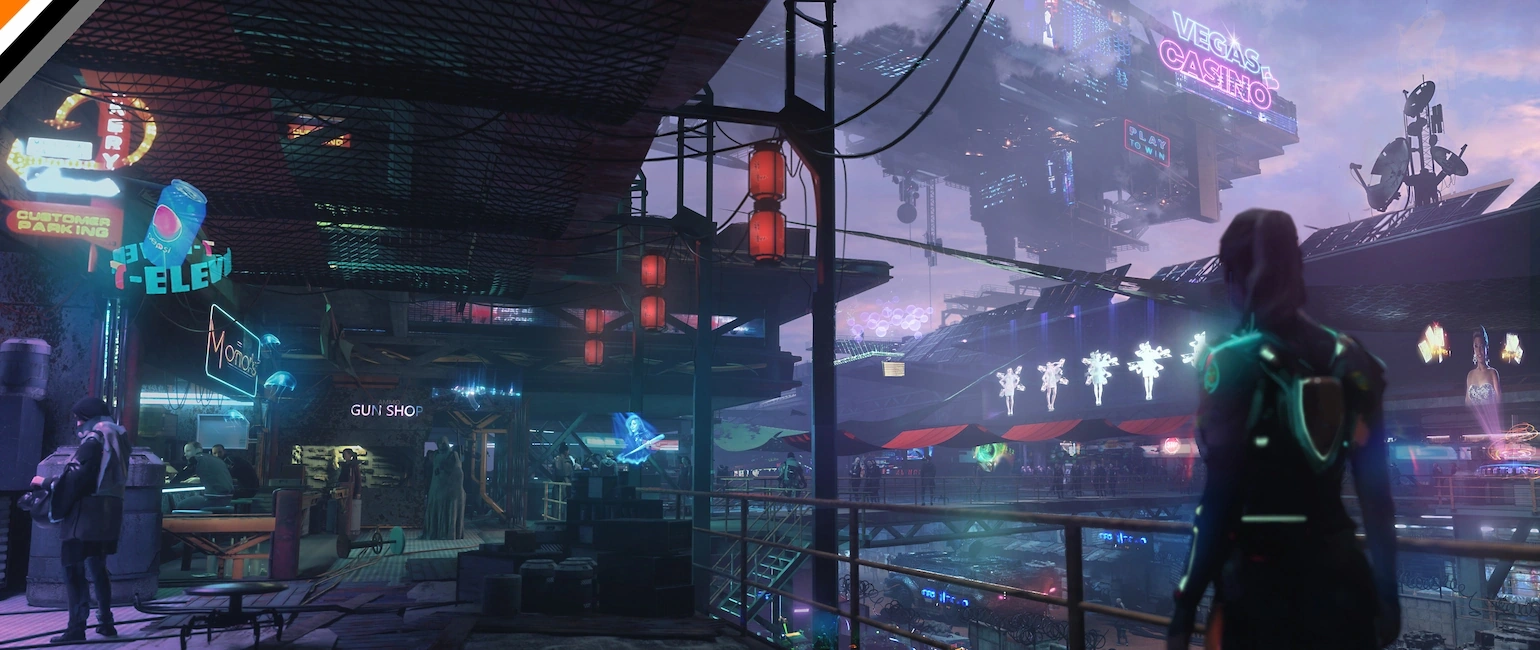
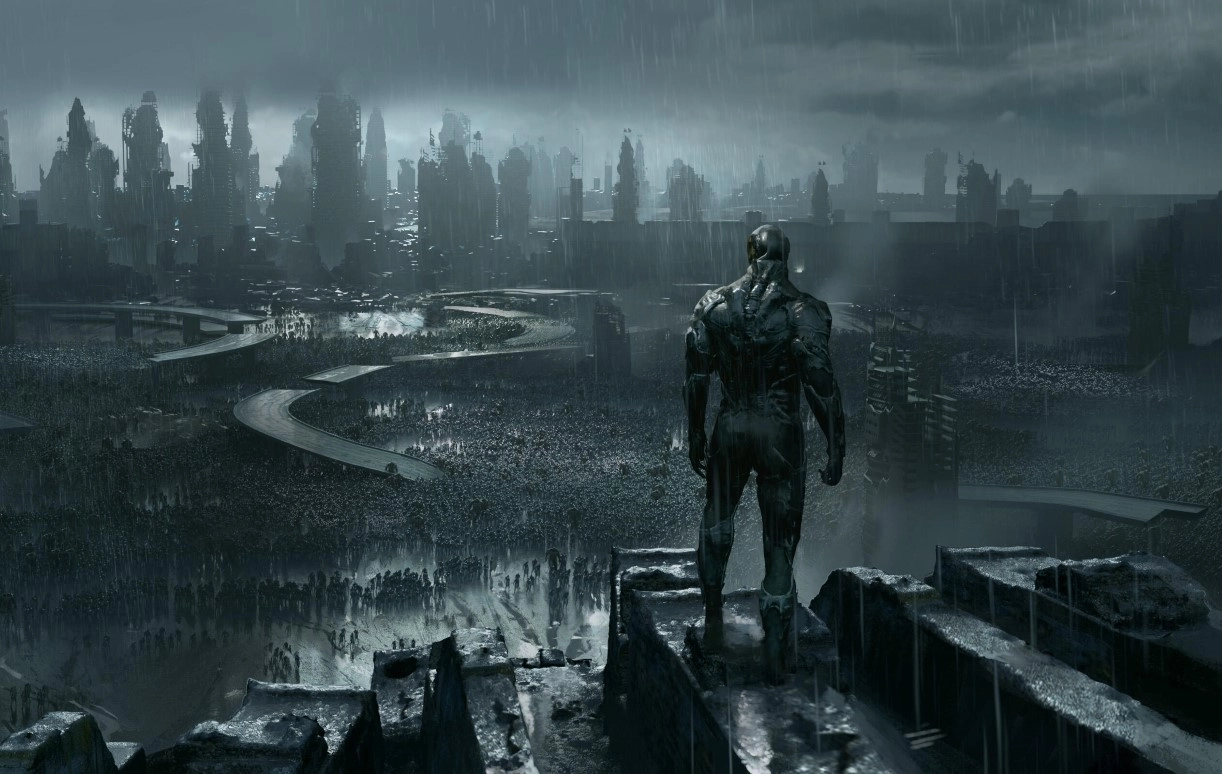
Imagendary’s strongest achievement was its visual direction. The reveal cinematic, created in Unreal Engine 5, combined frozen Antarctic landscapes, dense urban ruins, industrial laboratories, military machinery, altered wildlife and enormous structures buried beneath the ice. Former developers and artists later shared additional environment and character concepts showing damaged desert cities, cyberpunk districts, research facilities and landscapes where ordinary vegetation had been transformed by radiation and Astropulse energy. Even without playable footage, the project already possessed a visual identity strong enough to separate it from the familiar grey wastelands surrounding many post-apocalyptic games. The Neon Haze introduced unnatural colour without turning the world into bright fantasy, while the contrast between corporate architecture, improvised settlements and alien organic structures gave each region a different character. XIX territory could have appeared controlled and technologically advanced, with protected Havens connected through industrial infrastructure. Frontier regions suggested a less stable but more independent existence built around repaired vehicles, scavenged equipment and communities surviving beyond corporate barriers. Antarctica offered the opposite atmosphere: an isolated environment where ice, darkness and impossible biological growth concealed the origin of the catastrophe. The surviving material made these places appear less like disconnected backgrounds and more like parts of a world shaped by different forms of survival.The greatest regret comes from never discovering how those locations would have functioned as playable spaces. Astropulse was described as a single-player science-fiction third-person role-playing shooter, but its public material never reached the point of demonstrating combat, exploration, dialogue, progression or mission structure. The cinematic established tone, scale and artistic confidence without proving that the project had completed the difficult transition from concept art to game design. That uncertainty remains important, but it also makes the loss more frustrating. Imagendary showed enough to make the world feel real, then disappeared before players could learn whether its mechanics were capable of carrying that atmosphere.The ideal version would have treated the world as more than a corridor connecting combat arenas. Hall’s vehicle could have supported travel between settlements, contaminated zones and abandoned facilities, while the Neon Haze created regions requiring preparation before entry. XIX territory could have offered greater security at the cost of surveillance and political control. Frontier settlements could have provided freedom but limited equipment and protection. Outcast communities could have opened paths unavailable to players who treated every mutation as an enemy. Exploration should have revealed the history of the V virus through laboratories, abandoned evacuation zones and evidence of the decisions that accelerated the disaster. Combat also had room to become distinctive. Hall’s position between humanity and the Apostles suggested that progression might eventually combine conventional firearms, improvised technology and abilities connected to Astropulse. That combination could have supported a gradual transformation in which every new power carried narrative consequences. The danger would have been allowing supernatural abilities to replace careful third-person combat, but the material suggested a world capable of supporting both. Human factions, infected swarms, engineered soldiers and enormous alien organisms required different tactics, making the setting naturally suited to weapons, abilities and environmental preparation rather than one universal combat solution.

the warning signs were visible during the reveal
The project’s disappearance feels sudden when judged only by the cinematic, but the public reveal already contained signs that development had become unstable. Imagendary founder Wei Wang thanked the artists and developers who had contributed to the project, acknowledged the severe challenges facing the industry and stated that some team members were no longer able to continue. Another former developer said he had not been certain that the cinematic would ever be released after spending approximately a year and a half at the studio. Those comments gave the reveal the tone of both an announcement and a farewell, even though the scale of the difficulties was not yet publicly understood. Astropulse may also have attempted to become too much before establishing its first playable foundation. Imagendary presented it as a transmedia universe covering games, films, novels and billions of years of fictional history. That scale produced impressive lore, but it also created enormous production demands for a new studio working with an unproven intellectual property. A cinematic trailer can communicate ambition, while a complete single-player RPG requires years of combat design, animation, artificial intelligence, level production, narrative implementation, testing and technical optimisation. Building several media branches around the universe would have increased those demands before the game had demonstrated that its central systems could support the world. That does not mean the creative ambition was a mistake. The detailed timeline, factions and artwork are the main reasons Astropulse remains worth discussing after cancellation. The problem was likely one of production scale rather than imagination. A more focused first game could have introduced Hall, one major region and the conflict between XIX and the Frontiers while leaving Antarctica and the Grim Null as the larger threat waiting beyond the immediate story. Success could then have supported the novels, films and future games Imagendary wanted to create. Attempting to establish every part of the universe at once placed a small studio in competition with productions backed by far larger teams and budgets. The remaining material cannot reveal precisely how far the playable game progressed or which systems were functional when development ended. Concept art and cinematic production can continue even while the underlying game faces difficulties, and a visually complete trailer does not prove that missions, combat or progression were close to completion. That uncertainty should prevent Astropulse from being remembered as a guaranteed masterpiece that was taken away at the final moment. It was an ambitious project with exceptional visual foundations, not a finished game waiting to be released.
cancellation erased more than a single release
The loss is still significant. The industry regularly produces sequels, remakes and adaptations built around audiences that already exist. Astropulse represented an attempt to establish a completely new science-fiction property with its own mythology, visual language and long-term identity. Its influences were visible, but the combination of post-apocalyptic road travel, corporate bioengineering, Antarctic cosmic horror and forced evolution had enough personality to become more than a collection of familiar ideas. Its cancellation also removed the opportunity to discover whether Imagendary could convert worldbuilding into meaningful player choice. The strongest possible version would have made Hall’s transformation part of both the narrative and the mechanics, allowing the player to decide how much power to accept and what remained of his humanity. Factions could have reacted to physical and ideological changes, while companions such as Faye, Eilene and Black Lynch reflected different outcomes of the same evolutionary crisis. The journey toward Antarctica could have gradually changed from a mission of revenge into a confrontation with the possibility that humanity itself had become temporary. According to former concept artist Julian Calle, the studio closed with the project, leaving no active team to carry the original vision forward. The official Astropulse website remains as an unusually detailed archive, but its lore pages now describe locations, creatures and conflicts that will probably never become interactive spaces. A revival by another company is theoretically possible whenever ownership and existing material survive, but nothing currently indicates that Astropulse is being transferred or restarted. Rebuilding it elsewhere would also require more than purchasing a name and using the trailer as a visual reference. The identity came from the artists, writers and designers who established its world. Without enough of that team, a revived version could retain the terminology while losing the atmosphere that made the original material interesting.