PCD SPECIAL | BLADE RUNNER 2033: LABYRINTH | A SILENT CITY FULL OF SIGNALS
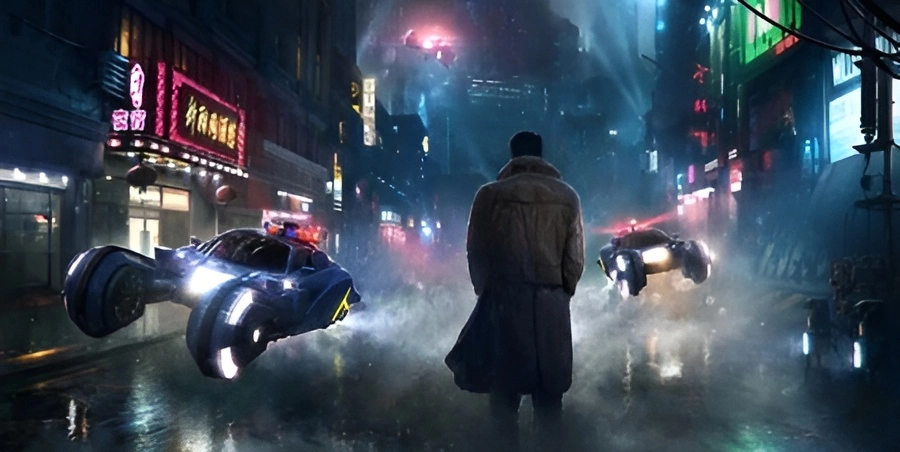
Blade Runner 2033: Labyrinth does not present itself as a typical modern game announcement designed to immediately dominate attention or generate fast excitement through spectacle or marketing rhythm. Instead, it feels like something that has been slowly forming inside the Blade Runner universe for years, as if the idea itself was always waiting for the right moment to be translated into an interactive structure rather than introduced as a new concept. Set in the continuity that follows the collapse points and systemic fractures established across the Blade Runner timeline, including the Blackout and the events leading toward Blade Runner 2049, the game positions itself in a version of Los Angeles that is no longer defined by dramatic collapse or visible decay alone, but by a far more unsettling condition of persistence where everything continues to function even after meaning has been eroded. This is a city that does not exist to be understood quickly or completely, but to be experienced as a continuous state of atmosphere, where rain, neon light, corporate architecture and human absence are not visual style choices but structural elements of existence itself. Developed by Annapurna Interactive, a studio known for narrative-driven experiences that prioritize tone and emotional design over mechanical complexity, the project immediately signals that its identity will not be built around traditional gameplay systems, but around controlled pacing, interpretation and environmental storytelling that forces the player to read the world rather than dominate it.
a city for interpretation, not clarity
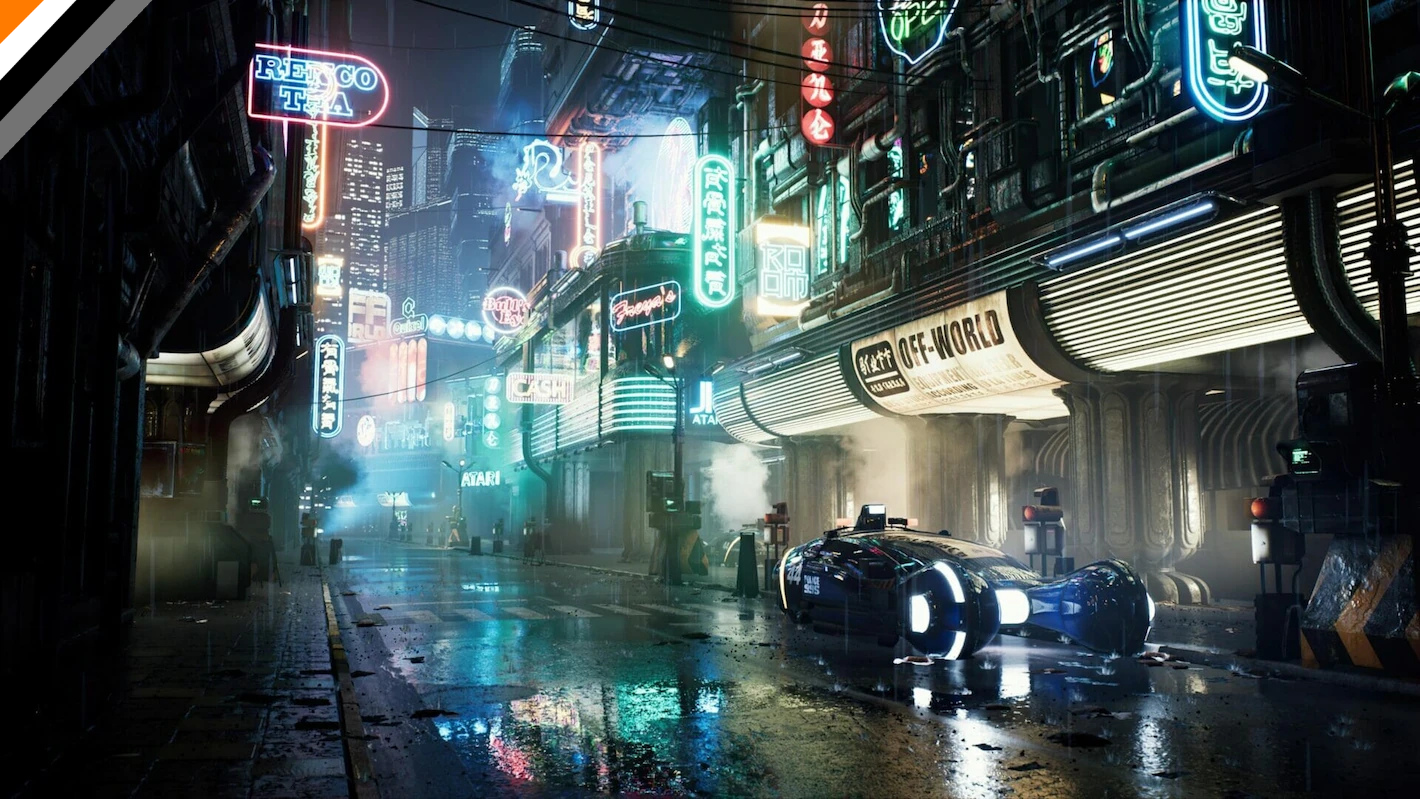
Blade Runner 2033: Labyrinth treats its version of Los Angeles as a space that does not simplify itself for the player’s benefit, nor does it reorganize itself into clear systems of progression or readable structure in the way most modern games do. Instead, the city operates as a layered construct of unresolved histories, where every street, interior and architectural fragment carries the sense that something already happened there long before the player arrived, and will continue happening long after they leave. Nothing in this environment is designed purely for function or clarity, and that absence of clarity becomes the defining mechanic of the experience. Exploration is therefore not a process of discovery in the traditional sense, but a slow reconstruction of meaning from incomplete signals, where understanding the world requires attention to detail rather than completion of objectives. The city does not guide the player forward with explicit direction or reward structures. It resists interpretation while still demanding it, creating a tension where presence inside the world becomes more important than progress through it. In that sense, Los Angeles is not a backdrop or setting, but the primary system through which narrative is delivered.
| – status – | in development |
| – release – | tba |
| – genre – | sci-fi / adventure / narrative |
| – developer – | annapurna interactive |
| – publisher – | annapurna interactive |
| – platform – | pc desktop / ps5 /xbox series |
| – focus – | atmospheric exploration / investigation |
| -score before score- | 94 / 100 |
identity as a broken system that never stops running
At the core of Blade Runner 2033: Labyrinth lies the same philosophical foundation that has always defined the Blade Runner universe, which is the instability of identity in a world where memory, consciousness and artificial life can no longer be separated into clear categories. The game does not operate within moral frameworks that allow simple distinctions between human and non-human, authentic and artificial, real and constructed. Instead, it exists in a conceptual space where those definitions have already broken down, leaving behind only fragments of identity that must be interpreted rather than accepted as fact. This creates a narrative structure where truth is not something revealed through progression, but something constantly questioned through interaction with environments, dialogue and situational context. The challenge this creates in game design is fundamental, because modern interactive systems are built around clarity, feedback and measurable outcomes, while Blade Runner as a narrative tradition depends entirely on ambiguity and unresolved meaning. As a result, the game is forced to operate inside a structural contradiction where every interactive system must carry narrative weight without turning that weight into simplification. If it leans too far toward mechanical clarity, it risks breaking the philosophical identity of the franchise, but if it leans too far into abstraction, it risks losing the engagement that defines it as a game rather than a passive experience.
the city as the primary form of storytelling
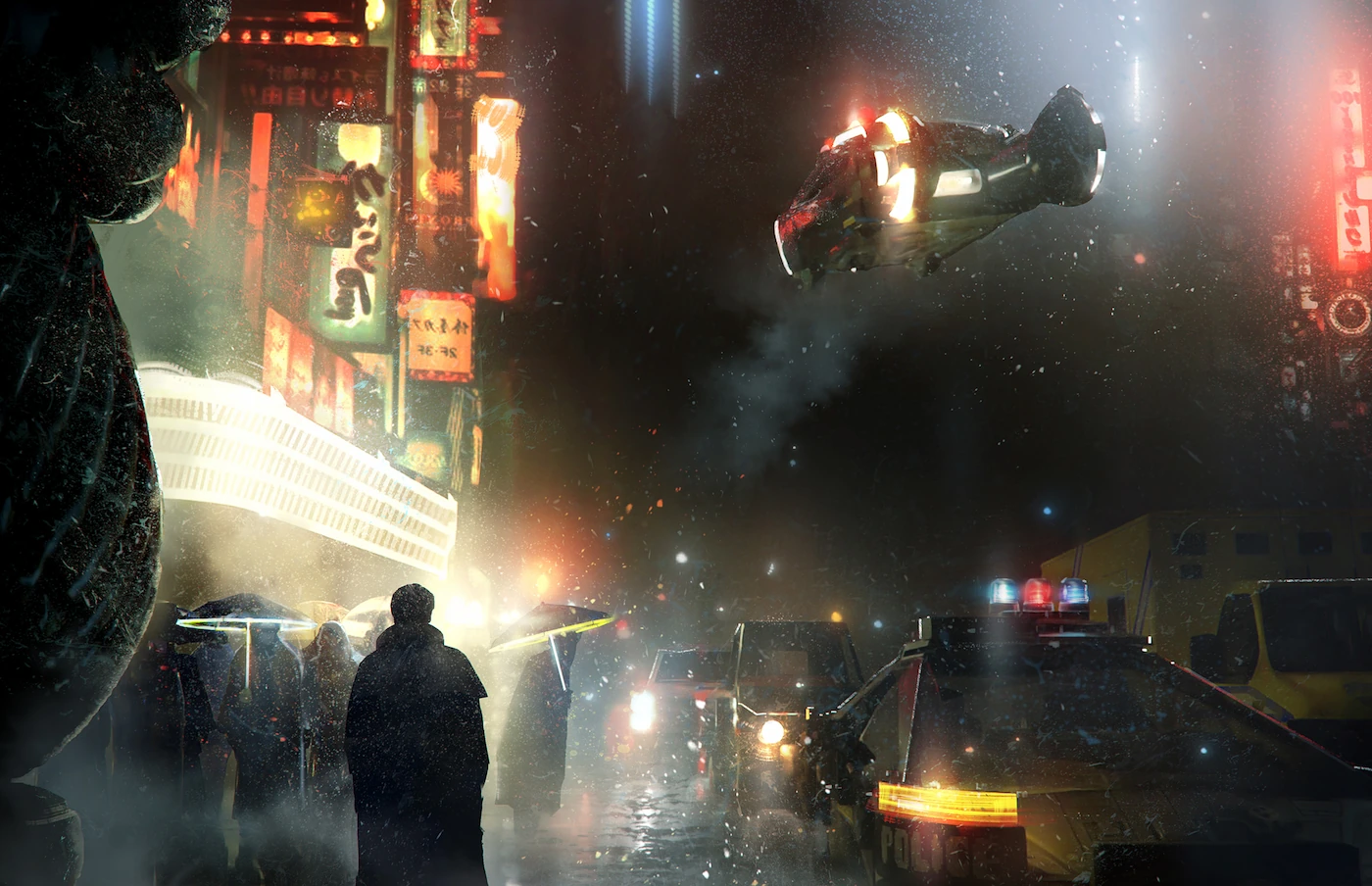
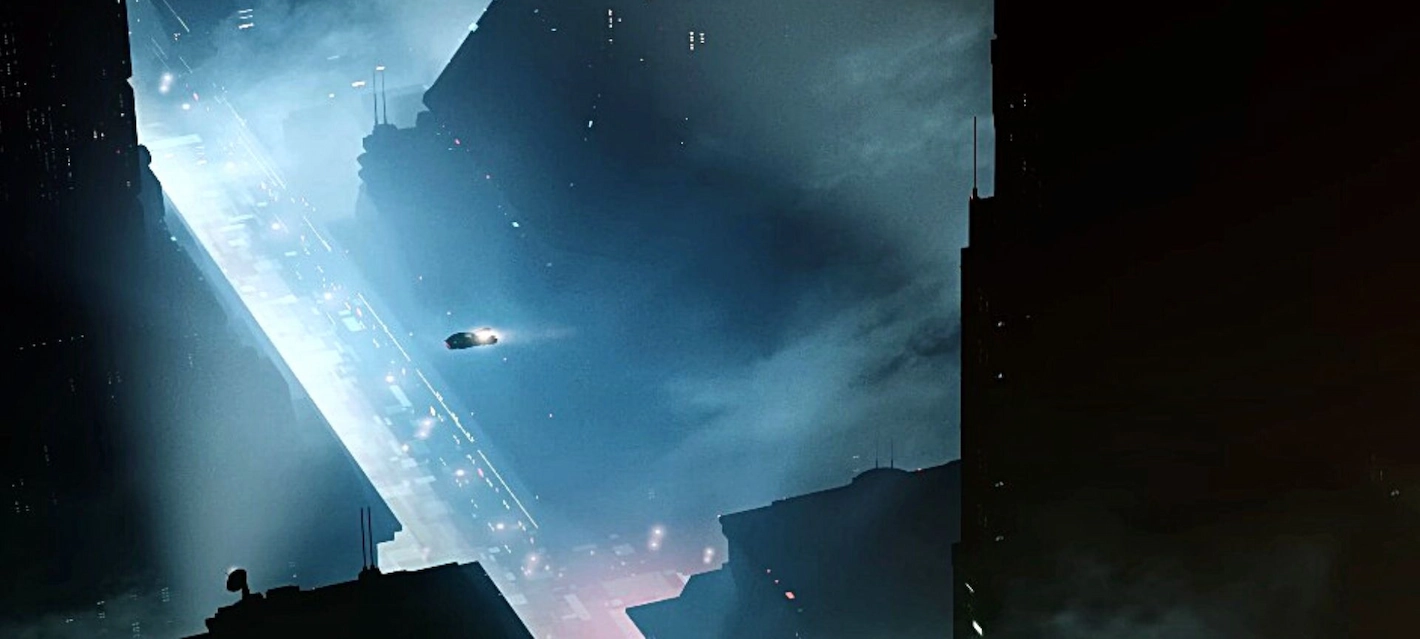
In Blade Runner 2033: Labyrinth, the city itself functions as the main narrative engine, replacing traditional exposition structures with environmental storytelling that depends on atmosphere, density and controlled visual decay rather than explicit explanation. Los Angeles is constructed not as a place designed to be navigated efficiently, but as a continuous spatial narrative where meaning is embedded in architecture, lighting, sound design and environmental repetition. The rain does not function as aesthetic reinforcement but as a constant atmospheric condition that shapes perception, while neon lighting and industrial density create a sense of layered reality where visibility itself becomes unreliable. Every visual element carries narrative implication, but none of it is explained directly, forcing the player into a mode of interpretation rather than consumption. This approach transforms movement through space into a form of reading, where understanding emerges gradually through observation of patterns, inconsistencies and fragments of information rather than structured mission design. It is an approach that aligns closely with the Blade Runner philosophy, but also demands extremely precise control over pacing, environmental clarity and player engagement to prevent the experience from collapsing into passivity.
the risk of turning atmosphere into a product
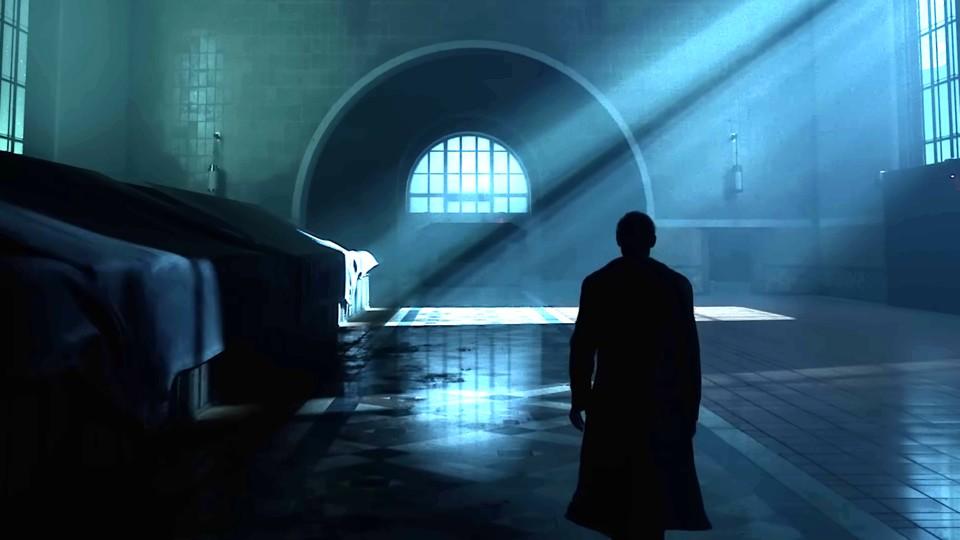
Blade Runner 2033: Labyrinth exists in a space where atmosphere is not just a creative direction, but the entire foundation of its identity, and that immediately creates a dangerous situation where the game is not being judged by systems, mechanics or even traditional gameplay expectations, but by whether it can successfully preserve a very specific emotional state across an interactive structure. This is where the real risk begins, because atmosphere in Blade Runner is not something that can be partially delivered or approximated; it either fully exists or completely collapses under the weight of interactivity. The moment a player is given control, the illusion of pure cinematic continuity breaks, and what remains must be strong enough to survive that break without losing meaning. In modern game development, especially in narrative-driven projects, there is always a tension between artistic intention and structural limitation, but in a universe like Blade Runner that tension becomes far more extreme because the source material itself depends on restraint, silence and controlled pacing. If Blade Runner 2033: Labyrinth pushes too far toward gameplay systems, it risks diluting the very atmosphere it is trying to preserve, but if it stays too close to cinematic restraint, it risks becoming something that feels observational rather than truly interactive. This is not just a design challenge, it is a structural contradiction that defines the entire project before it even reaches release, and it is exactly the kind of problem that can either produce a masterpiece or completely collapse under its own ambition.
why this game exists in the first place
Blade Runner 2033: Labyrinth exists because the Blade Runner universe occupies a rare position in science fiction where ambiguity is not a side effect but the core feature of its identity. Unlike most franchises that expand through clarity, explanation or escalation, Blade Runner persists through uncertainty, where the most important questions about identity, memory and artificial consciousness are never fully resolved. This makes it one of the few modern narrative universes that actively resists simplification when translated into interactive form. The game is not attempting to reinterpret Blade Runner into a more accessible format, nor is it trying to modernize it into a conventional action-driven experience. Instead, it attempts to preserve the philosophical tension that defines the franchise while translating it into a medium that naturally demands interaction, structure and feedback. That contradiction is what makes the project significant even before release, because it represents an attempt to maintain conceptual integrity in a form that constantly pressures it toward simplification.