RECENZIJA | GOTHIC 1 REMAKE | OLD SOUL, ROUGH HANDS, STILL WORTH ENTERING
Gothic 1 Remake is a strange kind of return. Not because the original Gothic was ever easy to remake, but because the new version constantly stands between two different ideas of what a remake should be. On one side, it clearly wants to respect the 2001 cult RPG: the prison colony, the harsh social structure, the slow rise from nobody to somebody, the unfriendly world that does not roll out a carpet for the player. On the other side, it now arrives with modern visuals, heavier production values and a much larger expectation from players who are used to smoother RPG movement, cleaner combat feedback and more comfortable moment-to-moment control. That tension is everywhere. Gothic 1 Remake looks much newer than it feels, and that is both its charm and its biggest problem. The official material still presents it as a faithful return to the Valley of Mines, with a hand-crafted open world and unrestricted exploration, while review coverage has also framed it as a remake that keeps much of the original’s rough “Eurojank” identity instead of sanding everything down into a modern template.
a world that still has teeth
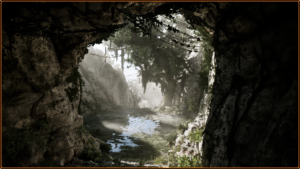
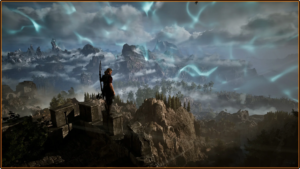
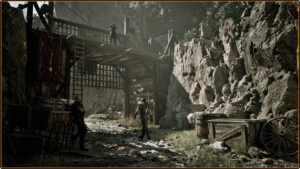
The best thing about Gothic 1 Remake is still the world. The prison colony remains a strong setting because it is not built like a friendly fantasy playground. It is dirty, tense, closed-in and socially aggressive. You do not enter this place as a heroic figure with a clean destiny and a bright path ahead. You enter as someone small, weak and replaceable. That matters. Many RPGs talk about danger, but then quickly surround the player with convenience, map markers, friendly systems and constant reassurance. Gothic does not have that kind of personality. Its world pushes back. The colony works because it has a social order before the player arrives. The camps, factions, guards, workers and criminals do not feel like they exist only to hand out quests. They feel like people already stuck inside a broken system. That was always one of Gothic’s great strengths, and the remake does a good job preserving it. You learn the place slowly. You listen. You get threatened. You figure out who matters and who is just pretending to matter. The game does not always explain itself gently, and that can still be refreshing. This is also where the remake feels most valuable. The updated visuals help the Valley of Mines feel heavier and more physical. The lighting, environments and added density give the old setting more atmosphere. Camps feel rougher, forests feel more dangerous, and the world has a stronger sense of place than the original could visually deliver back in 2001. It is not only nostalgia doing the work here. The remake really does make the colony look closer to what many players probably imagined in their heads years ago.
the remake understands atmosphere
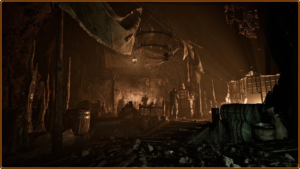
Atmosphere is where Gothic 1 Remake earns most of its score. The game has a very specific tone: harsh, muddy, suspicious, occasionally ugly, but alive. It does not feel like a fantasy theme park. It feels like a place where people are trapped together and making the best, worst and stupidest decisions possible. That tone is hard to fake. Even when some systems feel dated, the atmosphere keeps pulling the game back into interesting territory. The lack of excessive hand-holding also helps. PC Gamer’s pre-release coverage highlighted that the remake keeps the original’s commitment to immersion, including the absence of a traditional minimap and a stronger focus on navigating through the world rather than following a screen full of icons. That design choice fits Gothic perfectly. It makes the world feel less like a menu and more like a place. That does not mean everything feels elegant. Gothic has never been elegant. It is closer to a rusty tool that still does a specific job better than many cleaner alternatives. The remake carries that same energy. You accept some roughness because the world has identity. You tolerate some awkward systems because the setting has weight. You keep going because the colony has a strange pull. That is the Gothic effect, and the remake still has it.
movement is the big problem
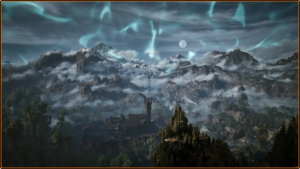
Now comes the part that keeps this from being a higher score. Character movement feels rough. Not just heavy. Not just grounded. Rough. The main character often moves with a stiff, awkward rhythm that makes basic navigation feel less comfortable than it should. Turning, stopping, repositioning and moving through tighter areas can feel clumsy. There are moments where the game looks modern, but the body under your control feels like it belongs to something much older. This is not a small issue. In an RPG where you spend so much time walking, exploring, fighting, looting, talking and positioning yourself, movement is not just a technical detail. It shapes the whole feeling of the game. When movement feels good, the world becomes easier to inhabit. When movement feels awkward, the player constantly notices the controller or keyboard under their hands. Gothic 1 Remake often creates that second feeling. Your criticism fits the experience very well: if we put the graphics aside, the game sometimes feels like it is ten years older than it is. Not in its ideas, because old-school design can still be powerful, but in the physical feeling of controlling the character. The remake modernizes the face of Gothic more successfully than the hands. That contrast can be strange. Your eyes see a detailed, moody, modern remake. Your fingers sometimes feel a game that never fully escaped older RPG stiffness.
combat has good intentions, mixed feel
Combat is similar. The idea behind it makes sense. Gothic should not be a weightless action game. You are supposed to feel weak early on. Enemies should matter. Getting stronger should be earned. A fight should carry risk. All of that fits the identity of the series. The problem is that difficulty and discomfort sometimes blend together in the wrong way. There are moments where combat creates useful tension. You know you are not invincible. You read enemy movements. You choose when to commit. You feel the game pushing you to respect danger. That is good. But there are also moments where the system feels more clumsy than challenging. Animation timing, movement stiffness and feedback do not always combine into satisfying pressure. Sometimes a fight feels dangerous because the enemy is threatening. Sometimes it feels dangerous because the character does not feel responsive enough. To be fair, the developers clearly tried to improve combat over the course of development. Coverage before launch pointed to changes such as faster animations, smoother movement transitions, improved responsiveness and better lock-on camera behavior. But even with those improvements, the final feeling still does not fully escape the remake’s broader issue: the game wants to feel old-school, but occasionally crosses into simply feeling old.
questing and progression still have that gothic pull
Where the remake works much better is progression. Gothic’s structure remains satisfying because it makes growth feel earned. You begin as someone with very little power and very little respect. Progress does not feel like a gift. It feels like survival slowly becoming competence. That is a different feeling from many modern RPGs, where the player becomes important almost immediately. The factions also help. Gothic has always understood that RPG choices feel stronger when they are tied to social identity. Joining a camp is not just a menu decision. It changes how you think about the world, who you listen to, what kind of path you imagine for the character and how you read the colony’s power structure. The remake benefits from keeping that foundation intact. Quest design is not always smooth, but it has more personality than checklist RPG design. You are often asked to pay attention to the environment, remember names, understand relationships and deal with the consequences of being weak or poorly informed. That can be slower, but it gives the game texture. For players who miss RPGs with less obvious guidance, Gothic 1 Remake offers something valuable.
the old design is both a strength and a limit
This is where Gothic 1 Remake becomes hard to judge. Some of its old-school nature is exactly why it works. The hostile world, the slow start, the limited guidance, the faction pressure and the rough social atmosphere all make the game feel different from safer modern RPGs. It is good that the remake did not turn Gothic into a generic fantasy action RPG with a thousand icons and smooth but empty systems. But old-school identity does not automatically excuse every old-feeling system. A remake has to know what to preserve and what to rebuild. Gothic 1 Remake preserves a lot of the right things, but it does not always rebuild enough of the physical feel. Movement, combat comfort and some interaction feedback remain too stiff. This creates the impression of a game that is visually remade, structurally respected, but mechanically only halfway modernized. That is why the game lands in a good-but-flawed zone. It is not a lazy remake. It is not soulless. It does not disrespect Gothic. In fact, it probably respects the original more than many safer remakes would. But respect is not the same as refinement. The remake sometimes protects the old shape so carefully that it also protects the old problems.
technical and presentation notes
Presentation is mostly strong. The world has better visual density, the environments carry atmosphere, and the remake gives the colony a more convincing physical presence. Sound and environmental mood help sell the prison setting, especially when the game slows down and lets the player absorb the place. It is at its best when you are not rushing, when the colony feels like something you are learning rather than consuming. Technical rough edges are still part of the experience. They do not completely ruin the game, but they reinforce the same general impression: this is a rough RPG with strong identity, not a perfectly polished modern release. Depending on your patience, that can be part of the appeal or the reason you bounce off it. OpenCritic currently lists Gothic 1 Remake in the “Fair” range, while Metacritic shows a spread of critic opinions rather than one simple consensus. That matches the feeling here. This is not a universally smooth remake. It is a game likely to mean more to players who already understand why Gothic mattered, and less to players expecting a fully modern fantasy RPG.
who should play it
Gothic 1 Remake is best for patient RPG players. If you like hostile worlds, slow progression, faction politics, old-school structure and games that do not immediately soften themselves for the player, this remake has real value. It gives you a world with identity, not just content. It asks you to adapt, observe and accept discomfort. But if movement feel is extremely important to you, this may be frustrating. If you want fast, smooth combat and modern RPG comfort, the remake will probably feel too stiff. If you expect every remake to fully modernize the way a game controls, Gothic 1 Remake may feel like it stopped halfway. It looks new, but it does not always move new. That is the core of the review. Gothic 1 Remake is not bad because it is old-school. It is good because it is old-school in the right places. But it is limited because it also feels old in places where a remake should feel better.