
NEOCLASSIC GAMES | THE WITCHER 3 WILD HUNT | STORIES THAT REFUSE TO FADE
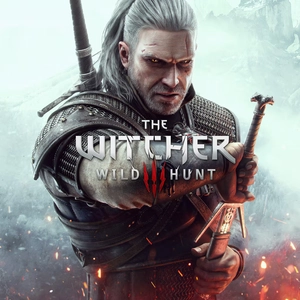
Few games manage to create a world so alive that even the smallest path seems deliberate, yet every corner carries whispers of history, sorrow, and mischief. The Witcher 3: Wild Hunt is one of those rare titles. Released in 2015 by CD Projekt Red, it quickly became a modern classic a benchmark for story-driven, open-world games that still holds up years later. From the first moment, you’re not just playing a game; you are stepping into a living, breathing, morally complex world where beauty and brutality sit side by side. Yet calling it perfect would be naive. The edges are rough, the paths sometimes convoluted, and the weight of choice can be exhausting. But perhaps that’s the point: the world demands engagement, reflection, and occasionally, failure. The Witcher 3 doesn’t rush to impress you. It slowly earns your attention, layer by layer, detail by detail. At first, it might feel like just another vast RPG, but the longer you stay, the more it reveals itself. What initially appears as scale becomes intimacy. What feels like freedom becomes responsibility. And somewhere along the way, without even noticing, you stop “playing” and start inhabiting the world.
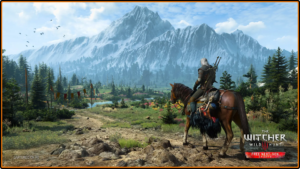
World and Atmosphere: More Than Just Scenery
Velen, Novigrad, Skellige the lands Geralt walks are painted with both care and cruelty. The air feels damp, smells of smoke and wet earth lingering in your imagination. It’s not a static landscape; it reacts. Villagers speak to each other, merchants shout from their stalls, and at night, the howl of distant monsters punctuates your solitude. Even the mundane a simple stroll through a market, the movement of a cart, the occasional clink of a coin creates an impression of life. You feel small, often helpless, yet curiously responsible. The choices you make ripple, sometimes immediately, sometimes subtly, in ways you only recognize after hours or days in the game. That tension between agency and consequence is rare. The world doesn’t exist for you; you exist within it, and that distinction is what gives Witcher 3 its enduring gravitas. Weather and environment are characters themselves. The rain in Novigrad isn’t just decoration; it makes streets slippery, tempers flare, and the air smells of coal and decay. Skellige’s winds are not polite; they push against you, they make travel feel dangerous, almost alive. Even the music, often subtle and melancholic, reinforces the sense of place a dirge for a continent caught between war and superstition, honor and cruelty. Moments of quiet, when the world seems to hold its breath, are punctuated by sudden violence or heartbreak. The contrast is striking: peace is fragile, beauty is fleeting, and the player is acutely aware of it. There’s also a subtle sense of decay running through everything. Not just physical decay, but emotional and societal. Wars leave scars not only on land but on people. Entire regions feel like they’re holding on rather than living. This gives the world a weight that goes beyond visuals. You’re not exploring a fantasy playground you’re walking through consequences.
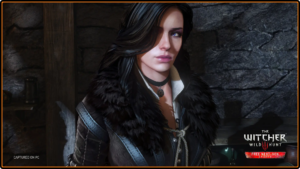
Gameplay and Choices: The Weight of Being a Witcher
Playing as Geralt is never a casual stroll through a medieval postcard. It’s a commitment to nuance, patience, and, at times, quiet frustration. Every swing of a silver or steel sword carries consequence, yes, but the real weight lies in preparation, observation, and judgment. Combat is deliberate, almost meditative when approached right, demanding timing, tactical awareness, and careful management of potions, oils, and signs. It’s not about mindless button mashing; one wrong choice a poorly timed Quen shield, a missed Igni can leave Geralt sprawled on cold stone, or worse, watching a carefully orchestrated plan unravel. Those moments sting, but they make victory when it finally comes all the more meaningful, leaving a sense of earned triumph that’s increasingly rare in modern RPGs. Monster contracts epitomize this philosophy. Each hunt is a carefully constructed puzzle, blending mechanical challenge with narrative weight. Knowing which blade to wield against a Noonwraith, which potion to sip before confronting a Leshen, or whether to cast Aard or Igni at the precise moment isn’t merely optional it can make the difference between a graceful, cinematic victory and a brutal, humiliating failure. The game encourages research, preparation, and attentiveness; reading journals, questioning villagers, observing the environment all feed into these encounters. And yet, there’s a subtle beauty in the unpredictability. Even seasoned players sometimes underestimate an enemy’s power, misjudge terrain, or fall victim to a misapplied strategy. Those failures feel natural, like slipping in a storm-slicked alley, and they stick in memory because the consequences matter. Yet, Witcher 3’s gameplay isn’t without its occasional friction. Long stretches of forest or marsh can begin to feel repetitive; swamp battles sometimes blur together, and the mechanics of certain recurring side quests risk becoming familiar in a way that diminishes tension. However, even in these moments, immersion rarely falters. Small details anchor the player to the world: a crumpled letter half-buried in mud, a terrified peasant whispering rumors of unseen horrors, the fleeting shadow of a monster passing under a dimly lit bridge. These touches remind you that this isn’t a generic fantasy playground. Every corner, every alley, every village has stories and stakes, even if the immediate gameplay loop occasionally feels familiar. Dialogue and decision-making elevate this experience beyond mere combat. Witcher 3 consistently rejects the binary morality seen in many RPGs. Choices are rarely “right” or “wrong”; they’re measured, ambiguous, and often unsettling. Saving one village might indirectly doom another; sparing the life of a would-be villain could unleash chaos elsewhere. Morality is not presented as a lesson but lived through, experienced in real-time. And sometimes, outcomes defy immediate logic. You might act with what seems to be the best intent, only to watch unintended consequences ripple outward weeks later in game time. That lingering moral weight can be exhausting, but it also leaves the game resonating long after the console powers down, embedding stories and decisions in memory rather than just progress meters. Preparation extends beyond combat and morality into the everyday grind of a Witcher’s life. Inventory management, potion crafting, and alchemy are integrated seamlessly into gameplay. Herbs must be gathered from forests, monsters must be studied, oils concocted, bombs prepared. Even the seemingly minor act of choosing which skill tree to invest in whether focusing on combat prowess, magical signs, or alchemical expertise reshapes not just Geralt’s capabilities but how you approach every encounter and quest. The layers of interdependency between skills, equipment, and environmental awareness reward attentive, thoughtful play, reinforcing the sense that being a Witcher is as much about intelligence and preparation as it is about reflexes or button presses. Exploration complements these systems beautifully. The world is vast and varied: snow-laden Skellige islands, mist-shrouded Velen, bustling, rain-soaked Novigrad. Each region carries its own rhythm, culture, and dangers, ensuring that even repeated journeys feel distinct. Hidden treasures, abandoned huts, mysterious notes, and NPCs with their own mini-stories turn every detour into an opportunity for discovery. It is in these quiet, sometimes overlooked corners that Witcher 3’s narrative richness truly shines, demonstrating how meticulous world-building can make mechanical repetition feel purposeful rather than tedious. Even with all its deliberate pacing, Witcher 3 rewards adaptability. Combat strategies shift with each new encounter; terrain, weather, and enemy type constantly demand recalibration. A swamp fight under heavy rain requires different tactics than a cliffside battle in Skellige’s harsh winds. This constant demand for attention keeps gameplay engaging and reinforces the notion that Geralt’s world is alive and reactive, rather than static and predictable. Even after dozens of hours, a clever combination of signs, bombs, and silver blades can still surprise, offering emergent moments that feel unscripted and alive. At its core, playing Geralt is about ownership. Each choice, each preparation, each tactical decision is yours. Victory is never guaranteed, but the satisfaction of surviving, adapting, and learning is profoundly personal. That enduring sense of responsibility the weight of being a Witche is what transforms Witcher 3 from a mere game into an experience that lingers, a story felt as much as it is played. Even something as simple as travel reinforces this design philosophy. Riding through the world isn’t just movement from point A to B; it becomes observation. You notice patterns, routes, recurring dangers. You start anticipating threats before they appear. Over time, the world teaches you how to survive in it, rather than simply letting you conquer it.
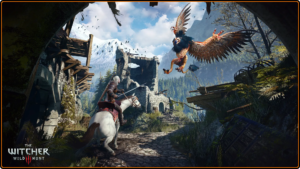
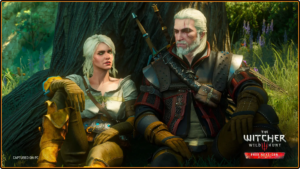
Expansions: Depth, Beauty, and Tragic Whimsy
The expansions “Hearts of Stone” and “Blood and Wine” exemplify why Witcher 3 has become such a modern classic. “Hearts of Stone” adds a layer of narrative complexity: morally dubious contracts, enigmatic antagonists, and plots that twist and bite in unexpected ways. “Blood and Wine” presents Toussaint, a land of sunlight, wine, and masked horrors, contrasting sharply with the grim shadows of Velen. It’s here that the game’s world-building shines brightest: the same developers who drew war-torn villages can conjure opulent ballrooms and sprawling vineyards, yet both feel believable, textured, and lived-in. These expansions are not mere additions; they are proof that the world can expand, breathe, and surprise even years after its initial release. Monsters are not merely enemies. They are woven into folklore, politics, and economics of the world. A noon-time hunt in Toussaint can lead to unexpected discovery: a missing noble’s daughter, a corrupted vineyard, or a secret society’s machinations. Every encounter feels consequential, every choice like a pebble in a pond that ripples through the game’s moral ecosystem. And yet, even here, the game is not flawless. Occasionally, quests feel padded or forced. Some mechanics, like loot distribution or scaling difficulty, can frustrate perfectionists. But these flaws rarely break immersion. They serve as minor wrinkles on an otherwise beautifully crafted tapestry. What makes these expansions exceptional is not just their content, but their confidence. They don’t try to be bigger than the base game; they try to be sharper. More focused. More deliberate. And in many moments, they surpass the base experience in storytelling precision and emotional impact.
Legacy and Why It Matters
What truly sets The Witcher 3 apart is not its size, but its consistency. Many open-world games offer scale; few maintain meaning across that scale. In Witcher 3, even the smallest interaction feels authored, intentional. There is very little filler in the traditional sense. Even when mechanics repeat, the context changes just enough to keep engagement alive. Another crucial aspect is how the game handles time. Not in a mechanical sense, but in emotional pacing. Some stories resolve quickly, others linger. Some consequences are immediate, others return hours later, almost forgotten until they resurface. This delayed impact creates a unique relationship between player and world one where memory matters as much as action. The game also respects the player’s intelligence. It rarely over-explains, rarely simplifies. Instead, it trusts you to interpret, to connect, to reflect. That trust is part of what makes the experience feel mature. Not darker for the sake of tone, but deeper in how it treats its audience. By the time you reach the end of The Witcher 3, what stays with you isn’t just the story of Geralt. It’s the accumulation of moments. Small decisions. Missed opportunities. Unexpected outcomes. The feeling that you were part of something larger, something that didn’t revolve entirely around you and yet wouldn’t be the same without you.

![THE WITCHER III: WILD HUNT [2015]](https://pcdoorz.com/wp-content/uploads/2026/07/kh4MUIuMmHlktOHar3lVl6rY.webp)