STRANDED DEEP 2 | THE DESERT BECOMES YOUR NEW OCEAN
Stranded Deep 2 has finally stepped out of the shadows, and the biggest surprise is that North Beach Games is not interested in simply rebuilding the first game with prettier water, larger islands and a few additional sharks. Although the sequel itself was confirmed earlier, this new reveal gives us the first meaningful look at what the project actually intends to become, and the answer is considerably more ambitious than a conventional follow-up. The Pacific Ocean and scattered tropical islands that defined Stranded Deep are being replaced by a vast desert wilderness carved apart by an apparently endless river, turning one of the original game’s most recognizable ideas completely inside out. Instead of crossing enormous stretches of water to reach small pockets of land, players will now travel through a huge landmass while depending on the river as their primary route through canyons, dunes, valleys, lakes and open plains. The basic survival DNA remains familiar hunger, thirst, exposure, crafting, exploration and the constant pressure to move beyond the safety of whatever shelter you have managed to build but almost everything surrounding those systems is being reconsidered. North Beach Games currently plans to bring Stranded Deep 2 to Steam Early Access in early 2027, giving the developers plenty of time to expand on what is already shaping up to be a much more systemic and flexible survival sandbox than the original.
a different kind of isolation
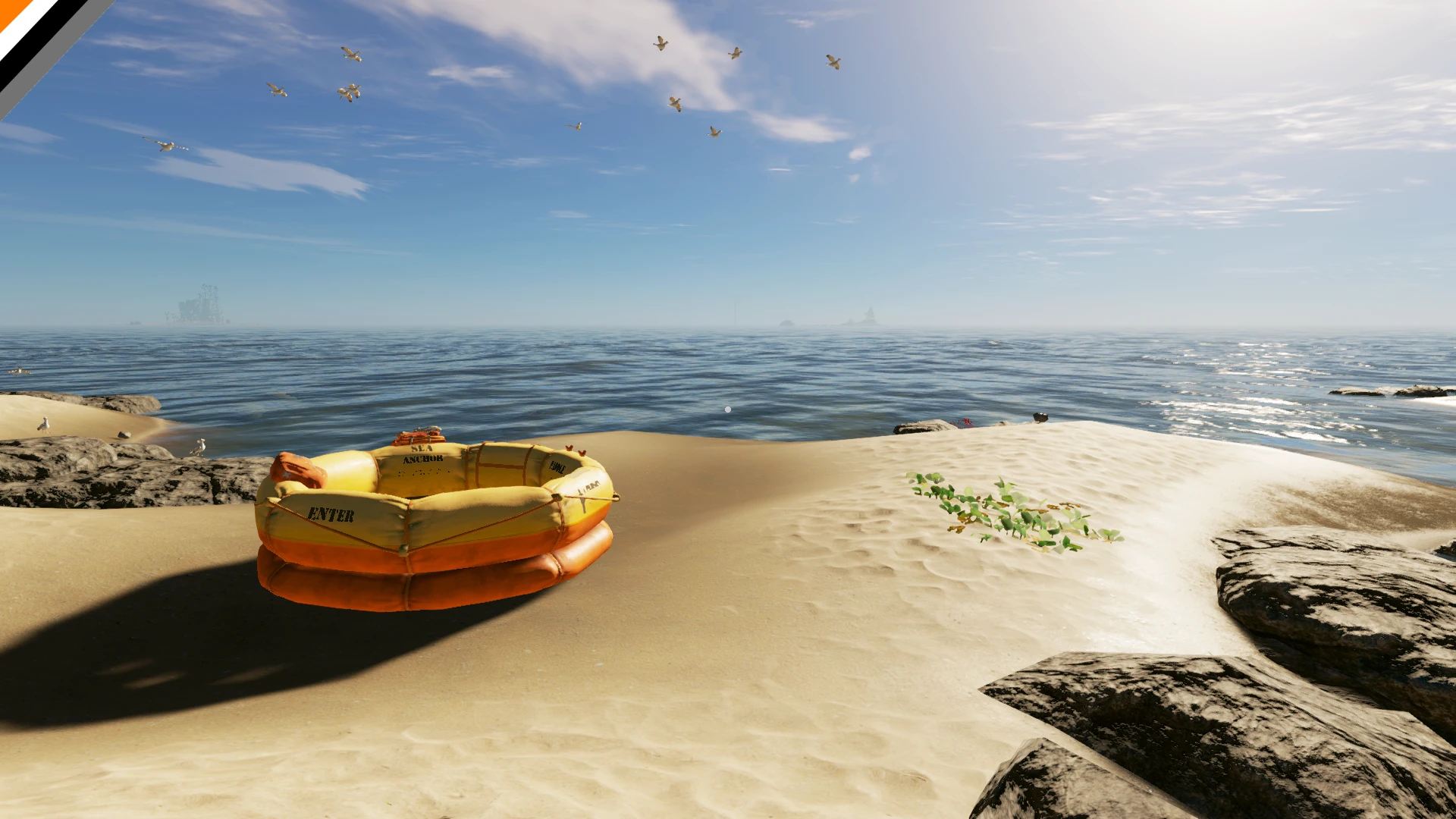
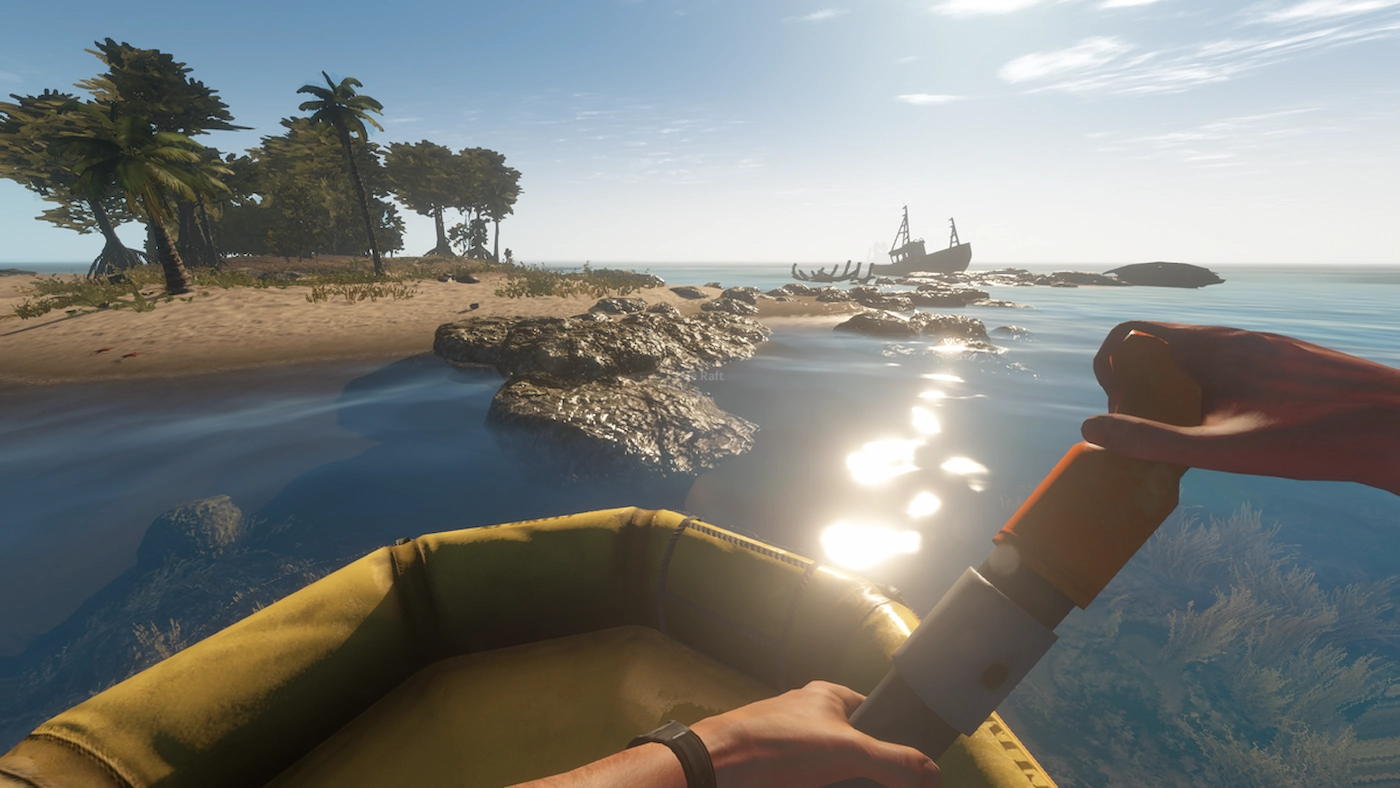
Creative Director Sam Edwards, who also co-created the original Stranded Deep, has explained that the team never wanted the series to be permanently defined by tropical islands alone. The larger idea was always isolation itself: putting the player somewhere hostile, making survival uncertain and then slowly turning an unfamiliar environment into something understandable and manageable. Stranded Deep 2 takes that philosophy and applies it to a completely different geography. The desert effectively becomes the new ocean, while the river becomes the equivalent of the original game’s network of travel routes, carrying players between handcrafted locations embedded inside a much larger procedurally generated world. That shift also changes the relationship between exploration and base building. The familiar yellow liferaft has evolved into a kayak for early travel, but players will eventually be able to construct larger rafts capable of functioning as mobile bases, allowing shelters, resources and equipment to move downstream instead of being abandoned every time curiosity pulls you toward another distant location. Permanent bases along the riverbank will still be possible, but the idea of a home that can travel with you feels particularly well suited to a game built around isolation and discovery. It creates an interesting tension between settling somewhere safe and continuing farther into the unknown, while also addressing one of the inherent frustrations of survival games where hours of careful construction can make exploration feel like leaving too much behind. The official stranded deep 2 website describes a world designed around continued movement, risk and discovery rather than a fixed collection of small survival zones, and that alone gives the sequel a very different rhythm from its predecessor.
the world itself becomes part of survival
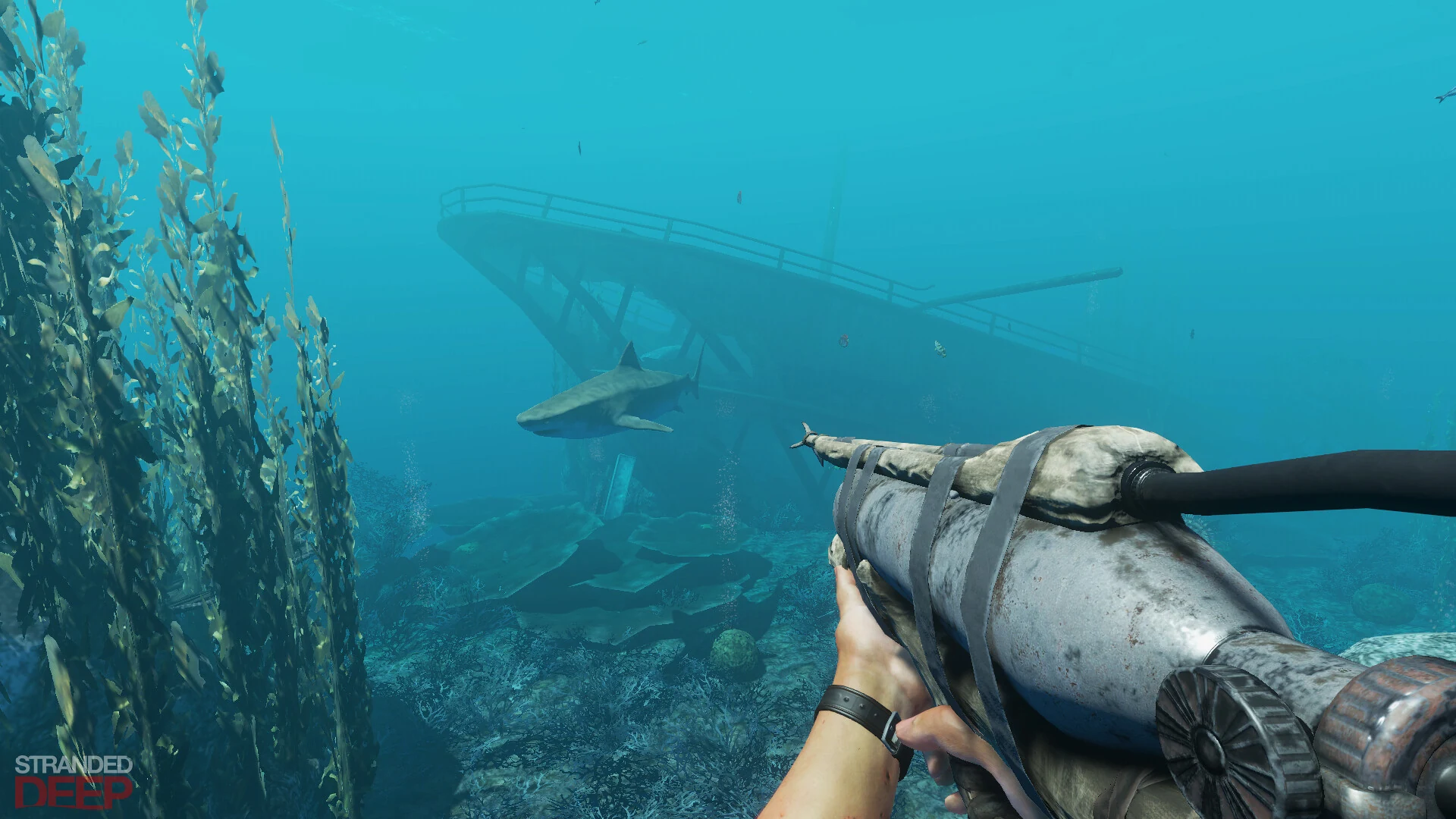
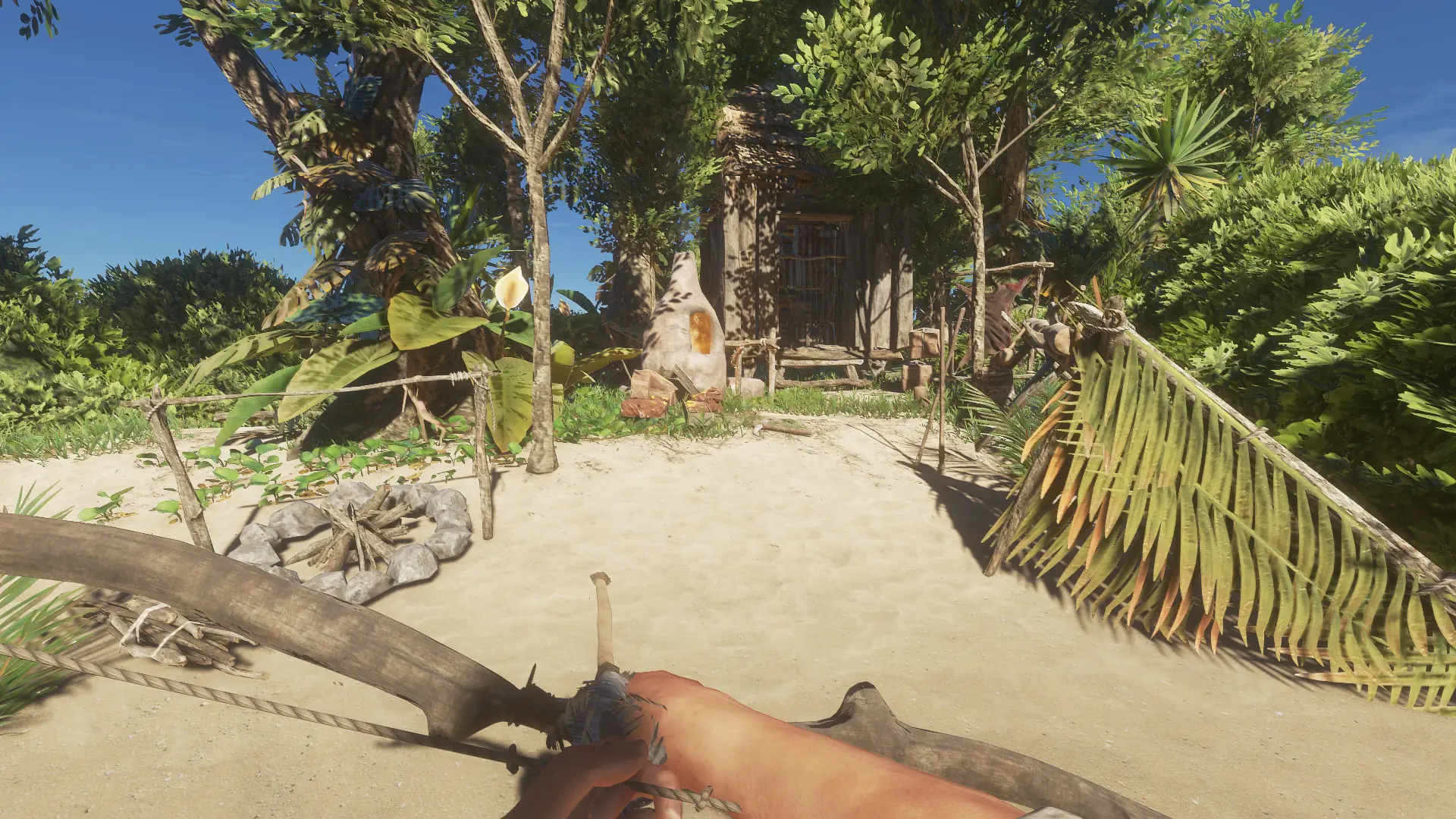
The most interesting changes may ultimately come from the systems underneath that new setting rather than the desert itself. Stranded Deep 2 retains the familiar need to manage health, hunger, thirst and environmental exposure, but North Beach Games is building a world intended to react more naturally to both the player and the creatures living inside it. Wildlife will roam, hunt and participate in a functioning food chain instead of simply existing as isolated threats waiting to attack, placing the player somewhere inside the ecosystem rather than permanently above it. Fish, lizards, crocodiles and hippos are already among the animals discussed, with crocodiles in particular sounding like they could become the sequel’s equivalent of the first game’s more memorable shark encounters. Crafting is also becoming considerably more granular. Instead of treating a tool as one fixed recipe, players will be able to select materials for individual components and gradually improve equipment as better resources become available, giving exploration a stronger connection to progression. More ambitious still is the work being done on dynamic water and terrain. Players are expected to be able to dig into and reshape parts of the environment, while waterways themselves may be redirected under the right circumstances. If those systems survive development in the form currently envisioned, they could fundamentally change how the game is played. Survival would no longer be limited to finding the correct resource and building the correct object; players could begin manipulating the environment itself to solve problems, create safer routes or reshape the land around a settlement. That is a major step beyond simply increasing the size of the map, and it is the part of the reveal that makes Stranded Deep 2 feel less like an incremental sequel and more like an attempt to build a deeper simulation around the same survival philosophy.
built for a much longer journey
North Beach Games is also treating Early Access as the beginning of development with the community rather than a short stop before version 1.0. The studio currently expects Stranded Deep 2 to remain in Early Access for roughly two to three years, during which additional locations, biomes, animals, crafting options, progression systems and other features are expected to arrive. Co-op is being considered from the foundation of the project rather than added as an afterthought, while mod support and a substantially expanded version of the Cartographer editor are also part of the plan. The Cartographer will once again allow players to create their own locations, but the sequel is intended to provide much broader tools and eventually support sharing those creations with other players. There will also be environmental lore spread throughout the world, although Stranded Deep 2 is not being built as a direct narrative continuation of the first game and will not rely on a traditional linear campaign to push the player forward. Exploration itself is meant to provide much of that motivation, with more valuable resources and unusual discoveries waiting farther from the relative safety of the main river. The Steam page is already available for wishlisting, while the official development plan currently points toward an early 2027 Steam Early Access launch before the game eventually expands to additional platforms. There is obviously still a long road ahead, and several of its most ambitious ideas will need to prove themselves in actual gameplay rather than developer descriptions, but the direction already feels much clearer than it did when Stranded Deep 2 existed primarily as a name. This is not an attempt to recreate the same survival trip with a different coat of paint. North Beach Games is using the sequel to reconsider what being stranded can actually mean.
![STRANDED DEEP [2015]](https://pcdoorz.com/wp-content/uploads/2026/08/EGS_StrandedDeep_BeamTeamGames_S1_2560x1440-5011dfe67d355a332f3b50472fa69955-1.webp)