SPECIAL | THE WITCHER REMAKE | REBUILD THE GAME, PRESERVE THE SOUL
Rain, mud and torchlight should greet Geralt before any modern interface explains what kind of game he has entered. The first Witcher was never defined by technical refinement, effortless movement or spectacular presentation. Its identity came from something less convenient and more difficult to reproduce: a sense that every village, inn, cemetery and marsh existed inside a morally exhausted world where monsters could be understood more easily than the people paying to kill them. CD Projekt RED has officially entrusted Fool’s Theory with rebuilding that game from the ground up in Unreal Engine 5, while retaining full creative supervision over the project. Several members of the development team previously worked on Witcher titles, but the companies have revealed little beyond the basic production structure and have repeatedly asked players for patience. More recently, CD Projekt stated that development of the remake had been temporarily integrated with work surrounding The Witcher 4, further confirming that this remains a distant project rather than a game ready for conventional preview coverage. That absence of footage makes this the right moment to discuss principles rather than promises. The central question is not whether Fool’s Theory can produce more detailed faces, larger environments or smoother animation. Modern technology can improve those elements almost automatically. The real challenge is identifying which parts of the original were limited by their time and which parts merely belonged to a design philosophy that modern action RPGs have abandoned. A remake that replaces every unusual system with the safest contemporary equivalent may become easier to control, but it could also lose the character that made the first journey through Vizima distinct from everything that followed. The Witcher Remake does not need to preserve every inconvenience. It does need to understand that age and failure are not the same thing.
vizima should feel like a place, not a checklist
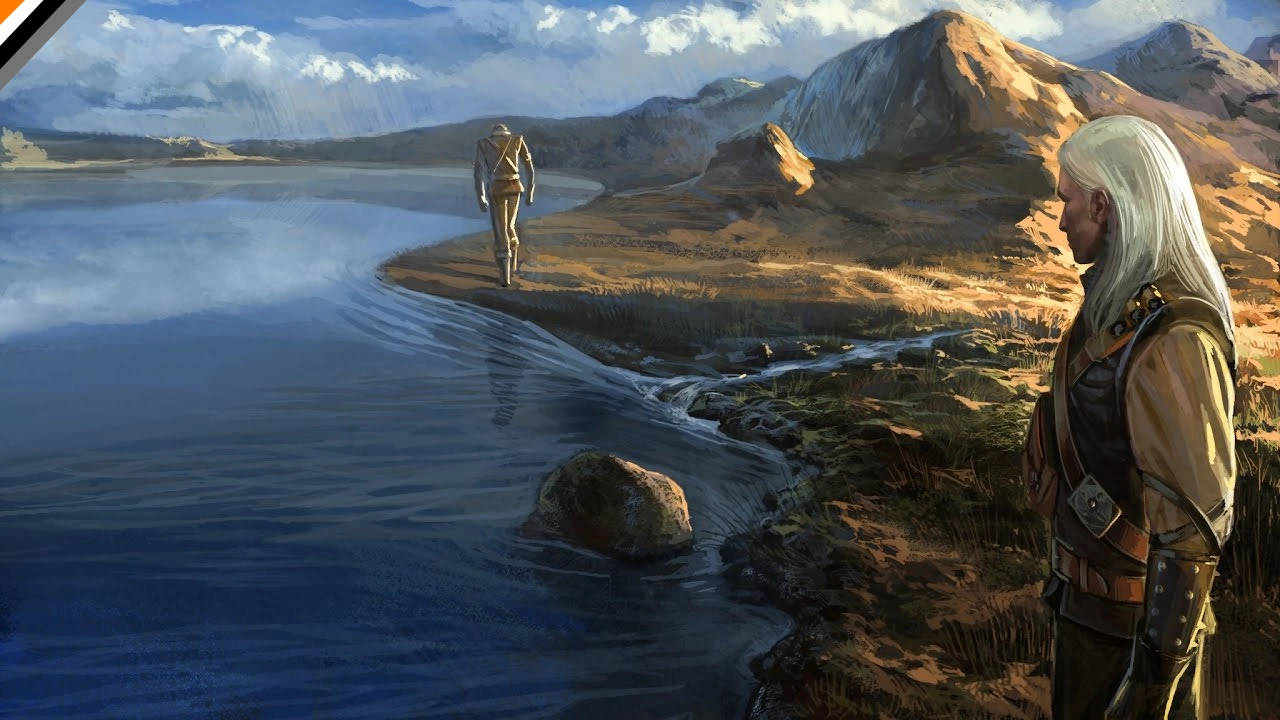
The first game’s version of Vizima was smaller and more segmented than the worlds players now associate with the series, but that concentration created a powerful sense of locality. Geralt did not travel through a continent assembled from endless scenic attractions. He became trapped inside one diseased political and social environment. The outskirts, the temple quarter, the trade district, the swamp and the surrounding villages formed connected layers of the same crisis. Characters reappeared. Decisions remained attached to familiar streets. A local dispute could gradually reveal religious conflict, racial hatred, economic desperation or political manipulation without requiring another kingdom to be placed on the map. A modern reconstruction will almost certainly make these spaces larger and more physically connected. Unreal Engine 5 gives Fool’s Theory the tools to reduce loading divisions, improve density and create a more continuous urban environment. That should benefit the remake, provided expansion does not become the purpose of the design. Vizima does not need enormous empty fields between every settlement. It needs believable roads, muddy courtyards, dangerous alleys, crowded interiors and districts that appear to belong to people with different levels of power. The city should feel larger because its systems, communities and conflicts overlap, not because the distance between objectives has been multiplied. The swamp presents the same test. In the original, it was inconvenient, hostile and visually oppressive. Movement through it could become frustrating, but its discomfort contributed to the feeling that Geralt was entering a place normal travellers avoided. A remake should improve navigation, landmarks and encounter distribution without turning the marsh into a beautiful theme-park biome. The region should remain wet, unpleasant and difficult to read. Players should be able to understand where they are going without feeling that the world has been organised for their comfort. This principle extends to every environment. Kaer Morhen should not resemble a polished tutorial arena. The outskirts should carry poverty, superstition and fear. The city should appear politically divided before dialogue explicitly explains those divisions. The remake must use modern detail to deepen the original atmosphere rather than sterilise it. Better lighting means little if every location becomes cleanly readable, beautifully framed and emotionally safe.

the combat should evolve, not be erased
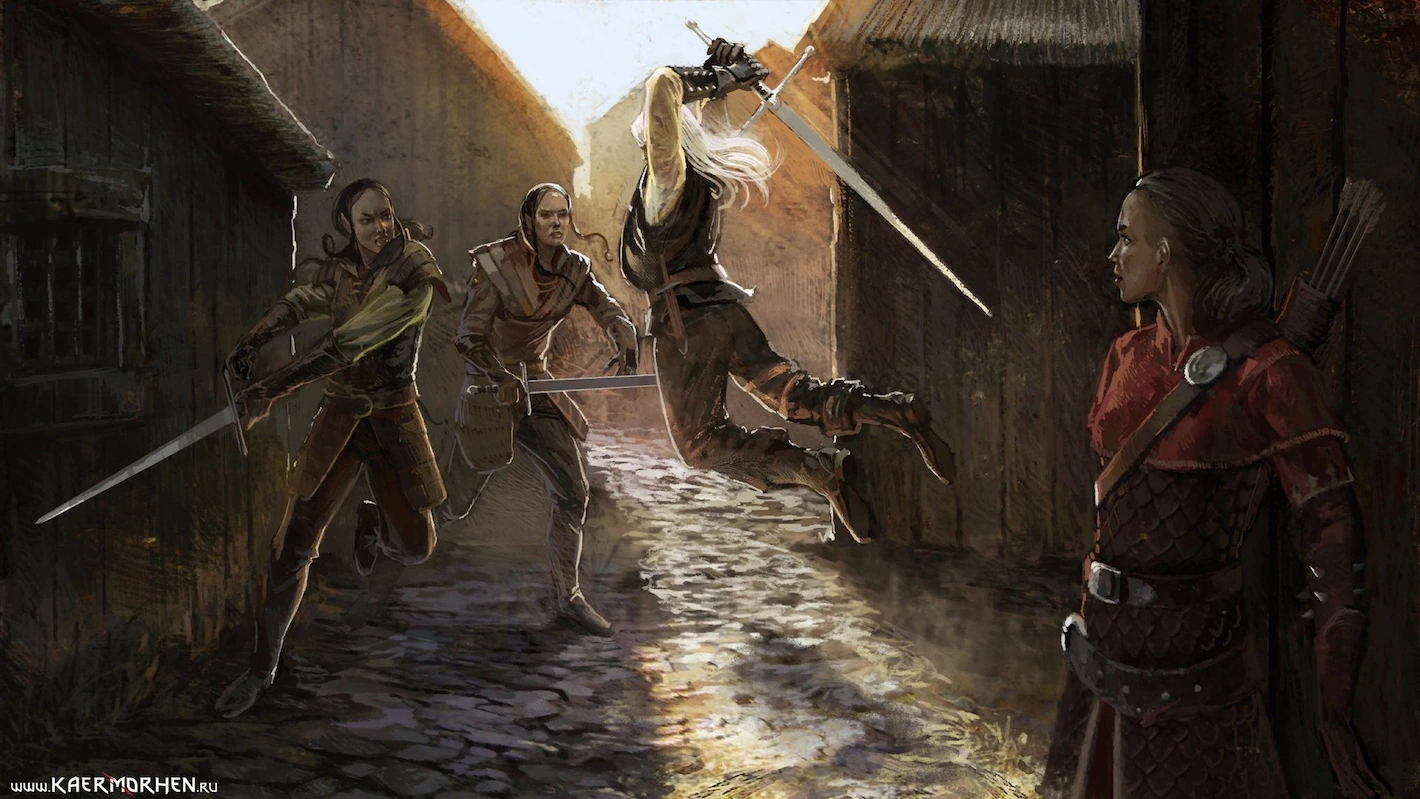
The original combat system is frequently described as something the remake must discard, but that judgement confuses unfamiliarity with complete failure. Geralt’s attacks were built around rhythm. The player initiated a sequence, watched for the correct moment and continued the chain when the visual cue appeared. Clicking without attention broke the flow, while successful timing produced increasingly elaborate combinations. Strong, fast and group styles required the player to identify the kind of threat standing in front of Geralt rather than using one universal attack pattern. That system was not a simulation of sword fighting, but it recognised an important truth: timing matters. Distance, rhythm, commitment and the moment chosen to continue an attack can matter as much as the number of available moves. The original translated that idea into a simplified chain-based system shaped by its camera, animation technology and RPG structure. Its weaknesses came from limited feedback, awkward movement, repetitive sequences and encounters that did not always support the intended rhythm. The concept itself was not empty. A remake will almost certainly use direct third-person controls closer to modern action RPGs. Geralt may move freely, aim attacks, dodge, parry and react without the old cursor-driven structure. That change is understandable, but the new combat should preserve the original emphasis on rhythm and preparation. Attacks should have commitment. Different enemies should require meaningful changes in style. Group control should not become a matter of spinning through crowds without thought. The player should learn when to enter, when to continue and when to break the sequence.The worst possible outcome would be a standard light-attack, heavy-attack and dodge-roll system that feels acceptable but interchangeable with dozens of other games. Geralt is not supposed to fight like a generic fantasy mercenary. His movements should appear trained, efficient and designed around creatures whose anatomy, reach and behaviour differ from human opponents. Timing can survive inside a modern action system through animation windows, stance transitions, counters, signs and attacks that grow more effective when chained with discipline rather than button repetition. Preparation must remain equally important. Oils, potions, weapon selection and acquired knowledge should affect the encounter before the first strike. The original sometimes demanded that players prepare without providing enough information, but the solution is clearer investigation and better bestiary design, not removing preparation from the process. A witcher should gain an advantage because he recognised the creature, understood its habits and entered the fight with the correct tools. Combat begins before the blade leaves its sheath.

the remake must preserve moral discomfort
The first Witcher rarely presented morality through a clean division between kindness and cruelty. Geralt was frequently asked to choose between compromised people, incomplete accounts and solutions whose consequences could not be fully predicted. Neutrality was available in theory, but the world often demonstrated that refusing to act was still a decision. This structure gave the game its strongest narrative identity. A modern remake may be tempted to make every consequence clearer. Contemporary quest design often signals which relationships will change, which faction will approve and which branch the player is about to close. That information can prevent frustration, but too much clarity would weaken the original’s moral atmosphere. Geralt should not always know whether the person asking for help is trustworthy. The journal should not automatically identify every lie. The player should sometimes have to act with imperfect evidence and live with the result. The investigation systems deserve substantial expansion. The original already contained quests in which information was collected through conversation, books, autopsies and observation. A remake can connect those elements more naturally, allowing Geralt to inspect scenes, compare testimony and use witcher knowledge without turning every case into glowing-object detection. Clues should support judgement rather than replace it. The player should still decide what the evidence means. The conflict between the Order of the Flaming Rose, the Scoia’tael and those caught between them must also retain its discomfort. Neither side should be rewritten into a simplified faction designed to provide a clean route through the story. The remake has an opportunity to improve character depth, cultural context and the representation of ordinary people living beneath these conflicts. It should not remove ugliness merely because some dialogue or characterisation now appears blunt. The proper response is better writing, not moral sanitisation. Some elements of the original will require careful reconstruction. Its treatment of women, romance and collectible intimacy reflected a period and design culture that the remake should not reproduce mechanically. Removing immature presentation does not require making Geralt emotionally harmless or eliminating sexuality from the world. It requires writing relationships as interactions between characters rather than rewards stored inside an album. Mature material should become more mature, not simply less visible.
alchemy should remain a profession, not a hotbar
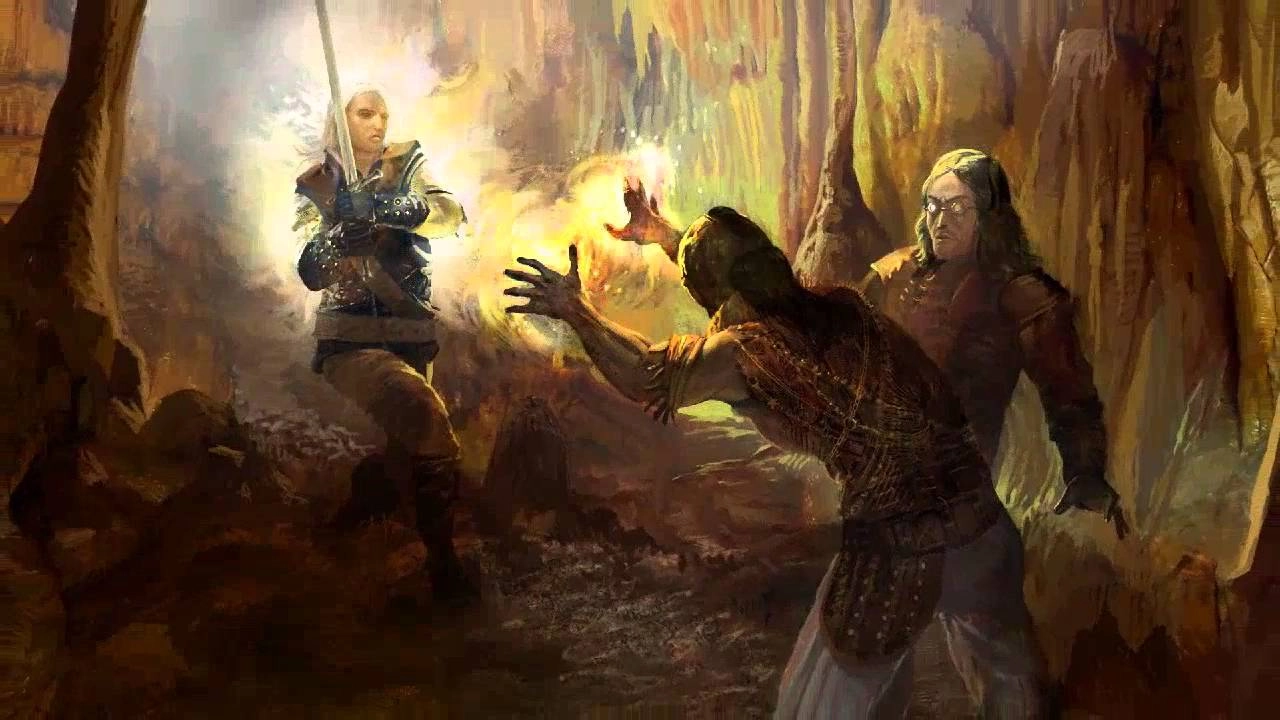
Potions in the first Witcher felt dangerous because they were not ordinary healing items. Toxicity mattered, ingredients had to be collected and preparation often occurred before the fight. Geralt’s body could survive mixtures that would kill an ordinary person, but even he could not consume them without limits. Alchemy therefore reinforced the character’s profession and physical difference. Modernisation should improve the process without reducing it to automatic crafting. Ingredients can be organised more clearly, recipes can explain their purpose and the interface can reduce unnecessary repetition. None of that requires turning every potion into an instant combat consumable refilled after resting. The player should still think about what is being prepared and why. Secondary ingredient properties could become more meaningful. The original allowed substances with similar primary components to carry different additional qualities, giving attentive players reasons to care about the exact materials used. A remake could develop that idea into a controlled system of potency, duration, toxicity and side effects. It should avoid becoming an enormous crafting spreadsheet, but it should reward knowledge. Meditation also deserves a deliberate role. Resting should not merely refill every resource because the player reached a safe point. It can represent time passing, potion preparation, talent allocation and the decision to enter the next part of the investigation under particular conditions. A modern interface can make meditation faster without making it meaningless. Alchemy, signs and swordplay should operate as one professional system. A prepared oil creates an opening. A potion changes Geralt’s perception or endurance. A sign controls space. The sword finishes the work. When these elements are separated into independent ability trees, the player becomes a fantasy action hero with several optional toolbars. When they support one another, the player becomes a witcher.
the story needs reconstruction, not replacement
The original narrative contains awkward transitions, uneven performances and sections that reveal the limitations of CD Projekt RED’s first production. The remake should not preserve every scene exactly as it was staged. Dialogue can be rewritten, motivations clarified and secondary characters developed more fully. The goal should be to reveal the strongest version of the same story rather than use familiar names inside a substantially different plot. Geralt’s amnesia was a practical device for introducing players unfamiliar with the books, but it also created an interesting version of the character. He possessed instincts, skills and fragments of identity without complete ownership of his past. The remake can handle that condition with greater subtlety, allowing remembered behaviour, external expectations and player choice to remain in tension. Geralt should not feel like an empty avatar, but neither should every response be predetermined by later franchise characterisation. The Salamandra investigation must become more coherent without losing its gradual escalation. Its members should appear connected through believable operations, resources and relationships rather than because the next quest requires another group of enemies. The theft from Kaer Morhen should remain personal, while the wider conspiracy expands naturally through Vizima’s criminal, magical and political structures. Characters who later became important to the series need careful treatment. The remake should not force unnecessary references to future events simply because players now recognise certain names. Foreshadowing works only when it belongs inside the immediate story. The original should be allowed to remain the beginning of the game trilogy rather than becoming an extended prologue written backwards from The Witcher 3. This restraint also applies to the broader world. Not every famous monster, kingdom or character needs an appearance. Vizima is strong enough to carry the game. Its local politics, cursed histories and human cruelty provide more than enough material. The remake will feel larger when the world beyond the city is suggested through travellers, books, contracts and political pressure rather than displayed as a checklist of franchise references.

modern technology must serve the old mood
Fool’s Theory is rebuilding the game in Unreal Engine 5 under CD Projekt RED’s creative supervision, with developers who have previous experience inside the Witcher universe. The project was officially described as being in an early development stage, and no release date, gameplay footage or final feature set has been announced. CD Projekt’s later confirmation that remake development had been temporarily integrated with work surrounding The Witcher 4 suggests that technology and production knowledge may move between the projects, but it does not tell us what the final structure of the remake will be. Unreal Engine 5 can provide dense geometry, improved lighting, seamless spaces and far more convincing character animation. It can also produce environments that resemble every other expensive dark-fantasy game using the same tools. Technology is not identity. The remake needs its own visual language: dirty stone, sickly torchlight, wet vegetation, pale dawns, rough clothing and faces shaped by labour, illness and suspicion. The colour palette should resist excessive cinematic grading. The original often looked brown, green and grey because its world was decaying, not because the artists lacked access to brighter colours. Modern lighting can make those tones richer without replacing them with dramatic blue shadows and orange fire in every scene. Monsters should look biological and disturbing rather than designed primarily for promotional screenshots. Animation requires the largest improvement. Conversations, facial performances and movement can finally express the uncertainty and tension that the original dialogue often carried only through text. Combat transitions can become smoother without losing rhythm. Creatures can communicate intention through posture and motion. Geralt can appear superhuman without becoming weightless. Performance must remain part of the design discussion from the beginning. An open or more connected Vizima filled with dense crowds, vegetation, weather and advanced lighting will be demanding. A remake of a PC RPG should not treat stable frame pacing, scalable settings and readable image quality as secondary concerns. Rebuilding the world means making it playable across realistic hardware, not only producing a technical showcase.

open world does not automatically mean better
The remake has often been discussed as a possible open-world reconstruction, but the official announcement itself does not provide a complete description of the final map structure. What has been confirmed is a ground-up Unreal Engine 5 remake developed by Fool’s Theory under CD Projekt RED’s supervision. Anything beyond that should currently be treated as possibility rather than established design. A more connected world would make sense. Walking from the outskirts toward Vizima, crossing into the swamp and returning through changed districts could strengthen continuity. However, “open world” should not become permission to stretch the game across empty territory, generic contracts and repeated points of interest. The first Witcher benefited from chapters that changed location, access and atmosphere as the story progressed. The remake should preserve that sense of narrative movement even if the physical world becomes less segmented. Areas can open gradually. Political events can block routes. Time, weather and story consequences can alter familiar locations. The player should feel that the world is changing rather than simply revealing more icons. A connected Vizima can still be structured, authored and selective. The Witcher 3 demonstrated how effectively monster contracts could exist inside an open world, but the remake should not copy that game’s structure without question. The first story is more claustrophobic and local. It concerns one city, nearby communities and a conspiracy tightening around them. Its world should feel deep before it feels broad.

what should be removed without regret
Preservation does not mean loyalty to every old decision. Inventory friction that adds no strategic value should disappear. Repeated backtracking without narrative purpose should be reduced. Quest information should become clearer without revealing every solution. Character movement, camera behaviour and object interaction need complete modernisation. Technical limitations that interrupted the atmosphere should not be defended as part of the soul. Long loading transitions, repeated NPC models, rigid facial animation and inconsistent pathfinding belong to the original production circumstances. They can be replaced without damaging the game’s identity. Some quest structures can be consolidated. Repetition can become escalation. Routine collection can become investigation. Minor characters can receive distinct appearances and voices. The city can react more visibly to Geralt’s decisions. These changes would fulfil the original ambition rather than betray it. The remake should be bold enough to recognise when the old game wanted to accomplish more than its resources allowed. Preservation matters most when it protects intention, not limitation.