SPECIAL | GOT: WAR FOR WESTEROS | DRAGONS CANNOT REPLACE STRATEGY
A proper Game of Thrones strategy game should never begin and end with large armies marching beneath familiar banners. Westeros is defined by what happens before the battle begins, by the promises made in private rooms, the territories left unprotected, the allies who arrive too late and the ambitious commanders who understand that political victory can be more valuable than military strength. PlaySide Studios is finally placing that world inside a premium real-time strategy game built for PC, combining a solo conquest of the Seven Kingdoms with free-for-all multiplayer shaped around temporary alliances, deception and open conflict. The project was originally expected in 2026, but the developer has now moved the release window to early 2027 while it continues refining unit behaviour, battlefield responsiveness, maps and faction systems. That delay removes War for Westeros from the immediate calendar, but the latest development update also gives the game a clearer identity than its original cinematic reveal could provide. This is no longer interesting only because it carries the Game of Thrones name. It is interesting because the foundations being described could support the type of strategy game Westeros has always deserved.

| – status – | in development |
| – release – | early 2027 |
| – genre – | real-time strategy |
| – developer – | playside studios |
| – publisher – | playside studios |
| – platform – | desktop pc |
| – focus – | faction warfare, hero management, territory control… |
| -score before score- | 87/100 |
westeros was always meant for strategy
The Seven Kingdoms provide almost everything an RTS needs before a single mechanic is invented. The North rewards defensive positioning and patience, the Westerlands offer wealth and organised military power, the Targaryen legacy brings dragons and conquest, while the Army of the Dead represents a threat that should not obey the same limitations as a conventional human faction. Castles, rivers, mountain passages and long distances between regions give the continent natural strategic boundaries, but geography alone will not be enough. The world becomes convincing only when the player feels that every campaign is part military operation and part political gamble. War for Westeros is promising solo play, multiplayer and campaigns that revisit major conflicts and turning points from the television series, but its larger opportunity is to let those events break away from their original outcomes. A Stark victory in the Westerlands, a successful defence of the Wall or a Targaryen invasion stopped before reaching King’s Landing should not feel like isolated skirmish results. They should alter the balance of power across the wider conflict and create a version of Westeros shaped by the player’s decisions. The official description places considerable emphasis on alliances and deception, particularly within free-for-all multiplayer. That language fits the licence perfectly, but it also creates one of the game’s largest design challenges. An alliance cannot be meaningful if it is only a temporary ceasefire selected from a diplomacy menu. Players need practical reasons to cooperate, exchange information, coordinate attacks or allow another army to cross disputed territory. Betrayal then becomes valuable because something real has been placed at risk. The most memorable multiplayer matches could emerge when two weakened houses cooperate against a dominant rival, only for one partner to withdraw at the critical moment and take an exposed castle for itself. Westeros does not require an elaborate role-playing dialogue system inside every battle, but it does require uncertainty. Players should never feel completely comfortable when another banner is marching beside them.

four banners must create four different wars
House Stark, House Lannister, House Targaryen and the Night King’s Army of the Dead are the four confirmed playable forces, and each carries expectations that extend beyond visual design. The Starks should not feel like Lannisters wearing grey armour, while the Army of the Dead cannot function as a conventional faction with renamed infantry and a darker interface. PlaySide has begun explaining how heroes will influence these differences. Jon Snow fights near the front line and strengthens nearby soldiers, while Tywin Lannister is described as a controlled battlefield commander capable of improving the effectiveness of the Lannister war machine. Heroes will gain levels, unlock abilities and support surrounding armies, making their survival and positioning part of the tactical structure rather than reducing them to decorative versions of television characters.That approach is promising, but heroes must remain part of the army rather than becoming the army. Game of Thrones offers recognisable names, dragons, giants and supernatural threats, all of which are easy to place at the centre of marketing. A serious RTS still needs ordinary soldiers to matter. Spearmen holding formation against cavalry, archers controlling an exposed lane and infantry protecting siege weapons should decide battles as often as a hero ability. The developer’s latest examples suggest that traditional counterplay remains important. Cavalry can physically break through vulnerable archer formations, while specialised anti-cavalry squads can stop that momentum. Giants can launch groups of soldiers through the air, and every faction is planned to have its own high-impact battlefield option. These systems could create battles that are readable and spectacular at the same time, provided that the powerful units have understandable counters and cannot erase careful positioning with a single command.
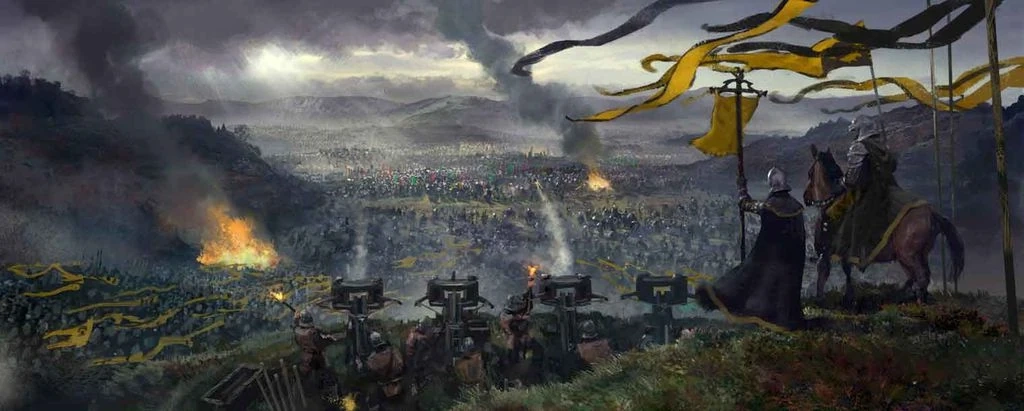
The Army of the Dead will be the clearest test of faction design. Its forces should grow, spread and pressure the map differently from the human houses, but unrestricted regeneration or effortless conversion of fallen enemies could quickly destroy competitive balance. Targaryen dragons create the opposite problem. They must feel terrifying without becoming automatic victory buttons that make infantry, fortifications and terrain irrelevant. Lannister strength should emerge through resources, disciplined formations and deliberate battlefield control, while the Starks should benefit from resilience, leadership and defensive advantages without becoming a predictable faction that can only hold ground. PlaySide has the right selection of factions for a strong asymmetric RTS. The quality of War for Westeros will depend on whether those differences are embedded throughout their economies, armies and strategic decisions rather than concentrated inside several dramatic special abilities.
combat must carry weight without losing control
PlaySide says it is spending substantial development time on responsiveness, pathfinding, unit behaviour and physical impact. Players will command full squads rather than individual soldiers, with cavalry able to scatter exposed formations and larger units capable of physically disrupting enemy lines. That sounds appropriate for a world where battles are dirty, crowded and frequently decided when formations collapse, but spectacle cannot interfere with control. A cavalry charge should look violent because the player identified a weak flank and committed at the correct moment, not because an animation automatically pushed every nearby unit aside. Likewise, infantry formations must respond quickly enough that a tactical mistake feels like the player’s failure rather than an argument with pathfinding. The decision to move the game into early 2027 is understandable if that additional time is being used to solve exactly these problems. The first detailed map example is Ashemark, a Westerlands battlefield connected to Robb Stark’s campaign during the War of the Five Kings. It is being designed as a focused one-versus-one map with two open lanes, defensible areas and opportunities to pressure, hold, flank and counterattack. Other announced locations include King’s Landing and the Wall, with maps intended to provide different terrain layouts and strategic challenges while supporting large army movements and territory control. Ashemark sounds like a sensible environment for demonstrating the fundamentals because its structure should make army composition and movement easy to read. The wider game, however, cannot rely entirely on symmetrical competitive layouts. A battle beneath the Wall should not feel structurally identical to an engagement outside King’s Landing. Westeros needs maps whose terrain affects the rhythm of war, even when that produces situations that are less perfectly balanced than a standard tournament battlefield. Much remains unknown. PlaySide has not fully explained resource gathering, base construction, recruitment, technological progression, siege mechanics, campaign structure or artificial intelligence. The Steam page identifies single-player, online PvP and cooperative support, but the current public material concentrates much more heavily on skirmishes and battlefield combat than on the larger systems surrounding them. Those missing details matter because a strong battle engine does not automatically produce a strong strategy game. Players need reasons to expand, protect supply lines, invest in specialised units and decide whether immediate military pressure is worth weakening long-term development. A Game of Thrones RTS cannot survive on recognisable heroes and attractive clashes alone. Its economy and campaign layer must create the difficult decisions that make those clashes meaningful.
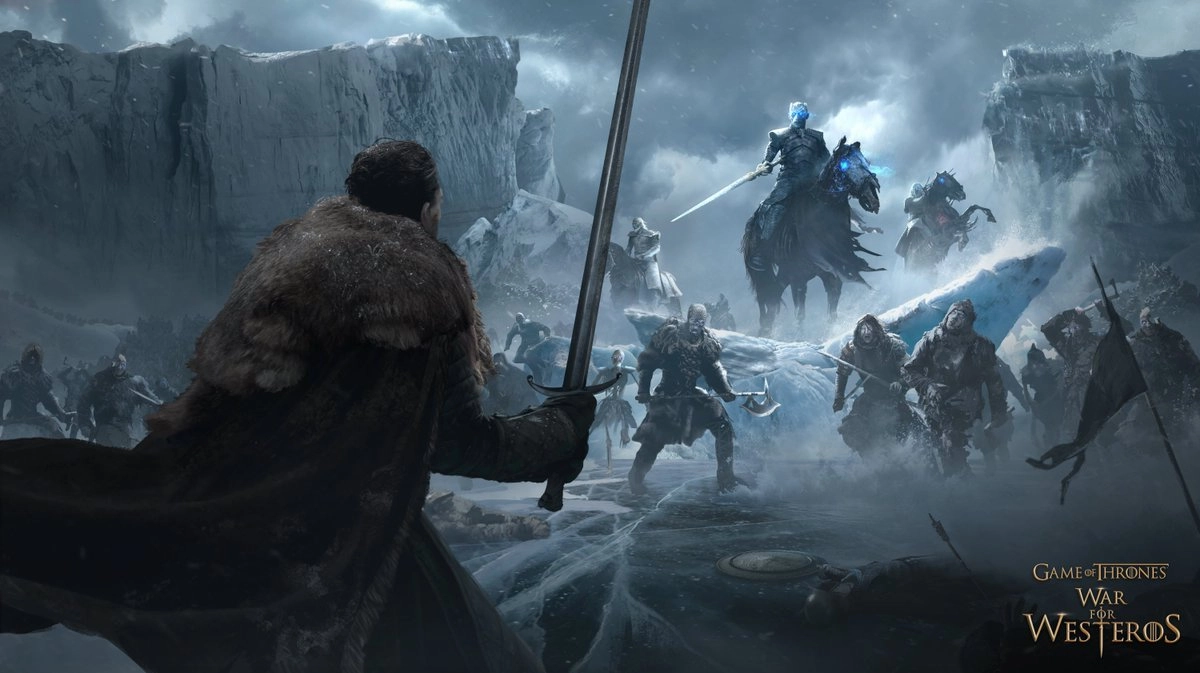
the game of thrones must remain political
The safest version of War for Westeros would be a polished faction RTS in which players gather resources, build armies and destroy enemy strongholds while famous characters provide powerful abilities. That could still produce an entertaining game, but it would leave much of the licence unused. Westeros is a world where information is a weapon, loyalty has a price and a smaller force can survive by convincing stronger rivals to fight each other. The official emphasis on free-for-all battles, alliances and deception shows that PlaySide understands this, but those ideas must become functional systems rather than language attached to a conventional multiplayer mode. Scouting, diplomacy, map control and the concealment of military intentions should be as important as direct combat. Single-player deserves the same attention. Re-envisioning iconic battles is an appealing foundation, but a campaign built only from a sequence of famous encounters would feel restrictive. The stronger approach would allow the player to choose a house, move through a connected conflict and create consequences that survive beyond each map. Losing a hero, sacrificing a region or breaking an alliance should change the next stage rather than disappearing behind a victory screen. The television story already exists. A strategy game should not ask players to reproduce it with slightly different unit placements. It should allow them to dismantle it, redirect it and discover what happens when the wrong king survives, the right army arrives early or the dead cross the Wall before the southern houses have finished destroying each other. The official promise to rewrite the fate of the realm provides the right ambition. The campaign must now prove that this means more than selecting alternate missions.

realism must come from weight and consequence
Realism in War for Westeros should not depend only on detailed armour, muddy terrain or accurate recreations of familiar castles. It needs to emerge from the way armies move, collide and react to pressure. Infantry should not turn instantly, cavalry should require space to build momentum, and siege equipment should feel heavy enough that protecting it becomes a tactical responsibility. Terrain must influence every engagement, making an open field, narrow passage and castle approach behave differently. A charge into broken ground should lose much of its strength, while archers positioned above an exposed route should force the enemy to reconsider a direct assault. Battles can remain accessible and dramatic, but players must clearly understand why a formation collapsed, why a defensive line held and why a poorly prepared attack failed. Heroes and powerful creatures also need believable limits. Jon Snow or Tywin Lannister should strengthen the army through leadership and command rather than function as nearly indestructible units. Dragons must be terrifying enough to reshape a battle without making infantry, fortifications and positioning irrelevant. The same applies to the Night King and his ability to expand the Army of the Dead through fallen enemies. These forces should break conventional rules in controlled ways, creating new tactical problems without turning every match into an automatic victory for the faction with the most spectacular unit. Ordinary soldiers must remain important because Westeros is ultimately won through armies, territory and preparation, not only famous characters.
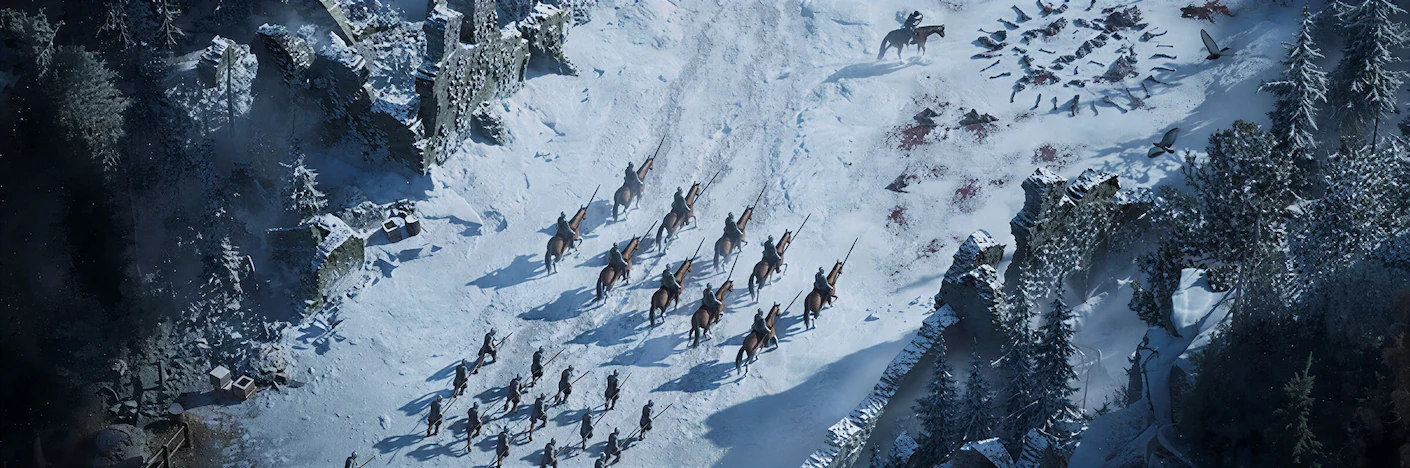
The campaign should support the same sense of consequence. Losing experienced formations, sacrificing a region or committing too many forces to one front should create problems that survive beyond a single battle. The North needs to feel difficult to invade because of distance and climate, the Westerlands should benefit from wealth and infrastructure, while King’s Landing must carry strategic and political value beyond its appearance. Alliances would become more meaningful if houses could exchange access, information or military support while knowing that every agreement remains temporary. War for Westeros does not need to become a military simulation, but it does need internal credibility. Armies should have weight, powerful units should carry a cost, and victory should sometimes leave the winning side weaker than it expected.