SAMSUNG ODYSSEY G55C 32” | CURVED GAMING WITHOUT THE PREMIUM PRICE
Samsung Odyssey G55C 32” has entered a noticeably different position in the gaming monitor market after a sharp price drop to $190 from its original $330, effectively shifting it away from its intended mid-range identity and placing it directly into the aggressive value segment where size and immersion start to matter more than panel refinement or competitive-level precision. Instead of being viewed as a standard mid-tier QHD curved monitor, it now competes with far smaller and lower-spec displays purely on the basis of physical scale and gaming experience per dollar, which completely changes how it is perceived in current monitor lineups. At this price point, it stops being a “spec comparison” product and becomes more of a “screen experience” decision, where buyers prioritize how the display feels in real usage rather than how it performs on paper. The result is a monitor that suddenly feels more relevant for budget gaming builds and immersive setups than many technically closer competitors.
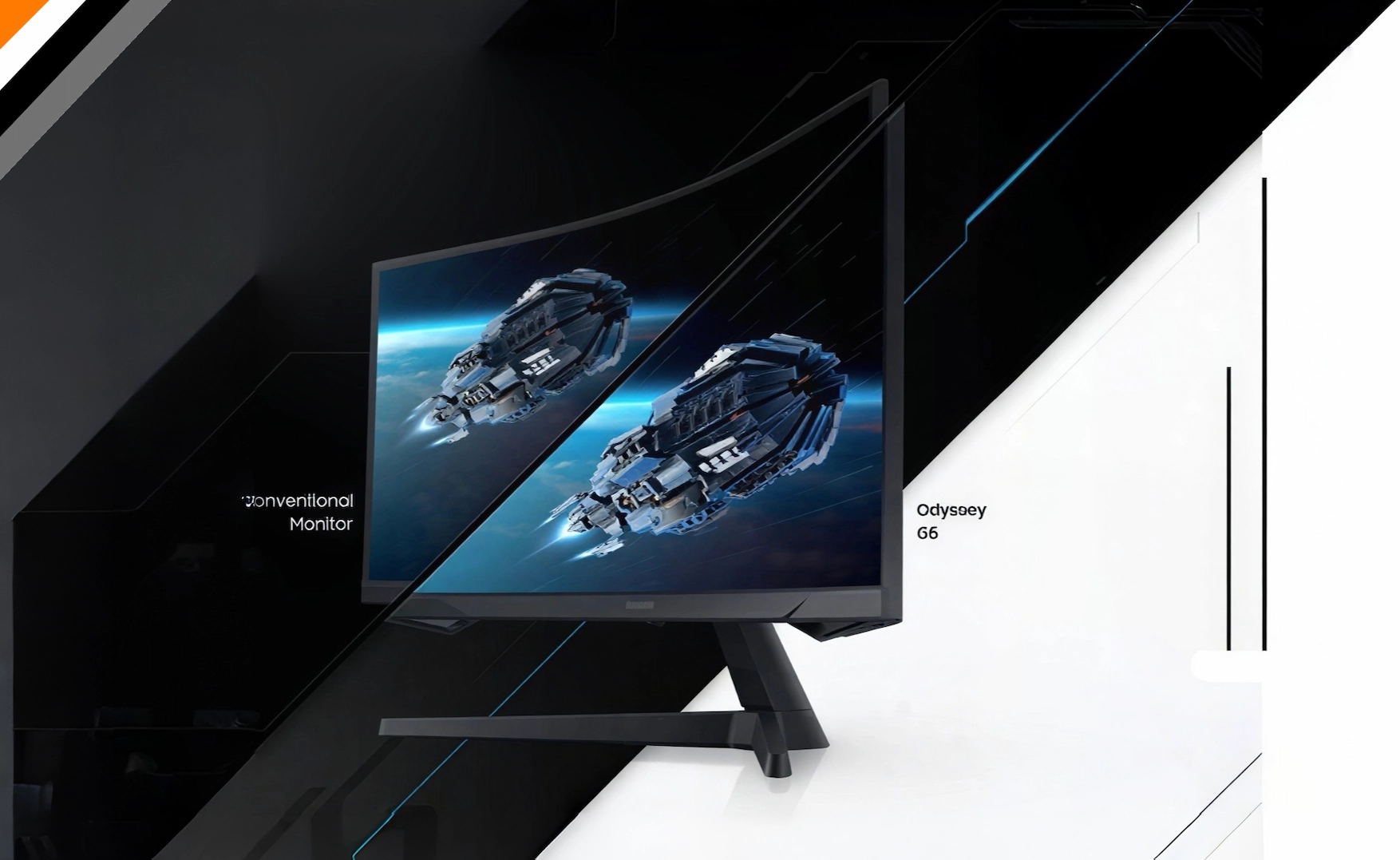
The core identity of the G55C is built around its 32-inch VA panel with a 2560×1440 QHD resolution and a 165Hz refresh rate, combined with a strong 1000R curvature that heavily wraps the image into the user’s field of view. This combination is not designed for competitive esports accuracy or pixel-perfect responsiveness, but rather for immersive gameplay where screen size, contrast depth, and curvature play a bigger role than absolute motion clarity. In practice, this makes the monitor feel significantly larger and more engaging than flat 27-inch alternatives, especially in open-world games, racing titles, and cinematic single-player experiences where immersion is more important than micro-level input precision.
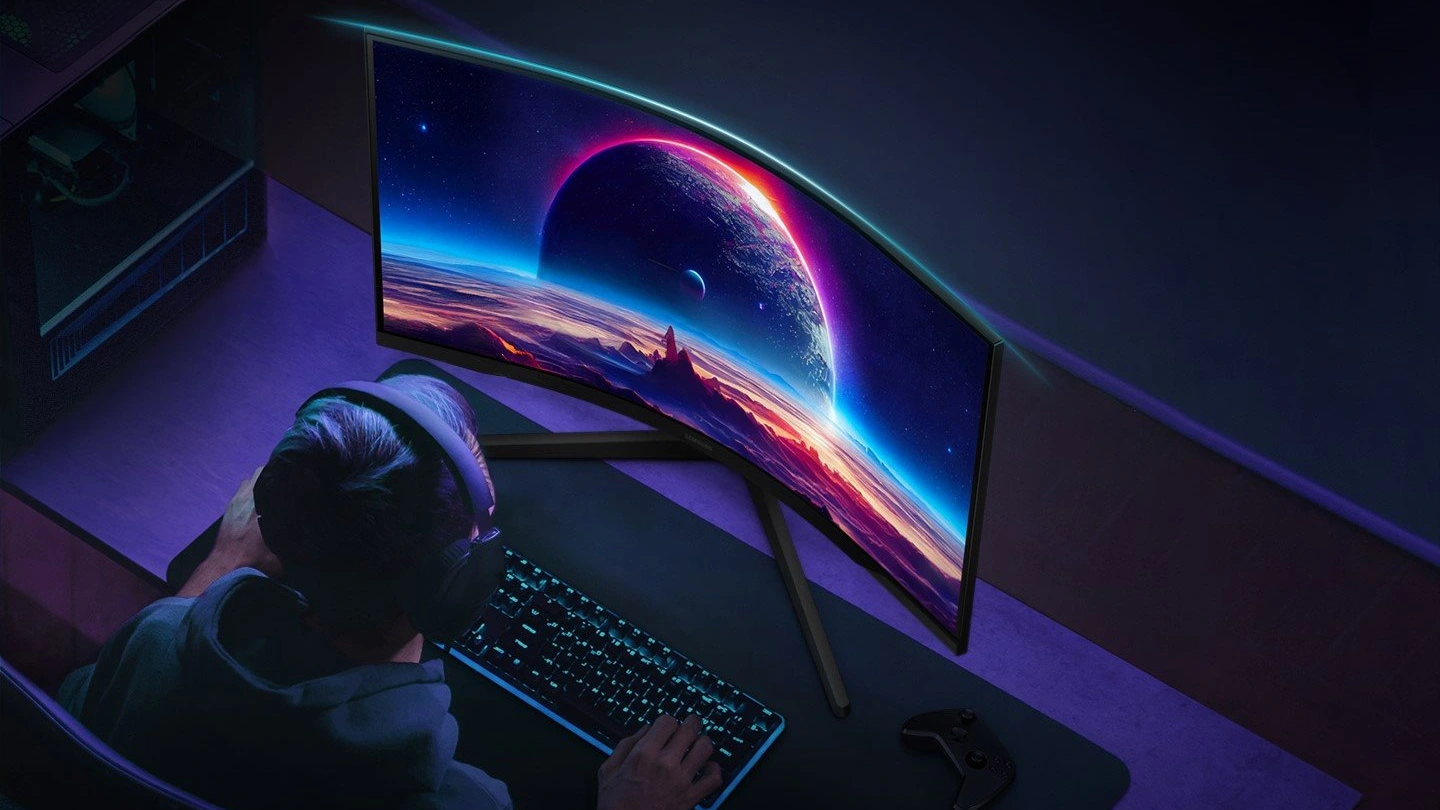
From a technical standpoint, the VA panel delivers strong contrast and deep blacks, which naturally enhances darker environments and atmospheric scenes, although it does not reach the response consistency or color accuracy levels of IPS or OLED alternatives. The 165Hz refresh rate helps smooth out motion and keeps the experience responsive enough for general gaming, but the monitor is clearly not positioned as an esports-grade display where ultra-low latency and pixel response uniformity would be critical. Instead, it sits in a practical middle zone where performance is sufficient for most gamers, as long as expectations are aligned with immersive rather than competitive usage. The most important shift in the entire product story is not technical but economic, because at $190 the G55C effectively changes class perception entirely, moving from a standard QHD curved gaming monitor into a high-value large-format display category where buyers are primarily trading panel sophistication and competitive performance for sheer screen size and immersion at a significantly lower entry cost. This price repositioning makes it especially relevant for users building budget gaming setups that prioritize visual scale and cinematic feel over high-end panel technologies or esports optimization.