ROBOCOP | ROGUE CITY-UNFINISHED BUSINESS | THE FUTURE STILL LOOKS LIKE ‘87
Steam currently has RoboCop: Rogue City – Unfinished Business at 60% off, dropping the standalone adventure from $29.99 to $11.99 until August 10, but the discount is almost the least interesting reason to bring Teyon’s version of RoboCop back into the conversation. Released in July 2025 as a standalone continuation of RoboCop: Rogue City, Unfinished Business takes place after the events of the original game and sends Murphy into OmniTower, an OCP housing project that has been seized and converted into a fortified stronghold by heavily armed mercenaries. It is a tighter premise than Rogue City’s broader tour through Old Detroit, but that concentration suits RoboCop remarkably well: corridors, concrete, industrial spaces, malfunctioning technology and an endless supply of people who clearly missed the memo about complying with the law. The current Steam reception remains Very Positive, with roughly 83% of English-language reviews positive, which suggests that this was not simply an expansion pushed out to capitalize on the unexpected affection surrounding Rogue City. The sale makes it easier to recommend taking another look, but what really matters is that Teyon understood something far more difficult than pricing: RoboCop was never just a chrome suit, a gun and a collection of one-liners. There was always a very particular mood wrapped around him, and both Rogue City and Unfinished Business somehow manage to recover it without turning into museum pieces.
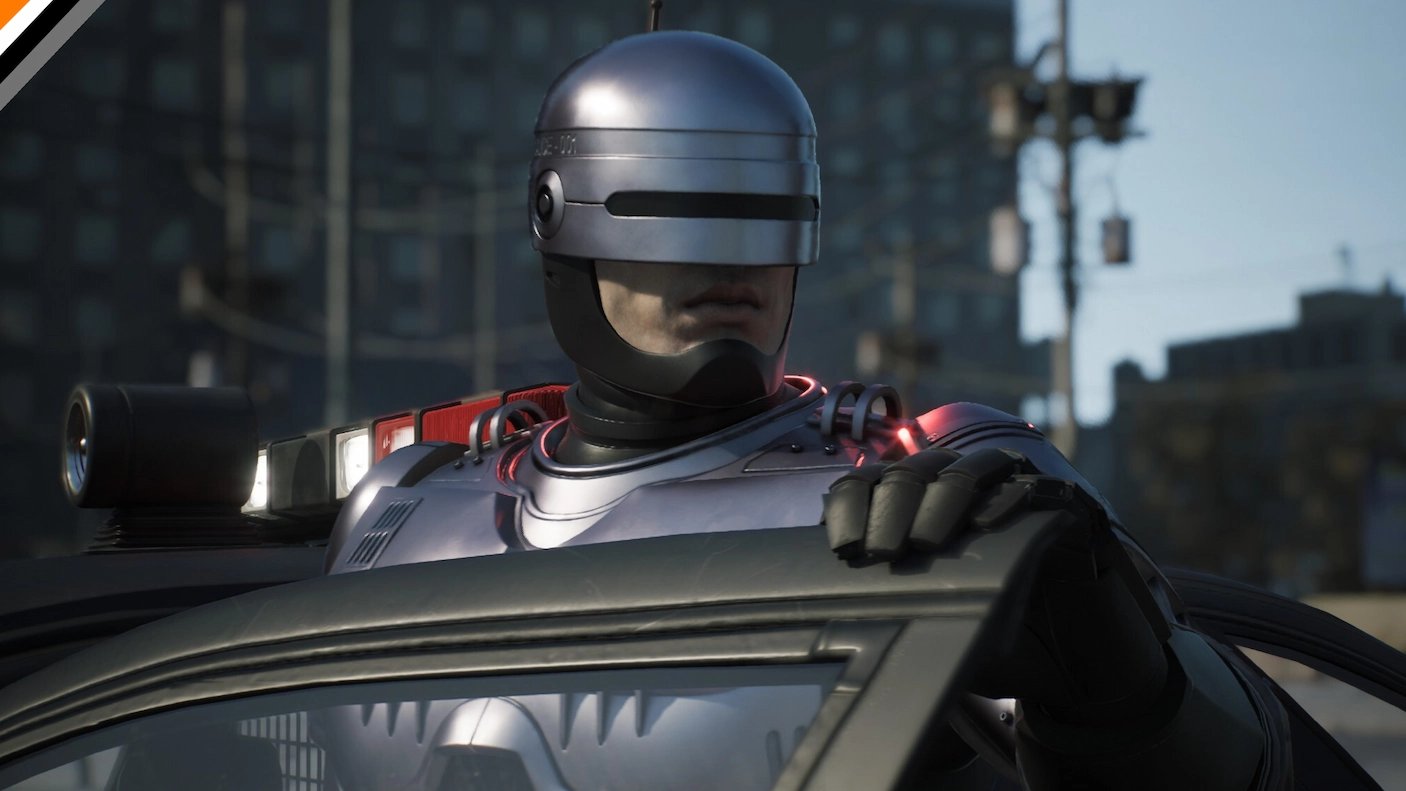
the future still looks like 1987
That may be the greatest compliment we can give either game. RoboCop: Rogue City looks modern enough to belong on a current PC, yet much of its world feels as though someone opened a door directly into the late 1980s vision of tomorrow and simply increased the rendering resolution. Old Detroit is dirty rather than sleek, technology is bulky, monitors look like they could injure somebody if dropped from a desk, corporate ambition is absurdly confident and OCP still treats human consequences as irritating paperwork. Steam itself lists “1980s” among Rogue City’s prominent user tags, which is unusually appropriate here rather than nostalgic keyword decoration. The remarkable part is that Teyon does not seem embarrassed by any of it. There is no attempt to redesign RoboCop into a cleaner contemporary superhero or replace the clunky machinery with anonymous holographic interfaces because modern science fiction supposedly demands them. That slight stiffness is part of the character. Murphy should feel heavy. Doors should look industrial. Streets should feel grimy. The world should contain enough CRT-era ugliness and corporate kitsch that you can almost hear a television commercial waiting to interrupt the violence. Yet the result does not feel like a cheap retro filter. Modern lighting, detailed environments and contemporary first-person presentation give the material enough technical weight that the old aesthetic survives without becoming parody. That balance is exceptionally difficult to get right, and it is probably the biggest reason Rogue City feels like an actual RoboCop game rather than another product borrowing the logo.

unfinished business knows what should remain untouched
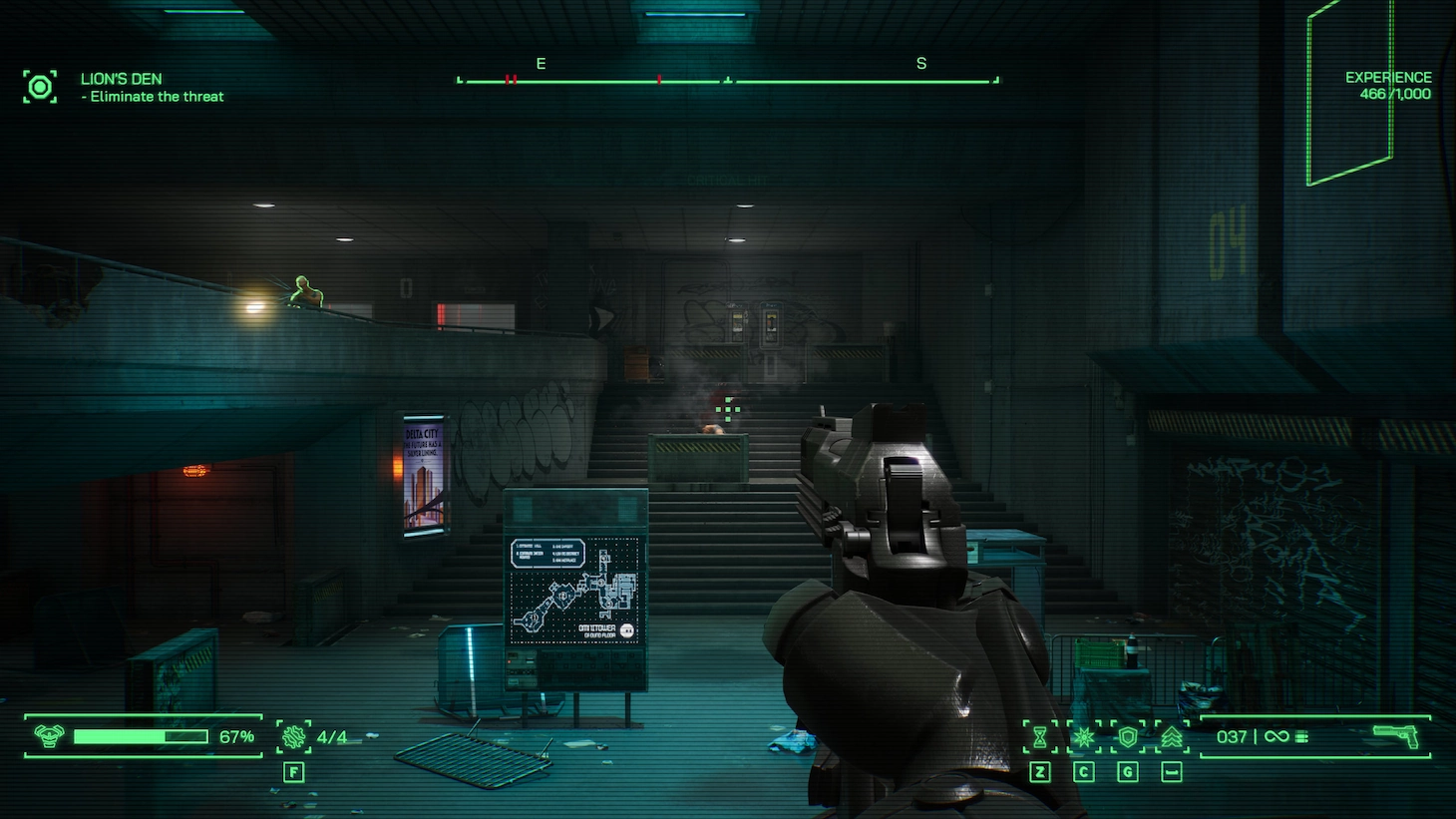
Unfinished Business wisely keeps that identity intact while giving the action a more concentrated structure. OmniTower introduces drones, automated turrets, heavily equipped squads and other threats as RoboCop works upward through the occupied complex, while the arsenal still revolves around the unmistakable Auto-9 alongside additional weapons such as the Cryo Cannon. The standalone adventure also broadens the perspective beyond RoboCop himself: Peter Weller again provides Murphy’s voice, sections explore Alex Murphy before the transformation, and the game even gives players a chance to control ED-209. Those additions could easily have become fan-service checkboxes, but they make sense inside a project that has always been unusually comfortable with its source material. Teyon does not appear interested in explaining why RoboCop still matters by reinventing him. It simply places the character back into a world where his peculiar mixture of mechanical power, residual humanity, deadpan police procedure and satirical dystopia works naturally. That is an important distinction. Plenty of modern revivals preserve recognizable costumes while sanding away the personality that made the original memorable. Rogue City went in the opposite direction. It kept the awkwardness, the exaggerated corporate world, the deliberate movement and the strange collision between police procedural, black comedy and brutal science fiction. Unfinished Business continues from there rather than trying to become a faster, louder and more fashionable shooter simply because sequels are expected to escalate.

part man, part machine, completely recognizable
There is also something genuinely satisfying about seeing Peter Weller associated with the character again. RoboCop belongs to that particular category of 1980s icons whose silhouette became recognizable long after the original cultural moment had passed, but nostalgia alone could never have carried an entire modern game. Rogue City succeeded because underneath all the references there was a competent first-person shooter with exploration, investigation, dialogue choices, upgrades and enough downtime to allow Murphy to exist as something other than a walking weapon. The original released in November 2023 and currently holds a Very Positive Steam rating, with approximately 86% positive English-language reviews across more than fourteen thousand ratings. That reception still feels significant because RoboCop games hardly arrived with an untouchable gaming legacy behind them. Teyon effectively had to demonstrate that the fantasy itself could work: slow, heavily armored movement instead of acrobatics; overwhelming firepower rather than twitch-shooter fragility; and conversations about mundane police work sitting alongside spectacular destruction. It is not flawless, and neither is Unfinished Business, but both understand their subject better than many much larger licensed productions. They treat RoboCop not as an old character who needs to apologize for being old, but as a character whose very specific identity can still work if developers resist the urge to modernize the wrong things.
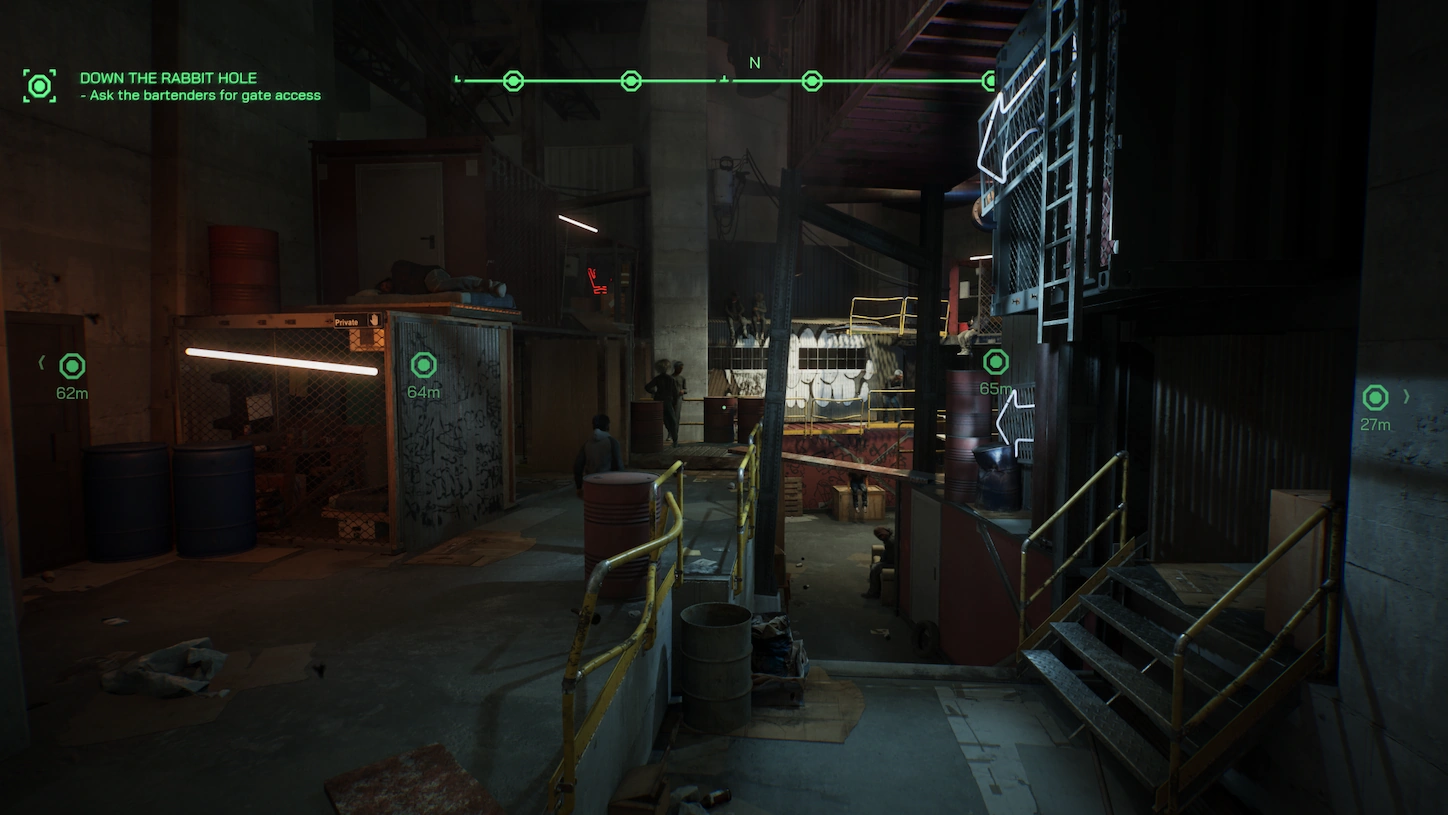
a small reminder that atmosphere ages differently
That is ultimately why this Steam discount caught our attention. There will always be cheaper games, larger games and technically more ambitious shooters, but atmosphere has a different shelf life. The first RoboCop film emerged from 1987, yet its combination of corporate satire, decaying urban America, ridiculous consumer culture and cold technological optimism remains immediately recognizable decades later. Rogue City and Unfinished Business tap into that memory without requiring the player to pretend it is still 1987. They preserve the look and rhythm, then allow modern hardware to supply the density, lighting and scale that older games simply could not. Unfinished Business is currently 60% off and available as a completely standalone purchase, so nobody needs to own Rogue City to enter OmniTower. But playing the two together makes Teyon’s achievement easier to appreciate. This is not merely nostalgia performed through familiar props. It is a convincing reconstruction of a fictional world whose old-fashioned technology, industrial grime and straight-faced absurdity are precisely what make it distinctive. Somewhere between the Auto-9, the CRT screens, OCP logos and Murphy’s mechanical footsteps, these games remember a version of science fiction that was allowed to be ugly, funny, threatening and strangely human at the same time.