REVIEW | THE ALTERS: LAST VARIABLE |  HOME BETWEEN THE STORMS
Few science-fiction games turn personal regret into a working survival system as effectively as this one, and that remains the strongest reason to return. Every practical decision carries an emotional consequence because the people keeping the base alive are also reminders of lives Jan never lived. Rather than chasing spectacle, the expansion strengthens that tension through a more experienced and visibly exhausted version of Jan Scientist, whose presence immediately gives the story a heavier and more reflective tone. The Alters: Last Variable returns to one of the most original science-fiction concepts of recent years without pretending that a larger map, more equipment or louder action would automatically make it better. The expansion places the older Scientist at the centre of another hostile planetary struggle, continuing the central idea of alternate lives while shifting the mood toward experience, fatigue and the consequences of decisions that can no longer be treated as theoretical possibilities. Last Variable arrived for PC and consoles on July 13, 2026, following the base game’s established combination of exploration, survival pressure and management inside a mobile base.
another jan, but not another beginning
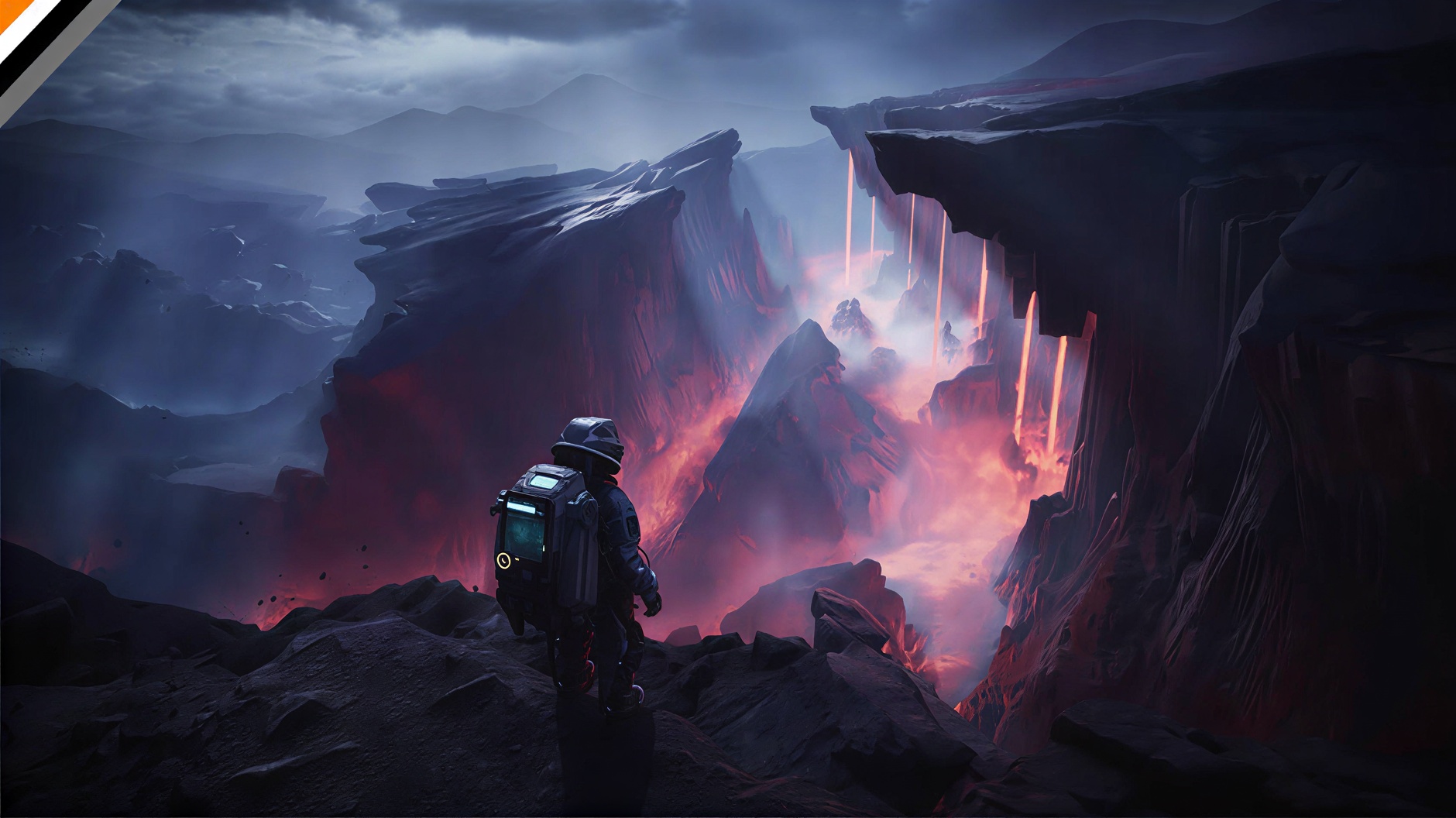
Last Variable works because it understands that the most interesting part of The Alters was never simply the ability to manufacture another worker with a different skill set. The stronger idea was watching one person confront versions of himself who carried different memories, regrets and emotional scars. Moving the focus toward an older Jan Scientist gives the expansion a naturally heavier tone. He does not feel like an untouched character waiting to discover what the world is; he feels like someone who has already lived through enough failures to know that intelligence does not guarantee control. The story benefits from that perspective because even familiar objectives carry a different emotional weight. Gathering resources, investigating the environment and maintaining a functioning shelter are still practical tasks, but they also reinforce the feeling that this is a man trying to preserve the final useful pieces of his life rather than merely completing another mission. The expansion does not reinvent the original structure, yet its protagonist gives that structure enough personality to prevent it from feeling like a recycled scenario.
decisions that refuse to stay mechanical
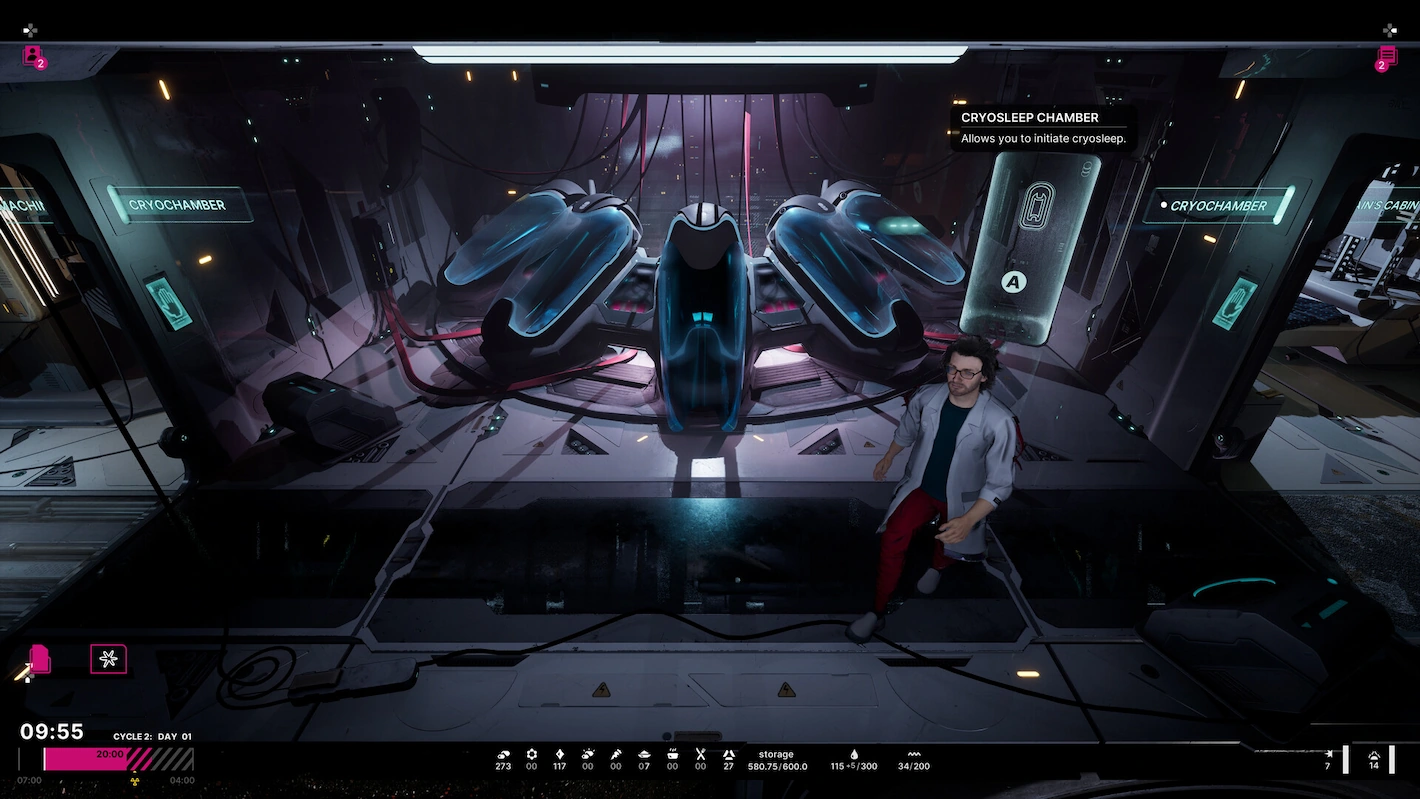
Every choice carries more weight than a simple resource calculation because the expansion keeps reminding the player that efficiency and empathy rarely point in the same direction. A task may look obvious when viewed through the needs of the shelter, yet the people involved bring their own fears, memories and limits into the decision. That tension gives conversations and management choices a stronger purpose, since the best practical solution is not always the one that leaves the group emotionally intact. Last Variable benefits from refusing to separate survival from personality, allowing small disagreements and difficult compromises to shape the atmosphere as much as the larger dangers outside. The result is a form of pressure that works quietly but consistently, making the player consider not only whether the Safe House can continue functioning, but also what kind of place it becomes when every problem is solved through pure necessity.
the safe house is the visual centre
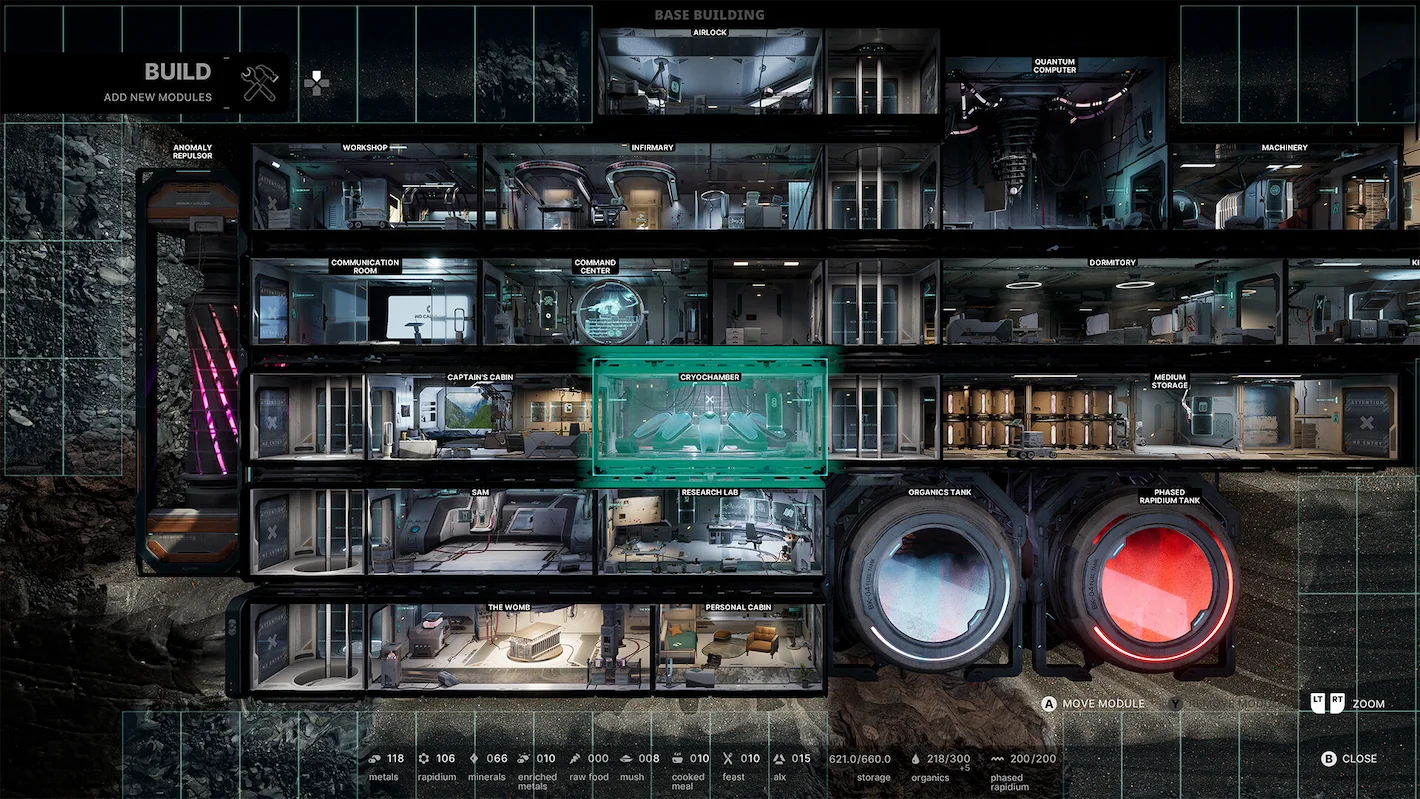
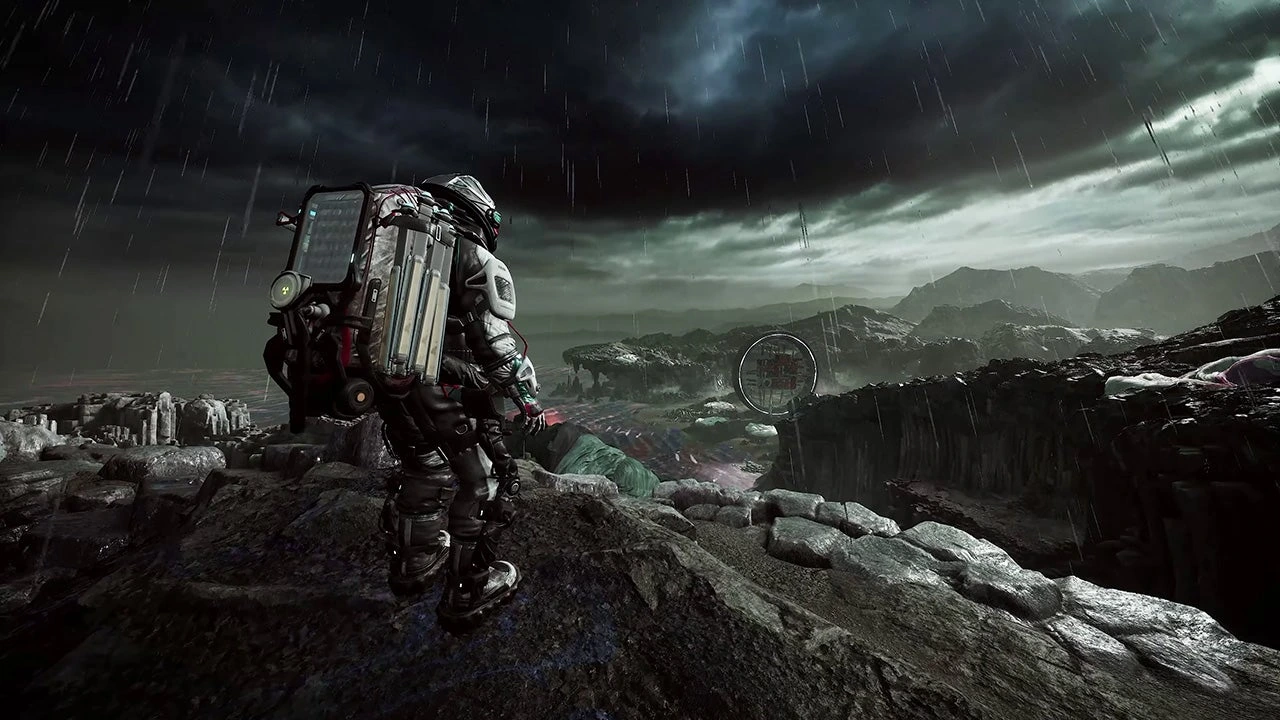
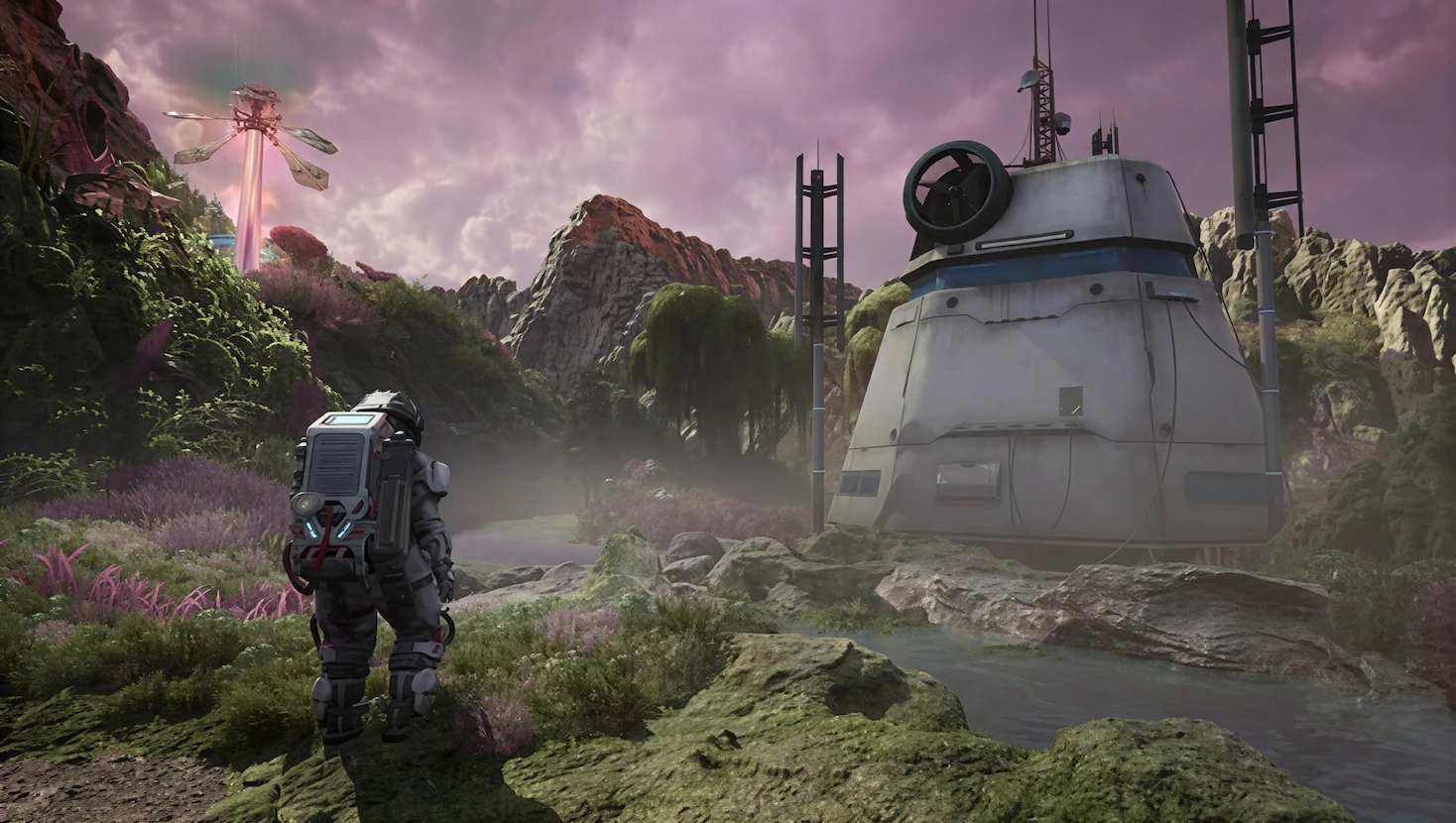
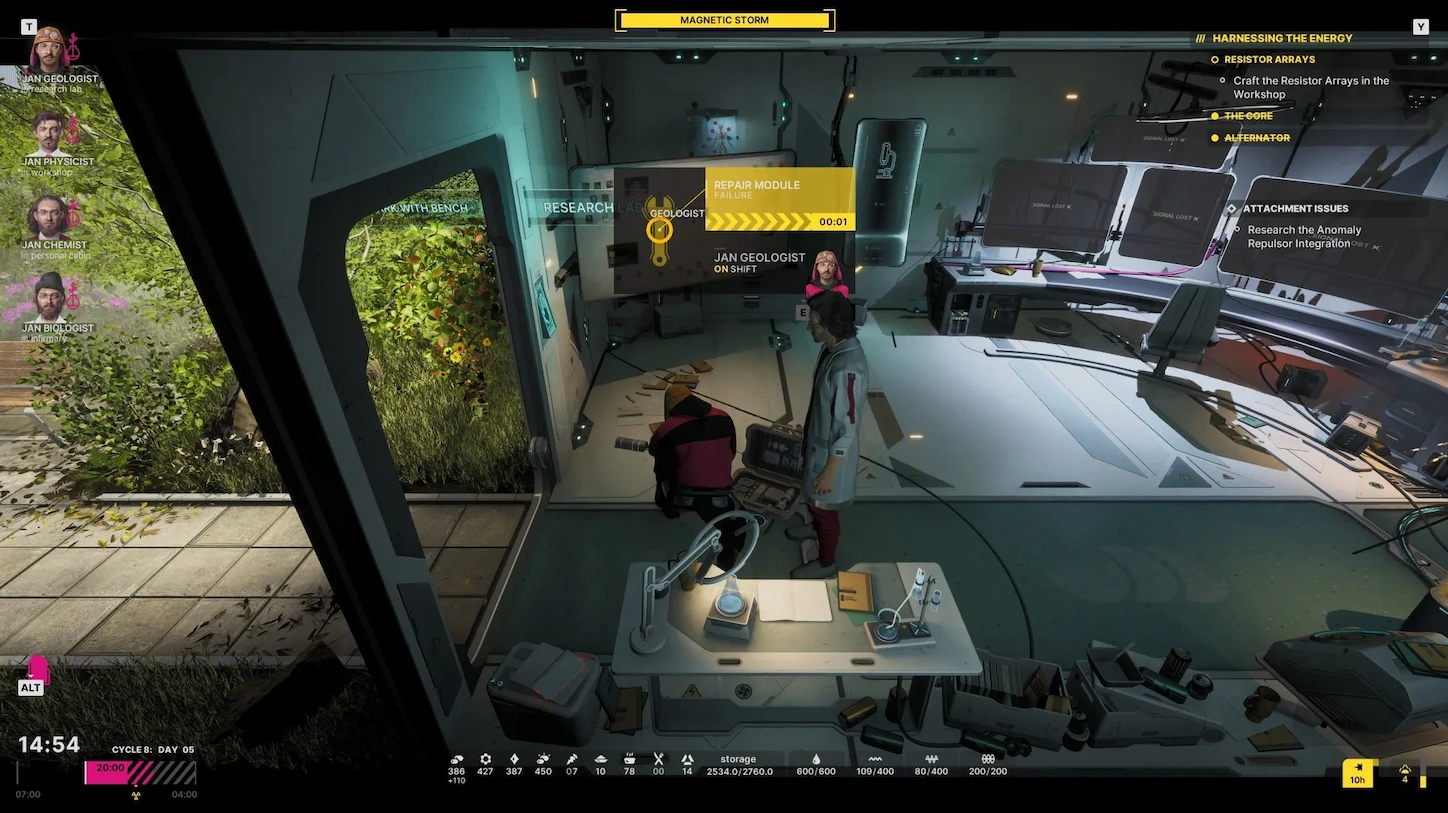
The Safe House is the strongest visual element in the entire expansion. Its rooms feel carefully arranged rather than simply populated with futuristic objects, and the lighting gives surfaces, work areas and personal spaces a convincing sense of depth. It looks inhabited, functional and slightly worn, which is exactly what a shelter in this universe should communicate. Small details make it feel like a place that has been adapted over time instead of constructed purely for the player’s convenience. The interior also benefits from a stronger visual hierarchy than the exterior environments: important objects are easy to identify, different areas have their own character and the overall composition remains readable even when several systems demand attention. It becomes more than a menu built in three dimensions. The Safe House feels like a fragile pocket of order created inside a world that refuses to provide any. That quality also makes the unevenness outside more noticeable. The exterior graphics are technically solid, with suitable atmosphere, scale and environmental danger, but some locations lack the density and individual character visible inside the shelter. Rocks, pathways and broader terrain occasionally feel flatter and more conventional, especially after leaving an interior filled with carefully placed details and controlled lighting. The contrast is not severe enough to damage the expansion, but it prevents the presentation from reaching a completely consistent level. Last Variable looks best when its environments feel physically used and narratively meaningful. When it relies mainly on open terrain and general alien scenery, the art direction remains competent without being equally memorable.
familiar systems under useful pressure
The gameplay remains effective because the expansion continues to treat time as a resource rather than a background number. Exploration is not simply about discovering everything on the map; it is about deciding what can be reached, what must be postponed and what risk is acceptable before conditions become worse. That pressure gives otherwise ordinary activities a reason to matter. Resource collection, shelter maintenance and route planning are familiar actions, but their relationship creates constant small decisions. Last Variable rarely needs spectacular combat or complicated puzzles because the real tension comes from knowing that solving one problem may leave another unattended. The management systems remain accessible enough to understand without becoming automatic. The Safe House provides a clear centre for preparation and recovery, while exterior journeys create the uncertainty needed to keep that preparation relevant. The expansion is strongest when those two spaces support each other: a successful expedition improves life inside, while a poorly planned trip can create additional problems that follow Jan home. Some repetition is unavoidable, particularly when familiar resource routines begin to dominate a longer session, but the pacing usually introduces a new concern before the structure becomes completely mechanical. Players who disliked the base game’s dependence on routine work will still notice it here. Last Variable refines that rhythm rather than removing it.
an expansion, not a replacement
This is not the kind of DLC designed to make the original game feel obsolete. It stays close to the established formula, adds another meaningful perspective and uses its central character to explore the same themes from a later point in life. That makes it a natural continuation rather than a dramatic transformation. The advantage is consistency: the narrative, management and exploration systems still feel like parts of the same project. The disadvantage is that Last Variable rarely delivers a moment where the mechanics themselves seem genuinely new. Its strongest additions are contextual. A task matters because of who performs it, where it happens and what it suggests about Jan, not because the player has been given an entirely different system. That approach is successful enough because The Alters already possessed a strong foundation. The base game combined third-person planetary exploration with base management and a story built around alternate versions of Jan Dolski, making personality conflicts as important as physical survival. Last Variable understands that foundation and avoids covering it with unnecessary features. It gives the player another reason to consider the cost of different lives, while the older Scientist provides a perspective that feels distinct from the more immediate panic of the original journey.



![THE ALTERS [2025]](https://pcdoorz.com/wp-content/uploads/2026/07/capsule_616x353-2-1.webp)