REVIEW | TENNIS ELBOW 4 | SOLID MATCH LOGIC, UNCONVINCING MOVEMENT
The first rally makes the priorities obvious. The ball has weight, spin changes its trajectory, poor positioning limits the available angles, and an attempted winner can collapse into an error when it is taken from the wrong place or struck under pressure. Instead of disguising tennis behind generous timing windows and dramatic presentation, Tennis Elbow 4 asks the player to understand spacing, anticipation, inertia, shot selection and risk. Holding a stroke button begins preparation, directional input gradually establishes the intended angle, and releasing the player from constant automatic assistance exposes how much the game depends on reaching the ball correctly rather than simply pressing the right command. Normal shots, topspin, slices, drops, defensive and aggressive lobs, accelerations and several service types all have a distinct tactical purpose, while optional Auto-Positioning, Footwork Boost and aiming assistance allow newcomers to reduce the initial difficulty before moving toward the more demanding Simulation and Elite control settings. This creates a learning curve that can initially feel stubborn, but the reward is a rally system in which winners are constructed rather than handed out. Tennis Elbow 4 entered Early Access in June 2021 before reaching its full PC release on January 23, 2026, and that long development period is most evident in the underlying match engine rather than in its appearance.

positioning, surfaces and the rhythm of real tennis
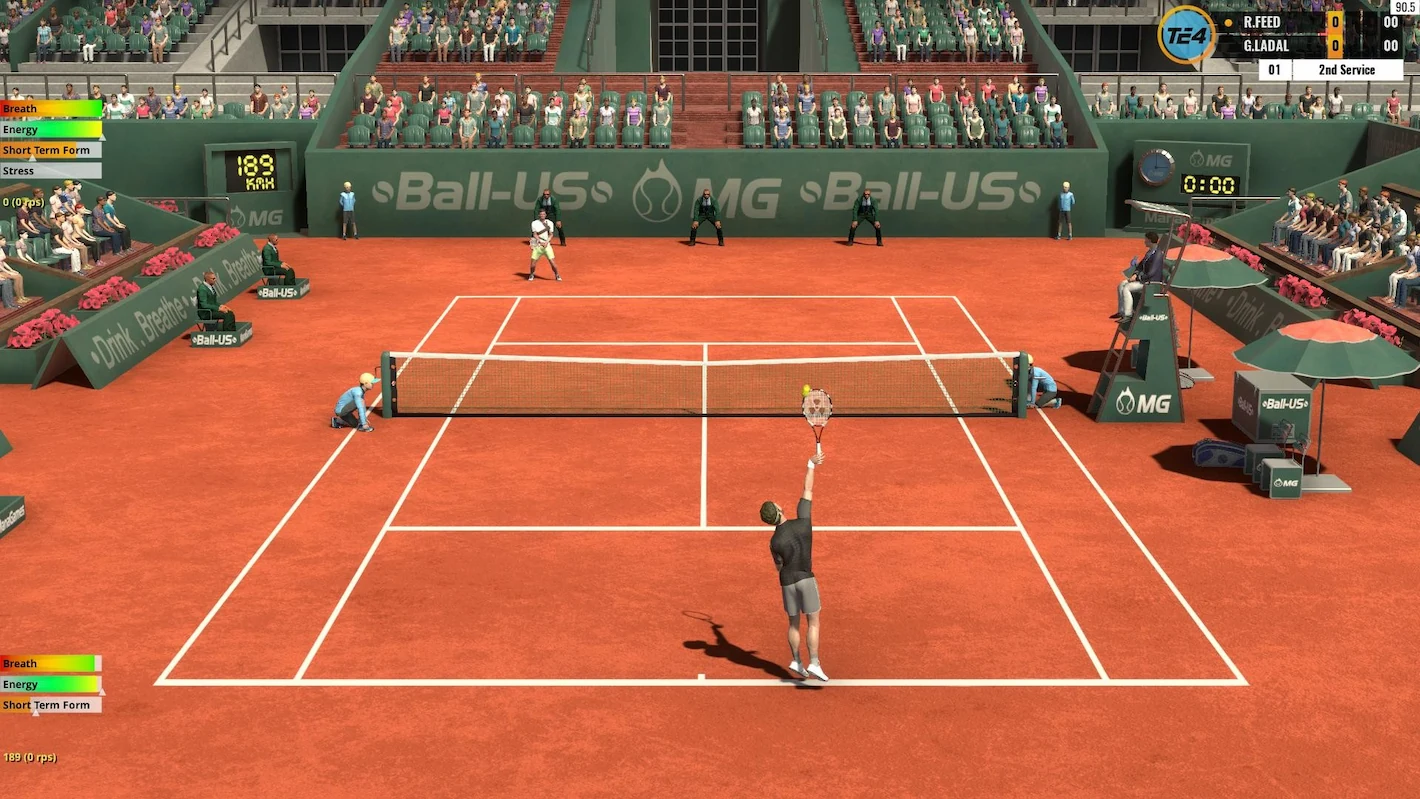
The strongest quality is not one spectacular feature but the consistency with which the simulation connects movement, preparation and ball behaviour. Returning to the centre is important, but blindly recovering there can leave the player vulnerable to another angle; running around a backhand can create an attacking forehand, but it also opens the court and demands earlier preparation; hitting with more aggression reduces safety, while controlled depth and variation can gradually force a weak response. Mistakes therefore feel connected to decisions made before contact. A late approach, excessive directional input or poorly judged acceleration can be identified as the cause instead of being dismissed as random failure. Court surfaces also matter because Tennis Elbow 4 includes nine types with different rebounds, covering several forms of clay, grass, hard and synthetic courts. Faster conditions reward compact preparation and assertive serving, while slower and higher-bouncing surfaces allow points to develop through spin, patience and physical positioning. The result is not visually dramatic, but it produces the rare sensation that two matches can develop differently because of court speed, player attributes and tactical style rather than through artificial difficulty changes. The game offers six main difficulty levels divided into ten sublevels each, giving players enough room to tune the opposition without jumping between extremes.
serving, returning and the importance of preparation
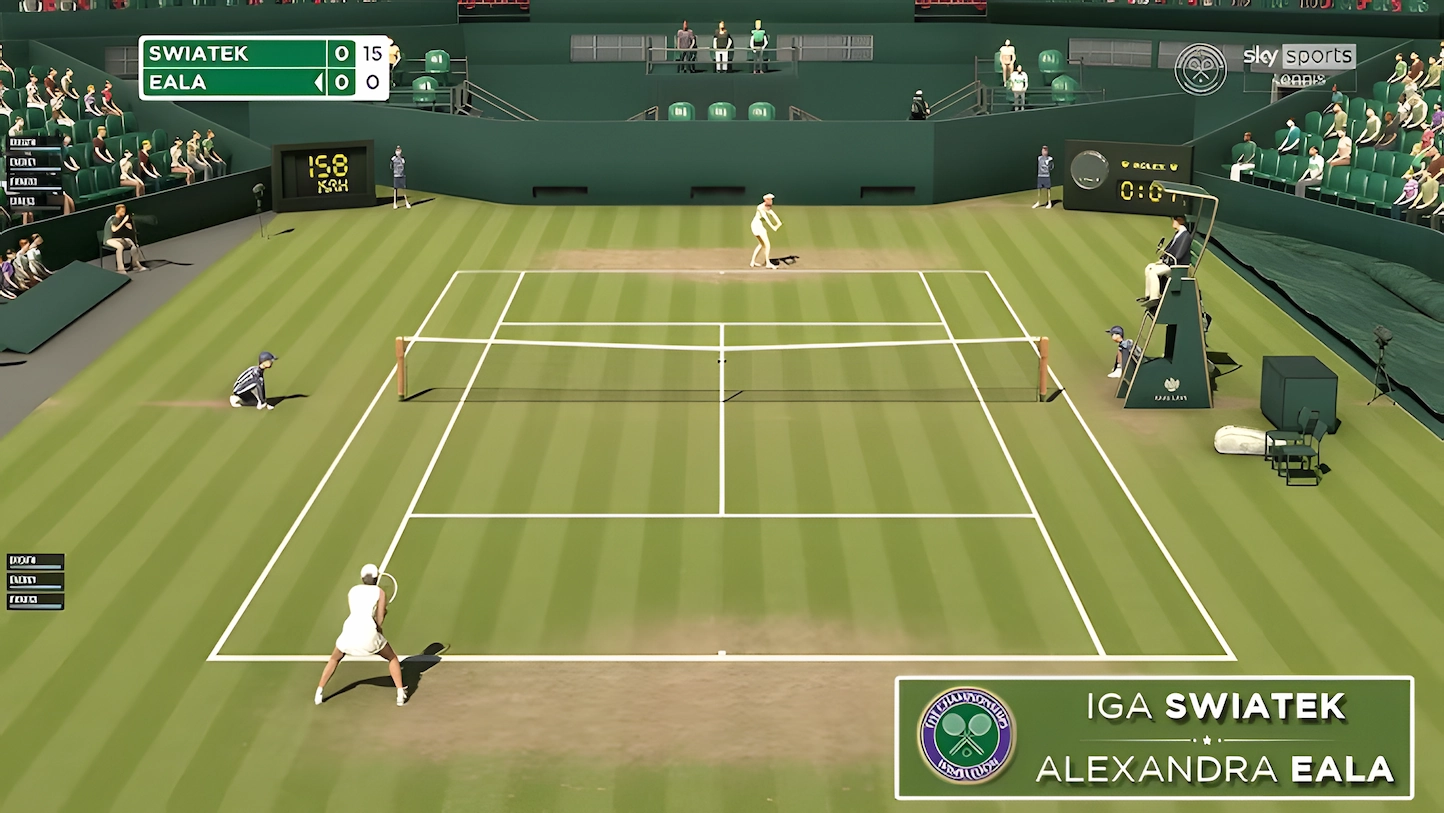
Serving is another area where Tennis Elbow 4 rewards understanding more than memorized button combinations. Power alone is not enough, because placement, spin, timing and the opponent’s return position all influence whether the serve creates an advantage or simply begins a neutral rally. Flat serves can produce direct pressure, slice can pull the receiver away from the court, and kick serves become useful when safety and height matter more than speed. Second serves also carry genuine tension because excessive ambition can lead to double faults, while overly cautious delivery gives the opponent immediate control. Returning works in a similar way. Standing too close can punish slower serves but leaves less reaction time against pace, while moving farther back creates space at the cost of surrendering court position. The game rarely explains these choices in dramatic terms, yet they become clear through repetition. A strong service game is not created only by statistics, and a good return is not simply the result of pressing early. Both depend on reading patterns, preparing correctly and understanding what the opponent is trying to achieve before the ball is struck.
a career measured in seasons rather than cutscenes
The World Tour is enormous. More than 3,500 players evolve across over 70 years, with more than 400 tournaments per season, men’s and women’s careers, junior and professional circuits, singles, doubles, rankings and long-term player development. Careers can begin in different historical periods and continue into the future, allowing generations to improve, decline and eventually disappear as new competitors enter the rankings. This creates a convincing sporting structure even though it is presented mostly through menus, statistics and tournament screens rather than cinematic scenes or elaborate off-court storytelling. Progression has genuine weight because early events, qualification rounds and lower-ranked opponents are not treated as disposable introductions; they form the foundation of a career in which ranking movement, scheduling and gradual skill improvement matter. At the same time, the career interface can feel dry and impersonal. Tournament information is functional rather than immersive, the surrounding presentation rarely creates the feeling of having a coach, agent or wider professional life, and some systems are not explained as clearly as they should be. Steam users have similarly praised the career’s depth while noting that its hub can feel stiff and that pre-tournament information and guidance could be better. The content is unusually extensive, but the game often expects players to discover its structure through persistence rather than polished onboarding.
the animation problem is impossible to ignore
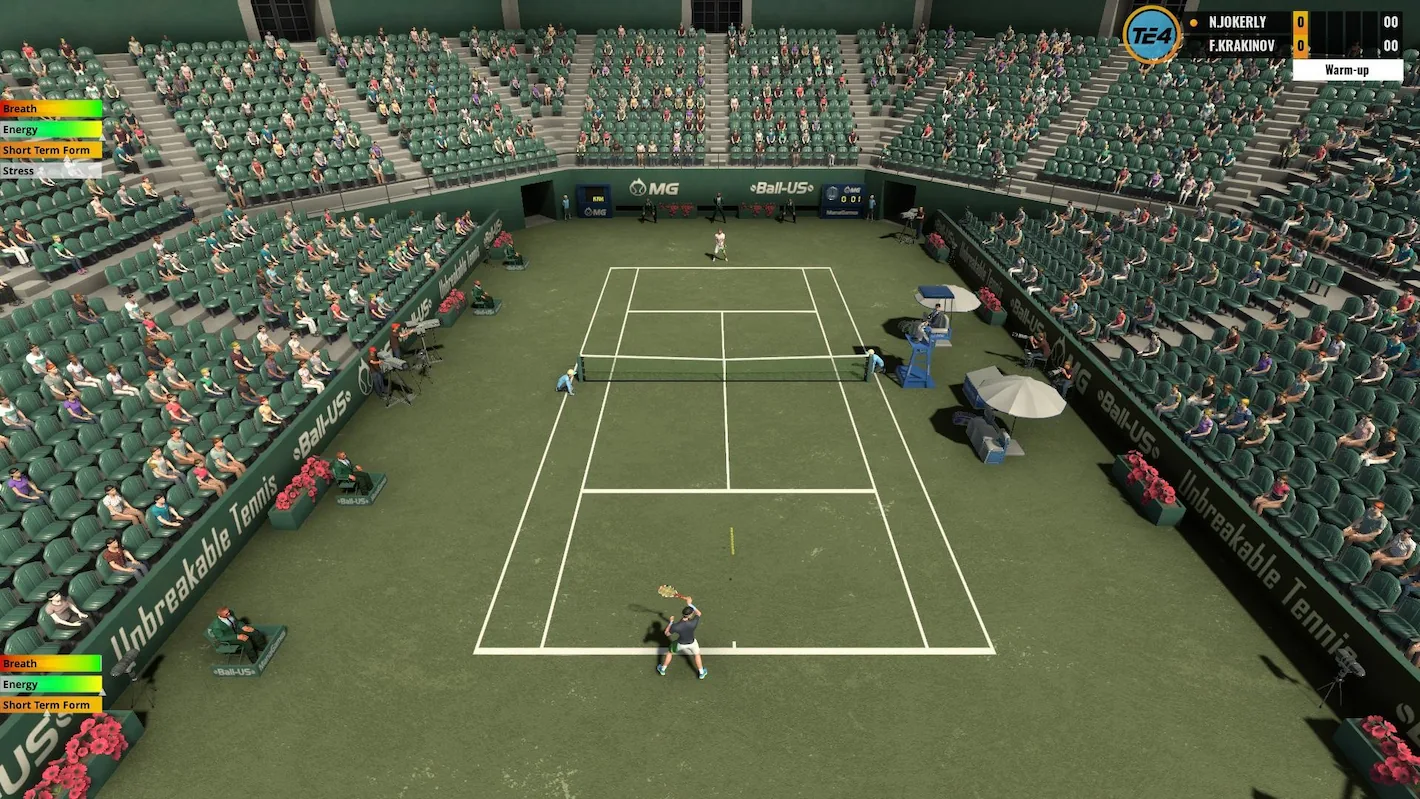
The largest weakness appears whenever a player must change direction sharply. Tennis Elbow 4 can represent the logic of court movement more convincingly than many larger productions, yet the body performing that movement does not always look natural. During major turns, emergency recoveries and attempts to run around the backhand, the player can rotate too abruptly, reposition with a visible snap or pass between movement and stroke animations without enough physical continuity. In 2026, these transitions should be softer, more fluid and more convincing. This is not merely a complaint about modest graphics. The courts, lighting and character models are acceptable for an independent simulation, and visual simplicity is easy to forgive when the ball physics are this strong. The problem is that tennis depends on footwork, balance and momentum, so an unnatural turn directly affects how the action is read. Mana Games has continued addressing animation issues through updates, including incorrect forehand and backhand sliding animations, head orientation, abrupt transitions when starting or stopping a run, and strange movement when players reposition to hit a forehand. Those fixes demonstrate active support, but they also confirm that animation blending remains an unfinished area. Community reviews frequently reach the same conclusion: the tennis simulation is excellent, while running and turning still look clumsy or outdated. The mismatch is striking—the ball often behaves like it belongs in the finest tennis simulation available, while the athlete occasionally moves like part of a much older game.

presentation, sound and the community advantage
The same contrast continues away from movement. Menus communicate a huge amount of information but lack elegance, and the overall visual identity remains closer to a specialist simulation tool than a premium sports production. Commentary by Darren Kilfara adds another layer to matches, but its limited variety and occasional contextual errors prevent it from consistently strengthening the atmosphere. Stadiums, crowds and presentation sequences provide the necessary framework without generating the tension or broadcast authenticity of a larger licensed title. Licensing itself is limited, but the game’s openness to modification changes the equation. Mods can alter player databases, names, outfits, courts, sounds, stadiums and even animations, and many can be accessed through the game’s modding systems. The official documentation exposes editable player and tournament databases and provides a dedicated SDK, making community support part of the game’s long-term identity rather than an unofficial afterthought. Multiplayer includes local, LAN and online options, shared-screen play and doubles, although online hosting uses peer-to-peer connections without a relay server, meaning some players behind CGNAT or without port-forwarding support may be unable to host. This is a technically old-fashioned limitation, but the combination of deep single-player content, local options and extensive mod support gives Tennis Elbow 4 durability that many annual sports releases never achieve.

difficulty, accessibility and the cost of authenticity
The commitment to simulation gives Tennis Elbow 4 much of its identity, but it also creates a barrier that should not be ignored. Players arriving from more forgiving tennis games may initially struggle to understand why apparently correct shots fail, why movement feels slow before contact or why aggressive angles disappear when the player reaches the ball late. The assistance options reduce some of this pressure, but they do not fully replace a stronger tutorial structure. Much of the game’s logic is learned through failure, experimentation and community guidance rather than through clear in-game explanation. That approach will appeal to players who enjoy mastering demanding systems, but it can make the opening hours feel unnecessarily opaque. The difficulty settings are extensive enough to create a suitable challenge for most players, yet the process of finding the correct balance may take time because movement assistance, positioning help and opponent strength all interact. Tennis Elbow 4 does not need to become easier, but it would benefit from teaching its systems with the same precision used to simulate them. Authenticity is one of its greatest strengths, although the game sometimes expects the player to earn access to that authenticity through patience rather than good onboarding.