REVIEW | MORTAL SHELL II |  BRUTAL, BLEAK & BEAUTIFUL
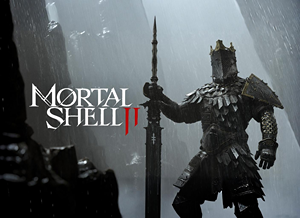
A heavy silence hangs over the ruined roads and forgotten settlements of Mortal Shell II, broken only by distant creatures, clashing steel and the strange machinery of a world that seems to be slowly collapsing into itself. Cold Symmetry understood one of the most important things about its first game: Mortal Shell was memorable not because it copied the structure of Dark Souls particularly well, but because its world had texture. Six years later, that identity has not been sacrificed in pursuit of scale. It has been amplified. Mortal Shell II is considerably larger, more open and mechanically richer than its predecessor, but its greatest achievement remains remarkably simple: the world is so oppressive and visually distinctive that wandering through it remains interesting even before a sword is drawn. Combat is quicker, Shells matter more, exploration has genuine purpose and the old feeling of a promising Soulslike assembled from limited pieces has largely disappeared. That extra ambition is visible almost immediately, not only in the size of the world but in how much more freedom the game gives players to experiment with weapons, Shells and different routes through its hostile landscape. PC players can find mortal shell II on steam, where Cold Symmetry’s sequel arrives as a substantially broader game than the compact original. Despite that increase in scale, it rarely loses the bleak character that made Mortal Shell stand out in the first place. What replaces the old limitations is not a revolution of the genre, nor an Elden Ring killer, but something more valuable for this particular series: a game that finally seems completely comfortable inside its own skin.
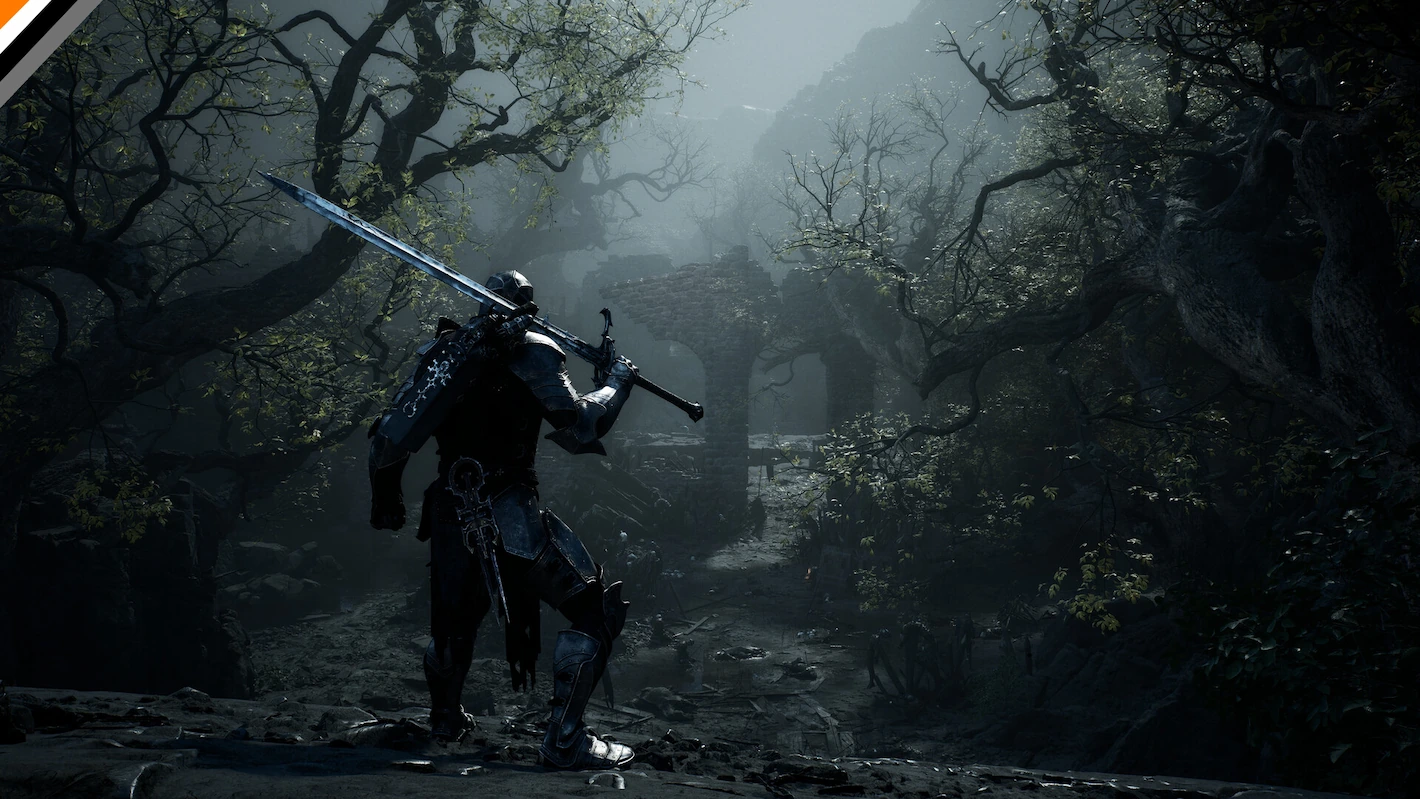
a beautifully rotten world
Mortal Shell II begins with the Harbinger entering a world shaped by the remains and corruption of the Undermether, searching for her stolen Ova while false gods and their followers occupy what is left behind. The terminology is deliberately strange and the story rarely stops to make itself easy to digest, but the important part is what Cold Symmetry builds around it. Villages, forests, ruined fortifications, cliffs, diseased caverns and enormous structures emerge from a landscape that often looks half medieval ruin and half biological nightmare. Grotesque enemies are not simply dropped into these places; they look as though the environment produced them. Strange religious imagery, mutilated bodies, oppressive lighting and sudden moments of almost peaceful natural beauty create a world where decay is not merely decoration. It becomes the visual language of the game. Mortal Shell II can look magnificent without becoming clean or conventionally pretty, and that distinction gives it character. Black-and-white sequences, brutal execution animations, heavy use of shadow and an appropriately vicious soundscape reinforce the impression. Even when environmental themes occasionally repeat, the wider world maintains a remarkably strong sense of place. Plenty of Soulslikes can produce ruined castles and grotesque monsters. Far fewer manage to make those ingredients feel like they belong specifically to them. Mortal Shell II does.
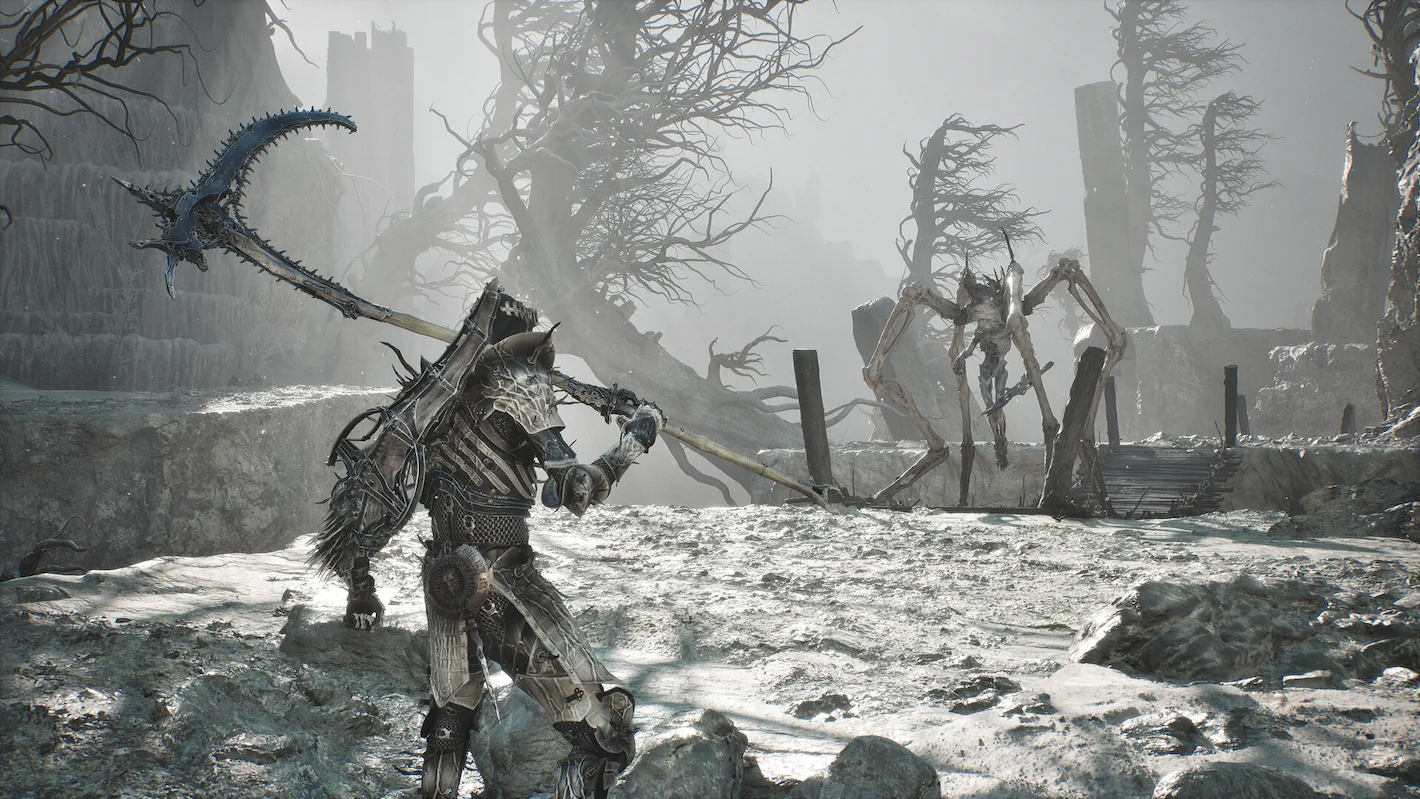
faster blood, heavier consequences
The most immediately important mechanical change is the removal of the traditional stamina restriction. Attacking, sprinting and dodging are no longer governed by a constantly depleting bar, and that single decision changes the rhythm of virtually every encounter. Mortal Shell II wants aggression, positioning and timing rather than repeated cycles of attack, retreat and stamina recovery. That does not make it a mindless action game. Enemy strikes remain dangerous, bad positioning against several opponents can destroy a run in seconds, and committing to the wrong animation at the wrong moment is still costly. What changes is the amount of freedom available between those mistakes. Resolve generated through successful combat feeds special abilities, posture damage creates opportunities for vicious finishers, ranged sidearms expand the tactical space, and different Seals alter defensive options. Harden remains one of the series’ most distinctive ideas: with the appropriate setup, turning the Shell to stone during an attack can absorb an incoming blow before the interrupted motion continues, creating a satisfying rhythm that feels different from simply waiting for a parry window. Firearms, unusual support tools and some wonderfully excessive executions could easily have turned the system into noise, yet most of these additions reinforce the same principle stay active, improvise and make the enemy respond to you. The result is faster than the original Mortal Shell without losing the sense that weapons have mass. Hits sound nasty, finishers look appropriately cruel and a successful exchange has physical impact rather than merely producing numbers above a health bar.
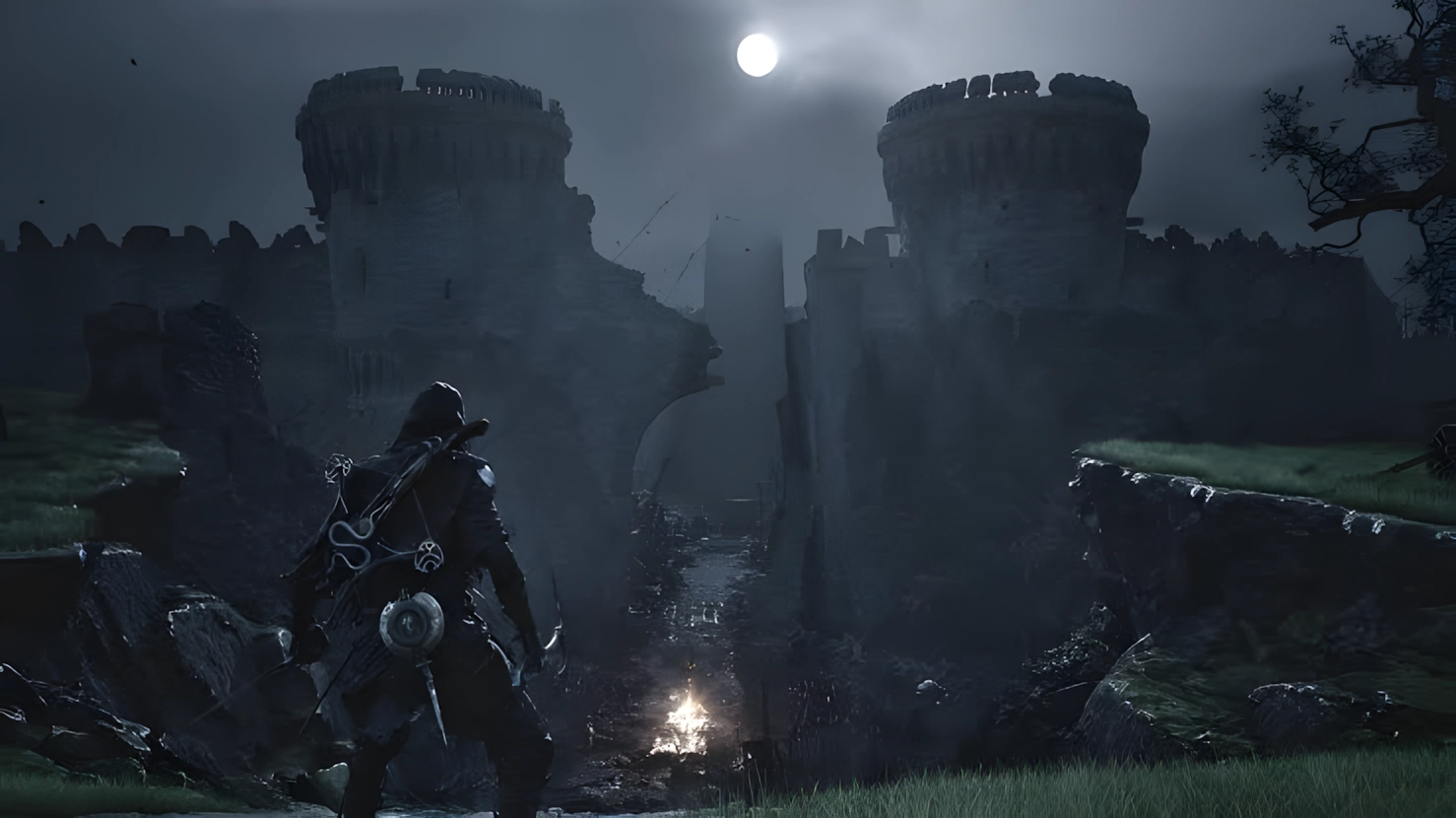
the shells finally become the heart of the game
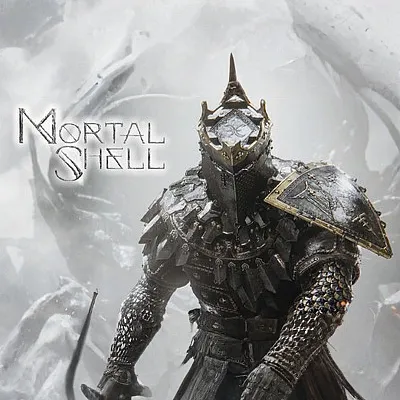
Possessing fallen warriors was always Mortal Shell’s best conceptual idea, but the sequel finally gives that idea enough mechanical room to become the foundation of an entire RPG. Eight playable Shells are scattered across the game, and they operate less like cosmetic bodies with different statistics and more like distinct classes with their own abilities, strengths and progression. Finding a new Shell can genuinely change how a difficult encounter is approached. One may encourage survival through armor and damage mitigation, another may support mobility or a more specialized offensive style, while individual skill trees gradually push those identities further apart. The system becomes more interesting when weapons, Tarstones, Seals, sidearms and other modifiers are layered on top. Tarstones can alter attacks, add elemental properties or introduce entirely new combat functions, while weapon choice changes spacing and attack rhythm enough to make experimentation worthwhile. Progression is therefore broad without requiring the player to spend half the game staring at a conventional attribute sheet. The Harbinger receives straightforward underlying growth, while the meaningful decisions happen in the interaction between Shell, weapon and attached abilities. Bonding with Shells also unlocks memories from their former lives, giving these otherwise borrowed bodies a narrative identity instead of reducing them to equipment slots. Not every one of those memory sequences is presented particularly well, but the idea strengthens the connection between character progression and world building. It is an elegant solution to one of the biggest problems facing class-heavy action RPGs: encouraging experimentation without making every change of direction feel like starting the character again.
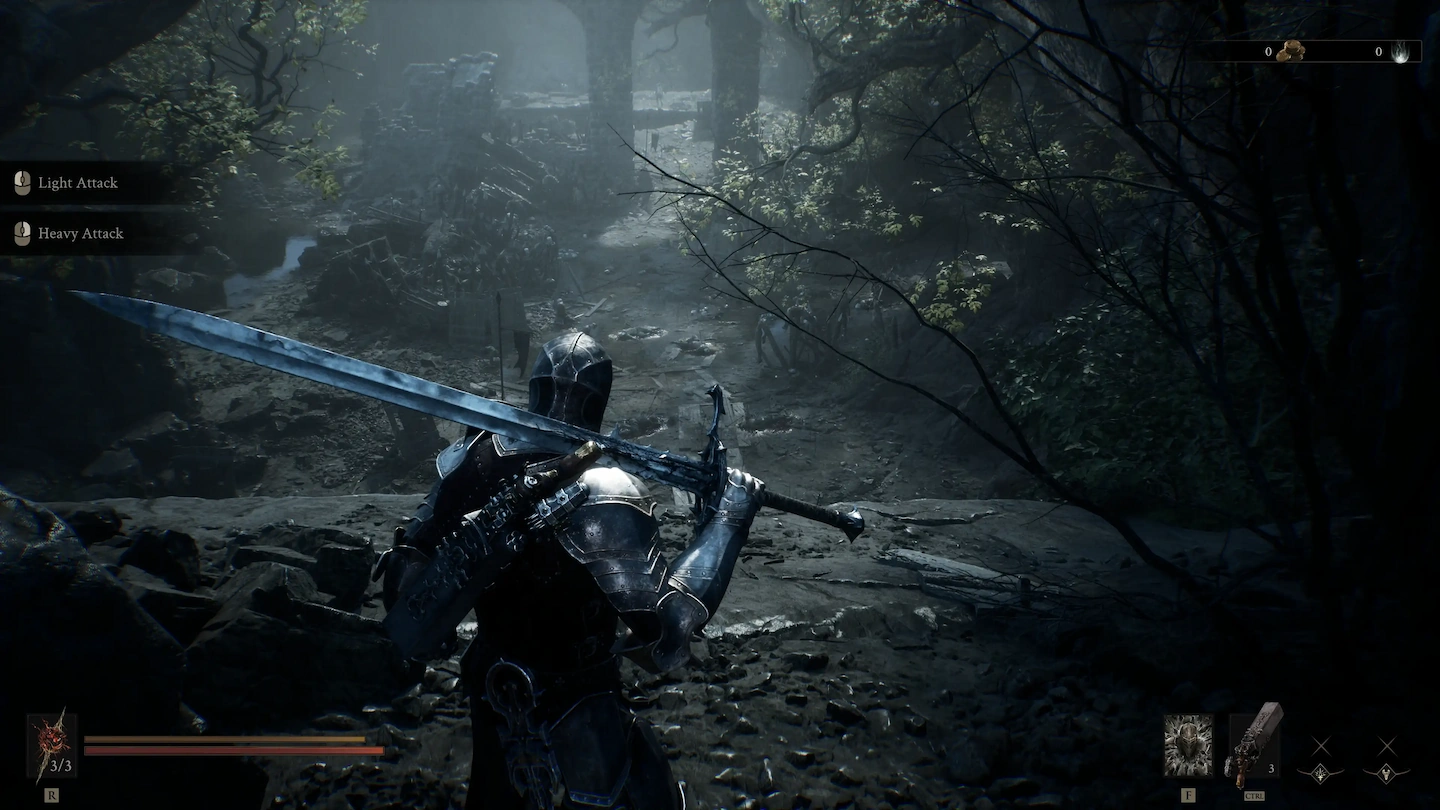
exploration with an actual reason behind it
Moving to a substantially more open structure could easily have diluted Mortal Shell into another map filled with disposable distractions. Instead, the sequel is at its best when it gives the player a direction and then quietly tempts them away from it. The open world is large enough to generate uncertainty but compact enough that exploration rarely feels like commuting between icons. Marrow Keep operates as a central point, while Beacons provide checkpoints and eventually help connect the wider landscape. Weapons, Shells, Tarstones, upgrade materials, map information and optional encounters give detours practical value, and that matters because curiosity is difficult to maintain when every hidden path ends with another forgettable consumable. Here, finding something new can alter a build rather than simply increase an inventory count. The map also does not immediately explain every connection. Paths fold around terrain, passages hide behind apparently unimportant architecture and certain routes only begin to make sense once more of the geography has been understood. There are frustrations – some stretches place Beacons farther apart than they need to be, fast traversal can create unnecessary backtracking, and a few connections are poorly communicated – but the overall structure succeeds because the game understands that exploration needs both mystery and reward. There is normally another direction to investigate if a particular area or boss is proving too demanding, allowing progression to emerge naturally from discovery rather than from grinding the same enemies until a number becomes larger.
monsters worth meeting
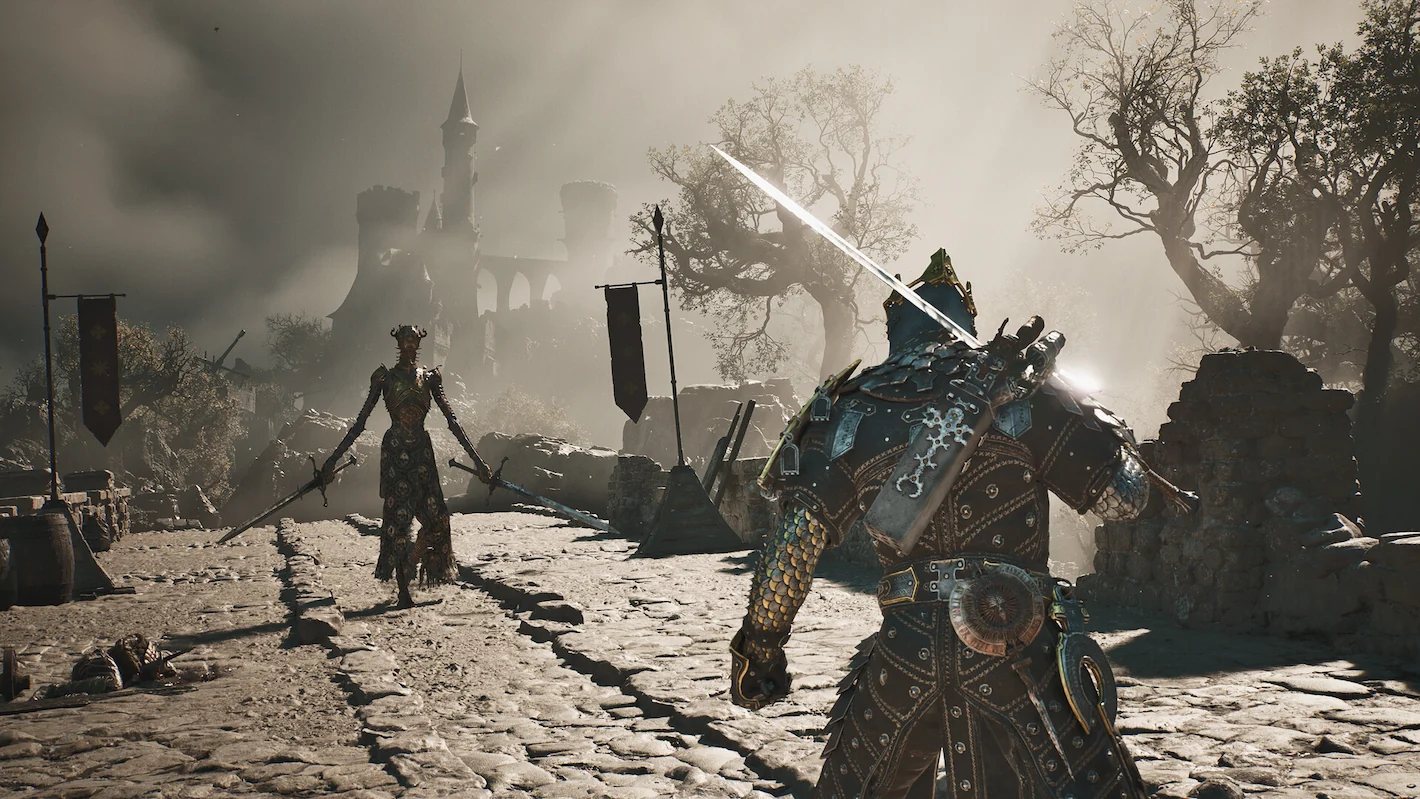
An oppressive world loses much of its threat when it is populated by the same three enemies for thirty hours, and Mortal Shell II generally avoids that problem. Its bestiary mixes recognizable armored opponents with increasingly strange creatures that demand different responses, while visual design frequently leans into body horror without making every monster a shapeless pile of limbs. Combat encounters become especially effective when several enemy types overlap and positioning suddenly matters as much as memorizing an individual moveset. Boss design is similarly capable of producing excellent fights, with readable tells and patterns that reward learning rather than pure reaction speed. The quality is not completely even. Some bosses simply lack the visual or musical presence required to become truly memorable, and the game’s rapidly expanding toolbox can eventually make certain encounters less threatening than their presentation suggests. But there are enough mechanical surprises, unusual creatures and deliberately grotesque execution interactions to prevent combat from becoming routine. Mortal Shell II is at its most convincing when the player enters an unfamiliar area and genuinely has no idea what kind of horrible thing is going to crawl out of it. That uncertainty works because the answer is often more interesting than another knight with a different-colored sword.
power can become its own problem
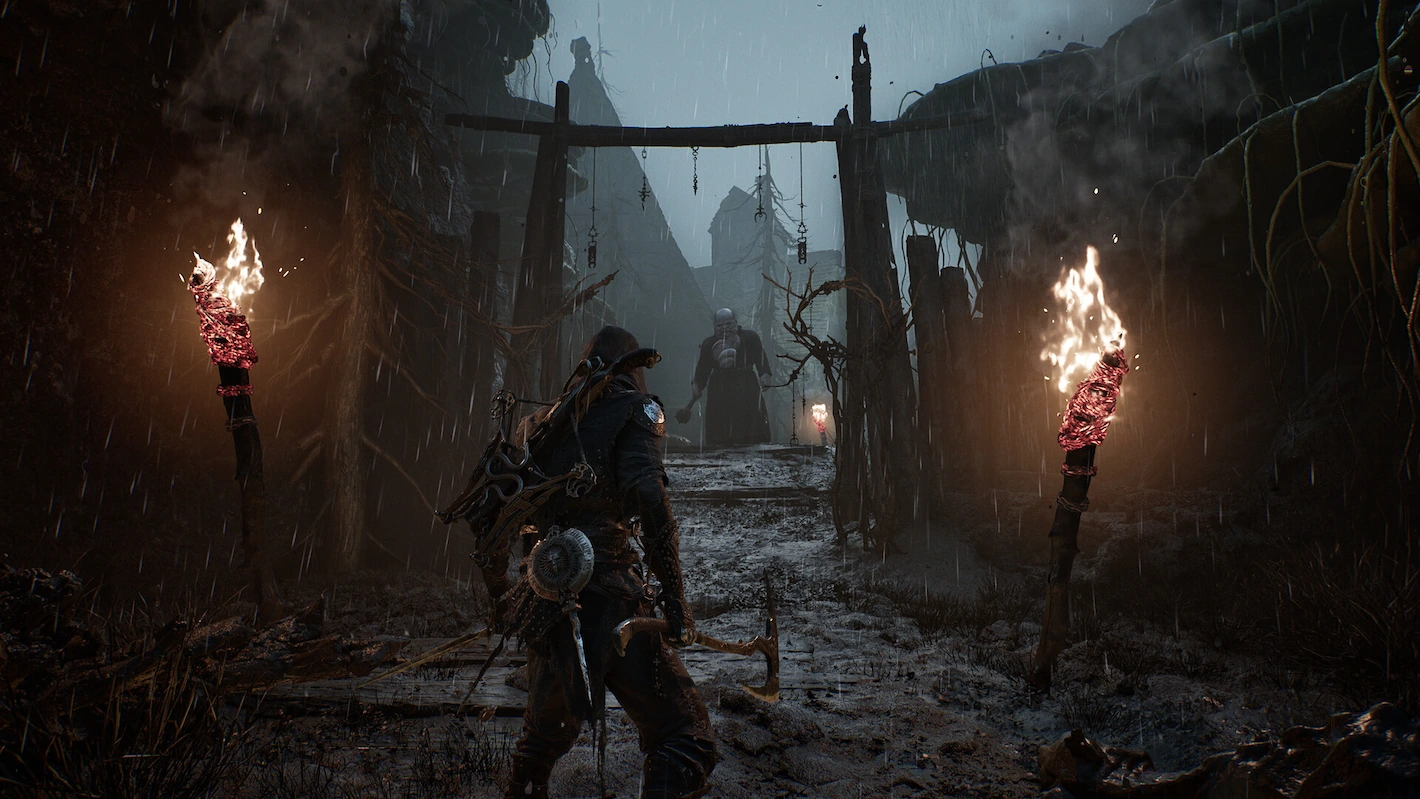
Giving players this many viable tools inevitably creates a balancing problem, and Mortal Shell II does not completely solve it. Certain Tarstones, ability combinations and highly developed builds can become powerful enough to flatten parts of the difficulty curve. This is not simply the normal satisfaction of becoming stronger. Some combinations can reduce the need to engage properly with enemy mechanics, particularly later in the game, where a build that has accumulated the right synergies may have an easier time than the early adventure suggested. The opposite can also happen when exploring aggressively outside the expected route, with individual encounters suddenly hitting much harder than surrounding content. This inconsistency prevents the challenge from feeling perfectly tuned from beginning to end. There are optional methods of pushing difficulty in either direction, including the considerably harsher Nightfall setup, but a Soulslike is at its strongest when the default balance remains convincing without asking the player to deliberately avoid powerful equipment. Mortal Shell II gets this right most of the time. It simply gives the player enough dangerous toys that, eventually, some of them become more dangerous to the game’s balance than to its monsters.
the cracks beneath the surface
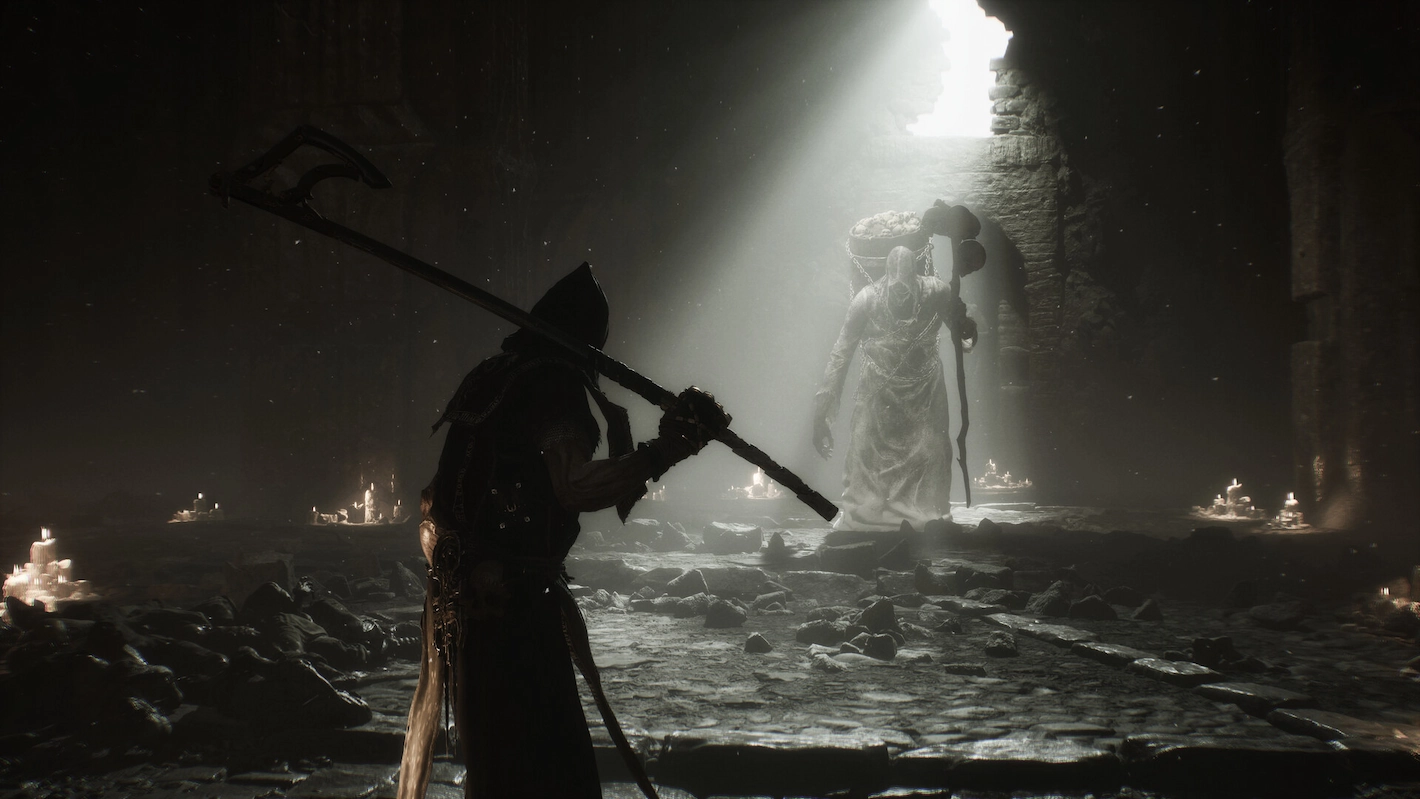
The sequel’s ambition also leaves several rough edges. The close cinematic camera is excellent for atmosphere and screenshots but less reliable once several enemies occupy a cramped space. Walls and corners can push the view into genuinely unhelpful positions, and the more distant Action camera is often the practical choice when situational awareness matters. Some execution and combat animations can expose the player in awkward ways, while reviewers have reported occasional hit-detection, collision and animation problems. Technical reports on PC are otherwise encouraging: several reviewers found performance surprisingly solid for an Unreal Engine 5 release, including high frame rates and relatively limited stutter, although crashes and unusual bugs were encountered in some pre-release builds and a substantial launch patch has already been part of the review-period picture. The bigger weakness is arguably less technical. Some optional dungeons lack the individuality of the overworld, repeating visual ideas and straightforward layouts more often than a game so committed to exploration should. The narrative suffers from a similar problem of unrealized potential. Its imagery and terminology are wonderfully strange, and individual Shell memories add texture, but the central story rarely develops into something as gripping as the world surrounding it. Mortal Shell II is often better at suggesting history than telling a story. For this kind of game that is hardly fatal, but the distinction is noticeable.