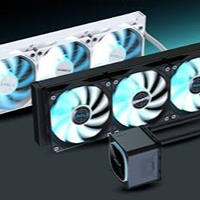
REVIEW | GIGABYTE EAGLE 360 ICE | WHITE COOLING THAT WORKS
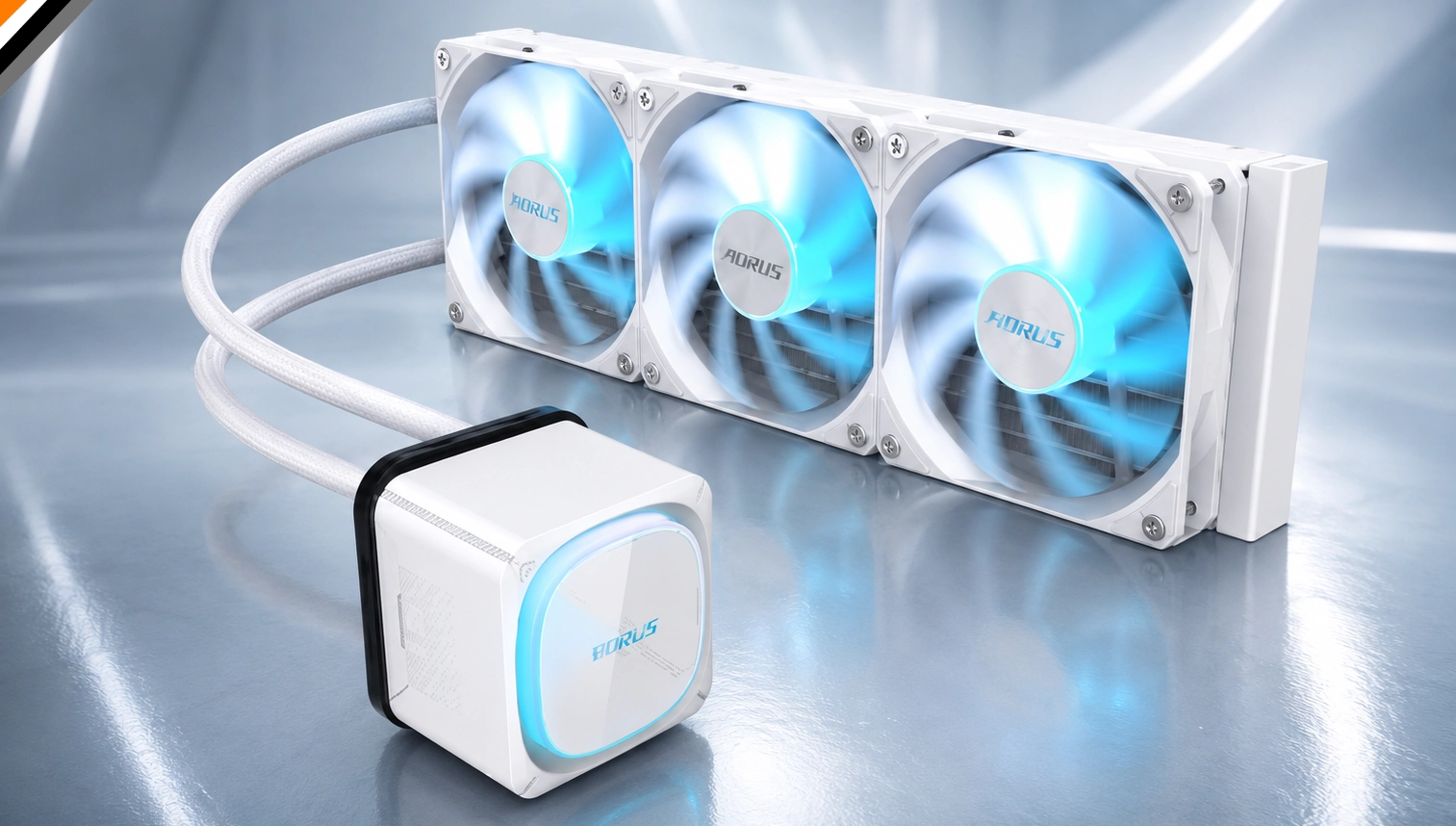
A white 360 mm radiator, three pre-installed ARGB fans and a square pump housing give the GIGABYTE EAGLE 360 ICE a cleaner and more restrained identity than many liquid coolers built around oversized displays and excessive decoration. Introduced as part of GIGABYTE’s 2026 EAGLE cooling range, this all-in-one solution targets modern gaming and productivity systems that need substantial thermal capacity without moving into the more expensive LCD-equipped segment. Its structure is conventional but sensible: a copper cold plate transfers heat into a dual-chamber pump running at 3,200 RPM, braided 400 mm tubes carry the coolant toward a 397 × 120 × 27 mm aluminium radiator, and three 120 mm PWM fans handle heat dissipation. The white finish covers the radiator, fan frames, tubing and pump body consistently, making the ICE model particularly suitable for coordinated white builds. GIGABYTE also avoids treating presentation as a reason to complicate installation. The fans arrive mounted to the radiator, cabling is simplified, and a magnetic EAGLE cover can be rotated so the logo remains correctly aligned regardless of the pump orientation. It is not an experimental cooler or a showcase product loaded with unnecessary systems. The EAGLE 360 ICE is built around a simpler objective: provide the surface area and airflow expected from a 360 mm AIO while keeping the assembly process and final appearance under control.
cooling hardware built for sustained loads
The 3,200 RPM pump is paired with a dual-chamber design that separates sections of the coolant path to improve circulation through the block. Beneath the pump housing sits a copper contact plate, while the radiator uses twelve independent cooling channels to spread heat across its large aluminium surface. This is the correct foundation for a cooler aimed at gaming processors, extended rendering workloads and modern multicore CPUs that can maintain high power consumption for long periods. A 360 mm radiator does not automatically guarantee class-leading temperatures, but it provides more heat-dissipation area than common 240 mm and 280 mm alternatives and allows the fans to distribute work across three positions. That gives the EAGLE 360 ICE enough structural headroom to suit performance-oriented Intel and AMD systems without presenting itself as an extreme overclocking solution. The pump operates at a fixed quoted speed of 3,200 RPM ±10%, which keeps the design straightforward but offers less tuning flexibility than premium models with broader pump-control ranges. Its 400 mm braided tubes should accommodate top-mounted and front-mounted radiator positions in most compatible mid-tower and full-tower cases, although the physical radiator length still requires careful clearance checks before purchase. This is not a small cooler, and its value depends on having a case that can accommodate the full 397 mm assembly without interfering with motherboard heatsinks, memory modules or front-mounted graphics cards.

high airflow with a clear acoustic limit
Each of the three 120 mm HDB fans operates between 600 and 2,000 RPM, with GIGABYTE quoting maximum airflow of 82.31 CFM, static pressure of 2.52 mmH₂O and a peak noise rating of 37.6 dBA. These figures describe fans designed to move a substantial volume of air through a radiator rather than prioritize near-silent operation at all speeds. The 2.52 mmH₂O pressure rating is appropriate for pushing air through dense fins, while the 600 RPM minimum gives motherboard fan control enough range to reduce unnecessary noise during lighter desktop work. Under heavier CPU loads, the upper end of the curve is likely to become clearly audible, so the best balance will come from a carefully configured PWM profile rather than allowing all three fans to climb directly toward 2,000 RPM whenever temperatures rise briefly. The cooler therefore has the right fan specifications for sustained gaming and productivity loads, but users expecting silence from a 360 mm system should not interpret its size as a guarantee of low noise. Three fans can share the workload effectively, yet they can also produce a noticeable combined acoustic presence when driven aggressively. The absence of unusually high 2,500–3,000 RPM fans is a positive sign for everyday usability, and the EAGLE 360 ICE appears tuned more toward balanced cooling than benchmark-focused excess. Its strongest operating profile should be the middle of the fan range, where the large radiator can do most of the work without relying on maximum rotational speed.
white styling without unnecessary complexity
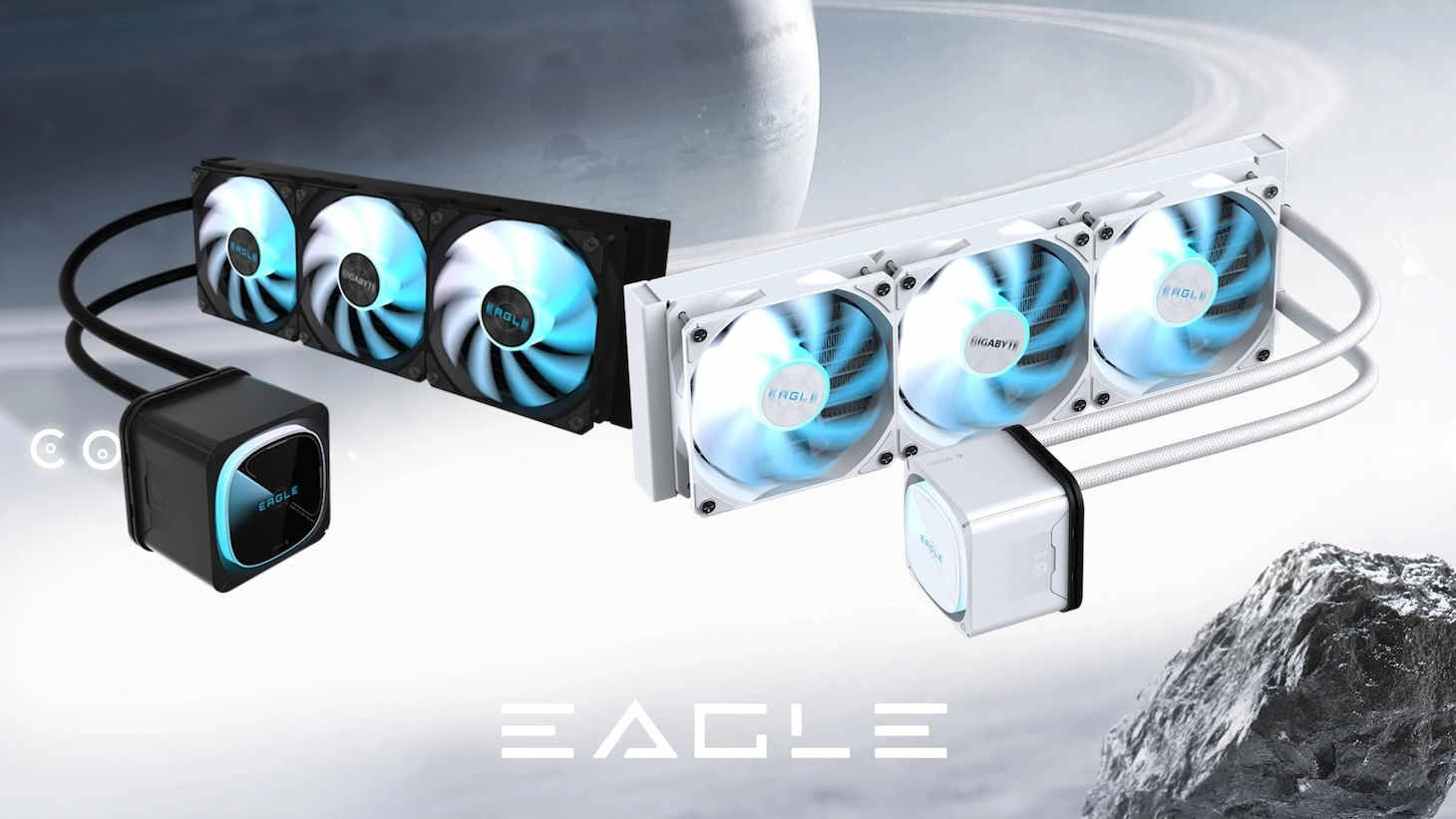
The ICE version succeeds visually because it commits to a complete white presentation rather than combining a white radiator with dark tubing or black fan frames. Soft blue-white ARGB lighting gives the three fans enough presence inside a glass-sided case, but the lighting arrangement remains more restrained than the multi-zone systems used on GIGABYTE’s higher-tier AORUS coolers. This makes the EAGLE model easier to integrate into a white system without allowing the cooler to dominate every other component. The square pump housing follows the same approach. It has no LCD, animated media support or continuous system telemetry, but the illuminated accent and magnetic logo plate provide enough customization to prevent it from looking unfinished. The rotating magnetic cover is a small but genuinely useful feature because AIO pump orientation is often dictated by tubing position and motherboard clearance rather than by logo alignment. Builders can mount the block in the practical direction and then correct the visible branding afterward. Users who want live CPU temperatures displayed inside the case will need to move to a different product, but removing the screen also reduces software dependence, internal USB requirements and the price premium associated with display hardware. The EAGLE 360 ICE looks most convincing as part of a clean gaming system rather than an RGB exhibition piece, and that distinction gives it a clearer purpose than coolers trying to serve every visual style at once.
installation that respects the finished build
GIGABYTE ships the three fans already attached to the radiator, removing one of the most repetitive parts of installing a 360 mm AIO. Simplified cabling further reduces the number of loose leads that must be routed behind the motherboard tray, helping the finished system maintain the clean appearance promised by the white exterior. Socket compatibility is broad: Intel support covers LGA 1851, 1700, 1200 and 115x, while AMD support includes AM5 and AM4. That makes the cooler suitable for current platforms as well as many existing systems being rebuilt around a new case or visual theme. The universal bracket and magnetic pump cover reduce orientation problems, although the size of the radiator still makes case preparation essential. Builders should confirm not only official 360 mm radiator support but also the available thickness above the motherboard or behind the front panel once the 27 mm radiator and fan depth are combined. The pre-installed fans save time, but they may need to be reversed when the intended airflow direction differs from the factory arrangement. None of these considerations are unusual for a large AIO, and the EAGLE 360 ICE handles the avoidable parts of installation well. Its design does not eliminate the planning required by a 360 mm cooler, but it reduces cable clutter and unnecessary assembly work after compatibility has been confirmed.

price position and practical competition
The EAGLE 360 ICE sits in the upper mid-range rather than the high-end or flagship class. Its 360 mm radiator, 3,200 RPM pump and high-airflow fans place it above basic liquid coolers, but the absence of an LCD, advanced pump controls, premium software features and elaborate lighting keeps it below the AORUS ELITE and Waterforce families. That position suits the product. Buyers are paying for the larger radiator, clean white design and simplified installation rather than for decorative systems that do not directly improve cooling. The strongest competition comes from affordable 360 mm AIOs that may offer similar radiator capacity, and from high-quality dual-tower air coolers that eliminate pump concerns entirely while costing less. The EAGLE justifies itself when case presentation and component clearance make liquid cooling desirable, particularly in a white build where a large dark air cooler would disrupt the visual plan. It is less compelling for users who care only about temperature-per-dollar or whose processors do not generate enough heat to require a 360 mm radiator. Retail listings on Amazon, Newegg and European stores confirm that this is a commercially available model rather than a concept announcement, but its value will still depend heavily on regional pricing. It becomes a strong purchase when priced close to mainstream 360 mm competitors; a large premium would be difficult to defend because its main differentiators are appearance and installation convenience rather than exclusive performance technology.