
REVIEW | DIVE OR DIE: CHILDREN OF RAIN | WHERE CURIOSITY BECOMES DANGER
A broken structure emerging from dark water is often more persuasive than any promise of treasure below it. DIVE or DIE: Children of Rain understands that fascination and builds its strongest quality around an environment that constantly pulls the player downward despite every warning. The Abyssal Pool is not simply a collection of underwater stages. It is a drowned landscape of ruined structures, forgotten idols, unstable passages and creatures that seem to belong to a world already surrendered to the Black Rain. Every descent carries limited oxygen, uncertain visibility and the possibility that the survivor sent below may not return. That pressure gives exploration a purpose beyond collecting resources. The player is not entering the depths because the route is safe or clearly marked, but because the camp above cannot survive without whatever may still be recovered beneath the surface. Developed by Drop Rate Studio and published by Dear Villagers, the game combines two-dimensional underwater exploration, roguelite progression and survivor management inside a forty-day struggle against an approaching final Flood.

the environment is the real protagonist
The greatest achievement is the Abyssal Pool itself. Its environments feel strange without becoming visually unreadable and hostile without reducing every location to the same dark corridor. Sunken buildings, broken stonework, organic growth and unnatural shapes suggest that the player is moving through several layers of history at once. Some areas resemble ruins overtaken by water; others seem transformed by forces that were never entirely human. The contrast between recognizable architecture and eldritch distortion keeps the descent interesting because the player is never simply exploring a cave system. There is always the feeling that something once existed here, something happened to it, and the water has preserved only the most disturbing fragments. The side-on presentation could have made the world feel flat, but the art direction uses foreground silhouettes, distant shapes, particles and limited visibility to create convincing depth. Light becomes both practical and atmospheric. It reveals a possible route, outlines an object in the distance or briefly exposes movement that may be better avoided. Darkness is not merely an empty black section of the screen; it is an uncertain space where oxygen continues falling while the player decides whether curiosity justifies the risk. That environment produces the game’s strongest personal impression. Even when the systems become familiar, the desire to see what lies beyond the next flooded chamber remains. A successful dive rarely feels satisfying only because resources were recovered. It feels satisfying because another part of the world has become known. The game is at its best when a route opens into a large ruined space and the player briefly stops thinking about efficiency, simply absorbing the scale and detail of a place that should no longer exist. This visual identity is also important because DIVE or DIE operates within familiar genres. Roguelite progression, permanent loss, resource gathering and camp management are not new ideas. The environment prevents the game from feeling like a mechanical exercise assembled from those systems. Its world gives the rules a reason to exist. Oxygen matters because the depths feel physically distant from safety. Sanity matters because the creatures and structures below seem fundamentally wrong. Returning to the surface matters because the camp is the last fragile piece of ordinary human life.

every dive is a calculation
The basic rhythm is simple to understand. A survivor descends into the Abyssal Pool, explores, gathers materials, confronts or avoids threats and attempts to return before oxygen, health or sanity collapses. The official description places knowledge and skill at the centre of survival, and that is accurate: repeated dives gradually teach the player which routes are manageable, which supplies deserve priority and how much risk can be accepted before turning back. The strongest decision is usually not whether to fight, but whether to continue. A valuable object may be visible below, yet reaching it consumes oxygen that must also cover the return journey. A damaged survivor may still have enough strength to enter another chamber, but a second encounter could turn a productive expedition into a complete loss. This creates tension without requiring constant action. The player can spend several seconds simply examining the surroundings and calculating whether the next move is responsible. That uncertainty gives each recovered item weight. Materials are not abstract numbers collected between combat rooms; they represent another day of survival, another improvement or another opportunity to send someone deeper. The trip back upward can be more stressful than the initial descent because the player now has something to lose. A route that felt manageable on the way down becomes longer when oxygen is nearly gone and an injury has reduced the margin for error. Movement generally supports the underwater fantasy. The diver feels slower and less secure than a conventional action hero, while directional control and environmental hazards demand deliberate positioning. There are moments when this weight can become awkward, particularly in tighter spaces or during encounters that require quick correction. However, the slight resistance is appropriate. Moving through deep water should not feel as responsive as running across dry ground. Combat is functional but not the main reason to enter the game. Threats create pressure and force resource use, yet direct confrontation is often less interesting than navigation and survival. The strongest encounters are those that change the route, block access to something important or force the player to decide whether the reward behind them is worth the danger. When combat becomes a repeated obligation, the game loses some of the mystery that its environment works so hard to create.
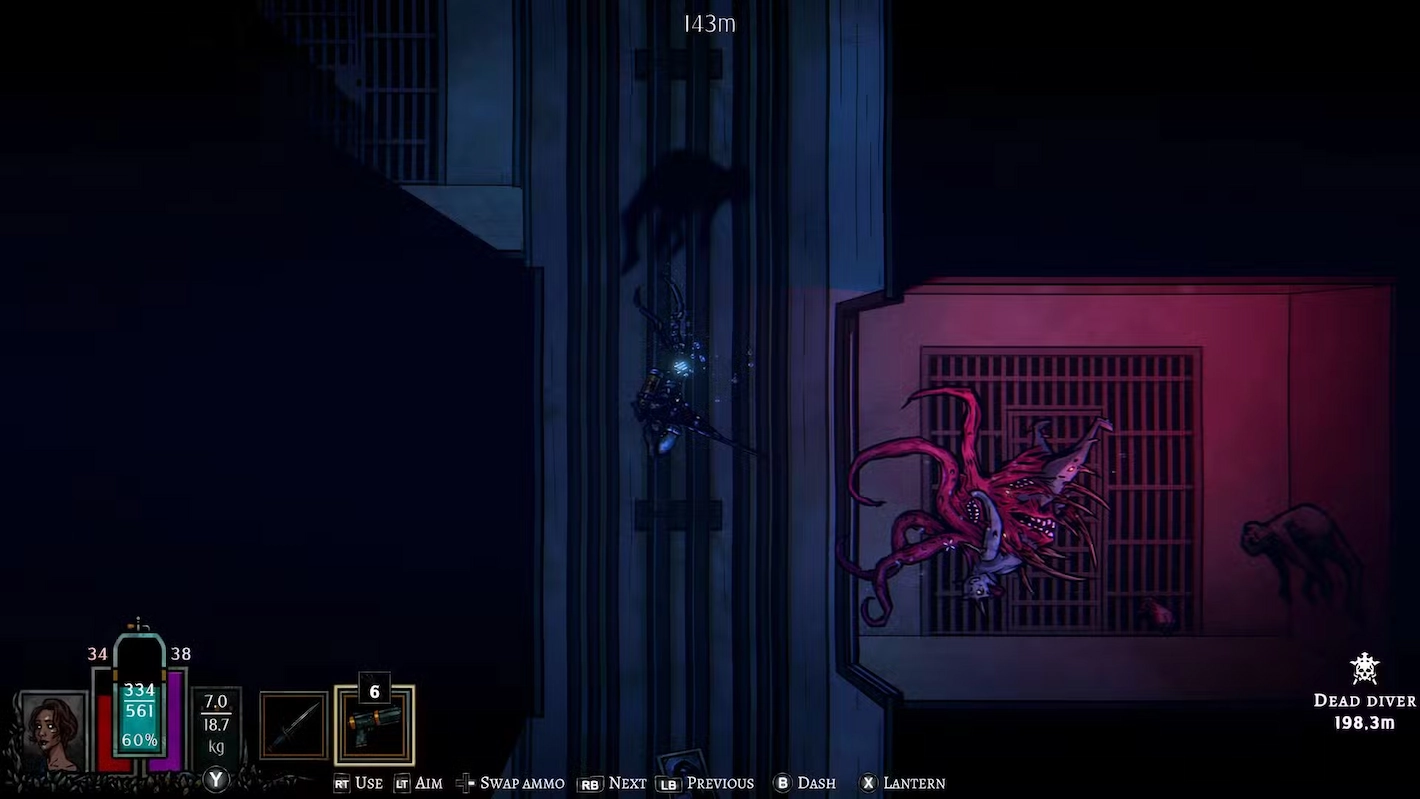
the camp gives failure a human cost
The surface camp turns individual dives into part of a larger struggle. Survivors have health and sanity to manage, while recruitment and permanent loss mean that the player is responsible for more than one replaceable avatar. The official premise is direct: decide who joins, who dives and who may be sacrificed so that the community can continue. This structure gives failure consequences without ending the entire campaign after one mistake. Losing a capable survivor removes accumulated value and may force a less prepared person into the next descent. Returning with injuries can create another kind of problem, because survival alone does not mean that the character is immediately ready to dive again. The camp therefore becomes a place where the cost of exploration is counted. The system works because the approaching Flood creates a fixed sense of time. Humanity has forty days to recover the sacred idols demanded by the Rainmaker, preventing the player from endlessly collecting resources until every risk has disappeared. Each day matters, but the pressure does not always produce the same kind of decision. Sometimes the camp needs supplies. Sometimes a stronger survivor needs recovery. Sometimes progress toward the central objective cannot be delayed. The calendar turns preparation into strategy rather than routine maintenance. Character management could have developed deeper personal attachment. The survivors matter mechanically, and their condition affects planning, but not every individual becomes memorable enough to make permanent loss emotionally powerful. The structure communicates desperation more consistently than personality. Stronger distinctions between survivors, additional camp interactions or more visible relationships might have made difficult decisions feel less like resource management and more like responsibility for actual people. Even so, the camp provides essential contrast. The Abyssal Pool is strange, dark and physically threatening, while the surface represents order, repair and limited safety. Returning is therefore meaningful. It is not just the end of a level; it is a temporary re-entry into the only place where the player can prepare for what comes next.
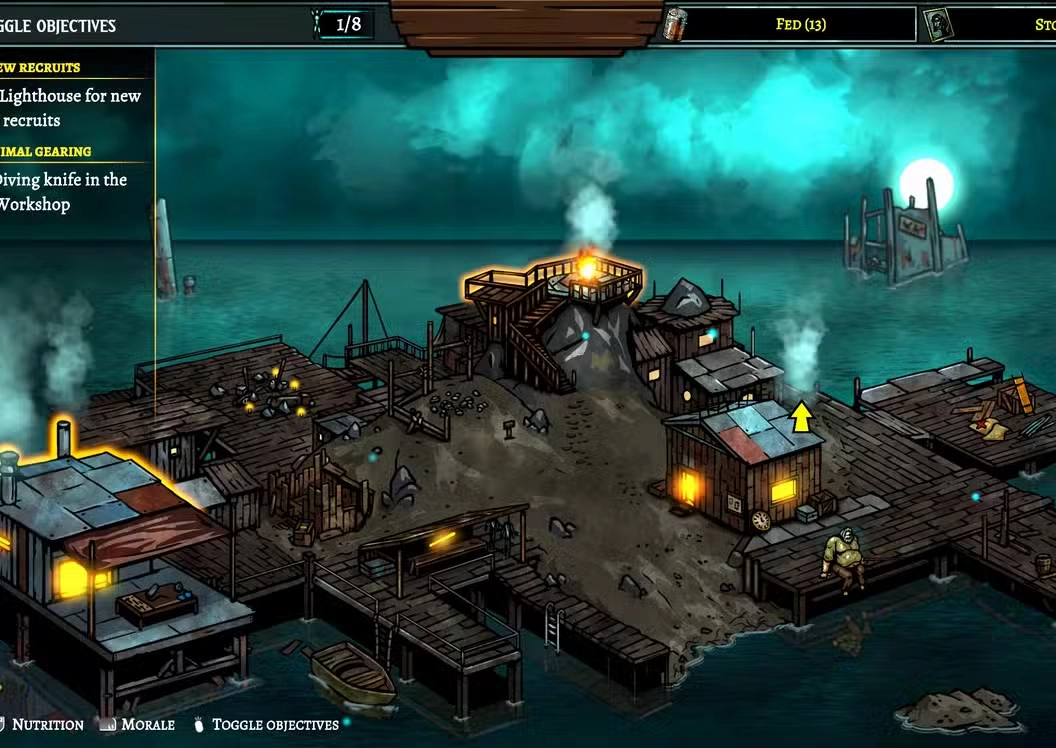
permanent loss makes the world more dangerous
Permanent consequences are central to the design, and they suit the setting. The depths would lose much of their character if every mistake could be erased without cost. Knowing that a survivor, gathered equipment or valuable progress may disappear changes the way the environment is read. A narrow passage is no longer a simple route. It is a commitment. The difficulty can be severe, particularly before the player understands the relationship between oxygen, resources, threats and return distance. The game expects observation and accepts failure as part of learning. Players who prefer to discover systems without much protection will find the early tension effective. Others may experience the opening as unnecessarily punishing because one poor decision can affect several following days. That harshness is not automatically a flaw. The world is supposed to feel desperate, and the forty-day structure would become meaningless if every expedition produced safe progress. The problem appears when information is insufficiently clear. A difficult outcome feels fair when the player can identify the mistake. It feels less satisfying when an encounter, environmental danger or resource requirement was difficult to understand before the loss occurred. The game improves as knowledge replaces uncertainty. Routes become recognizable, equipment choices become more deliberate and the player learns when to abandon an expedition. This learning process creates genuine progression independent of upgrades. The person playing becomes more capable, not only the survivors represented by statistics. However, that same familiarity can reduce the strength of later dives. Once the most effective priorities and routes are understood, some of the early terror becomes routine. Roguelite repetition always risks replacing discovery with procedure, and DIVE or DIE does not completely escape that transition. Its environments remain attractive, but repeated mechanical goals can gradually become more visible beneath them.

the black rain creates a strong premise
Years of Black Rain have drowned the world, leaving a small number of survivors facing an eldritch demand: recover sacred idols from the Abyssal Pool within forty days or face extinction in the final Flood. It is a compact premise, but it gives every system immediate context. The water is not a natural disaster that has already passed. It is part of an ongoing judgement whose meaning remains uncertain. The Rainmaker works best as a distant presence rather than a constantly visible antagonist. Its power is understood through the state of the world, the deadline and the conditions imposed upon the survivors. This leaves space for the player to question the nature of the idols, the ruins and the task itself. The game’s horror depends more on implication than on continuous exposition. Environmental discovery carries much of the narrative. Places, objects and changes in visual design reveal information in a way that suits a game about descent. The deeper the player travels, the further the world moves from ordinary explanation. This structure creates a satisfying relationship between story and geography: knowledge is physically located below the camp, and understanding requires danger. The writing is not always as strong as the visual storytelling. Some narrative elements function mainly to support the central loop, and the larger mystery may not develop with the same complexity suggested by the environment. The world often looks as though it contains more history than the story fully explores. That is partly a compliment to the art direction, but it also reveals an opportunity that the game does not completely use. Still, the premise remains memorable because it avoids overexplaining its horror. The Black Rain, the Rainmaker and the drowned ruins form a coherent identity. Even when every answer is not equally satisfying, the questions are strong enough to keep the descent meaningful.

visual and audio design work together
The art direction carries much of the experience, but the audio gives it physical tension. Water movement, distant threats, equipment sounds and muted environmental noise prevent silence from feeling empty. The player is often listening for information that cannot yet be seen. A change in sound can suggest danger before the light reveals it. Music is used with restraint, allowing the environment to dominate. This is important because constant dramatic scoring would weaken the loneliness of exploration. The strongest passages are those in which the player hears only movement, breathing and the uncertain life of the pool around them. Creature design benefits from limited visibility. Threats are often more effective when their full shape is not immediately readable. Light catches part of a body, movement crosses the edge of the screen or a silhouette appears where the player expected an empty route. The game understands that underwater horror should exploit restricted perception rather than simply place grotesque enemies in clear view. The presentation is not technically extravagant, but it is cohesive. Colour, lighting, environmental layering and sound all support the same mood. Nothing suggests that the depths are a safe fantasy aquarium. Beauty exists, but it is the beauty of a place that may already belong to something else.

repetition eventually reaches the surface
The central loop is strong enough to support the campaign, but repetition becomes visible once the player has mastered the fundamentals. Dive, gather, calculate, return and improve is an effective structure, yet not every expedition creates a new type of problem. Later sessions can begin to feel like increasingly efficient versions of earlier ones. Enemy variety, route variation and resource needs provide some change, but the game’s strongest asset discovery cannot remain equally powerful after the spaces and systems become familiar. This affects long-term replay value more than the first complete campaign. The structure invites another attempt, but the environmental surprise that defines the initial experience is difficult to reproduce. Camp decisions also settle into recognizable priorities. Once the player understands which upgrades and supplies provide the most reliable value, some strategic uncertainty disappears. Alternative approaches exist, but they do not always transform the campaign enough to make every new run feel fundamentally different. That limitation does not make the game brief or empty. It means that DIVE or DIE is strongest as a focused journey rather than an endlessly renewable roguelite platform. Its world deserves to be explored, its systems are satisfying to learn and its pressure remains effective through a full run. The appeal of repeating everything immediately will depend heavily on how much the player enjoys optimization after discovery has faded.
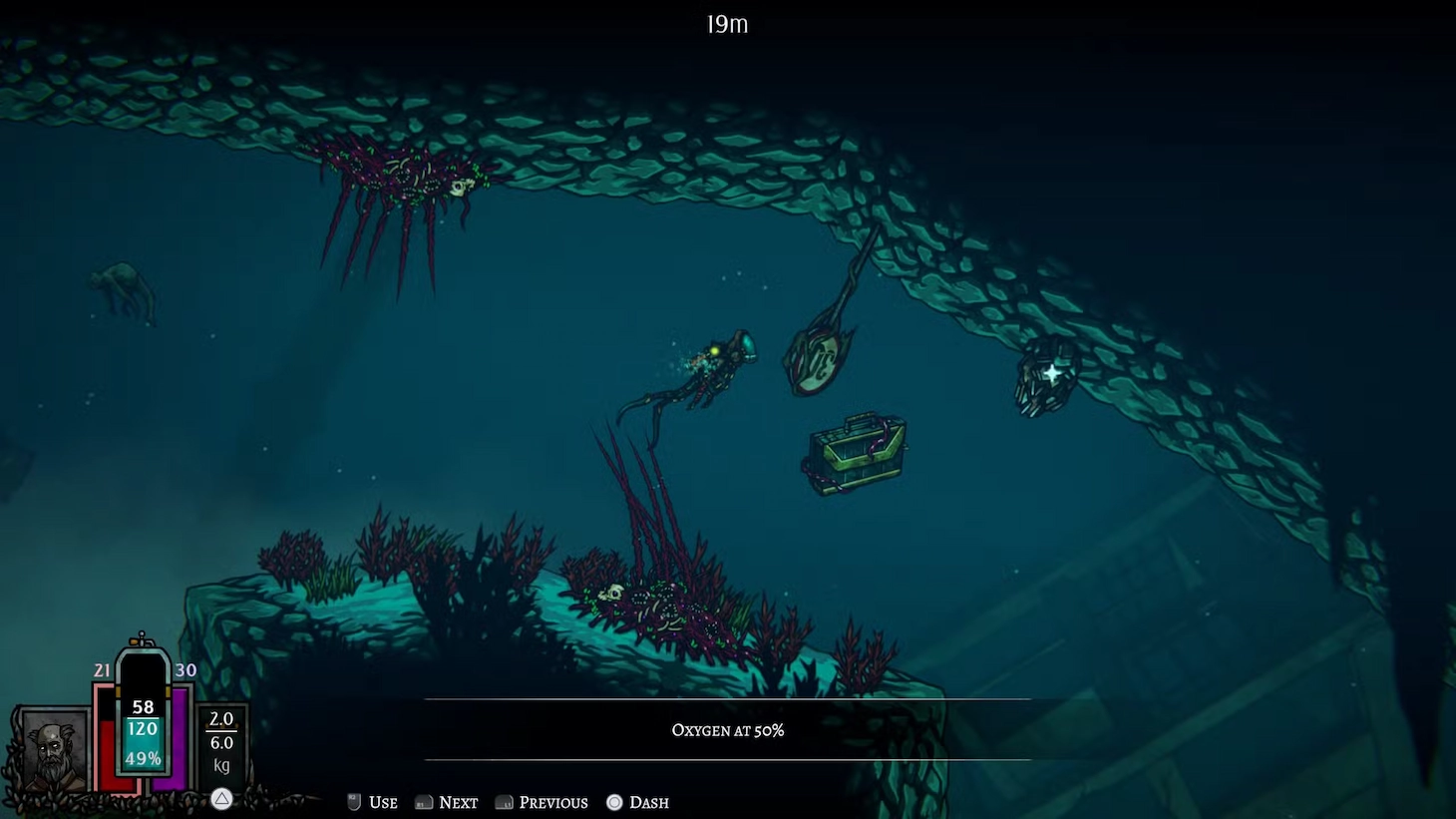
performance and control
The PC version is generally suited to the game’s restrained visual scale, but technical polish is not completely invisible. Input precision matters greatly when oxygen is low or a survivor is navigating a hazardous section, so any awkward movement or delayed correction feels more serious than it would in a less punishing game. Interface readability is usually adequate, although the amount of information connected to survivor condition, equipment, resources and camp planning can occasionally slow the rhythm. The game needs to communicate danger clearly without removing uncertainty, and it succeeds more often than it fails. Controller support fits the movement well, while keyboard play remains practical. Preference will depend on whether the player values analogue directional control or faster access to individual inputs. Neither method changes the underlying need for deliberate movement and route planning. The relatively contained technical design allows the atmosphere to remain the focus. DIVE or DIE does not rely on high-end rendering to make its world convincing. Strong composition and lighting achieve more than raw detail. That is particularly appropriate for an indie project whose identity comes from design rather than scale.