REVIEW | BANQUET FOR FOOLS | BEAUTY WITHOUT A MAP
A strange island opens before four newly appointed guards, but Banquet for Fools refuses to tell them exactly where to go, which trail is safest or which fragment of overheard information will become important several hours later. Developed and published by the two-person Hannah and Joseph Games team, this open-world party RPG left Early Access and reached version 1.0 on March 5, 2026, sending its generated four-member company across Invimona to investigate the disappearance of an entire farming settlement. The premise sounds familiar until the world begins revealing itself through pagan customs, hostile wilderness, unsettling inhabitants and visual design that resembles clay figures moving across richly painted theatrical backgrounds. There is no automatic compass directing the party toward the next objective, no conventional quest log organizing every request and no permanent stream of icons reducing exploration to a sequence of destinations. Instead, players listen, read scrolls, mark maps and keep their own journal while gradually learning how this unusual society functions. Banquet for Fools can be awkward, demanding and occasionally unclear, but those qualities rarely feel like evidence of an RPG without ideas. They are the rough edges of one overflowing with them.
a world that looks genuinely unfamiliar
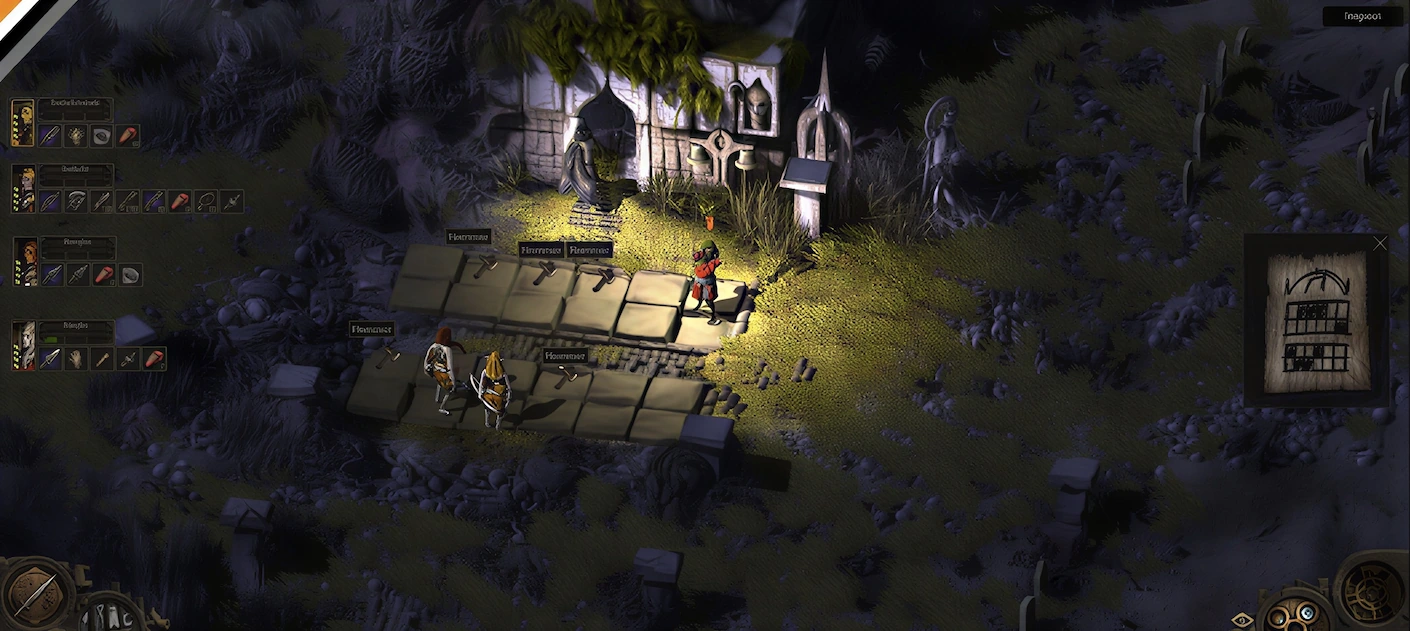
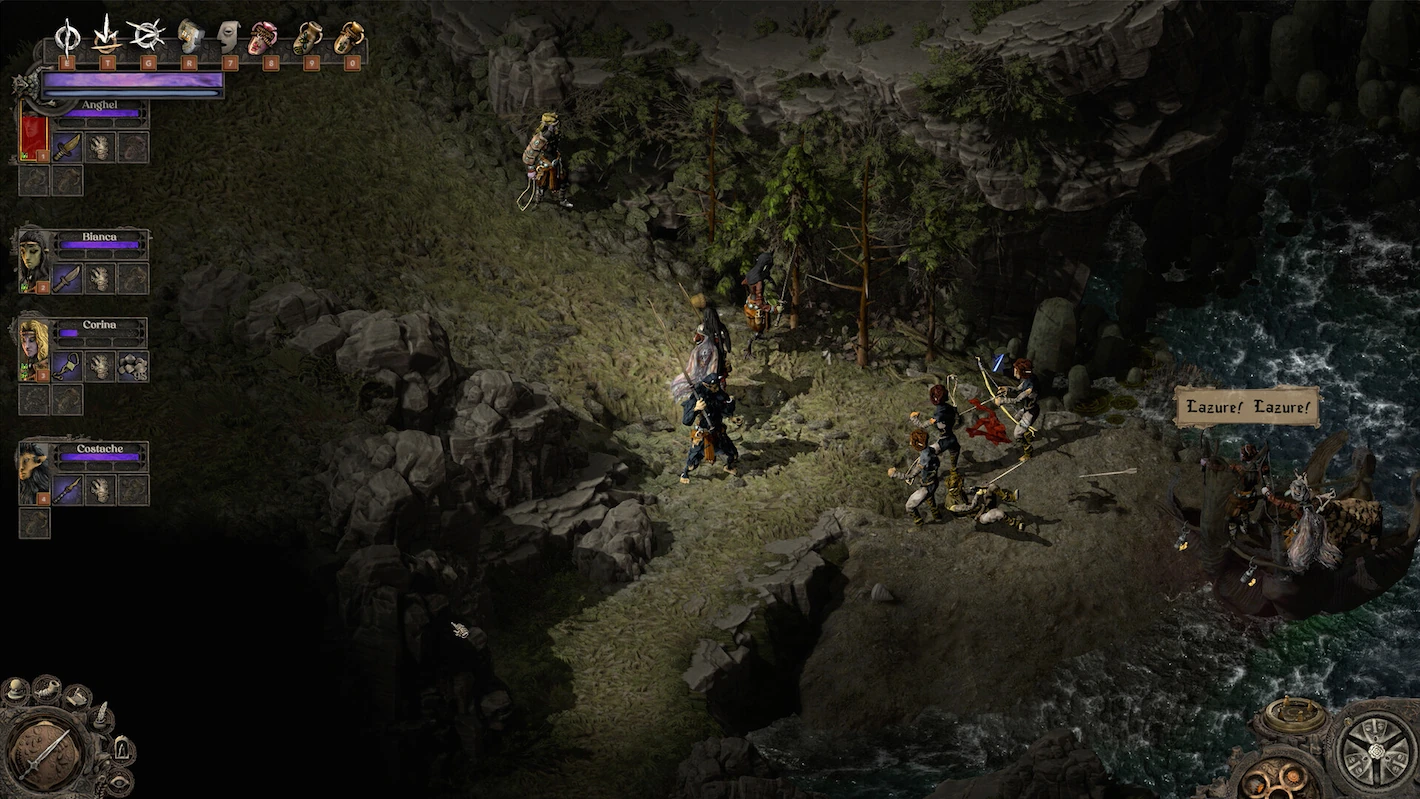
The greatest achievement is not technical fidelity but complete artistic conviction. Pre-rendered environments possess the depth and texture of illustrated storybooks, while the stylized character models resemble handmade figures whose unusual proportions feel entirely natural within this alien society. Invimona does not look like another arrangement of familiar castles, taverns and fantasy forests. Its farming settlements, coastal routes, strange vegetation and pagan imagery suggest a culture with its own history, materials, beliefs and relationship with nature. The Vollings resemble humans only loosely, often appearing severe or unsettling at first, yet their mannerisms and conversations gradually make them feel surprisingly warm, humorous and recognizable. The interface follows the same philosophy, designed like an ornate manuscript or ancient ritual object rather than a neutral collection of modern menus. This commitment occasionally compromises readability because small objects can disappear inside detailed scenery and elaborate interface elements are not always immediately clear, but abandoning that style for cleaner presentation would remove a large part of the game’s identity. Banquet for Fools demonstrates why art direction remains more important than raw graphical complexity: almost every screen looks deliberately composed, and even routine movement through the wilderness can feel like crossing a painting from a civilization that never existed.
exploration without administrative assistance
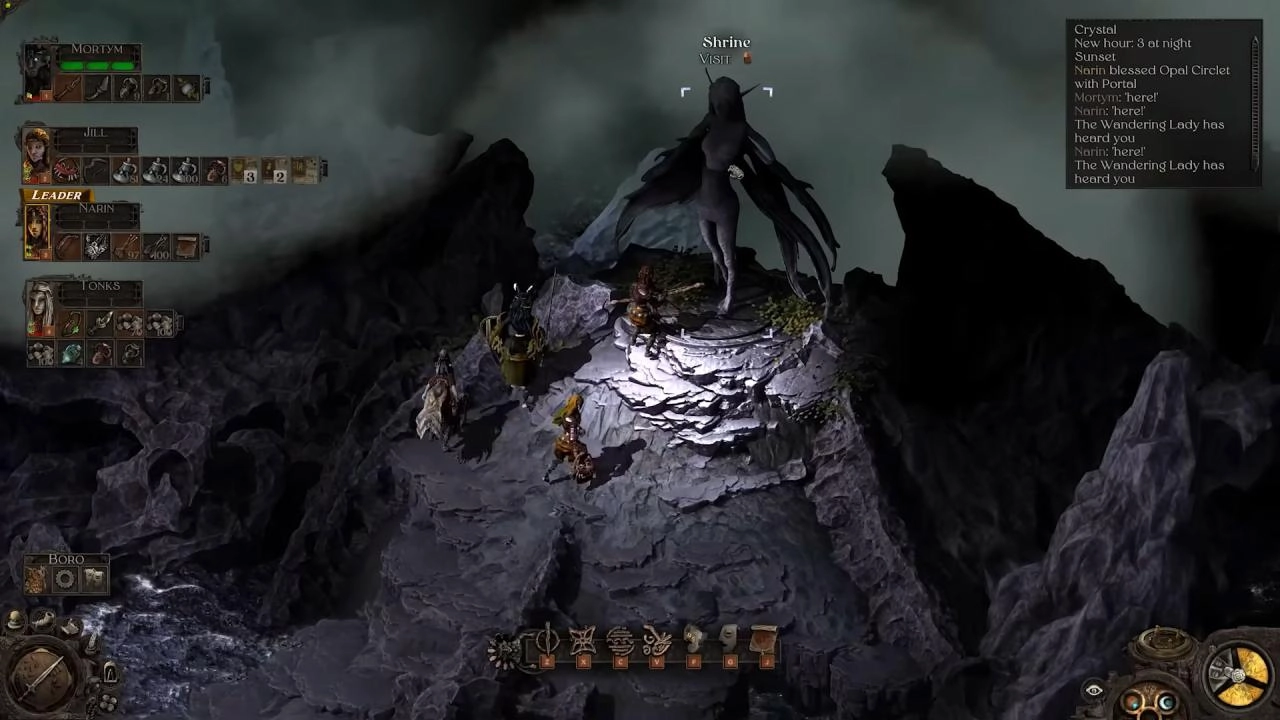
Modern RPGs often provide so much organizational help that the player spends more time following instructions than investigating a world. Banquet for Fools moves in the opposite direction. Conversations may contain practical directions, scrolls can preserve important requests and the map accepts manually placed notes, but the game does not automatically transform everything into a clean list of objectives. Navigation therefore becomes part of role-playing rather than empty travel between marked locations. A settlement described as lying beyond a river bend must be found by understanding the terrain, and information that initially sounds unimportant may later clarify a person, location or local custom. This creates genuine discovery because places are encountered through attention rather than interface obedience, although the same design can become frustrating when wording is vague or the relevant environmental detail is easy to overlook. The absence of fast travel across much of the adventure strengthens the sense of distance and preparation, but it also magnifies every wrong turn. Wilderness expeditions require supplies, routes must be remembered and reaching the safety of walls can produce real relief. The game trusts the player more than most contemporary RPGs, but that trust is demanding rather than flattering: anyone unwilling to read carefully, make notes and tolerate uncertainty may find Invimona more exhausting than mysterious.

four created characters, one developing company
The entire party is generated at the beginning rather than assembled gradually from predefined companions. Statistics, skills and individual capabilities influence dialogue choices, while relationships between the four guards develop through their conversations during the journey. This removes the elaborate personal questlines associated with party members in many modern CRPGs, but it supports a different fantasy: these are not famous heroes waiting to be recruited but ordinary volunteers whose identity forms through the expedition itself. Party creation can initially appear intimidating because the underlying systems are unusual and the game does not explain every possible interaction immediately, yet experimentation becomes part of understanding the group. One guard may handle social encounters, another may specialize in physical confrontation, while others contribute through pagan techniques, instruments, practical knowledge or support abilities. The absence of rigidly presented archetypes helps the party feel constructed rather than selected from a catalogue. At the same time, generated companions cannot always match the dramatic depth of fully written characters with extensive personal histories, and players who value companion romances or heavily scripted individual arcs may find the group less emotionally direct. What Banquet for Fools offers instead is collective personality: four strange figures slowly becoming recognizable through shared hardship, unexpected dialogue and the practical roles they perform for one another.
combat that behaves like a tactical brawl
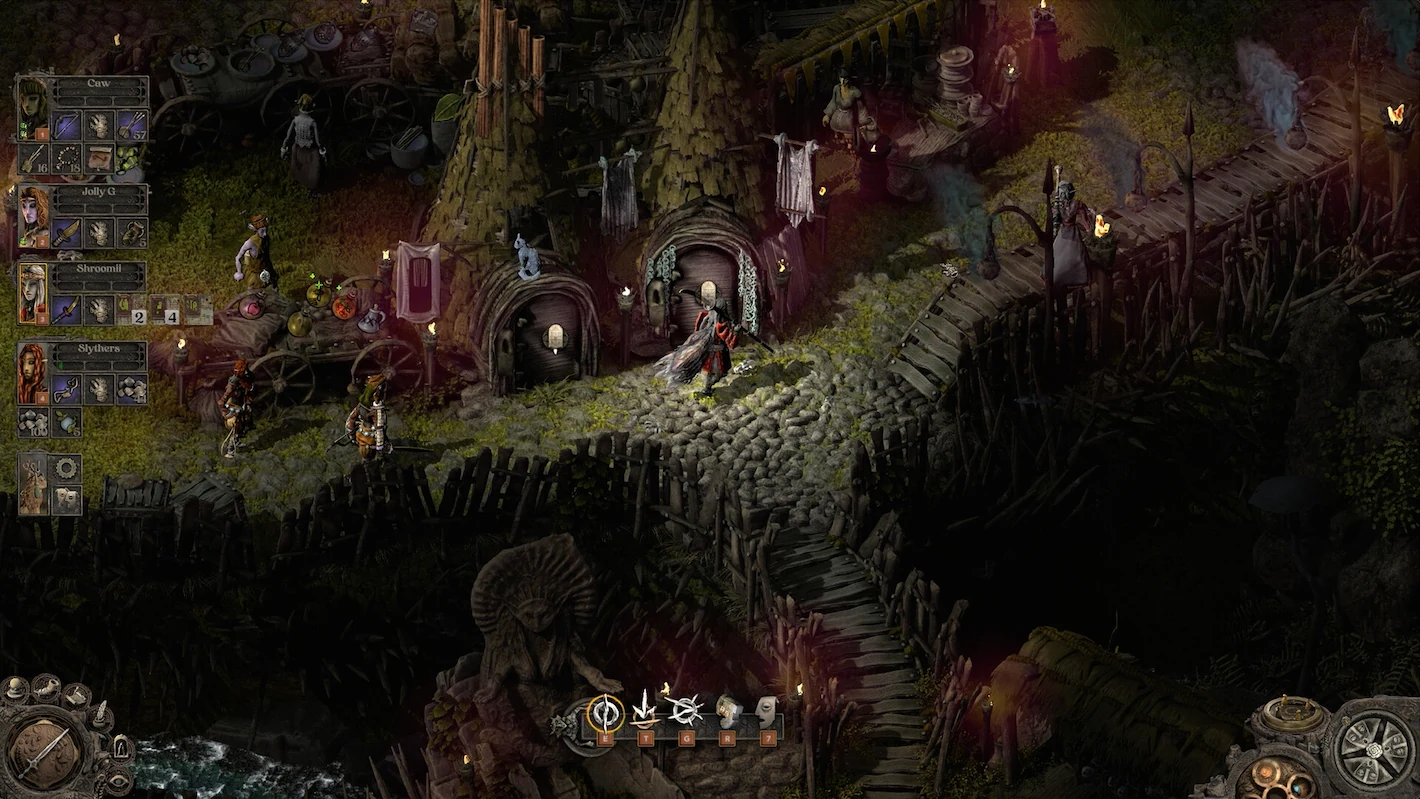
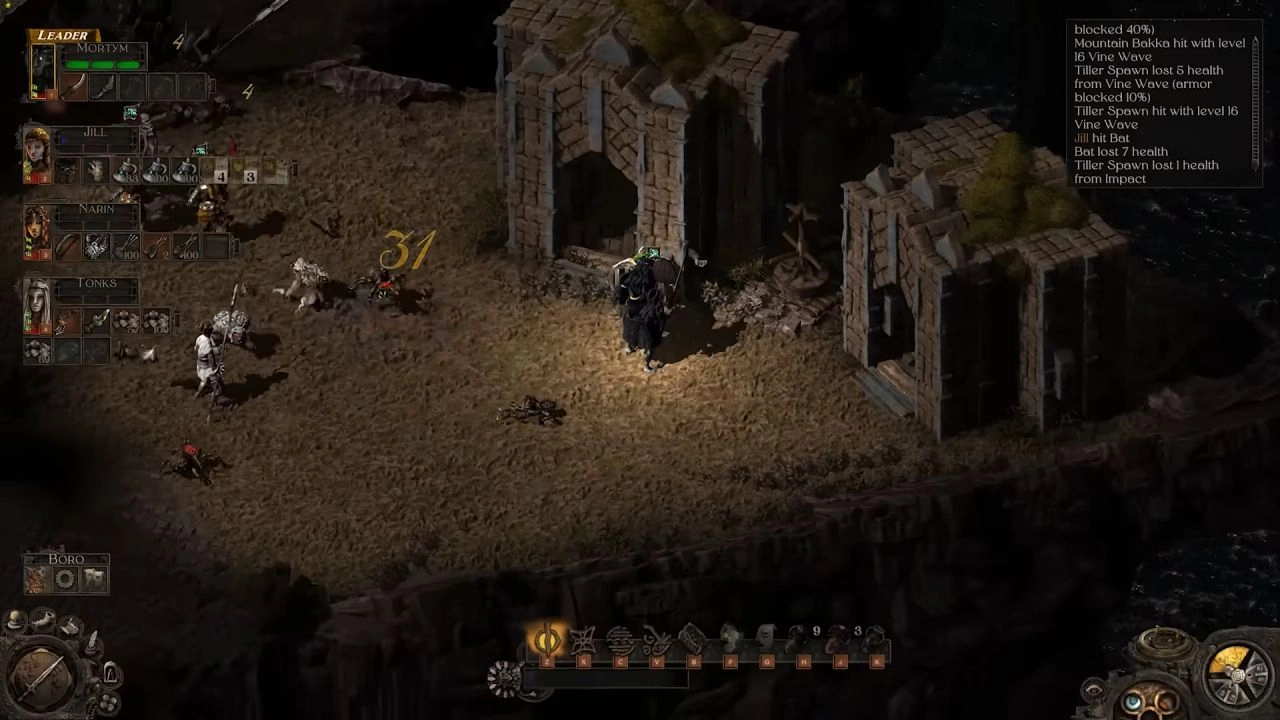
Combat refuses to settle comfortably inside either turn-based or conventional real-time-with-pause structure. Each character’s action resource fills over time, after which the combat dome can pause the encounter and allow an action or target to be selected. The player directly leads one guard while the remaining party members continue fighting according to their equipment and behaviour, although leadership can be switched and support characters can join attacks to create chained combinations. Enemies can be charged, kicked, pinned, launched and struck by coordinated follow-ups, giving battles a scrappy physical quality closer to a party-based brawler than a traditional line of combatants exchanging abilities. The system becomes satisfying once its rhythm is understood because positioning, timing and interaction between characters matter as much as individual damage. It is also initially chaotic. AI companions may act while the player is still interpreting the battlefield, targets can overlap and the visual density of larger encounters sometimes makes exact outcomes difficult to read. The learning process relies heavily on experimentation, and early battles can feel harsher than their underlying difficulty because the game communicates its action economy in unfamiliar terms. Once attacks begin forming chains and the party’s equipment supports a coherent plan, however, combat develops an identity few other CRPGs possess. It is not polished into complete predictability, but its physicality and controlled disorder suit the world perfectly.
pagan systems, improvised solutions and meaningful consequences
Banquet for Fools continually introduces systems that appear almost casually and then become important several hours later. Spells are created through particular trees, songs are acquired and equipped for instruments, deities can provide intercessions when they judge a character worthy and spirit resources may emerge during combat or return through specific consumables. Defeated criminals do not always need to die; the party can incapacitate them and send them toward exile, while mistakes in judgment may create consequences. These mechanics strengthen the sense that Invimona follows customs the player must learn rather than rules designed purely for convenience. Solutions can depend on party statistics, accumulated knowledge, religious relationships or the willingness to experiment with an item whose use was not immediately obvious. The downside is inconsistent communication. Some systems are explained through tips or contextual information, while others remain obscure until trial and error produces an answer. That opacity can make success memorable because the player genuinely discovered how something worked, but it can also create unnecessary doubt about whether a problem requires better reasoning or whether an interface element has simply been misunderstood. Banquet for Fools is at its best when mystery belongs to the world; it is less successful when the controls or feedback become mysterious for the same reason.

movement, animation and the absence of a clear walking option
Traversal generally feels appropriate for the size of the environments, but the party’s constant purposeful movement can look slightly hurried during quiet exploration. A dedicated walk/run toggle is not clearly exposed in the available control information, leaving quieter exploration without an obvious slower movement option. Considering the deliberately stylized character animation, however, constant faster movement rarely becomes visually disruptive. The game contains extensive control customization and continued input improvements, but no reliable current source I found identifies a specific command that switches ordinary movement between walking and running. That does not prove that no contextual or controller-based variation exists in every build, so it would be unsafe to present the absence as absolute; however, the lack of a clearly exposed toggle is noticeable enough to count as a small usability omission. In a more realistically animated RPG, constant running could damage the atmosphere, but Banquet for Fools’ intentionally stylized figures move like animated models on an illustrated stage, making the effect less distracting than it might otherwise be. It remains a minor disadvantage rather than a serious flaw: walking would improve slow observation inside settlements and allow players to match movement to the strange, contemplative tone, but the existing animation style prevents traversal from looking completely unnatural.

difficulty created by attention rather than statistics
The game’s difficulty does not come only from strong enemies. Preparation, navigation, interpretation and incomplete knowledge create pressure long before combat begins. Leaving safety without enough supplies can turn exploration into a costly mistake, while misunderstanding a direction may consume time and resources before the player even reaches danger. The day-and-night structure adds another layer to travel, and some quests become puzzles of language and geography rather than mechanical objectives. This approach creates exceptional immersion for players who enjoy being personally responsible for understanding a world, but it can occasionally cross from demanding into unnecessarily rigid. Important information may not be repeated conveniently, rewards are not always proportional to the effort required and rare opportunities for quick travel mean that a small oversight can produce a substantial return journey. None of these issues destroys the experience, because Banquet for Fools clearly values commitment and discovery over constant reward. Still, its refusal to compromise occasionally treats repetition as the price of authenticity. The best moments make the player feel perceptive; the weaker ones make the player feel that an extra sentence, clearer visual cue or slightly more flexible travel option would have preserved the challenge without diminishing the mystery.
sound, atmosphere and the comfort of walls
The visual design receives immediate attention, but the audio completes the world’s emotional character. Music often feels ritualistic, melancholic or quietly threatening rather than conventionally heroic, supporting a setting where nature is beautiful but rarely safe. Settlements develop their own sense of comfort because the wilderness outside them appears unpredictable, and returning behind walls after an extended journey can produce a stronger emotional response than entering another visually elaborate city in a larger RPG. Environmental sound keeps the island alive without overwhelming its slower periods, while combat audio gives blunt attacks, collisions and party actions enough impact to support the brawler-like system. Voice presentation and dialogue avoid the polished theatrical quality of blockbuster fantasy, which suits characters who should feel like members of a strange working society rather than performers waiting to deliver exposition. Some sound balancing and interface feedback have required post-release attention, and community reports indicate that particular effects have occasionally behaved inconsistently, but the overall audio direction remains exceptionally coherent with the imagery. Banquet for Fools understands that atmosphere is not created by darkness alone. It emerges from the contrast between unsafe roads, unusual wildlife, distant music and the moment a guarded settlement begins to feel like somewhere worth returning to.

an outstanding game that never tries to please everyone
Banquet for Fools is not difficult to recommend because it lacks quality; it is difficult to recommend universally because its strongest qualities are inseparable from its demands. The absence of automatic objectives, the experimental combat, the obscure systems and the commitment to player-written notes are precisely what make it distinctive, yet each can become a reason for another player to leave. It also retains rough edges expected from an ambitious game created by a very small team. Interface readability, occasional technical irregularities, uneven explanations and long corrective journeys prevent the experience from reaching the effortless refinement of the genre’s largest productions. Nevertheless, polish is only one form of achievement. Banquet for Fools creates places, people and mechanics that remain difficult to compare directly with anything else. Its influences can be recognized classic party RPGs, Planescape-like strangeness, Morrowind-style trust in the player and the physical rhythm of action games but the final combination belongs to this world alone. Reviews from PC Gamer, Slant Magazine and Gameffine similarly praised its originality and demanding vision, with published scores ranging from 85 to 90 and 4.5 out of 5. That reception matches the game’s real strength: not perfection, but the confidence to become strange enough that imperfections cannot make it ordinary.