
REVIEW | ASUS TUF GAMING T500 | COMPACT POWER, REAL COMPROMISES
A compact tower that arrives ready for gaming always sounds like the clean answer. No parts list, no cable routing, no BIOS dance, no compatibility headache, no evening spent wondering why a new machine refuses to post. You take it out, plug it in, install the games, and move on. For many players, that is not laziness. That is the whole point. Not everyone wants to build a PC, follow GPU prices, compare motherboards, or learn which power supply is safe enough for a certain graphics card. Some people just want the PC gaming library without the PC building ritual.That is the exact kind of promise behind the ASUS TUF Gaming T500. It is a compact prebuilt desktop made for buyers who want a real gaming PC in a smaller, simpler form. It wants to sit between a console and a traditional tower: easier than building, more flexible than a closed gaming box, and powerful enough to make modern PC gaming feel serious. The idea is attractive, especially for players who want Steam, Game Pass, Epic, mods, keyboard and mouse support, and NVIDIA RTX features without building a machine from scratch. The catch is that a ready-made gaming desktop still has to be judged as a desktop. Size, cooling, ports, upgrade freedom and component choices matter. The T500 makes a strong first impression because it looks practical and solves a real problem, but the deeper question is whether that convenience leaves too much behind.
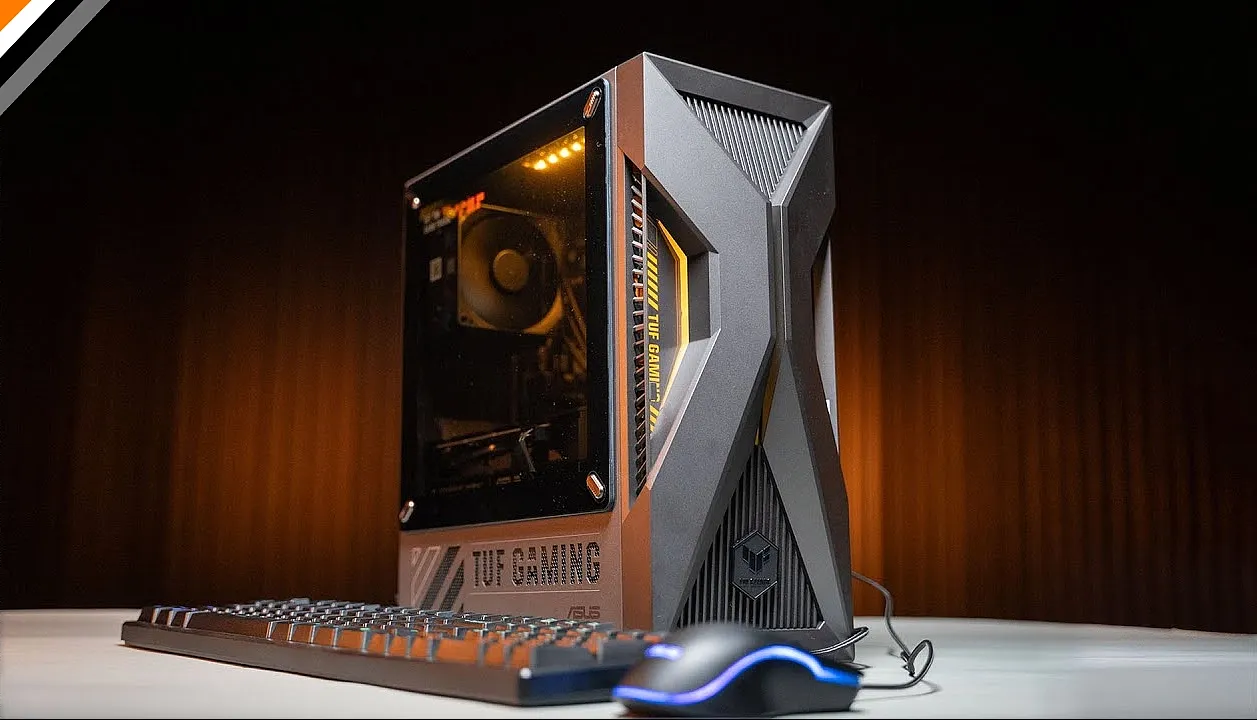
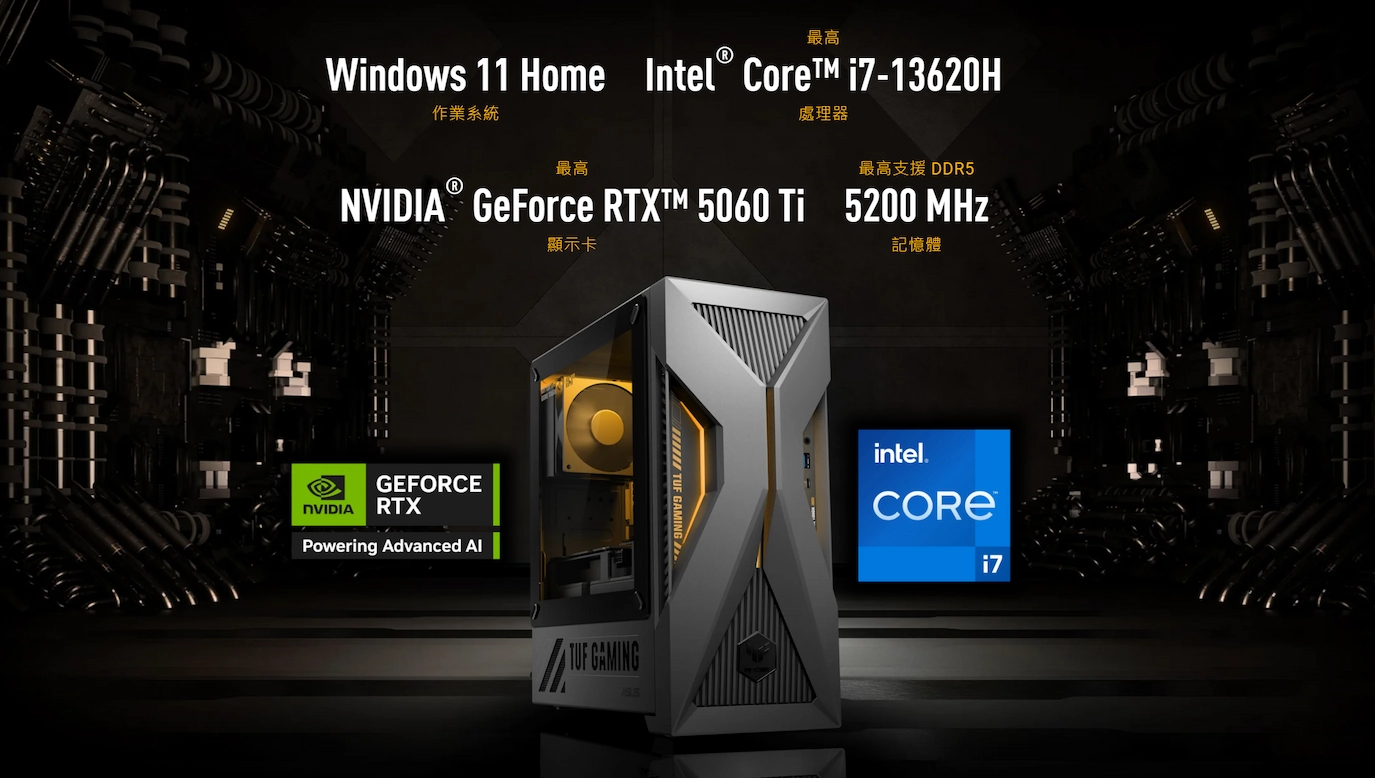
The T500 is not trying to be a giant glass-box desktop for people who already know which motherboard VRM they want. It is closer to a console replacement with Windows inside, a small gaming machine for someone who wants the PC library without the full ritual of building a PC. That makes it easy to understand and easy to like at first glance. But it also makes it tricky to judge. Because this is not a normal desktop in the classic sense. The Intel version uses mobile-class processor options like the Core i7-13620H and Core i5-13420H, while the graphics side can reach proper desktop gaming territory with NVIDIA RTX options, including RTX 5060 and RTX 5060 Ti configurations depending on market. That combination gives the machine a strange identity. It has enough GPU muscle to feel like a serious gaming PC, but some of the internal logic feels closer to a compact laptop-style platform placed inside a small tower. That is not automatically bad. It can help with space, heat targets, power use and price. It also lets ASUS build a smaller, cleaner machine for people who do not want a full ATX desktop under the desk. But it does create limits. A desktop should not only be judged by what it can run today. It should also be judged by how easy it is to live with three years later. That is where the T500 earns respect, but also loses points.
a small tower with a clear purpose
The best thing about the ASUS TUF Gaming T500 is that it knows who it is for. This is not a boutique custom PC with expensive parts arranged like a showroom piece. It is a practical prebuilt for someone who wants a compact gaming desktop that can sit near a monitor, under a small desk, or even near a TV without looking like a full-size tower from the old gaming cave era. The design fits the TUF brand well enough. It is simple, dark, slightly aggressive, and clearly gaming-focused without trying too hard to become a luxury object. The smaller case gives it a more living-room-friendly shape, which matters more than some desktop purists want to admit. Not every PC gamer has space for a big case, a huge monitor, speakers, accessories and a full setup. Some people want a machine that behaves like a PC but does not demand half the room. That is where the T500 makes sense. It can be the first proper gaming PC for someone moving away from consoles. It can be a dorm-room machine. It can be a ready-made family gaming desktop. It can also work for players who just do not want to build anything and are tired of watching component prices jump around. There is value in that. PC building is fun when you like it. It is not fun when you only want to play games and every part number feels like homework. A prebuilt like this removes that wall. The T500 arrives as a complete system, with Windows, storage, memory, graphics, Wi-Fi and the usual ASUS software layer already there. For the right buyer, that convenience matters. The issue is that convenience is never free. Sometimes you pay for it with money. Sometimes you pay for it with upgrade limits, port choices, cooling compromises and parts that are not as flexible as a standard desktop build. The T500 asks for that second kind of payment.
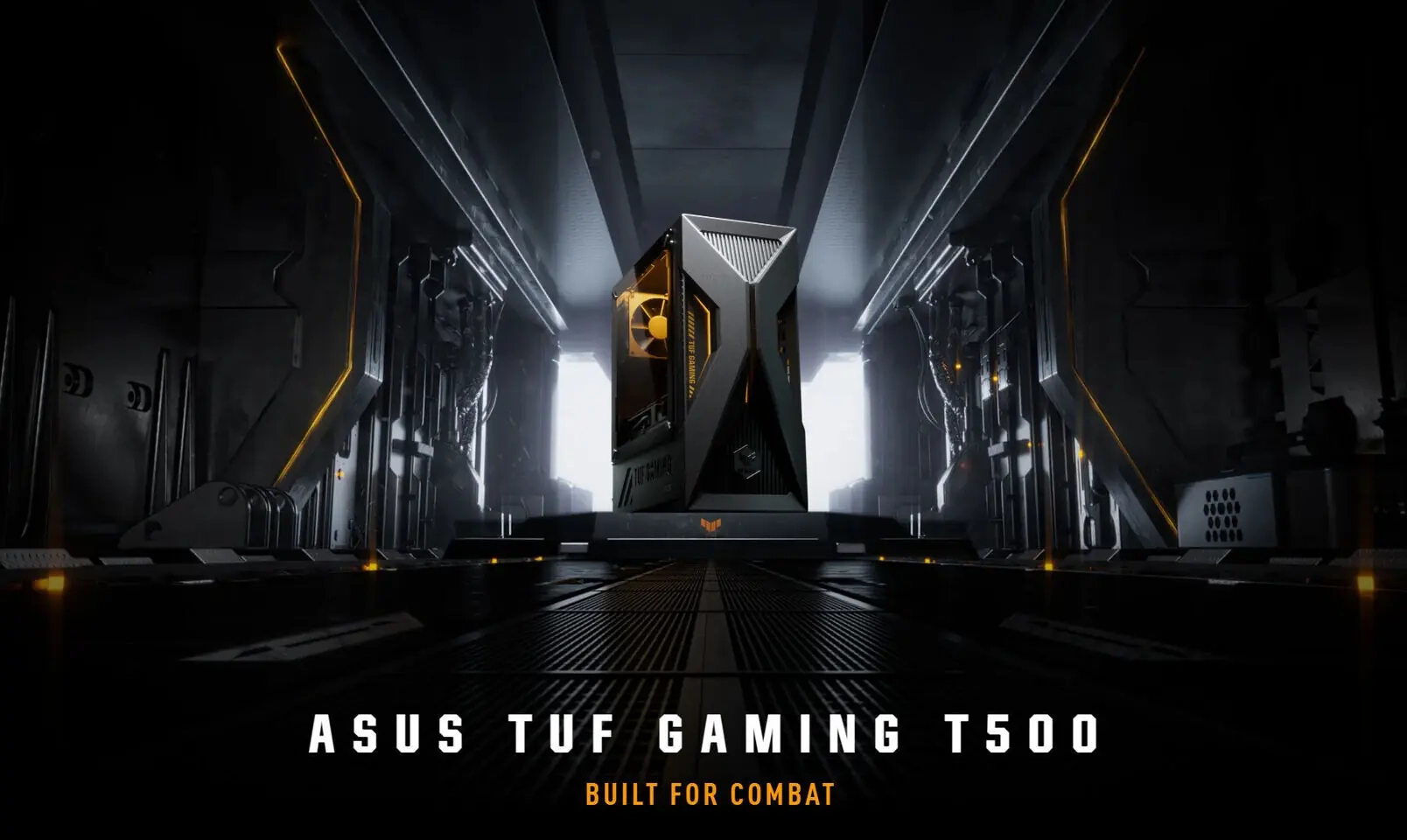
gaming performance lives on the gpu
The reason this machine works as a gaming desktop is simple: the GPU matters most, and ASUS gives the T500 proper NVIDIA graphics options. Depending on the exact model and region, the T500 can be configured with cards such as RTX 5060 and RTX 5060 Ti. That puts it firmly in the modern 1080p and entry-to-mid 1440p gaming conversation, especially when DLSS and frame generation support enter the picture. For the kind of buyer this machine targets, that is probably enough. Most people looking at a compact prebuilt are not trying to run every new game at ultra settings on a 4K high-refresh monitor. They want Fortnite, Call of Duty, Forza, Cyberpunk, racing games, shooters, RPGs, survival games, Game Pass titles, Steam libraries and everyday PC use without constant tweaking. In that role, the T500 makes sense. The RTX 5060 Ti configuration is the more interesting version because it gives the machine more breathing room. The RTX 5060 version can still be a good fit for 1080p, but VRAM and future game requirements become part of the discussion faster. Modern PC games are not getting lighter. Texture packs, ray tracing, open worlds and unoptimized launches can punish lower VRAM cards quickly. That does not make the RTX 5060 useless, but it does mean buyers should understand what they are buying. The Intel CPU side is more complicated. A Core i7-13620H is not weak. It is a capable chip, with enough threads and boost behavior for gaming, multitasking, browsing, streaming apps and general work. But it is still a mobile-class processor inside a desktop-shaped machine. That matters for expectations. A buyer may see a tower and assume normal desktop CPU behavior, normal desktop motherboard freedom and normal long-term upgrade paths. The T500 does not fully live in that world. In actual gaming, the GPU will carry most of the weight. That is good news for the T500. If the graphics card is strong enough for the target resolution, the experience can feel very solid. But the CPU and motherboard approach still shapes the long-term personality of the machine. It is not the same as buying a standard desktop platform where a future CPU swap is part of the plan. That is the T500’s whole story in one place: good performance today, less freedom tomorrow.
the prebuilt advantage is real
It is easy to criticize prebuilts because many of them deserve it. Some cut corners on power supplies, cooling, motherboards, memory configurations or software. Some look impressive in product photos but hide awkward compromises inside. But it would be unfair to treat every prebuilt as a bad idea. The ASUS TUF Gaming T500 has a real audience. Some buyers do not want to spend weeks comparing parts. Some do not want to risk bending pins, fighting case cables or discovering that a BIOS update is needed before a CPU works. Some just want a gaming PC that boots, connects to Wi-Fi, runs games and fits in a small space. For those people, this machine has a clean appeal. It is compact, branded, modern enough, and easier to buy than a full custom build. The TUF name also helps because ASUS has already trained buyers to expect a practical gaming product rather than a premium ROG showpiece. The T500 feels like that: not exotic, not luxurious, but aimed at doing the job. There is also a market reality behind it. Component pricing can make prebuilt desktops look better than they used to. When GPU, RAM and storage prices shift, a complete system can sometimes become the more sensible purchase. A buyer who only needs a good 1080p or 1440p gaming machine may not save enough by building from scratch to justify the time, risk and research. That is why the T500 cannot be dismissed. It is not trying to beat a perfectly planned custom PC. It is trying to beat the stress of building one. And for many people, that is a fair fight.

where the desktop feel starts to thin out
The T500 becomes less convincing when you start judging it as a long-term desktop platform. A desktop PC usually carries an unspoken promise: more space, more airflow, easier service, easier upgrades, more ports and more freedom than a laptop. The T500 gives some of that, but not all of it. The full-size GPU is the best part of the design. That gives the system better gaming potential and a more realistic future than a gaming laptop with similar graphics branding. A desktop GPU can be replaced more easily than a soldered laptop GPU, and that matters. It means the machine has some upgrade life, at least on the graphics side. But the CPU side is not as free. Using a mobile-class Intel processor changes the character of the machine. It can help with compactness and efficiency, but it also reduces the feeling that this is a normal desktop platform. If the buyer expects a traditional motherboard, socketed upgrade path and years of part swapping, the T500 may disappoint. Ports are another practical issue. A compact system should still feel generous because desktop users collect devices quickly: keyboard, mouse, headset, controller, external drive, capture card, webcam, USB hub, phone cable, maybe a DAC or card reader. If rear I/O is limited or too basic, the user starts reaching for hubs sooner than expected. That is not a disaster, but it is one of those small daily compromises that makes a prebuilt feel less mature. Cooling is also part of the concern. Compact gaming systems live close to the edge. They can be quiet and efficient when tuned well, but less internal space usually means less airflow margin. Heat is not only about today’s temperatures. It is also about dust, fan noise after a year, GPU upgrades later, and how comfortable the system feels during long gaming sessions. The T500 is not badly designed because it is compact. But compact desktops must always prove that the smaller body does not punish the owner too much. Here, the answer is mixed.
ready to play, harder to upgrade
The title really is the review. The ASUS TUF Gaming T500 is ready to play, but harder to upgrade than a more traditional desktop. That does not make it a bad product. It just means it should be bought for the right reasons. If someone wants a clean, compact, ready-made gaming PC and plans to keep it mostly as it is, the T500 makes sense. Pick the right GPU configuration, make sure the RAM and SSD are enough, and it can be a very usable machine. It will handle everyday work, media, browsing and gaming without asking the owner to become a PC technician. But if someone wants a long-term platform, the conversation changes. A custom desktop or a larger prebuilt with standard parts may be a better choice. More airflow, more motherboard flexibility, more ports and easier CPU upgrades matter over time. The T500 is convenient, but convenience narrows the road. That is why this review does not treat it like a bad deal. It is more interesting than that. It has a real place. It solves a real problem. It gives people a way into PC gaming without the full PC-building ritual. It also carries enough compromises that it cannot be praised blindly. A proper desktop should age well. The T500 can age well for a certain buyer, especially if the GPU configuration is chosen carefully. But it is not the kind of machine that invites endless future rebuilding. It feels more like a well-packaged gaming appliance with a stronger PC soul than a console, but less freedom than a classic tower. That middle ground is useful, but imperfect.

design and daily use
The compact design is probably the T500’s strongest emotional advantage. It does not look like a tiny office PC pretending to be a gaming machine, and it does not look like an oversized RGB cabinet either. It sits between those extremes. The case has enough TUF identity to feel gaming-oriented, but it keeps the footprint small enough to be practical. That matters in daily use. A machine can be powerful and still annoying if it takes too much space, makes too much noise or looks out of place. The T500 is easier to imagine under a small desk or beside a TV. It is also easier to recommend to someone who wants one box, one monitor and no drama. Noise and heat will depend on configuration, room temperature and load, but the general concern remains the same: small gaming desktops have less room to breathe. This is not a system for people who want to stuff in high-end future parts and treat the case like a blank canvas. It is a system for people who accept the design as a mostly finished product. ASUS also adds its usual software ecosystem. That can be useful for updates, monitoring and controls, but many users will still want to clean up what they do not need. Brand desktops often arrive with more software than necessary, and that remains part of the prebuilt experience. Some buyers will not care. Others will remove half of it on day one. The good side is that the machine should be easy to start using. The less good side is that “ready to use” does not always mean “clean.” That is another small prebuilt compromise.
performance expectations
With the right GPU, the ASUS TUF Gaming T500 should be viewed as a strong 1080p gaming machine and a capable 1440p option depending on the game and settings. The RTX 5060 Ti model is the one that fits the review score better because it gives the T500 more headroom. The RTX 5060 model can still work well, but buyers should be more careful with expectations in heavier modern games. DLSS support helps a lot. Modern NVIDIA features can make a midrange GPU feel stronger, especially in games that support upscaling and frame generation properly. That does not replace raw power, but it does extend the useful range of the system. For a compact prebuilt, that matters. The CPU should be fine for most gaming scenarios, especially where the GPU is the main limit. But CPU-heavy games, simulation titles, strategy games, large open worlds and heavy multitasking can expose the difference between a mobile-class chip and a stronger desktop processor. The Core i7-13620H is capable, but it is not the same kind of platform choice as a normal desktop i7. That distinction is important. The T500 is not weak because it uses an H-series processor. It is limited in a different way. It asks the buyer to accept a compact design philosophy rather than a traditional desktop upgrade philosophy. This is why the review score lands at 80. The performance case is strong enough. The platform case is more debatable.
the buyer who should consider it
The ASUS TUF Gaming T500 is best for someone who wants a simple path into PC gaming. A console player moving to PC could understand it immediately. A student with limited desk space could use it easily. A family looking for a ready-made gaming machine could avoid the confusion of custom parts. A casual-to-serious player who wants Steam, Game Pass, Battle.net, Epic, mod support and keyboard/mouse freedom could be happy with it. The wrong buyer is the person who already thinks about future CPU swaps, airflow tuning, case changes, motherboard features and long-term part cycling. That buyer should probably build a PC or buy a larger prebuilt with more standard desktop parts. The T500 is not a bad choice because it is limited. It is a bad choice only if the buyer expects the wrong thing from it. As a compact ready-made gaming PC, it makes sense. As a forever desktop platform, it is less convincing. The ASUS TUF Gaming T500 is a good compact prebuilt gaming PC, but not a perfect desktop. It is easy to understand, easy to place and easy to recommend to the right buyer. With the right RTX configuration, especially the stronger 5060 Ti version, it has enough gaming power to feel serious at 1080p and useful at 1440p. The problem is not that the T500 fails. It does not. The problem is that it sits between two worlds. It has the shape and purpose of a desktop, but some of its design choices feel closer to a compact appliance or laptop-style platform. That gives it size and convenience, but it takes away some of the long-term freedom that makes desktop PCs special. That is why 80 fits. This is a solid machine for people who want to play, not build. It is less ideal for people who want to upgrade, modify and keep rebuilding the same platform over years.