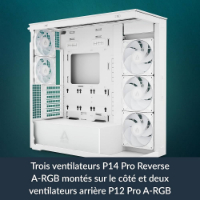
REVIEW | ARCTIC XTENDER WHITE | A WHITE SHOWCASE CASE WITH REAL AIRFLOW
ARCTIC Xtender White is not the kind of PC case that tries to hide what it wants to be. This is a large, clean, glass-heavy showcase case built for people who want their hardware to be visible, their build to look expensive and their airflow to still make sense. That last part matters more than it may seem at first, because many modern panorama-style cases look beautiful in product photos and then become questionable once you start thinking about heat, fan placement, GPU size and real component load. ARCTIC clearly understands that problem. The Xtender White is not just a white box with glass on it. It is a serious E-ATX case with five pre-installed A-RGB fans, room for big cooling hardware and enough internal space to make high-end builds feel realistic instead of forced. The white version is especially interesting because it fits directly into the kind of clean PC build that has become popular over the last few years. White GPU, white motherboard accents, white AIO, white sleeved cables, soft RGB and a large glass view into the system. That look can easily become cheap if the case feels thin, cramped or badly planned, but the Xtender White has enough presence to avoid that. It looks like a case designed for a proper showcase build, not just a budget frame wearing a nicer color.

a case built around presence
The first thing that stands out about the ARCTIC Xtender White is the visual footprint. This is not a shy case. It has the wide, open, panorama-style look that immediately puts the internal components on display. The clear glass design gives the build a strong front-and-side showcase effect, and that makes it a very good match for people who actually care about how their PC looks on the desk. Some cases are functional boxes. This one wants to be seen. That design works especially well in white. Black cases can hide detail, shadows and cable mistakes more easily. White cases expose everything. That can be a problem if the layout is messy, but it can also make a build look much more premium when done right. The Xtender White gives builders a good foundation for that kind of clean look. It has enough visual space around the components, and the included A-RGB fans already help the case feel complete before the builder even starts adding extra lighting. The case also avoids the worst kind of gamer styling. It is not covered in aggressive shapes or oversized branding. It looks modern, but not childish. That gives it a wider appeal. It can fit a gaming build, a creator build or a workstation-style setup without looking out of place. A lot of modern cases either go too plain or too loud. The Xtender White sits somewhere better. It is clearly premium, clearly visual, but it does not scream for attention with every corner. But size is part of the deal. The Xtender White is not a small case, and anyone thinking about buying it should understand that first. It is built for large hardware, big cooling and visual space. That means it needs desk room or floor space. For compact builds, this is not the case. For someone building around E-ATX, a large GPU, big radiators and a clean white theme, the size starts to make more sense.
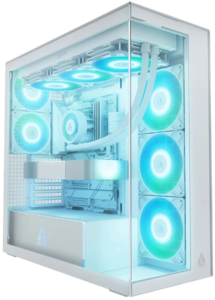
airflow is the reason this case works
The most important thing about the Xtender White is that the design is not only about glass. ARCTIC has a strong cooling background, and that matters here. A glass-heavy case can easily become a thermal compromise if the airflow is treated as an afterthought. The Xtender does not feel like that kind of case. It comes with five pre-installed A-RGB fans, and the internal layout is clearly built to move air through a large showcase chassis. That is the part that makes the case more interesting than a simple aquarium-style shell. It gives builders the visual style they want, but it also gives them real cooling hardware from the start. Five included fans are not a small detail. Many cases look cheaper at first and then become more expensive once you realize you need to buy extra fans to make them perform properly. With the Xtender White, ARCTIC gives you a stronger starting point. The included fan setup also makes the case feel more complete. A lot of premium cases arrive almost empty, which gives enthusiasts freedom, but also pushes the real cost higher. Here, the buyer gets a case that already has a cooling identity. That does not mean every builder will keep the stock setup forever, but it does mean the Xtender White is not asking you to solve the airflow problem from zero. For most users, that is a big advantage. Radiator support is another major strength. The case supports large cooling configurations, including serious radiator options, which immediately puts it in high-end build territory. That gives builders a lot of flexibility. A large AIO for the CPU, extra airflow for the GPU, or even more ambitious liquid cooling ideas all make sense here. This is not a case where the builder has to squeeze every part into place and hope the airflow survives. It is clearly meant for bigger systems. That said, airflow still depends on setup. The included fans are useful, but fan curves matter. A strong fan setup can become louder than expected if everything is left too aggressive. This is where ARCTIC gives you the hardware, but the builder still has to do the tuning. A little BIOS fan curve work can make a big difference. Out of the box, the case has strong cooling potential. With better fan tuning, it can feel much more refined.
space for serious hardware
The Xtender White is built for serious components. E-ATX support makes it a natural match for larger motherboards, and the internal space gives modern GPUs more breathing room. That matters because high-end graphics cards are not getting smaller. A case that looked large a few years ago can suddenly feel normal once you add a massive GPU, thick radiator, cable extensions and multiple storage devices. This case gives builders more freedom. You can plan a clean white build without immediately fighting the frame. Cable management matters a lot in a showcase case, and the Xtender gives enough room to make the visible side look clean if the builder takes the time. A white case with glass is unforgiving, so that space is important. If the cables are messy, everyone will see it. If the routing is clean, the whole system looks much more premium. The front and side glass design also makes component choice more important. This is not the case where you throw in random hardware and hope the panel hides it. The Xtender White rewards a matched build. White GPU, white motherboard heatsinks, white AIO, white fans and white cables will look excellent here. Black parts can still work, especially with contrast, but the case really shines when the whole build follows the same visual direction. There is one practical warning: because this is a large showcase case, it is probably best for builders who already know what they want. Beginners can still use it, but the size, cable planning and visual openness mean you need patience. This is not a tiny simple case where everything disappears behind panels. It is a case that asks you to care about layout.
the white version has real appeal
White PC cases are everywhere now, but not all of them look premium. Some look good only in product photos. The Xtender White has a stronger foundation because it combines the white finish with a large glass view and serious cooling layout. It has that clean, modern, high-end look that works well for gaming setups, creator stations and display builds. The A-RGB fans help too. ARCTIC usually has a more performance-focused image than many RGB-heavy brands, so seeing a white showcase case from them feels a little different. It does not feel like a company chasing lights for the sake of lights. It feels more like ARCTIC trying to enter the PC case market through something that matches modern build trends while still leaning on cooling credibility. That is probably the best thing about this case. It does not feel like only a fashion product. It is stylish, yes, but the cooling support, radiator space and included fans give it more substance. A white glass case without airflow is just decoration. The Xtender White has more ambition than that. The white finish also makes the case feel more expensive than a standard black tower. That is not always fair, but it is true visually. A clean white interior makes RGB softer, makes hardware easier to see and gives the build a brighter, more open character. For users who are building a themed PC, that matters. You do not buy a case like this only because you need a metal box. You buy it because the case is part of the build’s identity.

build experience and practical thinking
A good case should not only look good after the build is finished. It should also make the building process less painful. The Xtender White has the advantage of space, and that helps. Larger cases usually give you more room to work with, especially around the motherboard, GPU and cable routing areas. That does not automatically make every part perfect, but it reduces the feeling of constantly fighting the chassis. The showcase layout also makes planning more important. Before installing everything, it is worth thinking about the final look. Where will the AIO tubes sit? Where will the GPU power cable run? Will the visible cable path look clean? Are the RGB fans working together visually? In a closed black case, those questions matter less. In the Xtender White, they matter a lot. This is where the case becomes both easier and harder. Easier because there is room. Harder because the visual standard is higher. The case gives you the space to build something clean, but it does not hide laziness. That is not a flaw exactly. It is just the nature of this type of chassis. If you want a showcase case, the build has to be treated like a showcase build. The included fans also reduce the first-build cost and effort. You do not have to immediately buy a full fan pack just to make the case feel alive. Still, users who are picky about noise may want to tune fan curves or eventually replace fans depending on taste. The stock setup gives the case its airflow personality, but silence lovers will still want to spend time adjusting it.
noise and cooling balance
The Xtender White has strong cooling potential, but it should not be confused with a silent case by default. This is an airflow-focused showcase case with multiple fans. That means the fan curve matters. If the fans run too aggressively, the case can sound busier than some users expect. That is not surprising, but it is worth mentioning because a premium-looking case should also feel refined in daily use. The good news is that fan noise is usually easier to fix than bad airflow. If a case has poor airflow, you can only do so much. If a case has strong airflow but the fan curve is too aggressive, you can tune it. That is the better problem to have. With careful adjustment, the Xtender White can offer a better balance between cooling and noise. For high-end CPUs and GPUs, the extra airflow headroom is useful. Modern components can push a lot of heat into a case, especially during gaming, rendering or heavy workstation tasks. A case like this gives the builder enough cooling options to manage that heat properly. It is not only about temperatures on a spec sheet. It is also about keeping the system comfortable over long sessions. The important thing is expectation. If you want the quietest possible PC, a large glass airflow case with several fans may not be your first choice. If you want a white showcase case that can handle serious hardware and still breathe, the Xtender White makes much more sense.

not perfect, but very strong
The Xtender White is not flawless. It is big, and that alone makes it wrong for some users. It can also become louder than expected if the fans are left too aggressive. Builders who want a compact, quiet, invisible case should not look here. This is a large showcase chassis with performance ambition, not a minimalist small tower. There is also the usual glass-case issue: the cleaner the design, the more every small mistake becomes visible. Bad cable routing, mismatched components or messy RGB can make the build look less premium than the case deserves. That is not exactly ARCTIC’s fault, but it is part of owning this type of chassis. The case gives you a stage. You still have to build something worth showing on it. Some users may also wish for even more practical cable space depending on the power supply, cable extensions and storage setup. Large cases can still become busy behind the scenes, especially when builders use thick sleeved cables and multiple RGB connections. The visible side may be clean, but the hidden side still needs planning. The good part is that the Xtender White gives you enough tools to do the job properly. The space is there. The cooling hardware is there. The radiator support is there. The design is there. This is why the case deserves a strong score. It is not just another white case trying to look nice. It is a genuinely capable chassis with a clear identity.
who should buy it
The ARCTIC Xtender White makes the most sense for builders planning a large, clean, high-end system. If you are building around a powerful GPU, a white AIO, an E-ATX board or a full white theme, this case gives you the right kind of foundation. It is especially good for users who want the system to look premium without completely sacrificing airflow. It also makes sense for creator builds. A workstation does not have to look boring, and the Xtender White can fit a clean creator setup very well. It has enough room for strong hardware and enough style to look good in a studio or desk setup. This is not only a gamer case. It can serve as a serious, good-looking PC chassis for people who use their machine for work and play. Who should skip it? Anyone who wants compact. Anyone who wants invisible. Anyone who does not care about glass or presentation. Also, users who do not want to spend time managing cables or tuning fans may be happier with a simpler airflow tower. The Xtender White is not difficult for the sake of being difficult, but it does reward effort.