PREVIEW | ZEROSPACE | COMMAND, CHOOSE, CONQUER
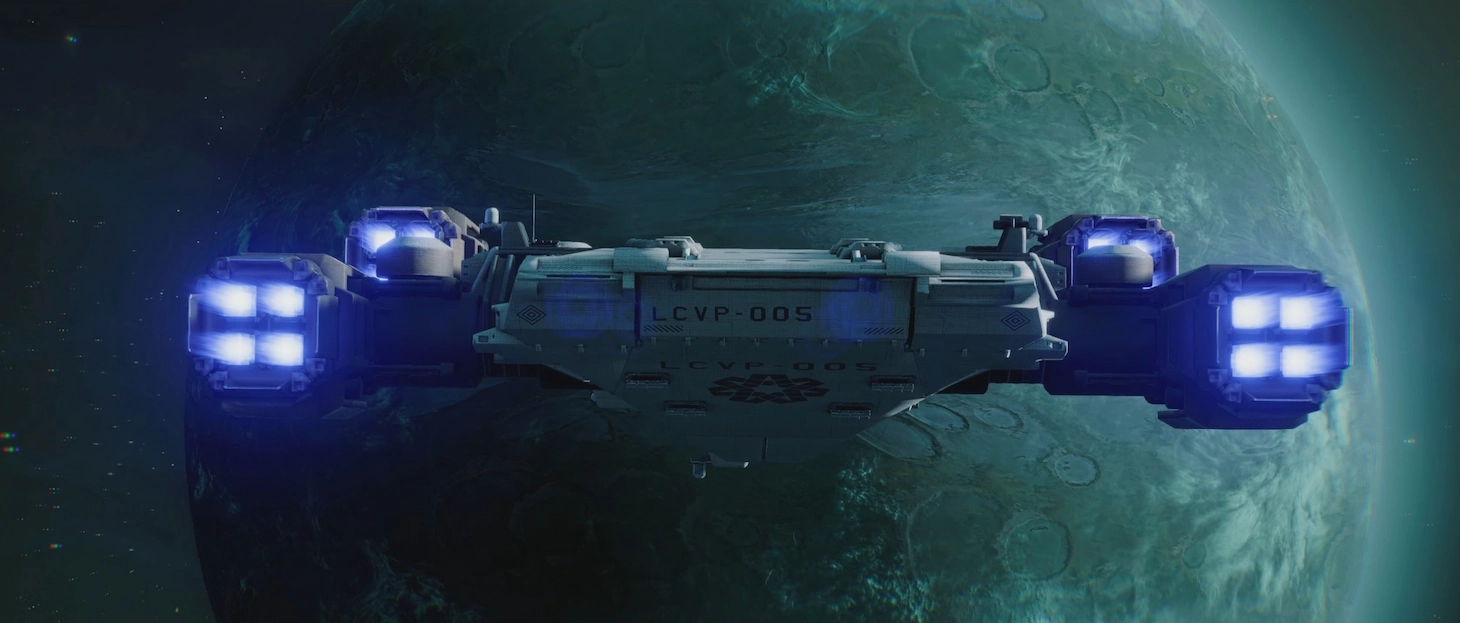
A fleet gathers above the Orion Sector while rival civilizations, mercenary armies and political interests prepare to decide who will control humanity’s next frontier. ZeroSpace enters Steam Early Access with ambitions far beyond delivering another competitive real-time strategy game. Its developers are attempting to combine traditional base building and large-scale battles with a cinematic campaign, crew relationships, dialogue choices, cooperative missions and a persistent Galactic War that turns individual multiplayer matches into part of a wider struggle for territory. The current version already shows why the project has attracted attention: its factions offer meaningful strategic combinations, its combat moves with purpose and its campaign treats commanders as characters rather than anonymous cursors floating above the battlefield. It also remains unmistakably unfinished, with presentation, interface clarity, performance and parts of the narrative requiring substantial improvement before the planned 1.0 release. ZeroSpace is therefore not yet the complete return of the story-driven RTS, but it may be one of the more ambitious attempts to build its future. The game launched through Steam Early Access on July 20, 2026, with the developers describing the release as the beginning of a longer development period shaped by player feedback.

more than another starcraft descendant
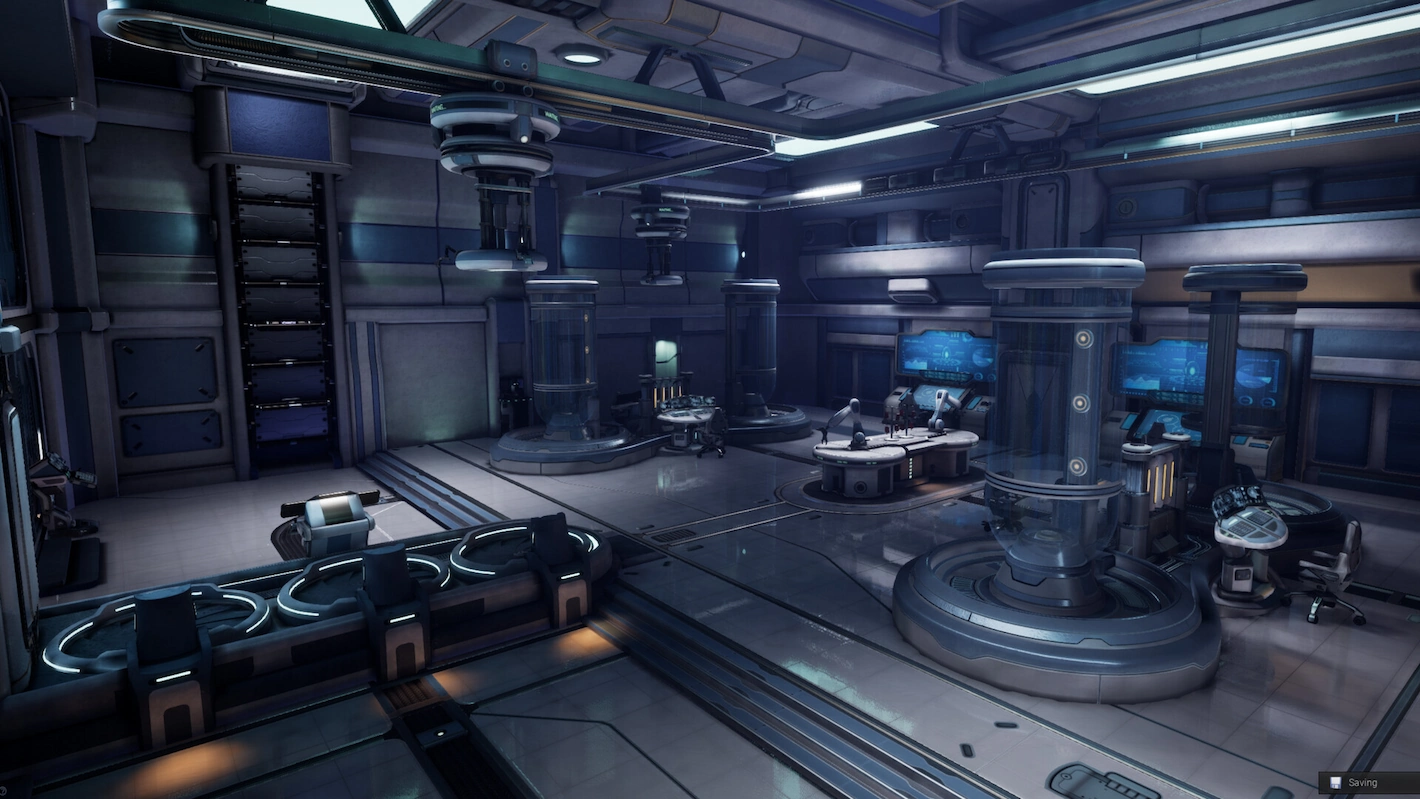
Modern RTS projects are often judged by how closely they resemble StarCraft II, and ZeroSpace does little to hide that influence. Workers gather resources, bases expand across the map, production buildings create specialized units and armies clash through positioning, ability management and economic pressure. Yet imitation is not the project’s final objective. Its larger ambition is to bring together several audiences that have gradually separated within the strategy genre: players who want a cinematic single-player campaign, cooperative groups interested in fighting AI, traditional skirmish fans and competitive players searching for a new long-term multiplayer system. That broad structure is important because real-time strategy has often treated its campaign as preparation for multiplayer rather than a complete attraction. ZeroSpace moves in the opposite direction. Its full campaign plan includes 15 main story missions, 10 hero loyalty missions and 15 side-story missions, supported by dialogue trees and decisions inspired by narrative RPGs. The Early Access build contains only the opening portion rather than the complete storyline, but the intended scale makes clear that the campaign is not a short tutorial attached to the competitive game.The player assumes command of Protectorate forces during a crisis spreading across the Orion Sector, a region populated by multiple alien civilizations and competing political powers. The mothership serves as more than a menu between battles. It is designed as a place where commanders recruit heroes, upgrade capabilities, interact with the crew and make decisions affecting humanity’s position in the wider conflict. The official description presents diplomacy and warfare as interconnected parts of the same campaign, with choices shaping alliances and eventual outcomes. That RPG layer is still developing. Dialogue scenes establish friction within the crew and suggest that the commander cannot trust every authority involved in the mission, but the writing and character presentation do not yet consistently reach the standard implied by comparisons with Mass Effect or Baldur’s Gate. The ideas are present, while the delivery often reveals the limits of the current production. Characters can appear more functional than memorable, and some exchanges exist mainly to move the player toward the next mission. Even so, giving political choices and personal relationships a central role offers ZeroSpace a stronger identity than a campaign built only around escalating enemy armies.
a campaign that wants decisions to matter
The campaign begins with a familiar science-fiction crisis involving humanity, scarce resources and hostile alien forces, but it gradually introduces competing motives inside the player’s own command structure. Briefings, conversations and mission decisions suggest that victory cannot always be measured by destroying every enemy base. The commander may need to decide whom to support, whether force is justified and how much political compromise is acceptable when survival is involved. Mission design attempts to support that narrative variety. Some operations follow the traditional RTS structure of establishing a base, building an economy and advancing across the map. Others place greater emphasis on hero units, defensive objectives, movement through controlled environments or story events that change the purpose of the battle. PC Gamer’s Early Access assessment praised this variety while noting that only the opening act is currently available. Hero characters give these missions another layer. They possess distinctive abilities and can influence the shape of an army without completely replacing conventional units. This balance is essential. Strategy games built around powerful heroes can easily turn ordinary soldiers into disposable background objects, while games that restrict heroes too heavily make them feel like decorative officers. ZeroSpace generally allows specialists to create openings, support formations and respond to dangerous moments without making the rest of the army irrelevant. Loyalty missions planned for the full campaign could become especially valuable. They offer an opportunity to explore characters outside the main conflict and attach mechanical consequences to personal decisions. At present, however, much of that potential remains ahead of the project rather than inside the current build. Early Access players are evaluating the beginning of a structure whose most meaningful narrative branches may not become visible until later acts arrive. This creates an unavoidable limitation for any current preview. The campaign can be judged by the quality of its foundation, but not by the consequences of its choices or the strength of its conclusion. ZeroSpace promises decisions that affect the universe, yet the full evidence needed to measure that claim does not exist today. The opening missions demonstrate intention, not completion.

factions built for combination
Strategic customization is one of the project’s most interesting systems. Instead of selecting a single faction and accepting one fixed technology tree, players can combine a main faction with a mercenary faction, hero or specialist options. The design allows commanders to preserve the identity of a core army while adding tools that address weaknesses or support a preferred style. The Early Access plan includes four principal factions and six mercenary groups, while the broader 1.0 vision expands the selection further. These combinations can alter unit composition, economic priorities and tactical possibilities without requiring the developers to create an entirely separate complete faction for every playstyle. This modular structure gives experimentation real value. A faction strong in direct ground combat may gain mobility, support abilities or specialized ranged units from its mercenary partner. Another commander can use the same core faction but construct an army around different specialists and therefore approach the battlefield through another set of priorities. The system has the potential to create substantial strategic diversity while remaining readable enough for players to understand what they are facing. The danger is balance. Every additional combination multiplies the number of interactions that must be tested across campaign, co-op and competitive modes. A mercenary unit that provides useful flexibility in one context may erase an intended faction weakness in another. Hero abilities that feel reasonable during a campaign mission may become oppressive in multiplayer when coordinated with a specific economy or army composition. Early Access is an appropriate environment for solving those problems, provided the developers resist making constant dramatic changes that prevent players from learning stable rules. ZeroSpace needs balance updates, but it also needs recognizable faction identities. If every army can obtain equivalent answers through mercenaries, the customization system could gradually weaken the distinctions it was designed to expand. At its best, the system allows players to build an army that feels personally constructed rather than selected from a menu. That is a significant advantage in a genre where faction choice usually happens before the match and remains largely fixed afterward.
fast combat without constant exhaustion
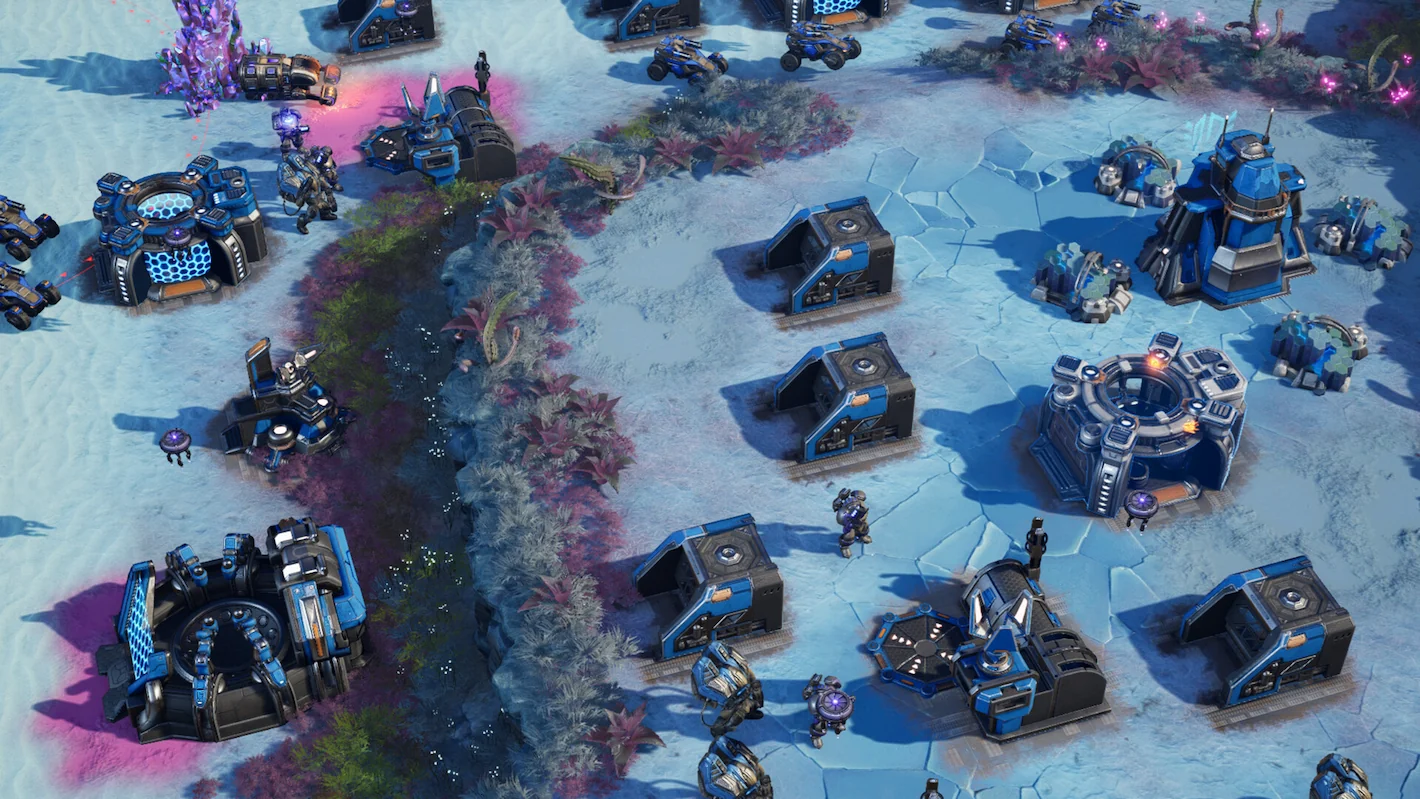
ZeroSpace aims to preserve the speed and responsiveness expected from a competitive RTS while reducing unnecessary mechanical strain. Base building, unit production and army control remain important, but the interface includes formation and selection tools intended to make larger forces easier to manage. PC Gamer highlighted quick formation controls as one of the project’s smarter mechanical additions. The combat has a strong immediate rhythm. Units respond quickly, abilities create visible tactical opportunities and armies can reposition without feeling trapped by excessive animation delays. Battles encourage active control, yet the game does not appear interested in measuring skill only through the number of actions performed every minute. Efficient commands and accessible automation reduce repetitive input without removing the need for strategic judgment. That distinction matters. Simplifying a control does not automatically simplify a strategy. Allowing players to organize units more efficiently can shift attention toward positioning, target selection, reinforcement timing and economy. ZeroSpace appears most successful when modern interface ideas remove friction while preserving meaningful choices. Large battles are less consistently readable. Effects, units, terrain and interface elements can compete for attention, making it difficult to identify the most important threat during crowded encounters. Visual clarity is not merely a cosmetic issue in an RTS. Players must understand which units are attacking, which abilities are active and why a formation is collapsing. When that information becomes buried beneath effects, decision-making turns into reaction. The art direction also lacks a fully distinct visual signature in its current state. Ship and vehicle designs are often attractive, but several environments and character presentations resemble familiar combinations of StarCraft and Mass Effect without establishing an equally recognizable personality of their own. An art overhaul led by veteran artist Aaron Kambeitz has improved the project, though the overall presentation still needs cohesion and polish. Those limitations do not prevent the battles from being enjoyable. The core movement, production and combat loop already provides a strong foundation. The larger question is whether the developers can make every important decision as visually readable as it is mechanically interesting.
co-op has room to become a major strength
Competitive multiplayer may provide an RTS with longevity, but a large portion of the genre’s audience prefers campaigns, skirmishes against AI and cooperative play. ZeroSpace appears aware of that reality. Its Early Access offering includes campaign content, AI skirmishes, cooperative modes, PvP matches and custom games rather than asking every player to enter a ranked ladder. Co-op missions allow players to combine faction tools against computer-controlled opposition, creating a less stressful environment for learning units and testing strategies. This mode can become one of the project’s most durable attractions if it develops meaningful progression and enough mission variety. StarCraft II demonstrated how strongly cooperative commanders can extend the life of an RTS, particularly for players who enjoy strategy but do not want every session to become a test against another human. The current co-op foundation is promising, though it still needs deeper progression, stronger tutorial support and more polished mission flow. AI behaviour must also improve enough to create pressure without relying only on larger waves or statistical advantages. Cooperative strategy becomes repetitive when every challenge is solved by surviving predictable attacks and building the same final army. ZeroSpace has an advantage because its faction-combination system naturally supports cooperative experimentation. Two players can select armies that complement one another, creating relationships between frontline durability, mobility, economy and support abilities. That interaction can make cooperation strategic rather than merely allowing two independent armies to occupy the same map. The developers must ensure, however, that multiplayer and tournament priorities do not absorb attention needed by campaign and co-op players. The project has promoted a substantial invitational tournament and connected parts of its Galactic War presentation to prominent community personalities. That strategy may help visibility, but it risks giving the impression that competitive promotion matters more than improving the areas most RTS players are likely to use. PC Gamer identified this streamer-focused marketing as one of the Early Access launch’s more distracting choices.

galactic war gives every match a larger purpose
Galactic War is the feature with the clearest potential to distinguish ZeroSpace from other modern RTS projects. Rather than treating multiplayer matches as isolated contests, the mode places them inside a seasonal struggle for control of the Orion Sector. Players choose a faction, fight across different worlds and contribute to territorial changes that affect the wider campaign. Season Zero began alongside the Early Access launch and serves as the first public iteration of the system. The developers describe it as a persistent multiplayer conflict in which factions compete for galactic dominance, with individual battles influencing the broader map. The concept resembles the community-driven wars seen in games such as Helldivers 2, but with rival player factions rather than a unified audience fighting a shared enemy. It gives participants a reason to care about results beyond rank, win percentage or cosmetic rewards. A player who has little interest in climbing a competitive ladder may still enjoy contributing to a visible territorial objective. Execution will determine whether the mode becomes a living war or simply a decorative map placed above standard matches. Territorial movement must be understandable, contributions must feel meaningful and factions need enough strategic agency to create stories that cannot be predicted before a season begins. If results are controlled too heavily by developer events or concentrated around a small group of high-profile players, ordinary participants may feel irrelevant. Population balance is another challenge. One faction may attract far more players than another, producing a war decided by numbers rather than strategic performance. The developers will need systems that prevent popularity from becoming automatic victory without making participation feel artificially manipulated. Galactic War is currently an experiment rather than a finished achievement, but it is the kind of experiment the RTS genre needs. It attempts to give multiplayer conflict context, continuity and a shared history. Even an imperfect first season can provide useful evidence for how that structure should evolve.
early access problems are easy to see
ZeroSpace does not hide its unfinished condition. Interface elements can feel inconsistent, tutorials do not always explain systems with sufficient clarity and large battles sometimes produce visual confusion. Bugs, performance issues and missing presentation details reinforce the sense that this is a working version rather than a polished commercial release. The interface is perhaps the most immediate concern because every mode depends on it. Strategy games communicate enormous amounts of information: resources, production, upgrades, unit health, abilities, objectives and map awareness. A weak interface does more than make menus unattractive. It interrupts the player’s understanding of the battle. New players may find that some concepts are introduced too quickly or without enough explanation. ZeroSpace wants to welcome people who enjoy campaigns and RPGs, but its systems still assume a degree of familiarity with traditional RTS design. Better tutorials, clearer tooltips and stronger visual hierarchy will be essential if the game intends to reach beyond experienced genre players. Performance and stability also require continued work. Early patches have focused on crashes, campaign progression, display settings, optimization and other immediate technical issues. Frequent updates are expected during Early Access, but their existence confirms that purchasing now means accepting disruption and unfinished systems rather than receiving the final promised experience. The developers estimate a broad campaign and feature set for 1.0, but there is no guarantee that every planned element will arrive exactly as described or on the original schedule. That uncertainty is part of Early Access and should shape purchasing expectations. ZeroSpace may eventually become a large and complete RTS package; the current build should be judged as the beginning of that process.

can it rebuild confidence in modern rts?
ZeroSpace arrives at a moment when strategy players are both hopeful and cautious. Several recent projects have promised to revive classical real-time strategy, only to struggle with incomplete campaigns, weak identities, monetization concerns or launches that exposed how much work remained. Ambition alone is no longer enough to earn trust. The difference here is that ZeroSpace appears to understand the breadth of the audience it is trying to serve. Its campaign is not presented as disposable. Co-op is not an afterthought. Skirmish and AI play remain available. Competitive multiplayer exists alongside those modes rather than replacing them. Galactic War attempts to connect the community without requiring every participant to become a tournament player. That scope is also the project’s greatest risk. Each mode requires content, balance, interface support, progression and long-term maintenance. Improving the campaign may demand different priorities from balancing high-level PvP. Expanding Galactic War may compete with the need for co-op missions or better AI. The developers will have to decide which systems define ZeroSpace and which should remain secondary.The correct priority should be the foundation: responsive combat, readable battles, distinct factions, a coherent campaign and stable performance. Streamer events, seasonal structures and competitive promotion can attract attention, but they cannot compensate for an RTS that is difficult to read or incomplete to play. ZeroSpace already demonstrates enough mechanical strength to justify attention. Its challenge is no longer proving that its ideas sound exciting. It must show that those ideas can coexist inside one polished game.