
PREVIEW | WAY OF THE HUNTER 2 | THE WILDERNESS DOES THE HEAVY LIFTING
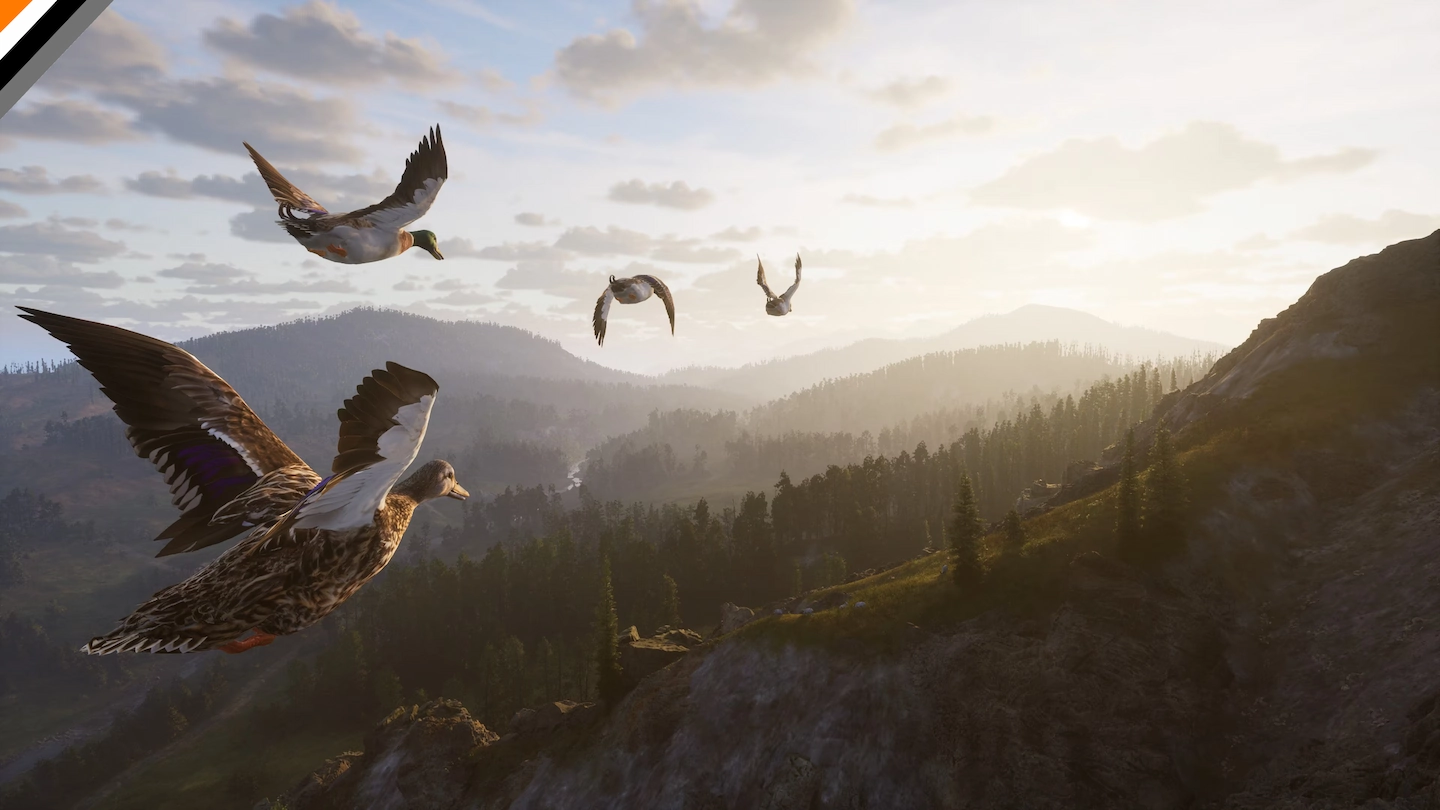
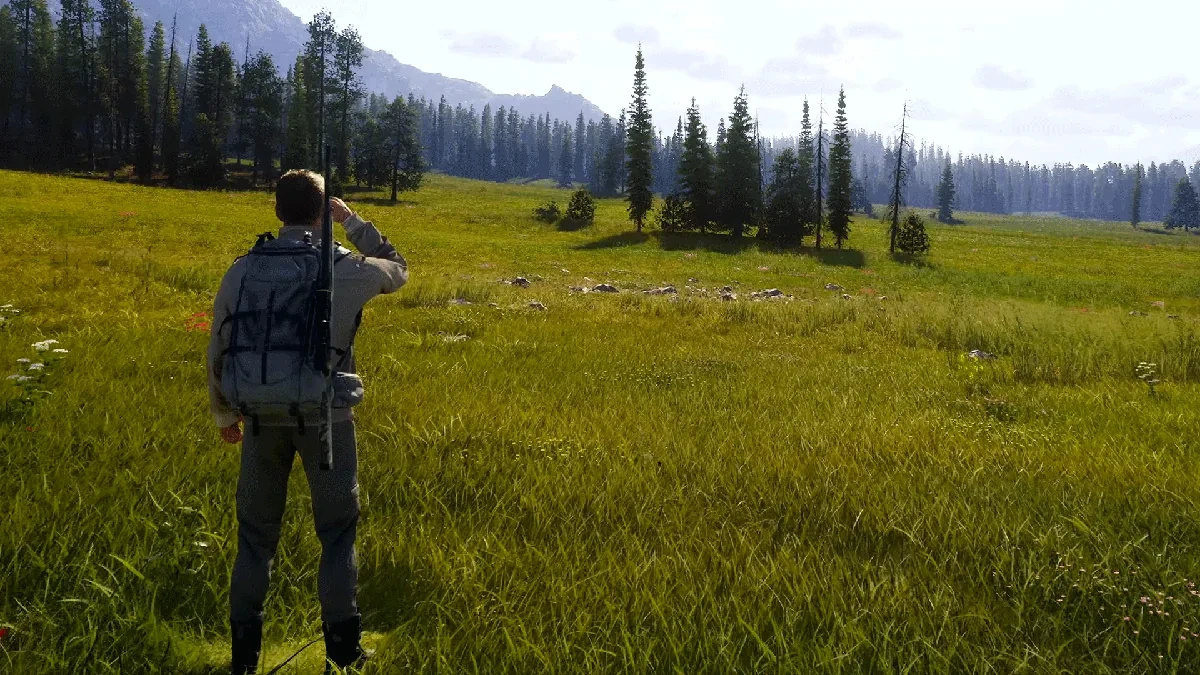
A broad valley opening beyond the trees, morning light cutting through a damp stretch of forest and a dog wandering several steps ahead can do more for Way of the Hunter 2 than almost any conventional reward system. That is important because the central fantasy of recreational hunting will not automatically appeal to everyone, and it certainly is not the reason we found ourselves most interested in Nine Rocks Games’ sequel. What keeps pulling the experience forward is everything surrounding the hunt: the scale of the reserves, the changing terrain, the quiet stretches between points of interest, the sound of weather moving through an otherwise empty landscape and the simple satisfaction of walking somewhere because the horizon looks worth reaching. The sequel moved to Unreal Engine 5 as part of a new technical foundation, and while technology alone does not guarantee atmosphere, the environmental presentation gives the series a stronger sense of place than before. New Laurentia provides the colder North American foundation, while Kilimaya Reserve, added during Early Access, introduces a 100 km² African environment combining highlands, forests, grasslands, wetlands, shrubland and more barren terrain, alongside settlements, ruins, lookout locations and cave paintings. The result is a game where simply crossing the landscape can sometimes be more memorable than whatever objective originally sent you there. Way of the Hunter 2 understands that large open spaces need silence as much as spectacle. It does not constantly throw something at the player simply to justify the size of the map. Long periods of observation and movement are part of its identity, and when the weather, lighting and terrain line up correctly, the world feels less like a level built around targets and more like a place that happens to contain a hunting simulation.
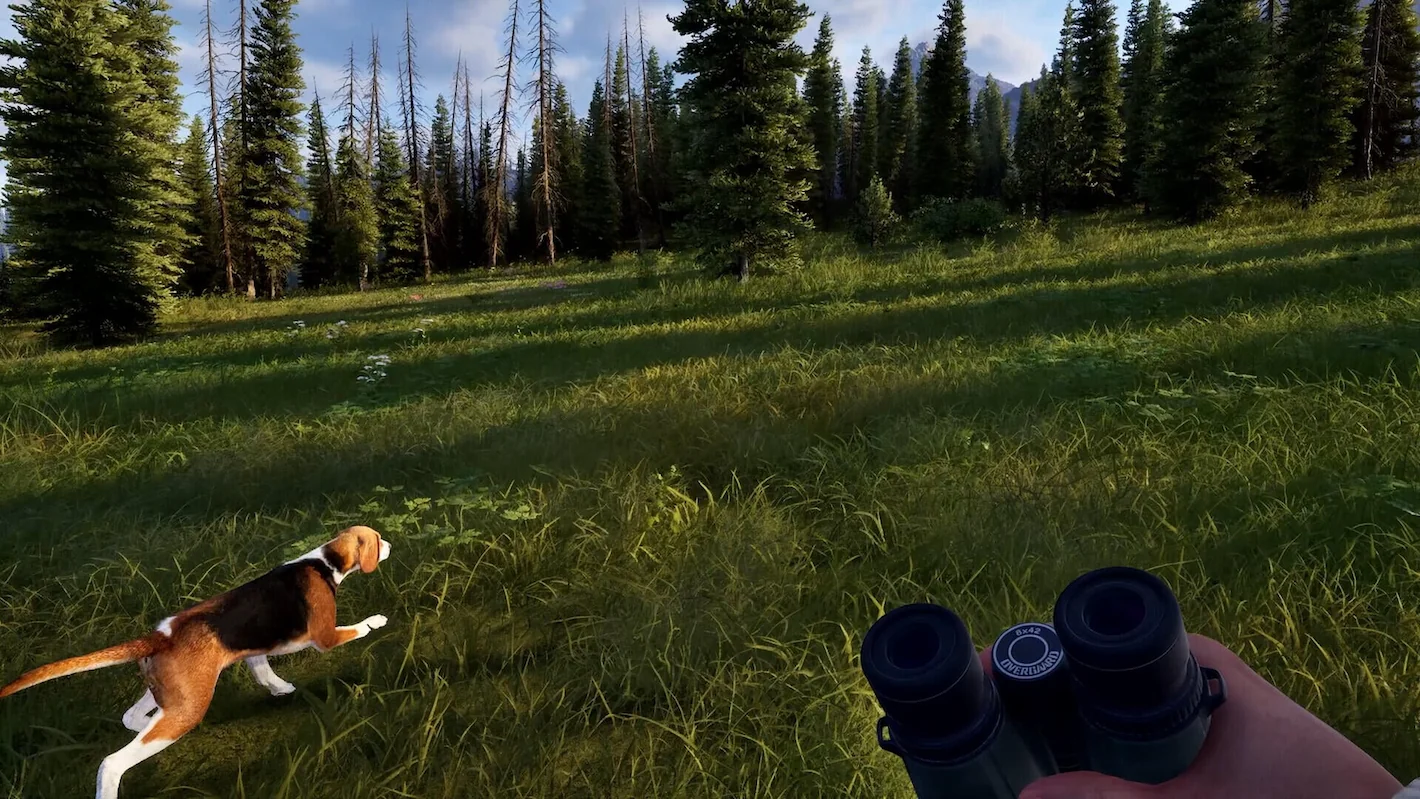
the dog gives all that empty space a little heart
Then there is the dog, and yes, the slightly clumsy companion may be one of the smartest decisions Nine Rocks Games made for the sequel. Mechanically, the animal has a genuine role: it can search the surroundings for signs, help locate active areas and assist with tracking, while continued interaction improves its reliability and obedience. Players can name it, develop its abilities over time and use it entirely as an optional companion rather than as a mandatory system. But reducing the dog to a feature list misses why it works so well. Way of the Hunter 2 contains enormous stretches of land where the player is deliberately alone, and the presence of another living thing moving beside you changes the emotional temperature of those journeys. Watching it move through grass, hesitate around terrain or disappear briefly behind vegetation makes the wilderness feel less sterile. It becomes a small point of movement against environments that can otherwise dwarf the player. Nine Rocks Games has said it studied real canine movement and behaviour for the companion’s animations, including searching, resting and environmental reactions, and that attention is noticeable in the way the dog feels integrated rather than simply attached to the player’s position. More importantly, the companion fits the pace of the game. This is not an experience that needs constant action to hold together, so a system based on gradual bonding and usefulness feels appropriate instead of artificially gamified. There will certainly be players who ignore it and concentrate entirely on the simulation underneath, but for us the dog adds something the original formula badly benefits from: companionship. A huge reserve becomes easier to enjoy when there is a slightly awkward four-legged idiot sharing it with you, and sometimes that alone makes another twenty-minute walk feel worthwhile.

simulation has started reaching beyond the obvious
Way of the Hunter 2 is still unmistakably a simulation, but its more interesting systems are beginning to stretch beyond the simple cycle implied by the title. The first major Early Access update introduced ecosystem management, allowing players to improve habitat conditions through activities such as restoring damaged areas, removing pollution and dealing with invasive species. That is a much more compelling direction than merely increasing the amount of equipment or the number of animals available, because it gives the environment some mechanical importance beyond functioning as scenery. It also complements the series’ slower approach. Learning where wildlife moves, reading the landscape, observing behaviour and understanding how different parts of a reserve connect are all more satisfying when the world behaves like a system rather than a static map. Nine Rocks Games has continued adjusting animal AI and behaviour throughout Early Access, and its updated roadmap specifically identifies further AI refinement as one of the areas receiving attention before 1.0. The current result is not flawless; simulations this dependent on emergent behaviour expose strange moments quickly when something does not react as expected, and the developers’ own patch notes have documented a substantial list of AI, collision and wildlife-related issues during development. Yet the underlying direction is right. Way of the Hunter 2 feels more interesting when it treats the wilderness as the object of the simulation instead of simply the backdrop for it. That distinction matters for players who appreciate the environmental side of the game more than the trophy-chasing side, because it creates reasons to notice what is happening around the player instead of reducing every trip through the landscape to the shortest possible path between two objectives.
two reserves give the game room to breathe
Kilimaya was also the update that demonstrated how much Way of the Hunter 2 depends on environmental contrast. A second huge reserve could easily have felt like more square kilometres added for the sake of a bigger feature list, but the shift from New Laurentia to the African landscape changes the rhythm and visual character of exploration considerably. Kilimaya’s 100 km² combine several biomes and introduce twelve additional species alongside new characters and missions, giving the Early Access build substantially more variety than it had at launch. The landscapes are not just different colours painted over the same terrain. Visibility changes, vegetation density changes, open areas create a different sense of exposure and distant landmarks become more important when the horizon stretches further. That variety makes the game’s deliberate pace easier to accept because an hour spent moving through one reserve does not produce precisely the same visual language as an hour in the other. Audio contributes more than it initially seems as well; a June patch specifically rebalanced river, rain, water and lightning audio as part of a broader attempt to strengthen environmental atmosphere. Those details matter because Way of the Hunter 2 asks the player to spend so much time simply existing in these spaces. When movement is slow and encounters are not constant, a badly presented environment would expose the emptiness immediately. Instead, the game frequently manages to make quietness itself part of the attraction. There are moments when stopping beside a ridge or watching weather move across an open area feels sufficient, which is a strange compliment for a hunting game but probably the most important compliment we can give it.

early access roughness is impossible to ignore
The problem is that the scenery cannot completely hide how unfinished parts of the package remain. Way of the Hunter 2 entered Early Access on March 26, 2026, and Nine Rocks Games initially described the current version as a playable core experience that would continue receiving balancing, new systems and content before 1.0. Months later, that description remains relevant. Update 0.3.1 was still addressing stuck markers, vehicle problems, gear issues and multiplayer bugs, while the studio stated plainly that numerous open issues remained a priority. Earlier updates had already dealt with crashes, incorrect animal LOD behaviour, audio problems, collision issues and performance drops in particular areas. Experimental multiplayer is an even clearer reminder of the development state: two-player sessions are available through a separate branch, but Nine Rocks Games openly lists networking, world, animal, UI and vehicle problems while it builds the foundation further. None of that makes the game unplayable, and the developers have been unusually transparent about what is broken and what is being addressed, but it prevents the current build from feeling like something that should be judged as a finished sequel. Steam reception reflects that middle ground reasonably well: the game remains Mostly Positive overall, but the percentage has hovered in the low seventies rather than suggesting universal approval. Players willing to tolerate Early Access roughness can already find a substantial simulation underneath; players who expect every system to be polished would be better served by waiting for 1.0. The important thing is that Nine Rocks Games appears to be spending this phase strengthening the foundation rather than simply stacking more content on top of unresolved problems.