PREVIEW | TUROK: ORIGINS | DINOSAUR HUNTER RETURNS IN CO-OP FORM
A dinosaur shooter name from another PC era is coming back, but not in the exact shape many older players may expect. Turok: Origins is not being presented as a simple return to the old first-person formula. Saber Interactive is bringing the series back as a third-person action shooter with solo play, online co-op and a stronger focus on team-based combat. That already makes it more interesting than a normal nostalgia revival, but also more risky. Turok is not a name that can survive only on dinosaurs and familiar branding. The old appeal came from hostile worlds, strange weapons, prehistoric danger and that odd mix of tribal warrior fantasy and science-fiction violence. Origins seems to understand some of that, but it is also clearly trying to rebuild the formula for a modern co-op audience. That is where the tension sits. The game has the right ingredients on paper: dinosaurs, alien threats, heavy weapons, upgrades, boss fights and team play. But when a classic name changes perspective and structure, the question becomes simple: is this still Turok, or only a modern shooter wearing the name?
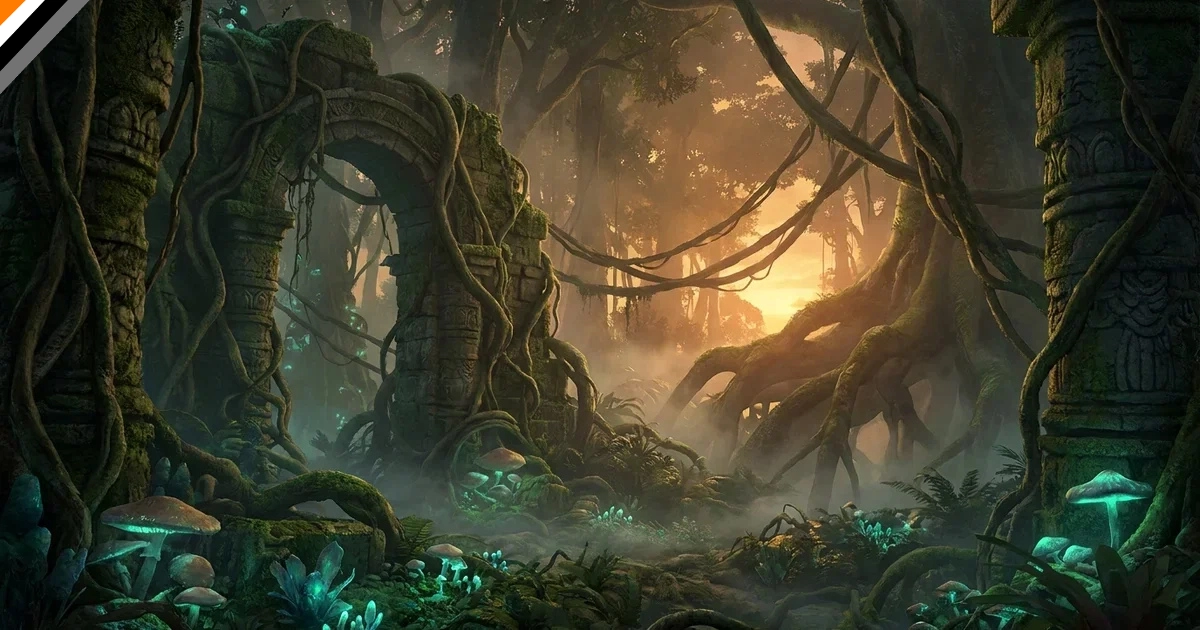
The good news is that the basic ingredients are still easy to understand. Turok means hostile worlds, dinosaurs, strange sci-fi danger and weapons that should feel heavier than normal military hardware. Turok: Origins keeps the dinosaur threat, adds an alien force, and puts players in the role of Turok warriors fighting to stop a larger danger to humanity. The official pitch also points to fallen enemy DNA being used to upgrade weapons and abilities, which gives the game a progression hook beyond simple mission shooting. That is enough for a real preview. This is not only a logo reveal or a cinematic trailer with dinosaurs running through smoke. There has already been hands-on preview material, and the shape of the game is clearer now: co-op-focused action, up to three players, character abilities, different weapons, vertical maps, boss encounters and a structure that seems closer to modern mission-based co-op shooters than old corridor FPS design.
the big change is third-person co-op
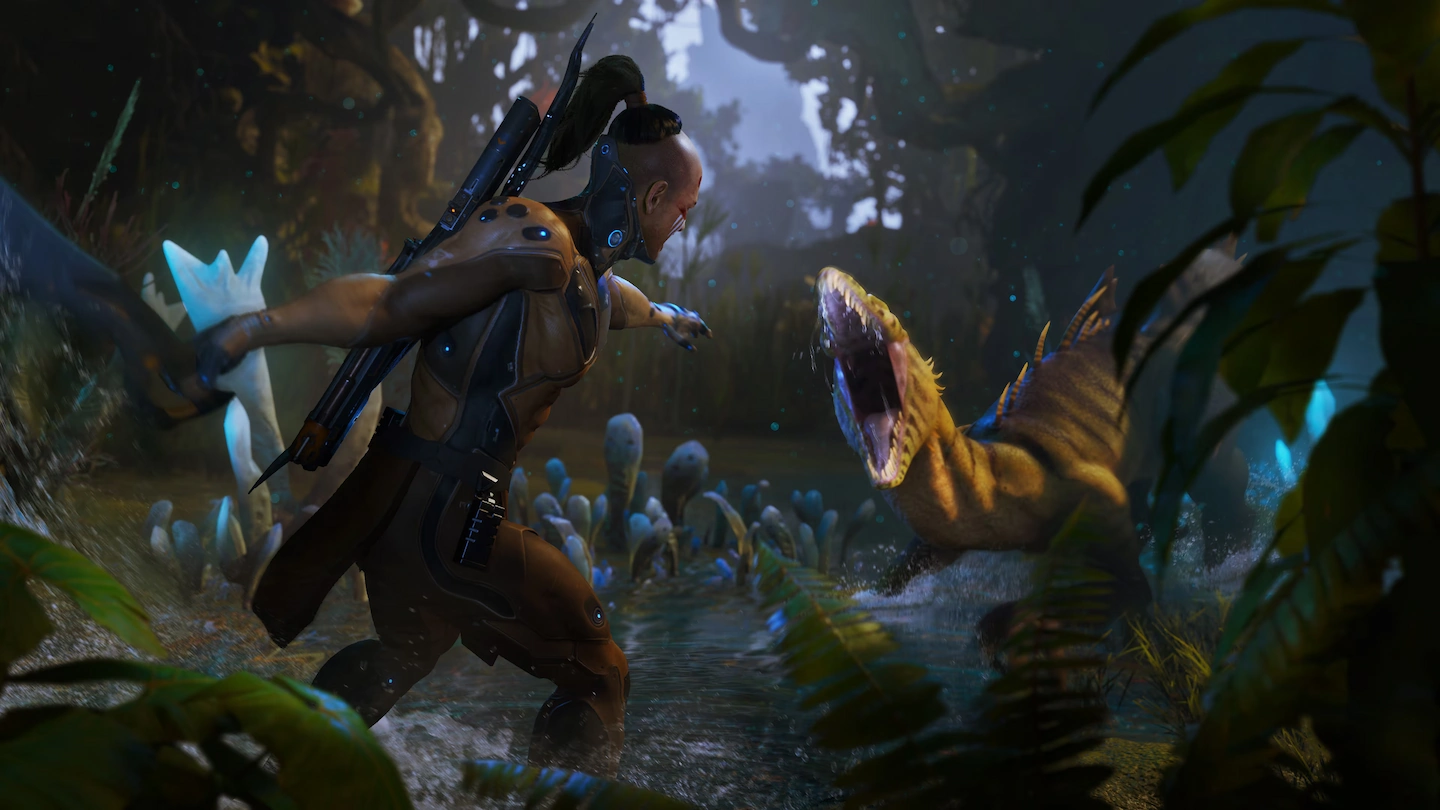
The most important thing to accept immediately is that Turok: Origins is not trying to recreate the old Nintendo 64 feeling one-to-one. The classic Turok identity was tied to first-person shooting, exploration, strange weapons and prehistoric sci-fi danger. Origins moves the camera behind the character and leans harder into co-op action. That change will probably divide players. For some, third-person is a smart move. It gives the player a better view of the character, animations, melee finishers, dinosaurs attacking from different angles and team movement across larger spaces. It can make the action feel more physical. If Saber uses the camera well, dinosaurs may feel more present because the player can see the body language of the Turok warrior and the size of the enemy in the same frame. For others, this will feel like a break from the old DNA. Turok used to be a name strongly connected with first-person dinosaur combat. Moving away from that creates pressure. The game has to prove that it did not only modernize the surface, but actually found a new way to make the old fantasy work. That is the central question of this preview. The third-person shift is not automatically bad. It may even help the game stand out. But it needs to feel intentional, not like Turok was pushed into the shape of another co-op shooter because that format is easier to sell today.
dinosaurs, aliens and the old turok flavor
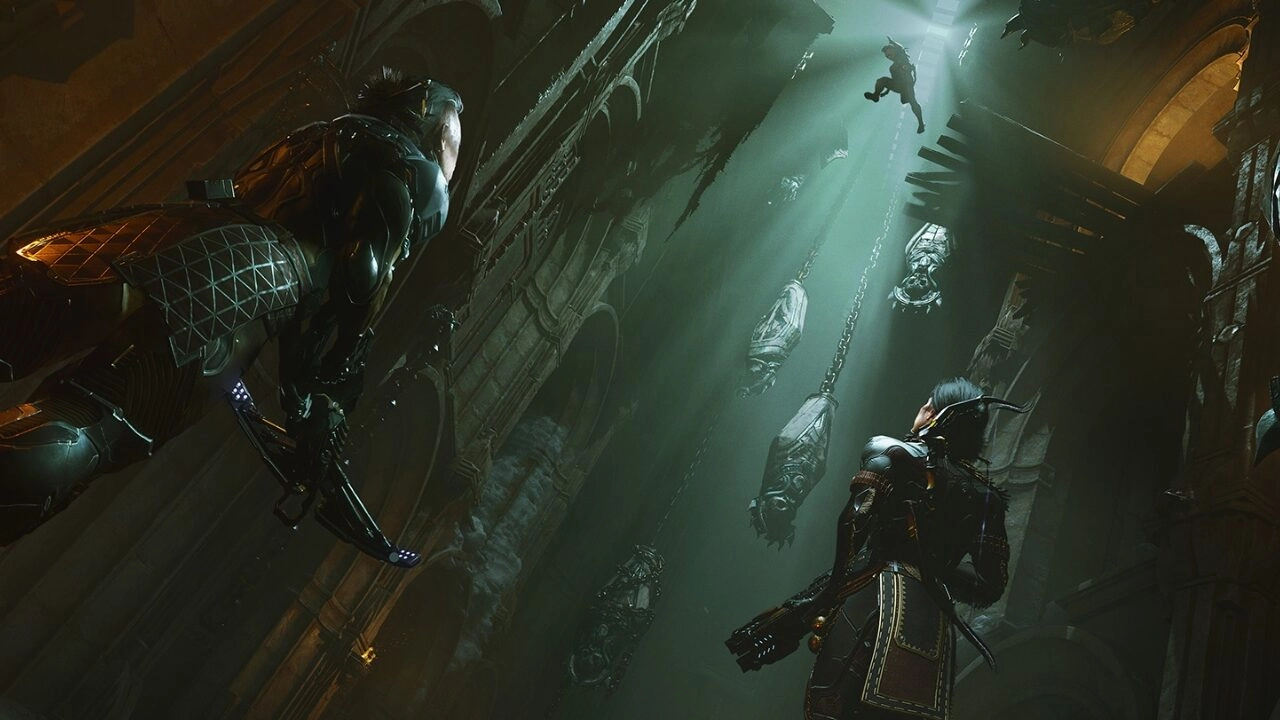
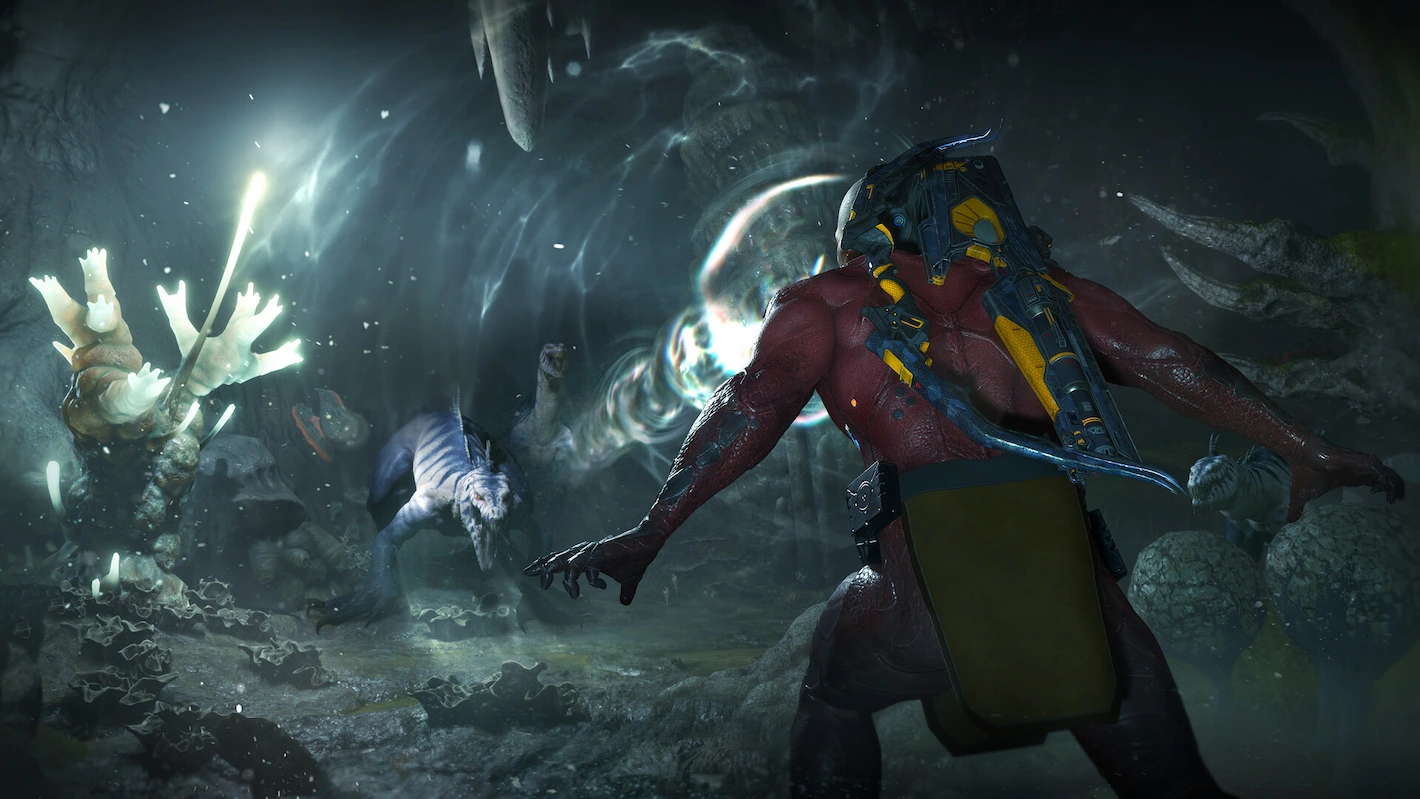
Turok has always worked best when dinosaurs are not just animals placed in a jungle for spectacle. The best version of the concept mixes prehistoric violence with weird science fiction. Dinosaurs, alien threats, strange technology and brutal weapons all belong to the same messy identity. Turok: Origins seems to understand that it cannot be only a dinosaur hunting game. It needs the stranger layer too. That is why the alien threat matters. The game is not only about surviving nature. It is about fighting through a world where prehistoric creatures and extraterrestrial danger share the same battlefield. This gives Saber room to build enemy variety: fast creatures, large predators, ranged alien units, armored enemies, bosses and mixed encounters where the battlefield is not clean. The danger is that dinosaurs can become background noise if the game leans too hard into generic sci-fi soldiers. Turok needs dinosaurs to feel central, not decorative. A raptor ambush, a massive creature breaking the rhythm of a firefight, or a boss encounter built around scale and movement can do more for the game’s identity than another ordinary enemy wave. The first impressions suggest that the prehistoric sci-fi tone is present. The real test will be whether that tone stays strong after several hours, or whether the missions start feeling like normal co-op arenas with dinosaur skins.
combat needs weight, not only speed
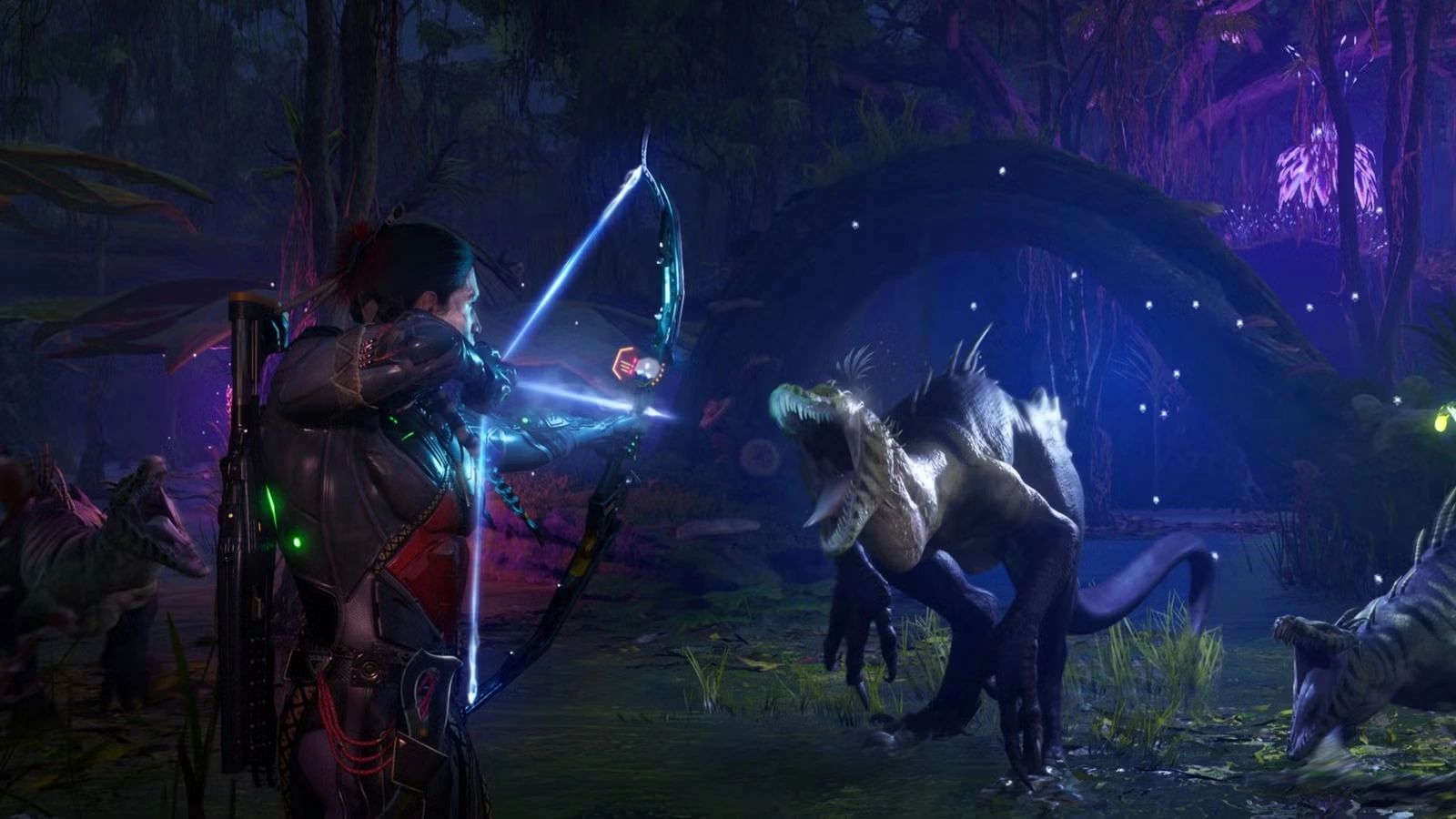
A Turok game lives or dies on combat feel. The series has always had a weapon identity, and Turok: Origins has to respect that. This cannot feel like a lightweight shooter where enemies simply absorb damage until the objective marker updates. Dinosaurs need impact. Weapons need punch. Bosses need pressure. The player should feel that every fight is messy, physical and dangerous. Preview impressions point to slick combat, strong animations and a range of weapon types including bows, rifles, shotguns and returning series-style tools such as the Cerebral Bore. That kind of weapon variety is important because a co-op shooter can quickly become repetitive if every player is only holding a different version of the same gun. The DNA upgrade system could help here. If fallen enemies provide material for upgrading weapons and abilities, the game has a chance to tie progression directly into its world. That is better than a generic XP bar. It makes the act of fighting creatures and aliens part of the build process. The player is not only clearing enemies. The player is becoming stronger through the biology of the world. But progression systems can also become noise. If the upgrades are only small percentage increases, the idea will not matter much. Turok: Origins needs upgrades that feel visible: stronger weapons, different combat options, meaningful abilities, survival tools and team roles that change how the player approaches encounters.
co-op may be the best version, but solo matters too
Turok: Origins is clearly being built with co-op in mind. Up to three players, character-specific abilities and team-based action suggest that the strongest version of the game may happen with friends. That can work very well. Dinosaurs attacking from multiple directions, alien units applying pressure, limited resources and bosses with mechanics can all benefit from co-op coordination. TechRadar’s hands-on preview also suggests that the game feels most promising as a co-op shooter, with character loadouts, vertical map design and group play being important parts of the experience. The concern is solo replay value. If the game is balanced mainly around a group, solo players may get a weaker experience unless Saber handles pacing, AI support and mission structure carefully. This matters because Turok has a single-player legacy. Many older fans remember playing these games alone, moving through dangerous spaces with strange weapons and no team voice chat behind them. If Turok: Origins wants to carry the name properly, solo play cannot feel like an afterthought. The ideal result would be simple: co-op feels like the loudest and most chaotic way to play, while solo still feels complete, atmospheric and worth finishing. If Saber can manage that balance, the game has a much better chance of reaching both old Turok fans and new co-op players.
map design is the big question
A co-op shooter can have strong weapons and still fall apart if the maps become repetitive. This is one of the main concerns around Turok: Origins. Early hands-on impressions have praised combat, but also raised questions about dark, same-looking environments and the possibility of repetition in mission design. That is worth taking seriously. Turok needs memorable spaces. Jungles, temples, alien structures, cliffs, caves and prehistoric combat zones should not blur together. The old games were often remembered for their strange worlds as much as their shooting. Origins needs that same sense of place in a modern form. Verticality could help. If players use grappling, traversal tools, high ground, hidden routes and layered arenas, the missions could feel more dynamic. Boss fights could also break the rhythm if they are more than large health bars. A cyborg dinosaur or alien-enhanced creature should not only look cool. It should force the team to move, react, coordinate and understand the arena. The worst-case version of Turok: Origins would be a set of linear co-op maps where players complete simple objectives and shoot waves until the exit opens. The best-case version would be a dangerous prehistoric sci-fi expedition where every map has its own identity, secrets, enemy mix and memorable encounter.
the legacy problem
Turok is not just another shooter name. It carries memory. The original Turok: Dinosaur Hunter was part of a specific console and PC era where dinosaur action, foggy environments, strange weapons and early 3D exploration created a distinct identity. The series later changed, struggled, disappeared and returned in remasters and conversations more than in major new releases. That creates a difficult situation for Origins. If it copies the past too closely, it may feel old. If it changes too much, it may lose the name. Saber Interactive has to find the middle path: respect the fantasy, but not freeze it in 1997. The third-person co-op direction is a bold answer. It says that Turok can be about warriors, dinosaurs, alien threats and savage combat without staying locked to the old camera. That is reasonable. But the name still needs its own flavor. It cannot become another modern co-op shooter with a famous logo. The trailer and previews suggest potential. The setting, enemy mix, weapon variety and DNA upgrade idea all sound like Turok pieces. The question is execution.
why it is worth watching
Turok: Origins is worth watching because it is not taking the safest route. A straightforward retro-style FPS revival would have been easier to understand. This is stranger: a third-person co-op action game built from a classic dinosaur shooter name. That makes it risky, but also more interesting. For PC players, the important questions are clear. How good does it feel with mouse and keyboard? How strong is solo play? Does co-op become necessary to enjoy the game properly? Are the maps varied enough? Does the DNA upgrade system create meaningful builds? Does the game run well on PC? And most importantly, does it feel like Turok after the first hour? The game has the right ingredients for a strong comeback: dinosaurs, alien enemies, heavy weapons, co-op chaos, boss fights and a recognizable legacy. But ingredients are not enough. Turok has to feel dangerous, strange and memorable again.