
PREVIEW | THE VERNYHORN | WHERE SLAVIC GODS STILL WATCH
A cold forest path disappears beneath mist while distant settlements continue their routines without waiting for a hero to arrive. Somewhere beyond the trees, forgotten beliefs remain alive enough to shape how people understand illness, violence, nature and death. The Vernyhorn is a third-person open-world action RPG from Polish developer INTERSTUDIO, built around the myths, customs and brutal realities of early Slavic societies during the ninth and tenth centuries. It follows a man haunted by his past as he moves through a world governed by faith, fear and survival, confronting both human enemies and the personal demons carried into every decision. The studio cites classic role-playing games such as Baldur’s Gate, Icewind Dale and The Witcher alongside cinematic influences including Robert Eggers, The Revenant and the historical scale associated with Ridley Scott. Those references suggest an unusual combination: a cinematic third-person RPG whose environments and combat remain physical and immediate, but whose narrative ambition comes from older games built around dialogue, consequence and carefully authored discovery. The Steam page currently lists the release date as to be announced, while INTERSTUDIO’s public roadmap places an early supporter test around mid-2026, a wider playable demo toward late 2026 and the first chapter around mid-2027. The studio intends to expand the game through additional chapters rather than waiting until every part of its world is complete.

a world built from slavic earth
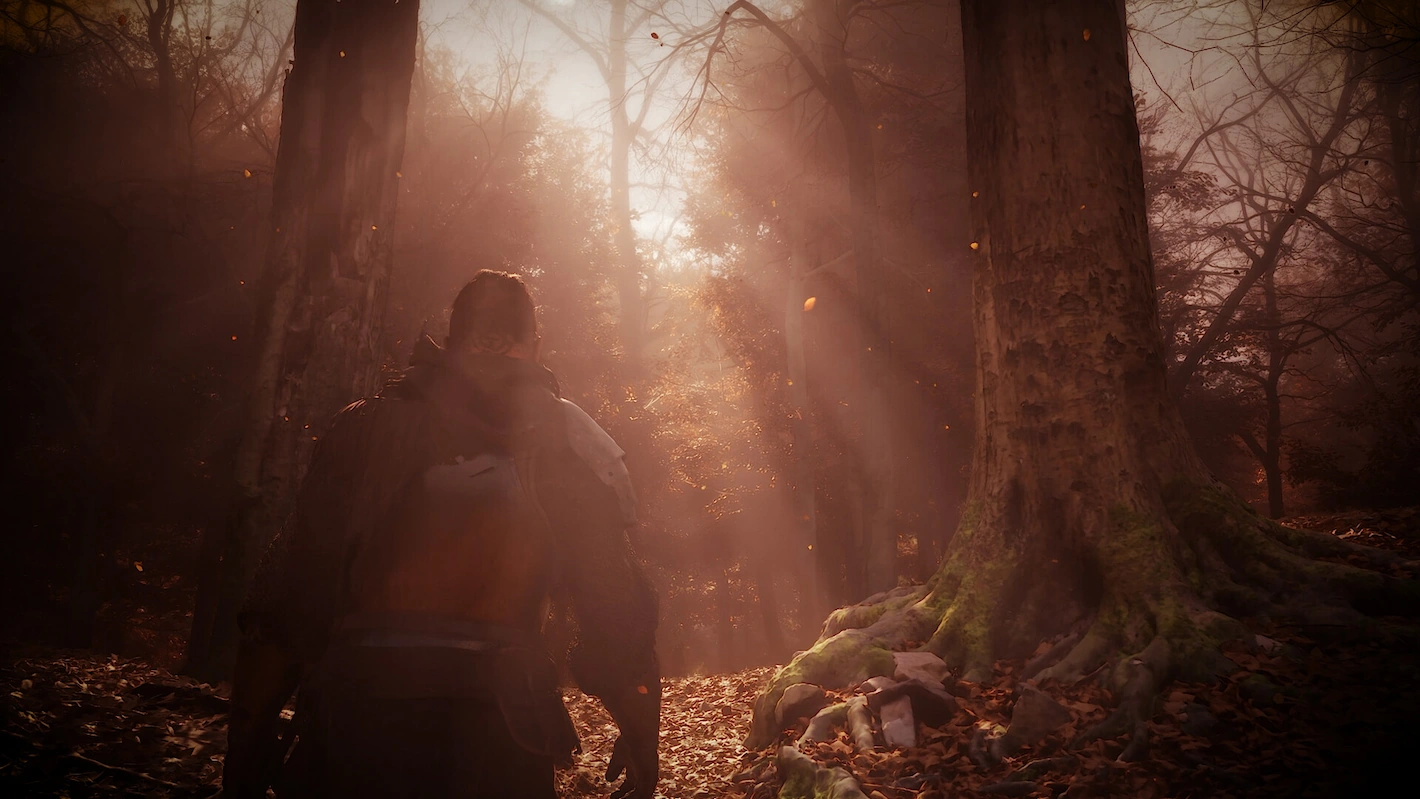
The Vernyhorn’s most convincing feature may be the physical identity of its world. INTERSTUDIO has travelled across Poland to scan forests, lakes, mountains, wetlands, architecture and smaller environmental details, while natural sounds were recorded on location to preserve the atmosphere of wind, flowing water, distant storms and moving vegetation. The resulting landscape is not supposed to function as a large empty map held together by scattered markers. The developers describe a handcrafted world in which villages, caves, forest clearings and hidden passages have a deliberate purpose, with exploration revealing stories instead of merely increasing a completion percentage. Its biomes range from ancient woodlands and mist-covered swamps to lowlands, coastlines and mountain territory, each intended to possess its own lighting, wildlife and natural rhythm. Authenticity also extends toward medieval structures and objects, created with knowledge gathered from historical reenactors and references connected to Slavic and Viking heritage. The game is still fantasy, but its supernatural elements are being planted inside a material world of mud, timber, weather, physical labour and fragile human settlements. That foundation matters. Folklore becomes more powerful when it appears inside a place that otherwise seems believable, and a dark forest becomes more threatening when the trees, paths and sounds resemble somewhere that might genuinely exist.

history, belief and the unseen
Rather than covering its medieval setting with constant magical spectacle, The Vernyhorn appears interested in the uncertain boundary between belief and reality. Its world is shaped by early Slavic myths, religious fears and legends carried between generations, but the narrative will not simply explain every strange event immediately. Villagers may understand the same occurrence through superstition, faith, trauma or practical experience, leaving the player to decide whom to believe and how far to pursue an explanation. The protagonist’s own damaged past adds another layer because the “demons” he faces may not always belong to the physical world. INTERSTUDIO promises morally complicated decisions guided by a mysterious presence that challenges the player’s conscience, with consequences capable of changing later events. That concept could produce a more personal form of role-playing than the usual division between obviously heroic and openly cruel dialogue choices. A decision made through fear may cause damage even when the intention was protective, while an apparently rational answer could ignore the beliefs holding a community together. The studio also wants the story to emerge through exploration rather than being delivered entirely through mandatory scenes. Ruins, caves, rituals and ordinary conversations can therefore carry pieces of the larger narrative without turning every discovery into another formal quest. The challenge will be connecting this subtle structure to meaningful outcomes. Ambiguous storytelling creates atmosphere, but choices need visible consequences before the player can believe that time truly remembers what was done.

survival has no rules of honour
Combat is being developed around precision, physical commitment and survival rather than bright effects or exaggerated camera movement. INTERSTUDIO worked with HEMA world champion Antoni Olbrychski and motion-capture performer Morgan Myśko, whose previous work includes Cyberpunk 2077, to record attacks and defensive movements grounded in practical martial ability. Swords remain important, but the system is not limited to formal duelling. The official description includes kicks, elbows, headbutts, chokes and desperate close-range struggles for situations in which the protagonist loses his weapon or is ambushed before he can establish distance. That philosophy fits the setting because an encounter on a muddy road should not resemble an organized tournament. Reading an opponent, controlling space and timing a response may determine survival, while armour, exhaustion and the surrounding terrain should make each confrontation more than an exchange of damage values. The footage already communicates force and danger, but realistic motion capture does not automatically produce responsive controls. Recorded movements must be connected through clean transitions, attacks must communicate their range and recovery, and the player needs enough control to react without turning every duel into animation lock. Enemy behaviour will be equally important. If opponents wait politely or repeat predictable sequences, the brutality promised by the animations will lose its purpose. The Vernyhorn does not need the fastest combat system; it needs one where every movement looks deliberate and every mistake has a readable cause.
a living world is more than movement
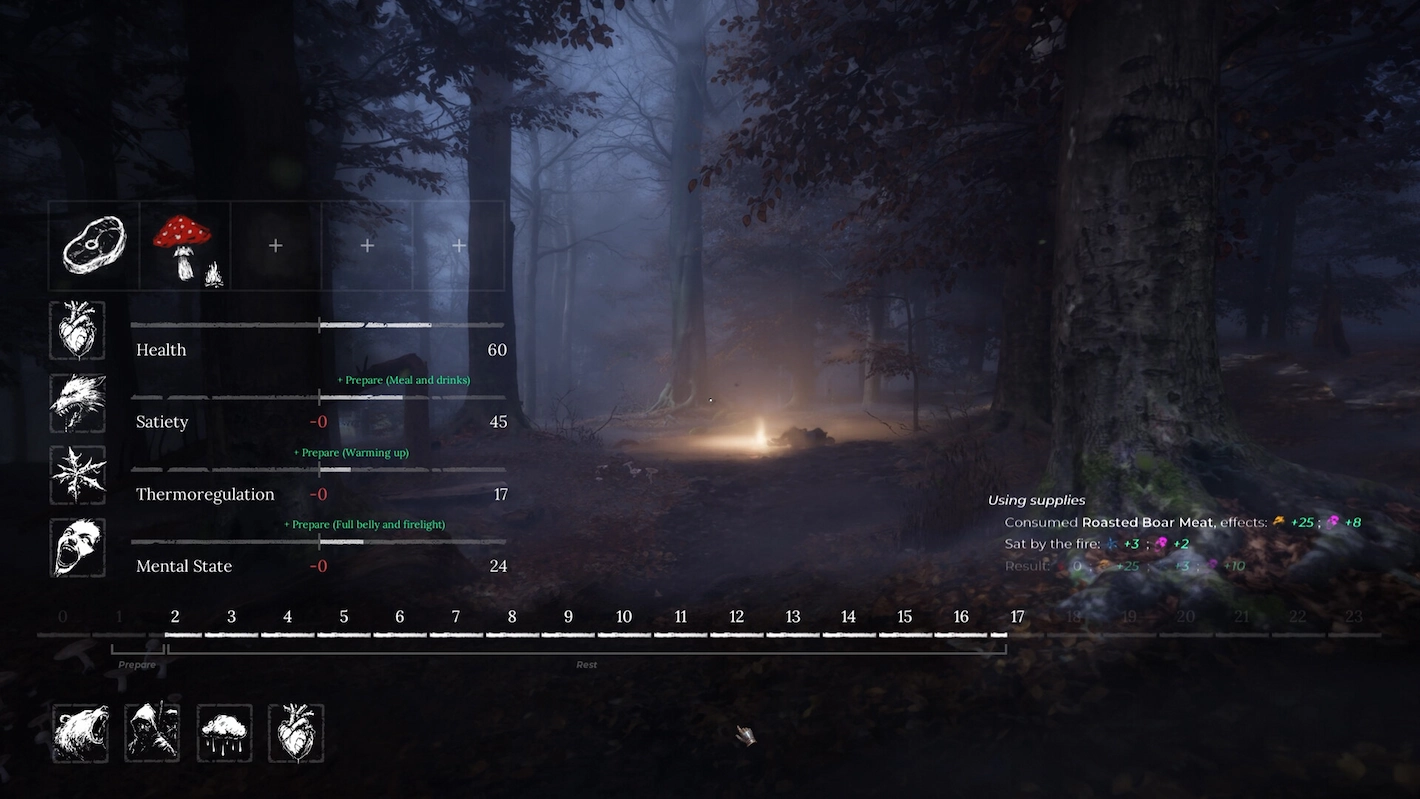
INTERSTUDIO describes NPCs following daily routines while animals move independently, weather develops organically and nature responds around the player. These systems can make the landscape feel active even when the protagonist is not completing a quest, but they will matter most when they affect decisions rather than operating only as decoration. A merchant closing for the evening, a storm changing visibility, animals reacting to nearby danger or residents altering their routines after violence would give the passage of time practical meaning. Crafting, resource management, inventory systems, investigation, archery and loot are also represented among the game’s current Steam features and tags, suggesting a broader RPG structure surrounding exploration and melee combat. The risk is familiar: a small studio can easily accumulate too many individually promising systems before proving that they work together. The Vernyhorn does not require every survival mechanic associated with open-world games. Its strength lies in atmosphere, narrative consequence and a landscape that feels historically and culturally specific. Resource systems should reinforce the harshness of travel without burying the experience beneath constant maintenance, while crafting should connect the player to local materials and customs rather than becoming another list of disposable upgrades. The decision to release the project gradually in chapters may allow INTERSTUDIO to test these systems, gather feedback and improve later areas, although it also means players may wait years before the complete journey reaches its intended form.