
PREVIEW | THE LOST WILD | YOU ARE NOT THE HUNTER
A shape taller than the surrounding trees moves through the mist, partially hidden by vegetation and too distant to identify with certainty. The safest decision is not to approach, mark it on a map or search for a weapon capable of bringing it down. It is to remain still, watch where the animal is looking and decide whether the next few steps can be taken without attracting its attention. The Lost Wild is a cinematic first-person survival horror game from Great Ape Games and Annapurna Interactive, built around evasion rather than dinosaur hunting. Players control Saskia, a woman trapped on an abandoned island filled with overgrown research facilities, scattered evidence and prehistoric animals that have escaped whatever system once contained them. The objective is to survive long enough to uncover what happened, why Saskia is connected to the island and what remains hidden inside its abandoned human structures. The game is scheduled for 2027 on PC and PlayStation 5, with the PC version planned for Steam and the Epic Games Store. Its premise sounds simple, but its refusal to turn dinosaurs into conventional combat targets immediately gives it a stronger identity than another Jurassic-themed shooter. Here, the dinosaurs are not waiting to be cleared from an objective zone. They occupy the environment, follow their own instincts and force the player to accept an uncomfortable position inside the food chain.
dinosaurs are animals, not monsters
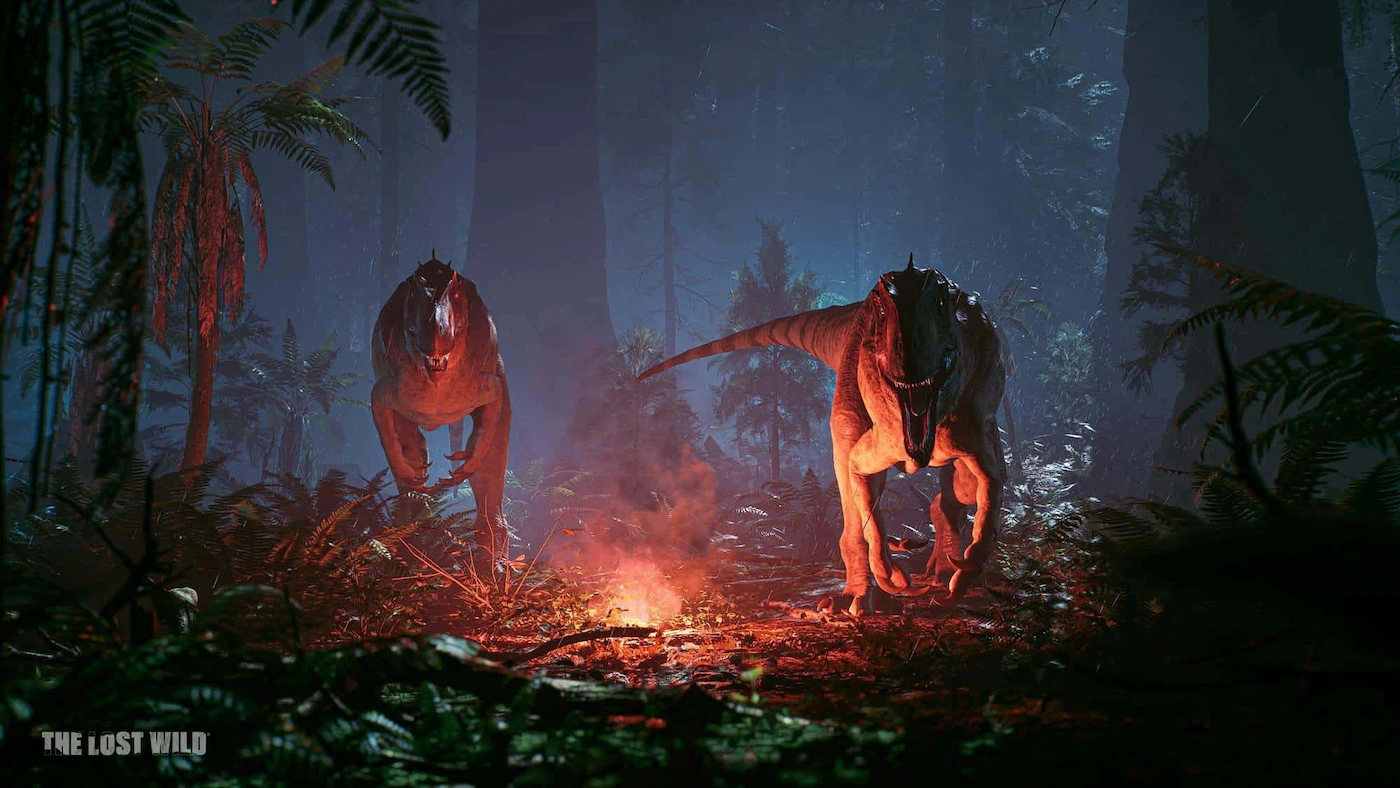
Great Ape Games describes The Lost Wild around three principles: observation, instinct and restraint. That philosophy matters because the game is not trying to make dinosaurs frightening by transforming them into supernatural creatures or giving them exaggerated aggression. They are dangerous because they are large, intelligent animals sharing the same space with a physically vulnerable human. A dinosaur may investigate noise, respond to movement, search an area or lose interest according to its perception of the situation rather than simply charging along a scripted route. The player must watch its head, direction and body language before moving, then use cover, distance and timing to remain unnoticed. This approach has the potential to restore uncertainty to dinosaur encounters. Familiar species have become so common in games and films that their appearance alone no longer creates fear, but an animal that seems to make decisions can remain disturbing even after its model is recognized. The Lost Wild therefore depends less on how many dinosaurs it includes and more on whether each encounter feels unscripted enough to create doubt. If the player can quickly identify patrol paths and repeat one distraction method, the illusion will collapse. If the animals respond convincingly to sound, visibility and changing surroundings, simply crossing a section of forest could become more tense than fighting a conventional boss.
survival through observation
There is no indication that Saskia will become an armed dinosaur hunter as the story progresses. The available descriptions focus on evading, distracting and intimidating animals while using the environment and limited resources to stay alive. That does not mean the player is completely powerless. Objects can create noise, flares and other tools may discourage an approach, and knowledge of the surrounding space can open temporary escape routes. The distinction is important: these tools provide time and distance rather than control. They allow Saskia to survive an encounter, not permanently remove its source. This makes every location potentially reusable as a threat space because the animal that disappeared behind the trees may still be somewhere nearby. The strongest survival-horror games understand that tension weakens once the player possesses a reliable answer to every enemy, and The Lost Wild appears determined to protect that vulnerability. Its first-person view should make close encounters especially uncomfortable, limiting awareness and forcing players to physically look away from an escape route when checking whether something is following. At the same time, the game must avoid turning restraint into repetition. Hiding in grass, throwing objects and waiting for patrols can become routine unless environments, animal senses and objectives continually change the problem. Great Ape Games needs to create encounters that reward attention without reducing every solution to crouching behind another wall until the danger leaves.

a human mystery inside prehistoric territory
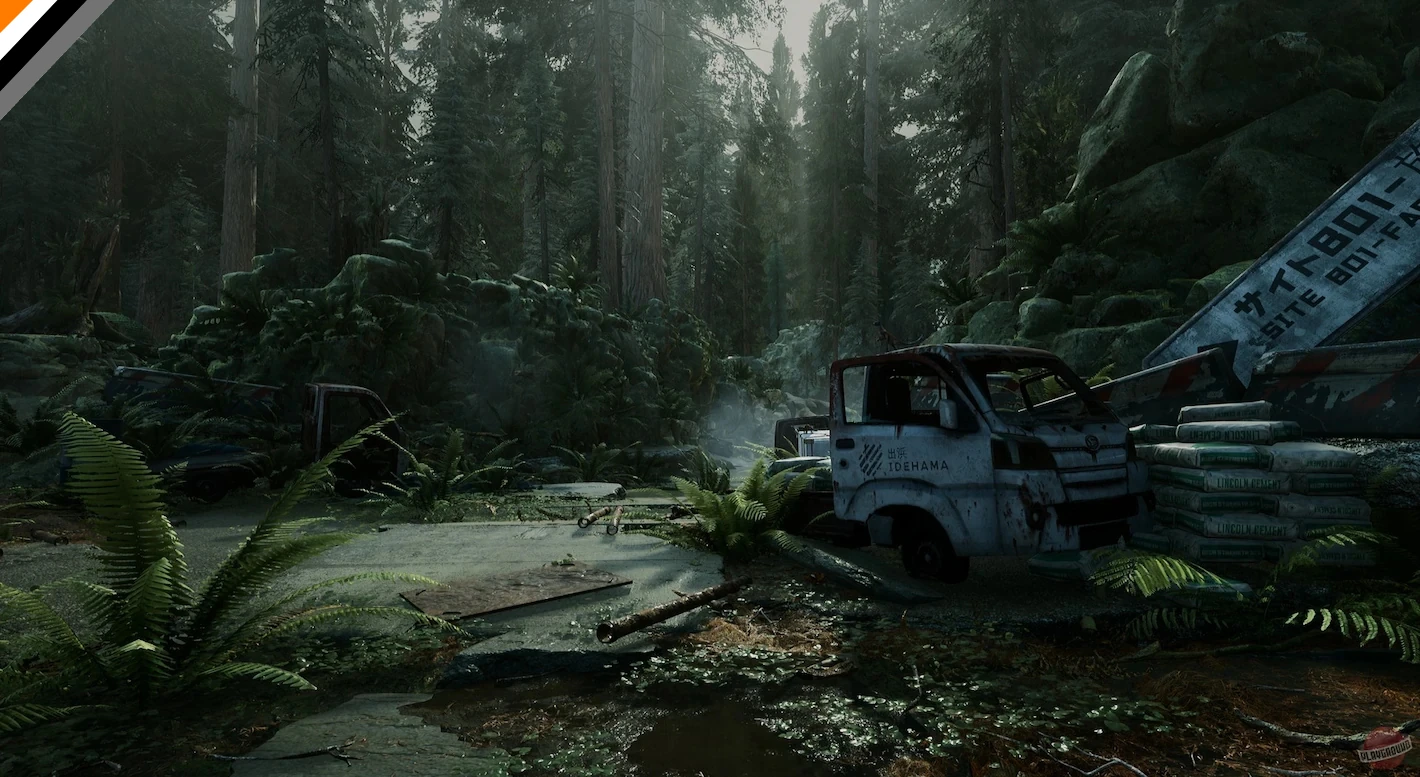
The island is not an untouched natural reserve. Abandoned laboratories, research buildings and other human structures sit beneath years of vegetation, suggesting that whatever happened here was connected to organized experimentation rather than an accidental discovery. Saskia will search these spaces, recover information and gradually reconstruct both the island’s history and her personal relationship with it. That narrative layer gives exploration a purpose beyond finding another safe route. Empty control rooms, damaged equipment and sealed sections can explain how the animals were studied, contained or created, while the contrast between concrete facilities and uncontrolled wilderness shows how completely the original project failed. The danger is that the mystery becomes too familiar. Dinosaur fiction has spent decades returning to secret laboratories, corporate negligence and escaped specimens, so atmosphere alone will not make those ideas new. The Lost Wild needs its human story to support the animal behaviour at the centre of the game. Research notes and environmental evidence should explain why the ecosystem behaves as it does, not simply provide another sequence of predictable revelations about people attempting to control nature. Saskia’s connection to the island may become the element that makes the premise more personal, but official material remains intentionally limited about its exact nature. For now, the strongest narrative image is still the environment itself: human infrastructure being slowly absorbed by a world that no longer recognizes its authority.

the Alien: Isolation comparison brings expectations
The involvement of director Gary Napper, whose previous work includes Alien: Isolation, naturally raises expectations. The comparison does not mean The Lost Wild is copying that game directly, but both projects share a clear horror principle: an enemy becomes more frightening when it appears to perceive the player rather than simply activate when a trigger is crossed. Alien: Isolation built much of its tension around observing behaviour, managing sound and never feeling certain that a hiding place would remain safe. Dinosaurs provide an even broader challenge because they differ in size, mobility, senses and likely temperament. A large predator moving through an open region should create a different problem from a smaller animal searching inside a building, while flying species can make apparently secure outdoor routes dangerous from above. The new footage has already shown a Quetzalcoatlus moving through fog-covered woodland, suggesting that the game will not restrict its threats to the most familiar ground predators. However, the Alien comparison can also become a burden. Players will expect behaviour that remains convincing across repeated encounters, not merely strong staging during a trailer. The Lost Wild must support suspense when nothing is immediately visible, then allow the dinosaur’s actions to justify that suspense once it appears. Its sound design, environmental readability and AI will matter more than cinematic presentation because the entire concept relies on the player believing that the creature exists independently of the scene prepared for it.