
PREVIEW | THE LAST CARETAKER | SURVIVAL THAT ACTUALLY MATTERS
The survival-crafting genre is crowded enough that every new game has to answer one simple question very quickly: why should anyone care? Not every project manages that. Some arrive with the same trees, the same rocks, the same hunger bar, the same crafting table and the same feeling that you have already played this loop under a different name. The Last Caretaker looks different because it does not seem built only around staying alive. It is built around a purpose. You are not just surviving because the game says survival is the genre. You are the last active Caretaker, a machine waking up in a flooded, broken world with one job left: recover what remains of humanity and give it a future. That is a strong hook. More importantly, it gives the whole game a reason to exist beyond collecting resources and upgrading gear. The world is gone, the oceans have swallowed what used to be Earth, and the player is placed inside a strange role that feels lonely, mechanical and quietly emotional at the same time. A robot trying to preserve human life could easily sound like another sci-fi setup, but in a survival game, it creates a different kind of pressure. Every system can be tied back to the central idea. Every resource has a reason. Every journey across the water can feel like part of a larger mission instead of just another trip to fill inventory slots. That is why The Last Caretaker immediately feels worth watching.
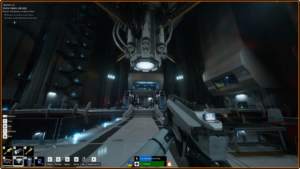
a survival game with a clear identity
What makes The Last Caretaker interesting is not only that it has crafting, exploration, base systems and danger. Many games have those things. The stronger point is that its survival loop appears connected to worldbuilding. You are not a random survivor waking up on a beach. You are a machine built for a specific task, moving through the remains of a world that already failed once. That changes the mood. It gives the game a colder, more focused identity. The flooded Earth setting also helps. Survival games often depend heavily on environment, and an ocean-covered world gives The Last Caretaker a very clear visual and mechanical direction. Water is not just background scenery. It is the space you cross, the barrier between locations, the danger zone, the unknown. It makes exploration feel wider, slower and more deliberate. This is where the game can separate itself from the usual forest-and-campfire survival formula. There is also something appealing about the machine perspective. Playing as a robot does not automatically make a game interesting, but here it fits the survival systems better than expected. Repair, energy, resource management, machinery, production and long-term restoration all make sense when the protagonist is not simply trying to eat berries and sleep through the night. The Caretaker is a tool left behind to finish a job. That gives the game a different emotional weight. And yes, we are optimistic about this one.
early access, but not empty
The big warning with any Early Access survival game is obvious: potential is not the same as a finished game. This genre is full of ambitious projects that start with a great idea, then slow down, scatter their systems, or never quite become the game they looked like they could be. The Last Caretaker still has to prove itself over time. It needs content, polish, pacing, optimization and strong long-term progression. But the early signs are better than average. The project already appears to be moving. Updates have added new features, new locations, new tools and performance improvements, which is exactly what you want to see from an Early Access survival title. A game like this cannot survive only on a good Steam page and a nice concept. It needs momentum. It needs developer presence. It needs signs that the world will keep expanding and the rough edges will keep getting worked down. So far, The Last Caretaker seems to have that pulse. That matters a lot. Survival players are patient when they feel a game is alive. They can tolerate rough spots if the core loop is strong and if the developers keep improving the experience. They are much less forgiving when Early Access feels like a parking lot for unfinished ideas. The Last Caretaker does not currently give that dead-project impression. It feels like a game with a real direction.
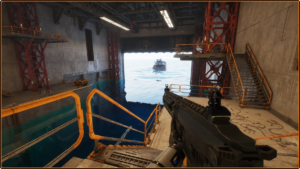
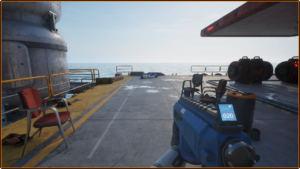
systems that could actually matter
The phrase “survival-crafting” can sound tired because so many games use it without adding much personality. The Last Caretaker has a chance to make its systems matter because the central mission is bigger than personal comfort. You are not just building for yourself. You are building toward recovery, preservation and continuation. That small shift can change how crafting feels. A structure is more interesting when it has a purpose beyond decoration. A resource is more meaningful when it connects to progress, repair, protection or the restoration of something larger. A journey becomes stronger when you are not only searching for loot, but trying to push humanity one step further from extinction. The game’s official framing around systems, choices and purpose is exactly the kind of language that makes us pay attention, because good survival games are not only about having many systems. They are about systems that feed into each other. This is where The Last Caretaker could become special. If the developers keep connecting exploration, crafting, base-building, machines, combat and story into one consistent loop, the game could become more than another Early Access survival project. It could become one of those slower, more immersive experiences where the player starts to care about the world because the work inside it feels meaningful. That is the difference between busywork and survival with purpose.
the ocean setting could be its big advantage
The oceanic setting is not just visually useful. It can shape pacing. A flooded world naturally creates distance, isolation and uncertainty. You move from place to place with more commitment. You look across water and wonder what is worth the trip. You think about fuel, storage, danger and return routes. If done well, that can create a satisfying rhythm: prepare, travel, scavenge, survive, bring something valuable back, improve your systems, then push farther out. That loop has real potential. It is slower, but in a good way. It gives the player space to think. The best survival games are not always the ones that throw enemies at you every thirty seconds. Sometimes they are the ones that make a long trip feel important before anything even attacks you. The Last Caretaker looks like it understands that kind of pacing. The base-boat idea also fits the setting nicely. A moving base can give the game a strong identity if it is developed properly. It lets the world feel open without forcing the player to abandon everything behind. It can become a home, a tool, a workshop and a symbol of progress. If the boat customization and upgrade systems continue to grow, they could become one of the game’s most important features.

hopefully it does not lose its quiet side
One thing we hope The Last Caretaker does not lose is its quieter tone. Survival games often start atmospheric and then slowly become louder, busier and more combat-heavy. There is nothing wrong with danger, enemies or action, but this particular game seems strongest when it leans into loneliness, machinery, ocean travel and the weight of the mission. That is the part that feels memorable. The world should feel hostile, but not only because enemies exist. It should feel hostile because it is empty, broken and difficult to restore. The player should feel small, not because the game is unfair, but because the job is enormous. That kind of mood is harder to build than a crafting menu, but it is also what can make the game stay in people’s heads. The Last Caretaker has a good chance to become a strong atmospheric survival experience if it keeps that balance. Add too much noise, and it risks becoming another action-survival project. Keep the sense of purpose, isolation and careful restoration, and it could stand apart.
why we are watching it
For pcdoorz, this is exactly the kind of Early Access game worth covering before it becomes obvious to everyone. It has a strong premise, a clear visual identity and a survival loop that could grow into something genuinely impressive. We are not calling it a finished success yet, because that would be unfair. Early Access still means unfinished, and the game still has to earn its final reputation. But the foundation looks promising. The survival genre needs more games with a reason behind the grind. The Last Caretaker seems to understand that collecting materials is not enough by itself. Players need a reason to care about what they are building. They need a world that feels worth understanding. They need progress that feels connected to more than bigger numbers. This game has the right ingredients for that. It also has a tone that feels different. The robot protagonist, flooded Earth, human seeds, Lazarus Complex and oceanic exploration all suggest a survival game with a real sci-fi backbone. Not just sci-fi decoration, but actual thematic direction. If Channel37 keeps building carefully, improving performance, expanding locations and deepening the late-game systems, The Last Caretaker could become one of the more interesting survival-crafting projects currently in development. That is the optimistic view, and honestly, it feels justified.