PREVIEW | STARSHIP SIMULATOR | EXPLORATION WITHOUT SHORTCUTS
Most space games sell the fantasy from the outside. A ship becomes a silhouette against a planet, a cockpit becomes a place from which the universe is observed, and the machinery between those two surfaces is largely left to imagination. Starship Simulator is being built from the opposite direction. Fleetyard Studios wants the cables behind the wall panels, the machinery beneath the deck, the power flowing through the ship and the work required to keep hundreds of people alive to matter just as much as the stars outside the windows. The result is an unusually literal interpretation of the words space simulator: a game where travelling into the unknown is supposed to feel less like commanding an abstract vehicle and more like living aboard an enormous machine whose systems continue working whether the player is looking at them or not. The project remains in active development, with a free tech demo currently available and the full Steam release still listed as TBA, so much of its broader design remains a promise rather than finished content. But even in that unfinished state, the central idea is already unusually clear. Starship Simulator is not trying to make space merely look convincing. It wants the journey itself to have weight.
the magellan is more than a cockpit
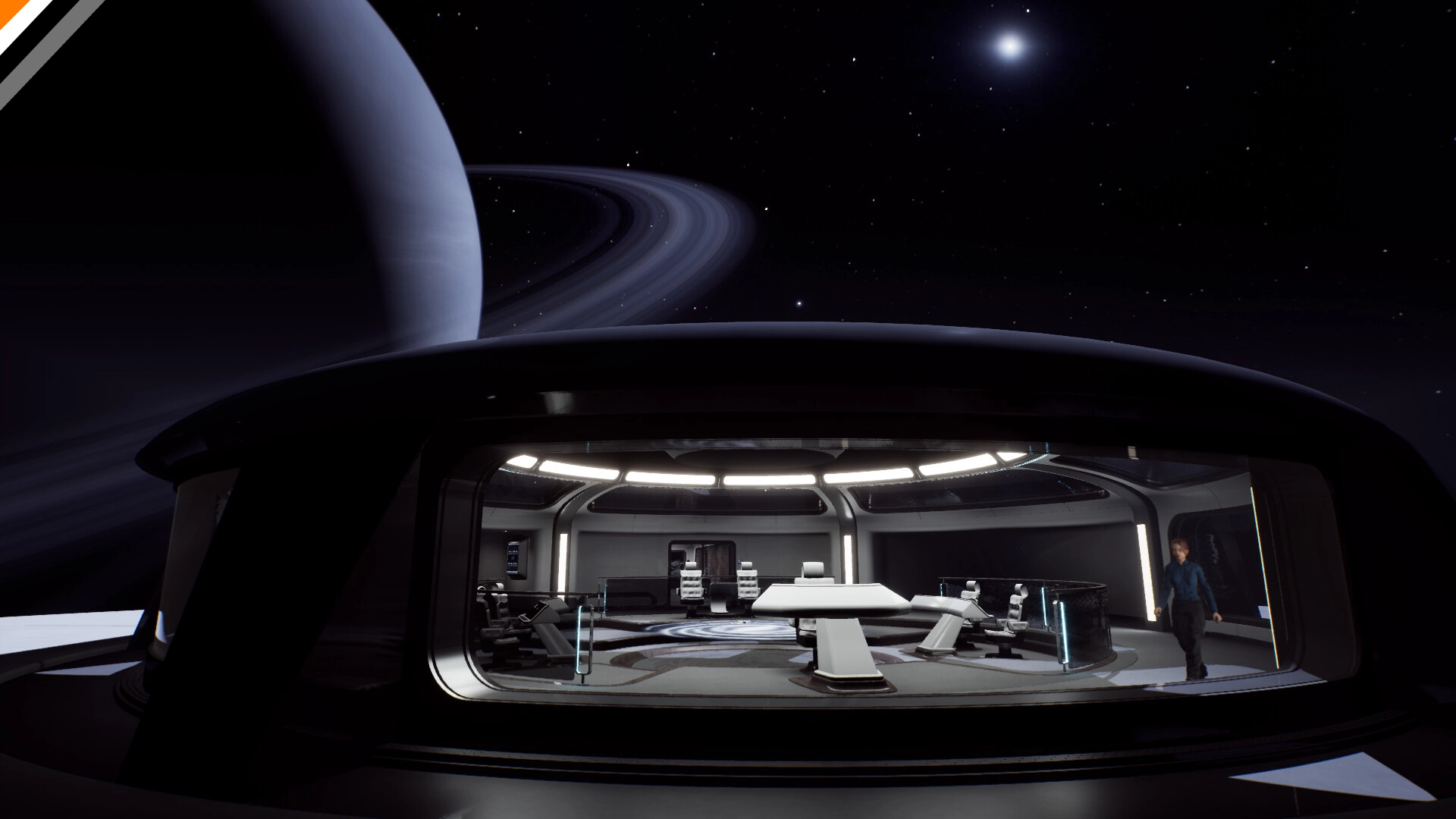
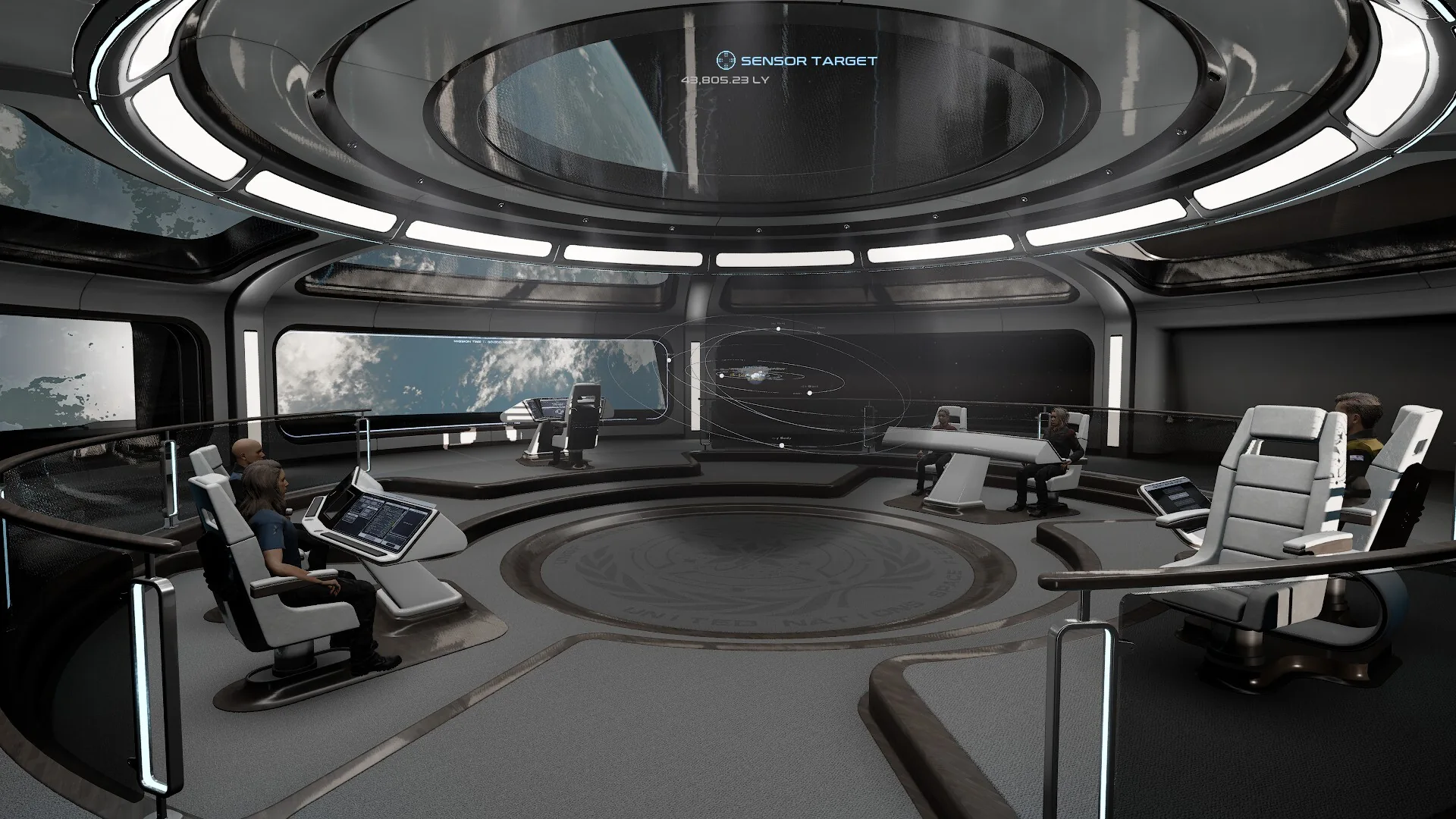
The centre of the entire project is the Magellan Class deep-space exploration vessel, and Fleetyard Studios describes it less like a level and more like an engineered object. The ship spans seven explorable decks and more than 200 rooms, with unrestricted movement through its interior and no intention of reducing engineering to decorative blinking panels. Pipes, cables, conduits and individual pieces of hardware are being represented as functional parts of simulated systems, while the underlying structure itself has been designed with techniques inspired by real naval architecture and projected future manufacturing methods. That level of detail matters because Starship Simulator is not built around a single captain’s chair. A player can work as Captain, Pilot, Science Officer, Tactical Officer, Engineer, Doctor, Morale Officer or simply travel as a Passenger, with each role intended to interact with a different slice of the same ship. An engineer should be able to trace a cable from its origin to its destination rather than watch an abstract repair percentage increase, while a doctor is expected to deal with crew health and a science officer with gathered samples and astronomical data. The interesting part is not that the game has eight roles. It is that all eight are supposed to exist inside the same physical machine, giving the ship the potential to become a place the player gradually understands rather than a menu that happens to move through space.

a galaxy that takes the science seriously
Outside the hull, Fleetyard is aiming just as high. Starship Simulator is designed around a full-scale Milky Way driven by astrophysics rather than a small collection of hand-authored solar systems connected by loading screens. Procedural generation is used to build scientifically plausible systems, with factors such as stellar type, orbital distance, atmosphere and albedo contributing to whether a planet could support liquid water and potentially life. The latest development work has pushed that concept further through the new Genesis system, which is replacing two previous galaxy and system-generation solutions with one unified framework. According to the August development update published in September, generation has become effectively instantaneous, previous CPU hitching associated with high-speed travel has been removed, large luminous objects can now remain visible across distances exceeding 2,000 light-years, and the underlying dataset contains more than 21 million real-world stars. Every star visible to the naked eye from Earth is now represented, along with the familiar constellations, while datasets for known nebulae, clusters and confirmed exoplanets are being prepared for integration. These are development claims rather than a description of the current public demo, but they show where the project is spending its effort: not simply increasing the number of destinations, but trying to make the Milky Way behave like one connected astronomical environment.
exploration needs something worth finding
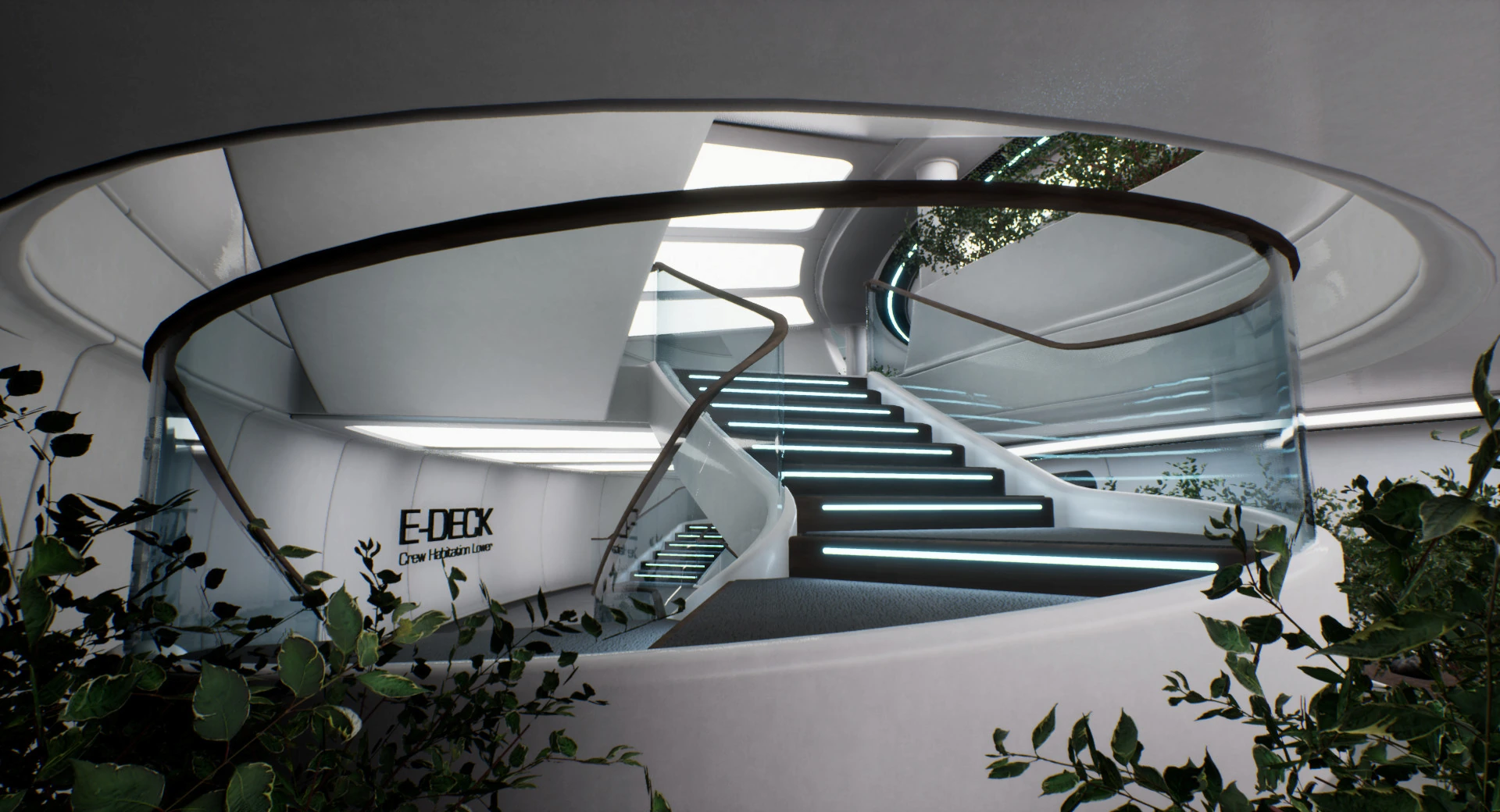
Scale alone has never guaranteed an interesting space game, and Fleetyard appears aware of that problem. The larger plan for Starship Simulator is not merely to catalogue stars but to give the crew reasons to investigate them. Habitable planets may contain biological samples, useful minerals, ancient technology or signs of intelligent life. Probes can be sent to planetary surfaces, while future gameplay is intended to allow shuttle missions, exploration of alien structures and the recovery of physical objects that can be analysed aboard the ship. First contact is another major pillar, with procedurally generated civilizations expected to respond according to their own traits and attitudes rather than functioning purely as targets or quest dispensers. Diplomacy therefore matters because a poorly handled encounter may create a dangerous situation for a vessel whose primary mission is exploration rather than conquest. This is also where Starship Simulator begins to look less like a conventional vehicle simulator and more like a long-form science-fiction sandbox. The ship requires fuel and maintenance, the crew requires food and healthcare, and decisions taken far from Sol are supposed to accumulate into the larger question of whether the expedition can eventually make it home. That combination could give exploration consequences beyond discovering another icon on a map, although much of this deeper alien, planetary and mission content remains part of the developing game rather than a finished system we can judge today.
the quiet moments may be just as important
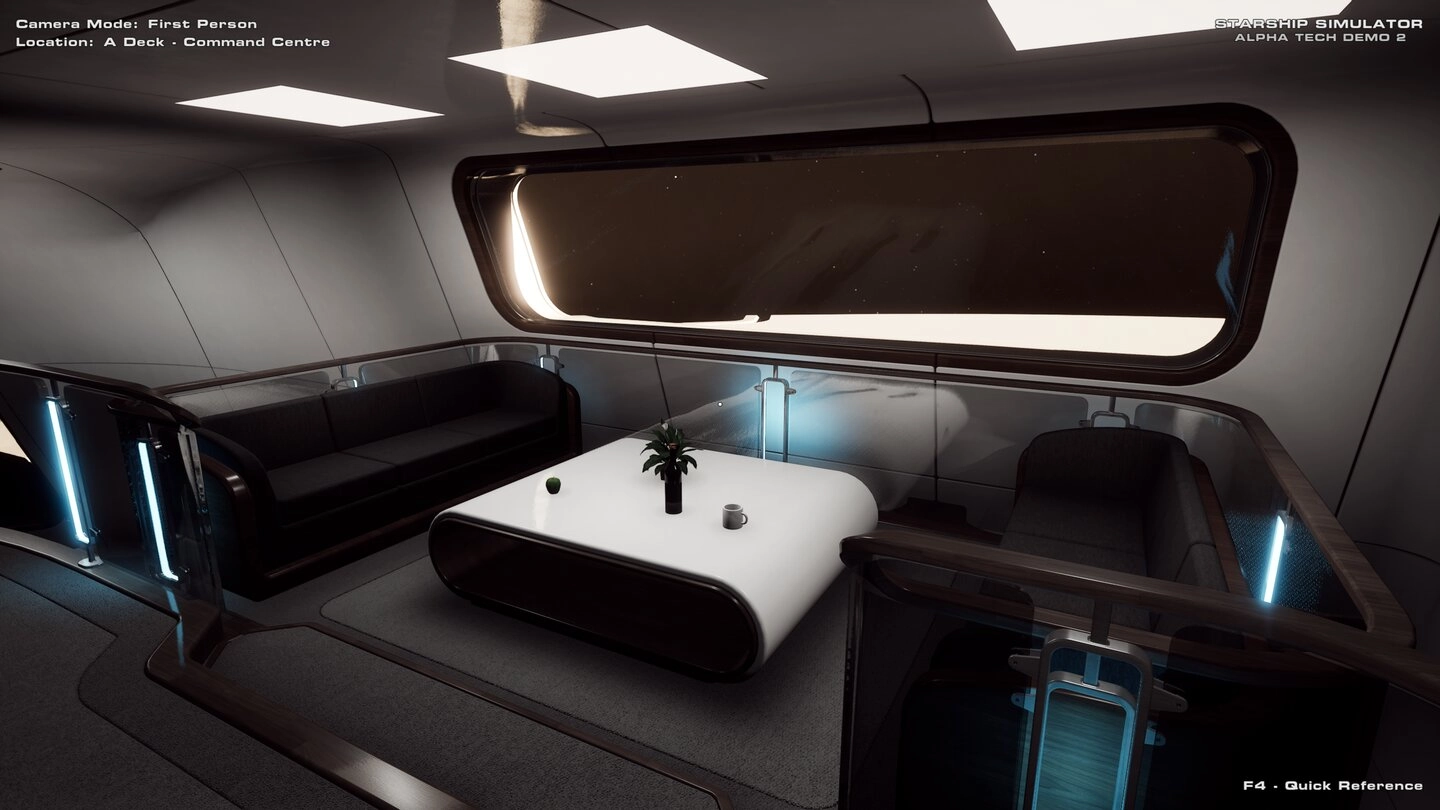
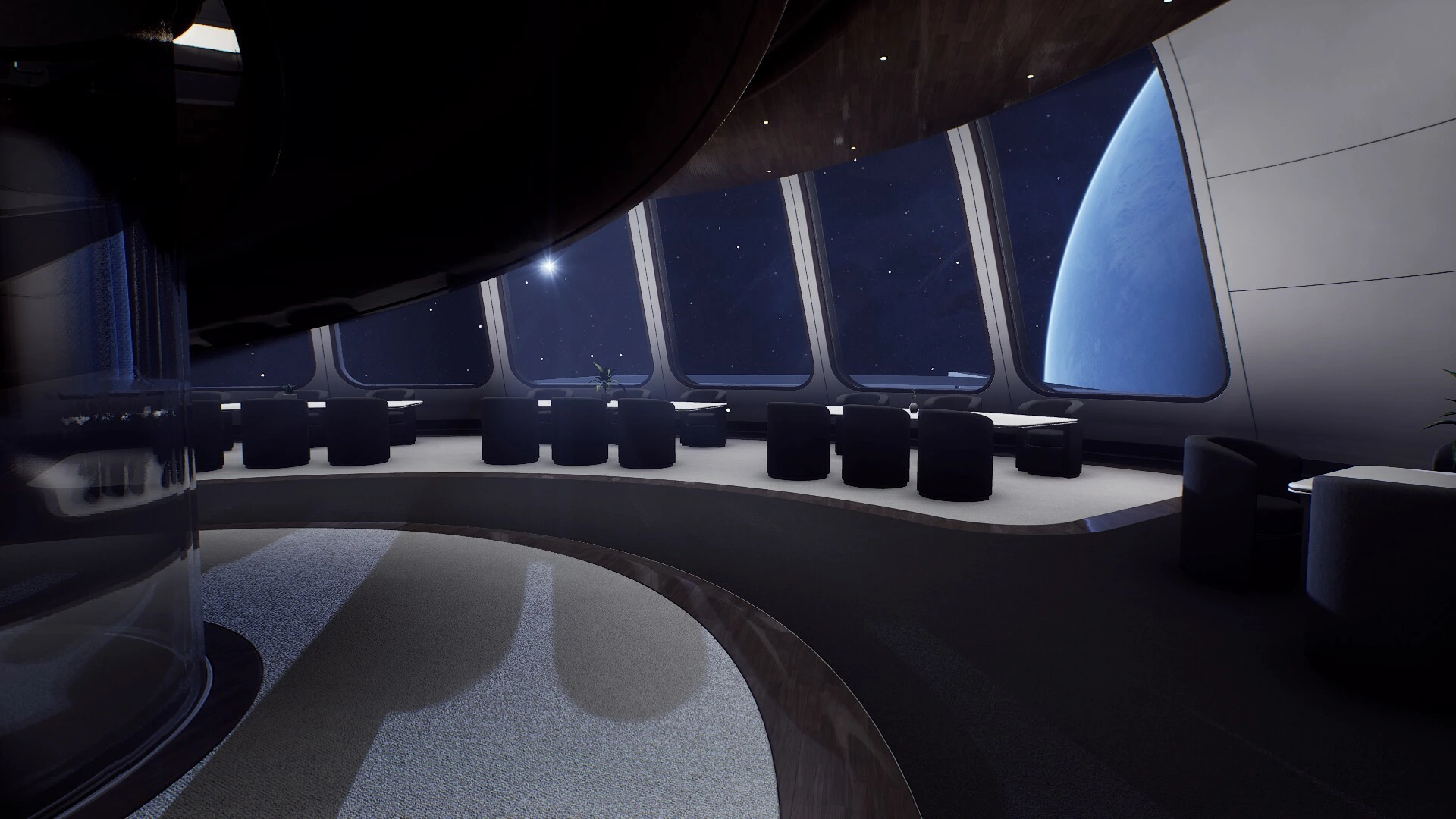
One of the more appealing things about Starship Simulator is that its design leaves room for inactivity. Not every player has to stand at a tactical station waiting for something to explode. The Passenger role exists specifically for those who simply want to live aboard the ship and explore it, while lounges, mess halls and other everyday spaces are intended to make the Magellan feel inhabited rather than assembled exclusively around gameplay stations. That slower rhythm fits the scale of the project surprisingly well. Crossing hundreds of light-years should not necessarily feel like fast travel with extra animation; it can become time spent walking through engineering, watching stars from an observation area, talking with other players or simply letting the simulated vessel do what a vessel does. Multiplayer currently targets roughly 14–16 players on the same ship, while single-player remains the primary experience and lets one person move between the available roles. The base sandbox is also planned to remain free to play without microtransactions or procedural content locked behind a paywall, with Fleetyard instead planning paid additional ships and future story campaigns. If the studio can preserve that sense of ordinary life alongside the technical systems, Starship Simulator may find something many space games lose while chasing spectacle: the feeling that being aboard the ship is itself part of the adventure.
development remains the biggest variable
The ambition is also the obvious risk. Starship Simulator is being built by Fleetyard Studios, a small team centred around primary developer Dan Govier, and virtually every major idea in the project creates another technical dependency. A simulated starship needs stable ship-state systems. A seamless galaxy needs reliable procedural generation. Multiplayer needs those systems to remain synchronized, while planetary exploration, NPC crews, alien civilizations, VR support and later story content all sit on top of that foundation. Development during 2026 illustrates the challenge clearly. Work on the project involved a substantial rebase of core game-state and galaxy-generation systems, including the removal of circular dependencies that had been causing engine crashes and the migration toward the new Genesis architecture. Fleetyard acknowledged in its July update that this work had pushed Early Access back, while the current FAQ now describes 2026/27 as a hope rather than a fixed release window and Steam itself simply lists the release as TBA. That is the correct way to look at Starship Simulator today. It is not a nearly finished game waiting for a marketing date. It is an unusually transparent simulation project whose foundations are still being rebuilt while the developers continue exposing that process to backers and demo players. Patience is not optional here. It is practically another crew role.
a simulator with an unusually clear identity
What keeps Starship Simulator interesting despite that uncertainty is how consistently its systems point toward the same fantasy. The detailed ship, crew professions, astrophysics, survival needs, scientific exploration and long-distance travel are not separate features thrown together because space games are expected to have them. They all support the idea of joining a deep-space expedition and living with the machinery, people and decisions required to keep it moving. Even the current Genesis work fits that identity. Fleetyard is not rebuilding the galaxy simply to increase a number on a feature list; the stated goals include eliminating travel hitching, allowing far greater flight speeds, increasing astronomical visibility and creating a foundation capable of representing known stars and large-scale stellar phenomena more naturally. Unreal Engine 5 is being used for the visual side, and current development is moving toward volumetric stars, atmospheres, clouds, gas giants, rings, black holes and nebulae through a shared rendering framework. None of this guarantees that the eventual game will successfully balance simulation depth with accessibility, or that every ambitious feature will arrive exactly as currently planned. But Starship Simulator already has something valuable: it knows precisely what sort of space game it wants to become.