
PREVIEW | SPACE HAULER | THE JOURNEY IS THE MISSION
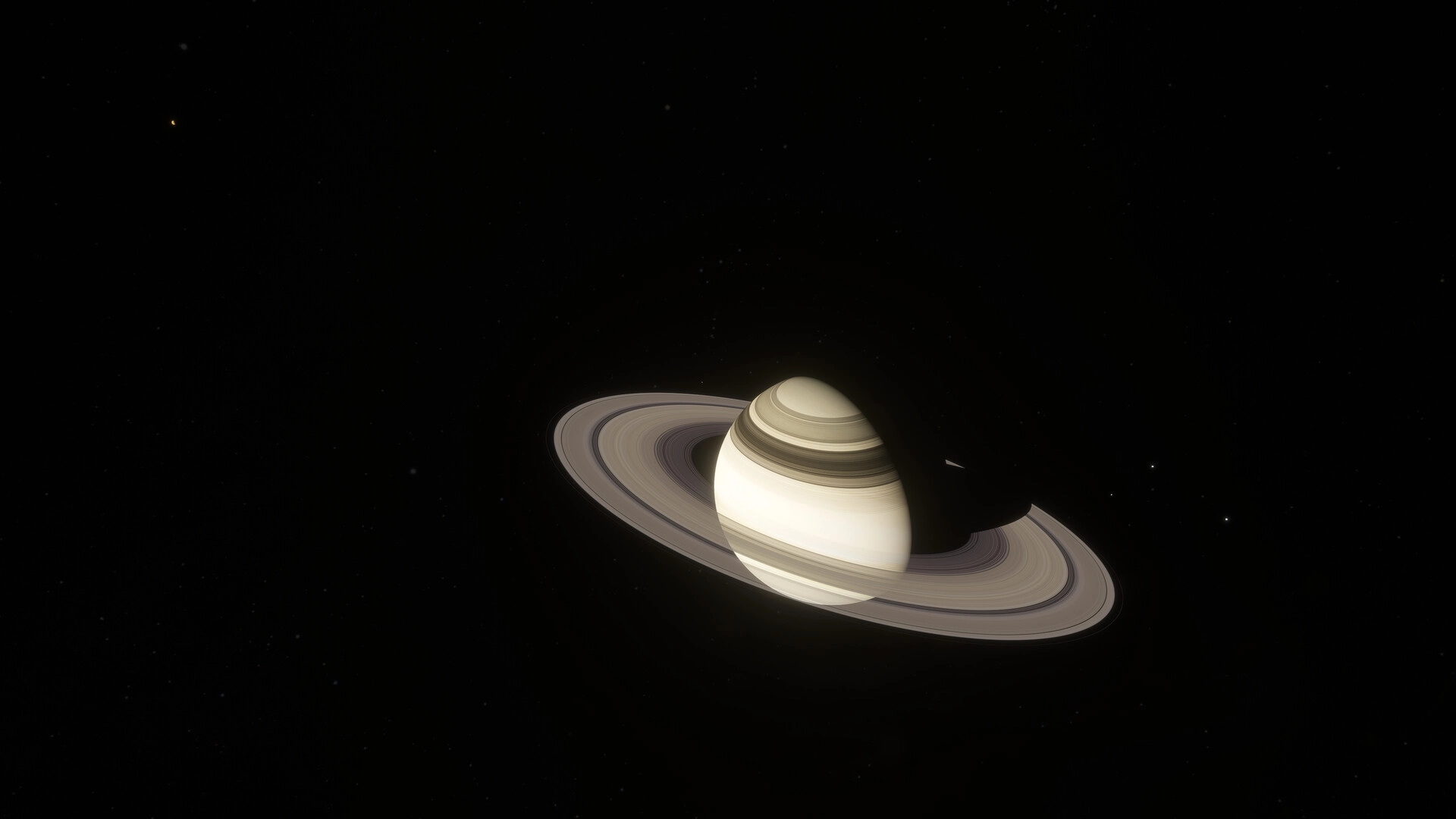
A heavy cargo spaceplane rises above Titan while its propellers fight through an atmosphere thick enough to make flight possible beneath the distant rings of Saturn. The destination may be an orbital station, an isolated surface base or a precise point where a satellite must be released, but reaching it is not treated as empty travel between two pieces of content. Space Hauler is a hard-physics spaceflight simulator in which transportation itself becomes the central challenge. Developed and published by Icelandic studio 94 Kelvin, the game places the player inside a fully interactive cockpit and asks them to build a career as a pilot-for-hire through cargo deliveries, scientific surveys, supply drops, orbital deployment and rescue work. Aerodynamic lift and drag govern flight inside Titan’s dense atmosphere, while n-body orbital mechanics take over after the spacecraft climbs beyond it. The Saturnian system is being recreated at full scale using real observations and data, giving distance, velocity, fuel and trajectory practical meaning instead of reducing them to decorative numbers beside a mission marker. Space Hauler is scheduled to enter Steam Early Access in 2027, initially with one flyable spacecraft and a focused selection of jobs around Titan. Its ambitions are narrower than those of many space games, but that may become its greatest advantage. Rather than promising an entire galaxy filled with generic activities, it wants one difficult delivery to feel like a complete occupation.
titan changes the rules of flight
Titan is not simply an unusual orange backdrop chosen to distinguish the screenshots. It is the only moon in the Solar System with a dense atmosphere, and Space Hauler uses its combination of thick air and weak gravity as the physical foundation of the experience. The atmosphere is approximately four times denser than Earth’s, allowing the VT-100 cargo craft to rely on proprotors and conventional control surfaces while operating near the surface. Aerodynamic lift, drag and changing air density therefore remain active considerations during takeoff, landing and atmospheric transport. Once the vehicle climbs above that environment, the same machinery can no longer carry it forward. Propellers are folded away, rocket propulsion takes over and movement becomes a problem of velocity, gravity and orbital trajectory. This transition is central to the entire concept. Many space games allow a ship to fly through atmosphere and vacuum with roughly the same simplified handling, but Space Hauler wants those regions to feel like different physical worlds connected by one continuous journey. A craft stable during low-altitude cargo flight may require a completely different approach while inserting a payload into orbit or matching velocity with a station. Titan’s low gravity may make certain operations more forgiving than they would be on Earth, but the scale of the Saturnian system ensures that errors in direction or timing can still grow into enormous missed distances. The game is not asking players merely to point the nose toward space. It is asking them to understand why an aircraft can fly, when it must become a spacecraft and how to arrive somewhere that never stops moving.
every switch should earn its place
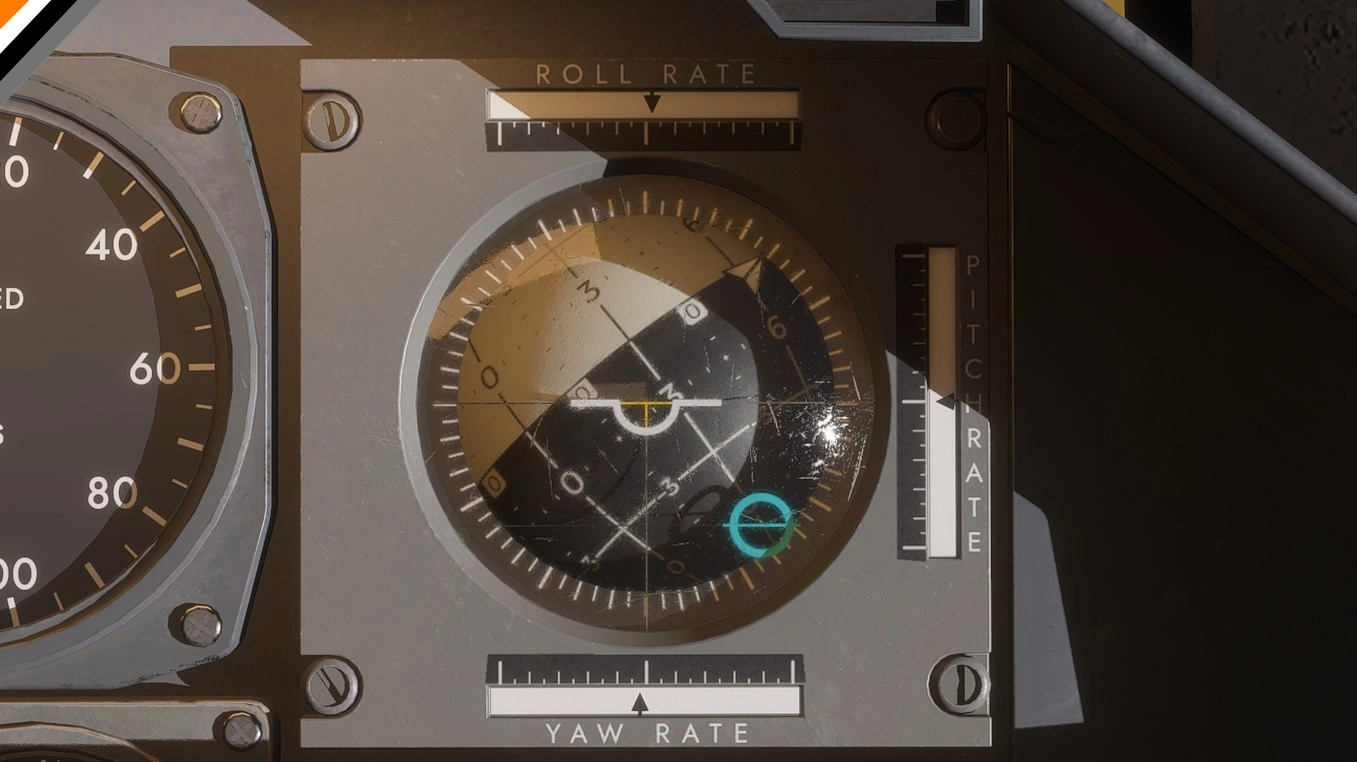
The VT-100 cockpit is fully interactive, with every button, switch and dial intended to serve an actual function. Its layout is inspired by analog aviation instruments rather than a clean science-fiction interface that compresses every system into a few glowing screens. That gives Space Hauler a deliberately industrial identity. The pilot is not commanding an elegant exploration vessel built for effortless travel; they are operating working machinery designed to carry equipment, supplies and people through an environment where one forgotten setting can compromise an entire contract. Optional VR support should make the scale and physical arrangement of the cockpit especially convincing, but the game also supports conventional monitor play with HOTAS, flight stick or gamepad. The challenge will be making this depth readable rather than merely complicated. A functional cockpit is valuable when instruments communicate the state of the aircraft and help the player make informed decisions. It becomes frustrating when critical information is spread across unfamiliar controls without enough explanation. Space Hauler will need strong tutorials, clear operating procedures and assistance settings capable of teaching atmospheric flight and orbital mechanics without removing their importance. The analog presentation also raises questions about how believable the fictional VT-100 will feel as a vehicle designed specifically for Titan rather than a familiar terrestrial aircraft transported into space. The project is still early enough that visual elements and systems may change, but its strongest possible identity lies in treating the cockpit as a workplace. Every gauge should answer a practical question, every warning should require a response and every successful landing should feel connected to the pilot’s understanding of the machine.
cargo is only simple before takeoff
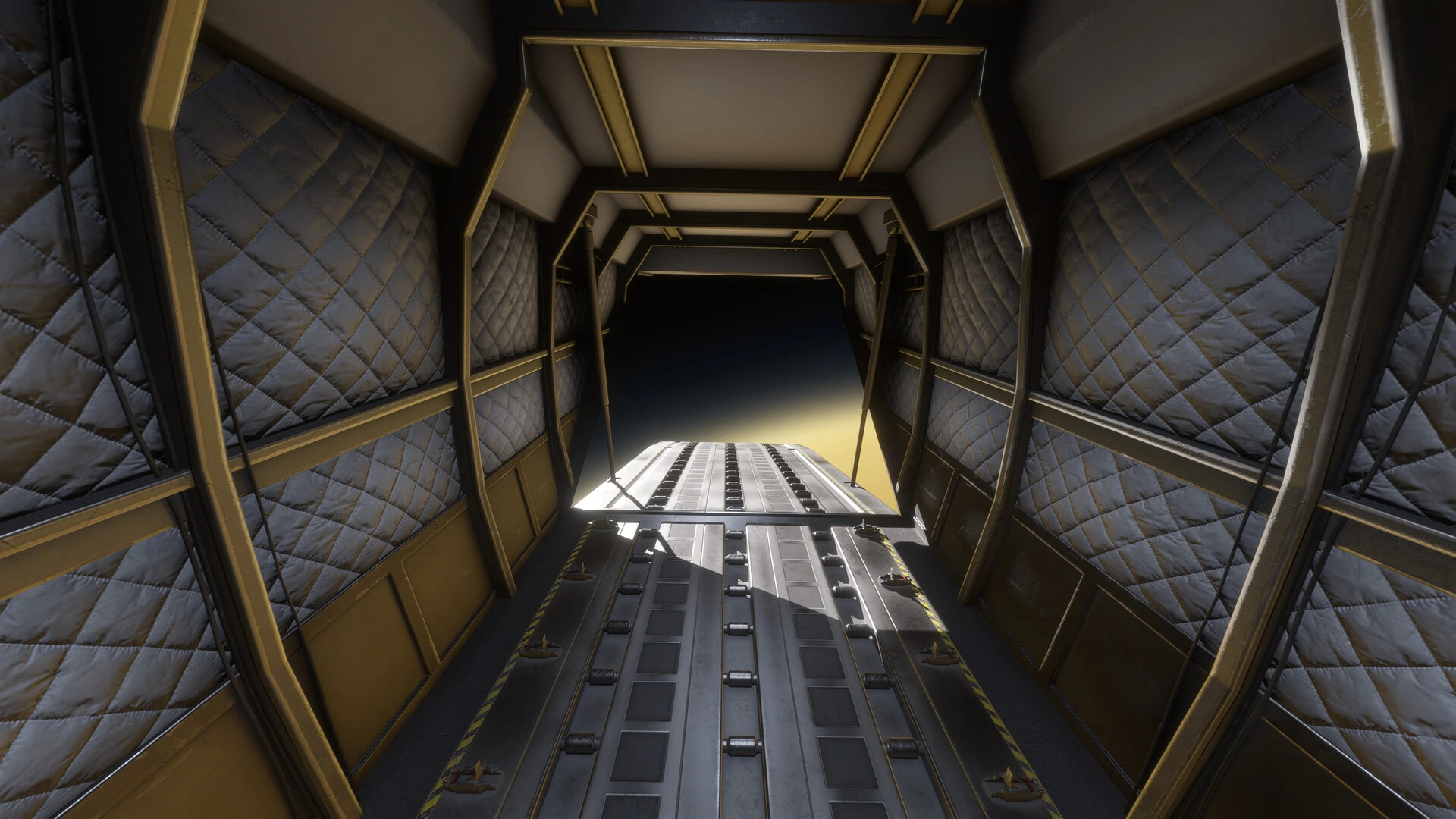
The initial job market will include basic cargo transport, supply drops to remote locations, scientific surveys, satellite deployment and search-and-rescue assignments. These activities use the same spacecraft but create very different demands. A surface delivery may emphasize payload mass, weather, fuel consumption and landing accuracy, while orbital satellite insertion requires reaching a specific trajectory before releasing valuable equipment at the correct moment. Refuelling or assisting a stranded spacecraft introduces rendezvous procedures in which matching position is not enough; relative velocity must also be controlled before two vehicles can safely approach. The game’s career structure turns successful work into money that can be spent on VT-100 upgrades or saved for future opportunities. That loop sounds straightforward, yet realistic physics can give even an ordinary contract several stages of preparation and risk. Cargo mass should affect acceleration, fuel use, balance and landing behavior. A longer route may require more propellant, but carrying more propellant adds additional mass. A rushed ascent can waste fuel, while an incorrect orbit may cost more energy to repair than the contract can economically justify. This is where Space Hauler could distinguish professional routine from repetition. The missions do not need constant emergencies if the aircraft, cargo and destination create enough variation on their own. A successful delivery should feel satisfying because the player planned and executed it cleanly, not because pirates appeared halfway through the route. The concern is whether the initial selection of contracts can sustain that satisfaction with only one flyable vehicle. Deep simulation can keep familiar work engaging, but job conditions, locations, payloads and economic decisions will need enough variation to prevent the career from becoming the same route performed with slightly different numbers.
one spacecraft carries the entire early access launch
Space Hauler is being developed by a very small team, with 94 Kelvin founded by solo developer Pétur Darri Pétursson in Reykjavík in January 2026. The studio plans to use approximately two years of Early Access to expand the game with additional ships, more regions of the Solar System and broader activities including mining, station construction and a more developed search-and-rescue structure. The initial build will be much more focused: Titan and the wider Saturnian system, one flyable VT-100 and a contract market built around the core piloting experience. That honesty is welcome, but it also reveals the scale of the risk. Simulation-heavy games require reliable physics, useful instrumentation, stable control support, convincing audiovisual feedback, mission variety and enough optimization to handle both standard displays and VR. Each additional spacecraft also requires its own handling, systems and purpose if it is to become more than a cosmetic replacement. A full-scale Saturnian system can create extraordinary distance and isolation, but scale alone does not guarantee meaningful content between locations. The environment needs navigational interest, active infrastructure and enough operational detail to stop the system from feeling like empty mathematical space. Early Access is therefore not merely a period for adding more contracts; it is where the central claim of Space Hauler will be tested. The game must prove that realistic travel can remain engaging after the novelty of the first successful orbit has passed. Its limited starting scope could produce a concentrated and carefully simulated experience, or expose how much of the broader career still exists only as a future plan.