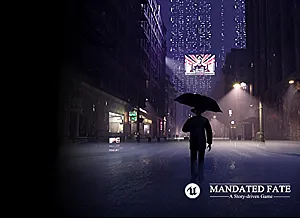
PREVIEW | MANDATED FATE | A DYSTOPIAN RPG WITH ENORMOUS POTENTIAL
A surveillance camera turns above a narrow street while enormous government screens illuminate buildings that were already old before the Empire learned how to control gravity. Somewhere inside this vertical capital, an Imperial Inspector is expected to solve a murder without asking the kind of questions that might embarrass the people who gave him the case. This is the uncomfortable position at the heart of Mandated Fate, an upcoming narrative RPG and future-noir social thriller created through Tetrarchy Studios primarily by solo developer thibaut billerot, whose ArtStation portfolio provides a closer look at his visual work.. Its alternate version of 1985 is ruled by the Greater American Technological Empire, or G.A.T.E., a regime built around technological supremacy, public obedience and an obsessive race to discover the anti-gravity particle before its global rivals. One old District continues to resist its authority, although nobody seems certain how that resistance has survived or what is really being protected there. When a strange murder draws official attention back toward the District, the investigation begins to expose political interests, personal histories and secrets that the Empire would apparently prefer to keep buried. It is a familiar dystopian foundation, but Mandated Fate appears interested in the smaller compromises that make such a system function: the answer given to the wrong official, the neighbor sacrificed to preserve a reputation and the moment an investigator realizes that discovering the truth may be much more dangerous than failing to solve the case.
a murder the empire wants controlled
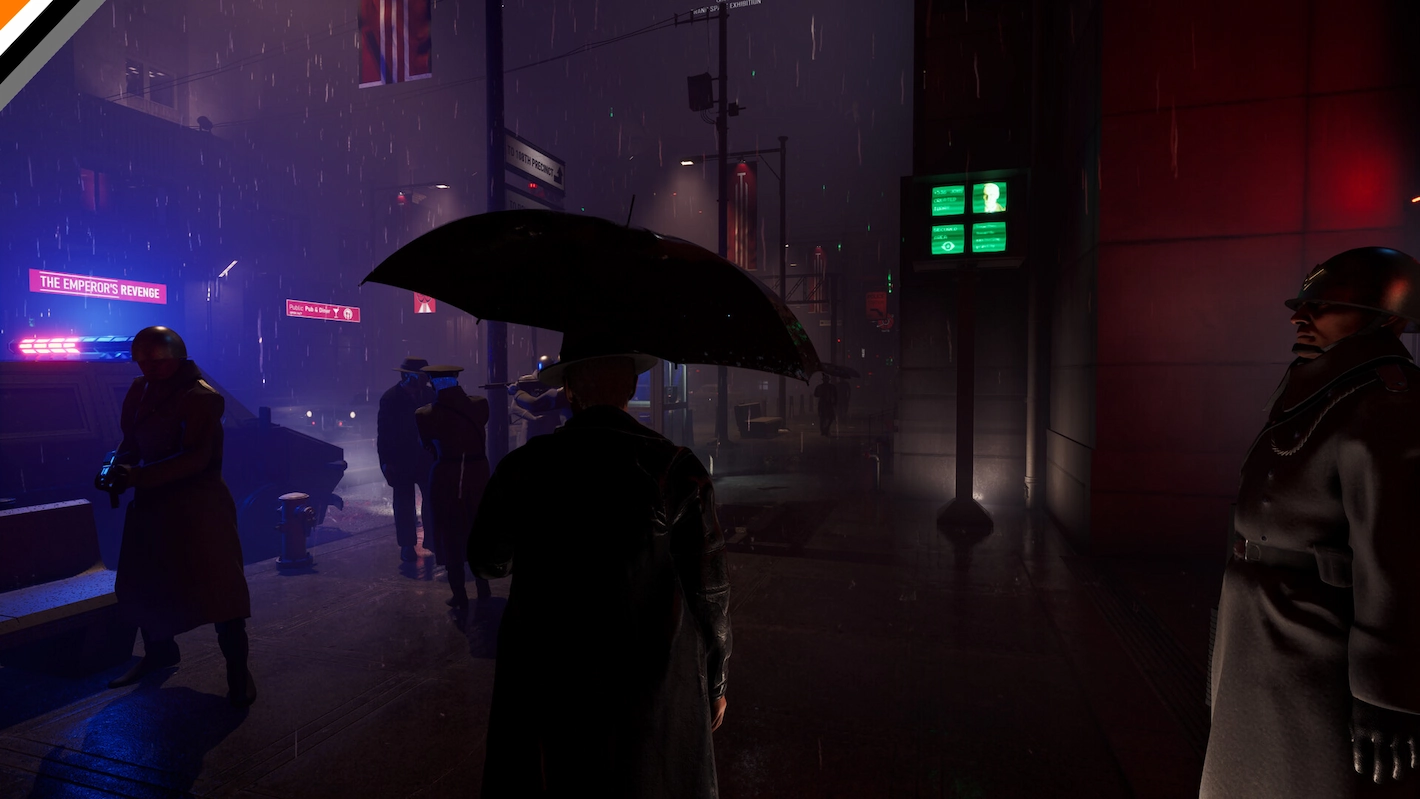
The protagonist is not an untouched outsider entering this machinery for the first time. He is a weary Imperial Inspector with a complicated past, working inside a recently established authoritarian order that demands results and absolute loyalty even when those demands directly contradict each other. The investigation leads into the resistant District, where an Imperial agent known locally as Victor has disappeared and no body has been recovered. What initially looks like a contained criminal case therefore carries the weight of a possible political crisis. Players will question important characters, examine documents, collect intelligence and consult gathered evidence through the Inspector’s computer, but the objective is not simply to assemble every clue until the game presents one correct solution. Different people carry government agendas, private fears and ideological loyalties of their own, leaving motives to overlap instead of forming a convenient line between innocence and guilt. Mandated Fate promises a narrative in which ambiguity can survive even after an outcome has been reached, and that may prove more important than the number of dialogue choices displayed on screen. An inspector serving this regime must sometimes violate the law to enforce it, manipulate one faction to protect another or stop investigating before an inconvenient discovery becomes impossible to hide. The case is consequently both a mystery and a test of political survival. Every piece of information has potential value, but possessing it can also make the player responsible for deciding who should suffer because it was found.
loyalty becomes a playable system
The most convincing part of the design is the tension between the protagonist’s public Merit Score and his private Convictions. Merit represents the Empire’s assessment of an acceptable citizen, while Convictions gradually define whether the Inspector genuinely supports the regime, remains unaligned or moves toward dissidence. This separation gives Mandated Fate a more interesting foundation than a basic morality meter. A player may perform loyalty to maintain access and protect a useful position while privately working against the system, but repeated decisions eventually make that performance harder to separate from an actual identity. Conviction functions as a form of ideological charisma: stronger alignment makes the Inspector more authentic and persuasive to characters who share his beliefs, opening dialogue choices, hidden routes and deeper secrets that an undecided character may never see. Neutrality is therefore not automatically the safest route through the story. Avoiding commitment might preserve short-term flexibility, but it can also prevent anyone from trusting the protagonist enough to reveal what truly matters. The promised consequences are equally severe. Losing political protection may force the player to bribe guards, betray neighbors or sacrifice allies simply to remain active long enough to continue the investigation. These systems still need to demonstrate that choices produce more than altered dialogue and a different ending scene, but the underlying idea is strong because it treats belief as social leverage rather than a colored bar measuring whether the player has been good or evil.

a city designed to make people feel small
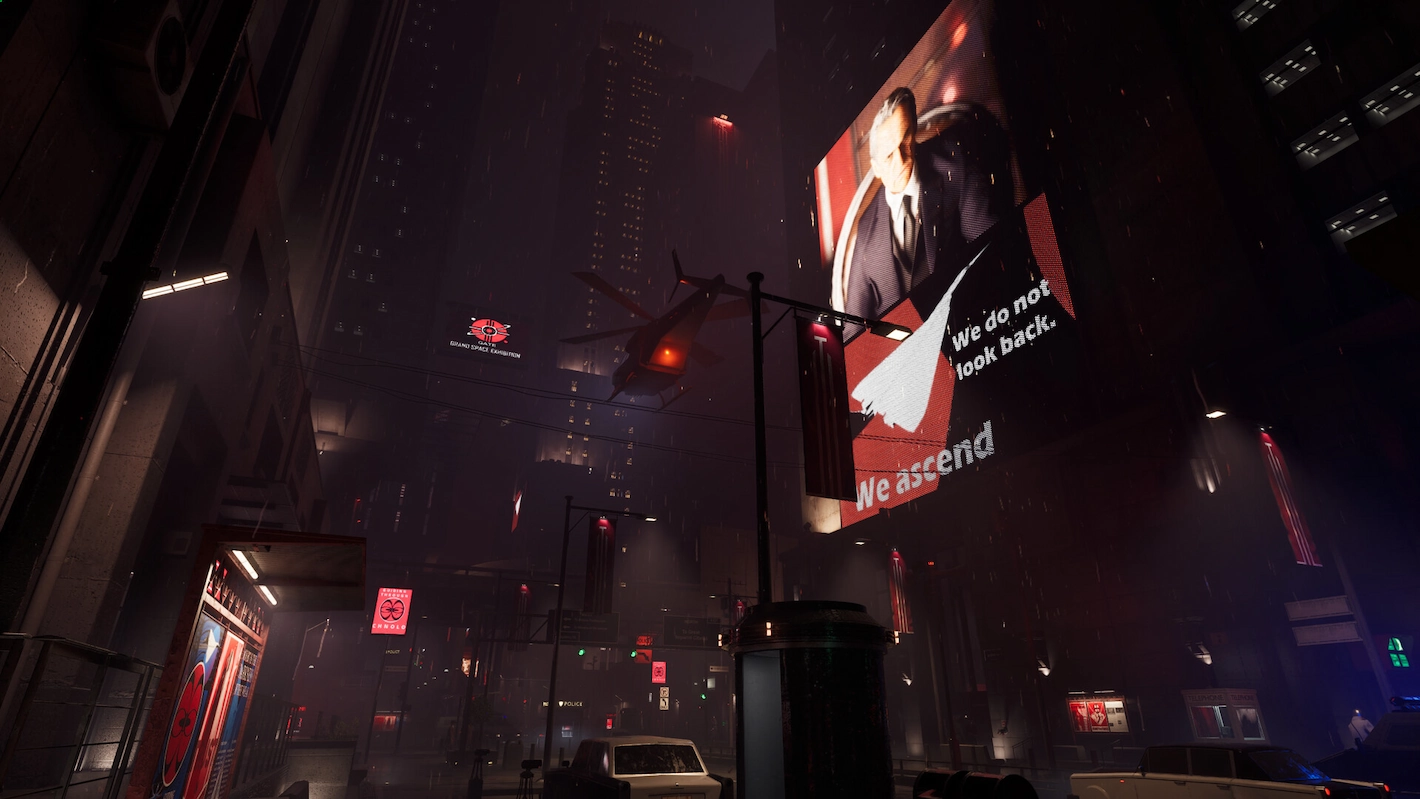
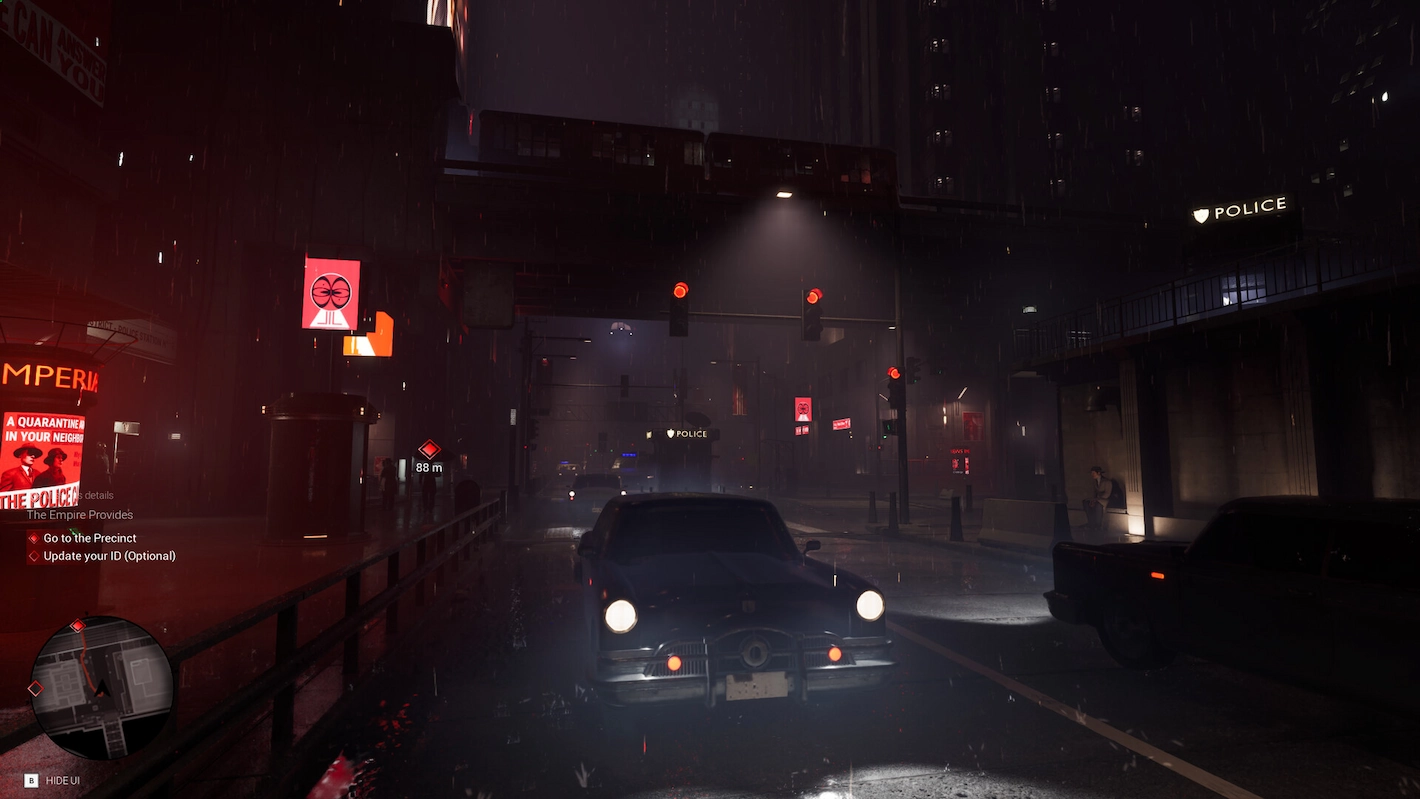
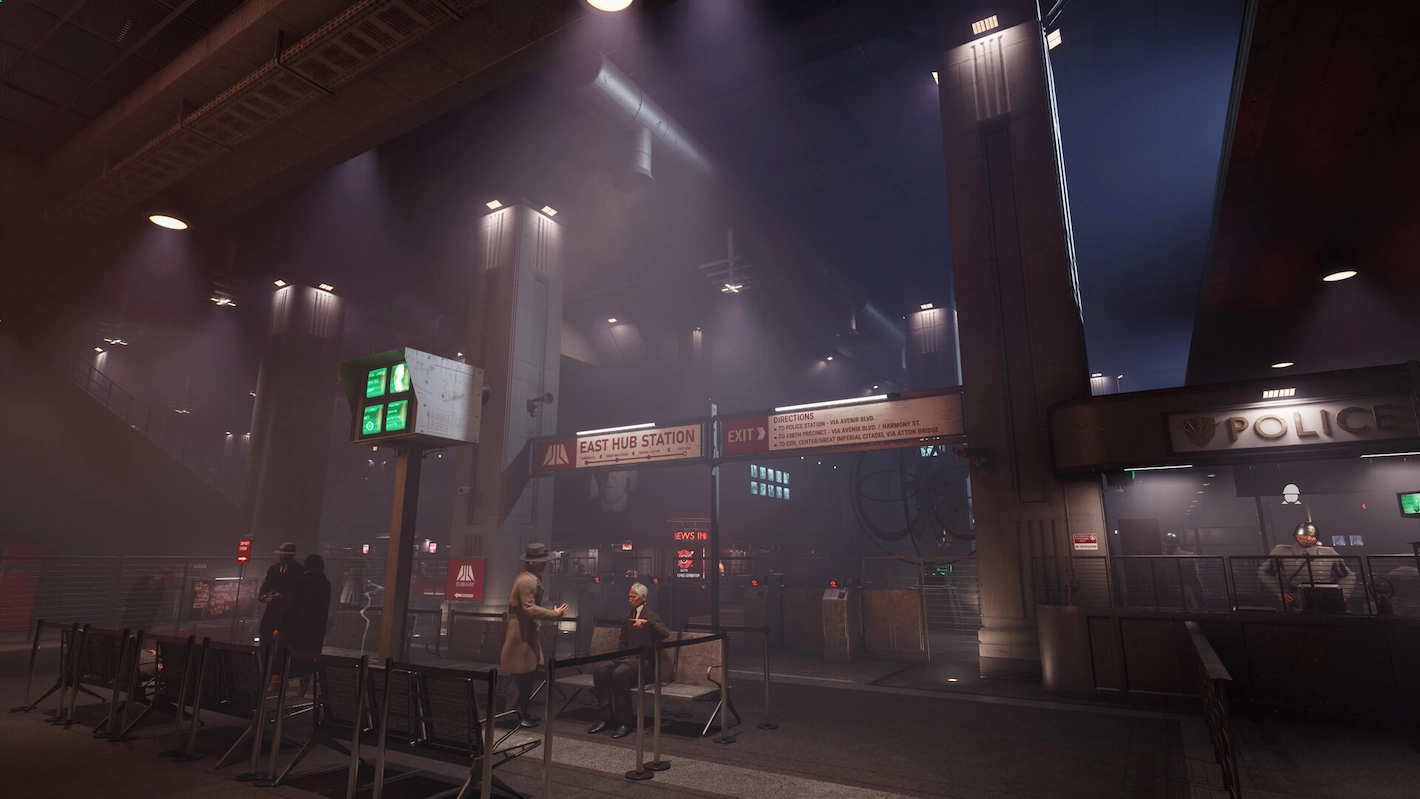
Mandated Fate’s capital may ultimately carry as much of the story as its characters. Elegant Art Deco remains are trapped beneath authoritarian neo-brutalism, gigantic propaganda screens and structures whose scale makes individual citizens look temporary. Narrow alleys sit below towers and transportation networks, giving the city a strong vertical character instead of spreading everything across another flat open-world map. The full game is intended to connect streets with multi-level building interiors without loading screens, allowing the player to walk, use elevators, take the subway and drive through a city where even ordinary movement can be observed. Driving is not presented as a harmless shortcut either, since traffic behavior is monitored by the authorities. That detail says more about the intended atmosphere than another row of armed guards ever could: control has moved beyond checkpoints and become part of the infrastructure. Players can freely switch between first and third-person perspectives, which should make slower investigation and broader exploration equally comfortable. The currently available demo offers only the opening portion of the Imperial Capital and keeps several optional areas, lore sections and the subway inaccessible, but its stated purpose is to provide a representative sample of the atmosphere and general direction. The city still has to prove that its seamless interiors contain meaningful discoveries rather than decorative rooms, yet its visual identity is already one of the project’s clearest strengths.
the scale of one developer’s ambition
There is no point pretending that Mandated Fate is a safe project. tetrarchy studios describes it as a detailed open-world narrative experience with complex dialogue, factional choices and five different endings, while the Steam page adds seamless interiors, transportation systems and several ways of navigating the city. Delivering all of that with a very small team would be difficult; doing most of it as a solo developer is considerably more dangerous. Animation quality, performance, voice work, consistency across branching storylines and the density of the open world will all need careful attention. The project has already been transparent about temporary AI-generated dialogue, with the August 2026 disclosure stating that only a few lines awaiting real actors remain generated while the rest has been handcrafted. That willingness to replace temporary material is encouraging, although the final performance quality will matter greatly in a game built around long conversations and human pressure. The visual presentation also occasionally exposes the limitations of an independent production, but the important part is that Mandated Fate is not attempting to hide behind atmosphere alone. A playable demo exists, feedback is being collected and the central systems are clearly defined. Ambition remains the greatest risk, but it is also the reason this project is worth watching instead of being dismissed as another attractive cyberpunk environment searching for an actual game.