
PREVIEW | LOW-FI | THE FUTURE LEFT THEM BEHIND
A patrol vehicle moves between towers washed in artificial light while rain, advertisements and industrial haze turn every street into a reflection of something richer happening somewhere else. Cityblock 303 is not the technological center of the future but the place where its rejected population has been left to continue living. Most people have entered the Platform, a ubiquitous virtual reality simulation that has absorbed ordinary human existence, while those unable or unwilling to connect remain outside under the dismissive name “low-fi.” The player is one of them, a police officer transferred into a district populated by other disconnected humans and synthetic beings whose intelligence never advanced far enough to join the new order. LOW-FI is being developed by IRIS VR as a single-player cyberpunk role-playing sandbox with exploration, simulation, strategy and action elements, but its most interesting promise is freedom from the usual sequence of missions. The studio describes the experience more like a holodeck program than a conventional campaign: patrol the streets and skies, investigate events, fight crime, accept corruption, spend time in arcades or simply move through the city without immediately serving a marked objective. Steam still lists no release date, while development builds remain available through the project’s itch.io page for regular Windows desktop, Steam Deck and several PC VR systems. A PS5 version is also announced, with PS VR2 presented as optional rather than mandatory.
a city built for people who no longer matter
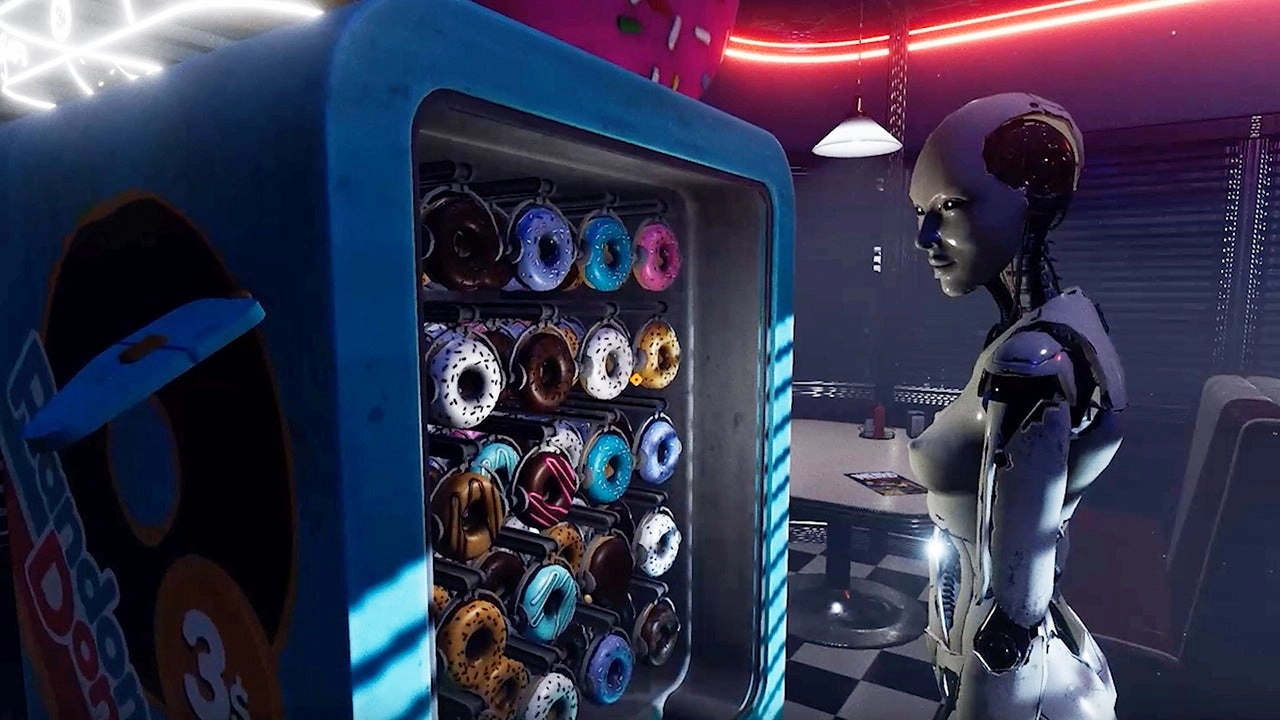
LOW-FI’s world begins with a useful cyberpunk reversal. The residents are not desperately trying to gain access to the newest technology; society has already moved beyond them and largely stopped caring whether they follow. Those who can enter the Platform spend their lives inside a dominant virtual reality, leaving physical districts such as Cityblock 303 to the poor, disconnected and technologically obsolete. That premise gives every street, machine and resident a reason to look neglected without reducing the setting to generic neon decay. Rusting robots remain because they failed to achieve higher intelligence, human residents remain because access to the Platform depends on resources or compatibility they do not possess, and the player’s police authority operates inside a part of the city no longer important enough to receive clean institutional solutions. The role of sheriff can therefore support several different identities. The player may protect residents, exploit them, investigate mysteries, enforce rules selectively or simply use the badge to move through situations unavailable to an ordinary citizen. IRIS VR says the world is completely nonlinear and that players decide how they earn and spend credits, including upgrades for weapons and companion-related items. That freedom could make the city feel inhabited rather than arranged around one central heroic storyline. It also creates a serious design challenge. A sandbox only feels free when its smaller systems respond meaningfully, and LOW-FI will need enough characters, consequences, routines and interconnected events to prevent Cityblock 303 from becoming an impressive environment filled with isolated attractions.

patrol the streets or disappear into them
The player can move through the city on foot and patrol its skies, allowing LOW-FI to alternate between close street-level detail and a wider view of the district’s architecture. The official concept includes solving mysteries, fighting crime and deciding whether police power becomes a service or another form of exploitation. Arcades, casinos, shops and optional activities are intended to remain available without the game constantly redirecting the player toward a mandatory route. This is where the project separates itself from many cyberpunk RPGs that advertise open worlds but still organize nearly every meaningful activity around a visible mission structure. LOW-FI appears more interested in occupation than completion: being present in the district, finding something unusual and deciding whether it deserves attention. VR can strengthen that approach because ordinary spaces gain importance when the player physically looks around, handles objects and occupies the cockpit of a patrol vehicle rather than controlling it from a distant camera. Desktop support is equally important, however, because the project has expanded beyond being a headset-only experience. The current itch.io description explicitly lists regular Windows desktop and Steam Deck compatibility alongside Oculus Rift, SteamVR and Windows Mixed Reality, while PlayStation lists PS VR2 as optional for the PS5 version. This broader access gives LOW-FI a better chance of reaching players attracted by its world rather than only by its technology. The question is whether controls, interfaces and environmental interaction will feel equally deliberate across both formats, or whether desktop play will reveal systems originally built around the novelty and physical presence of VR.

neon beauty needs a functioning simulation
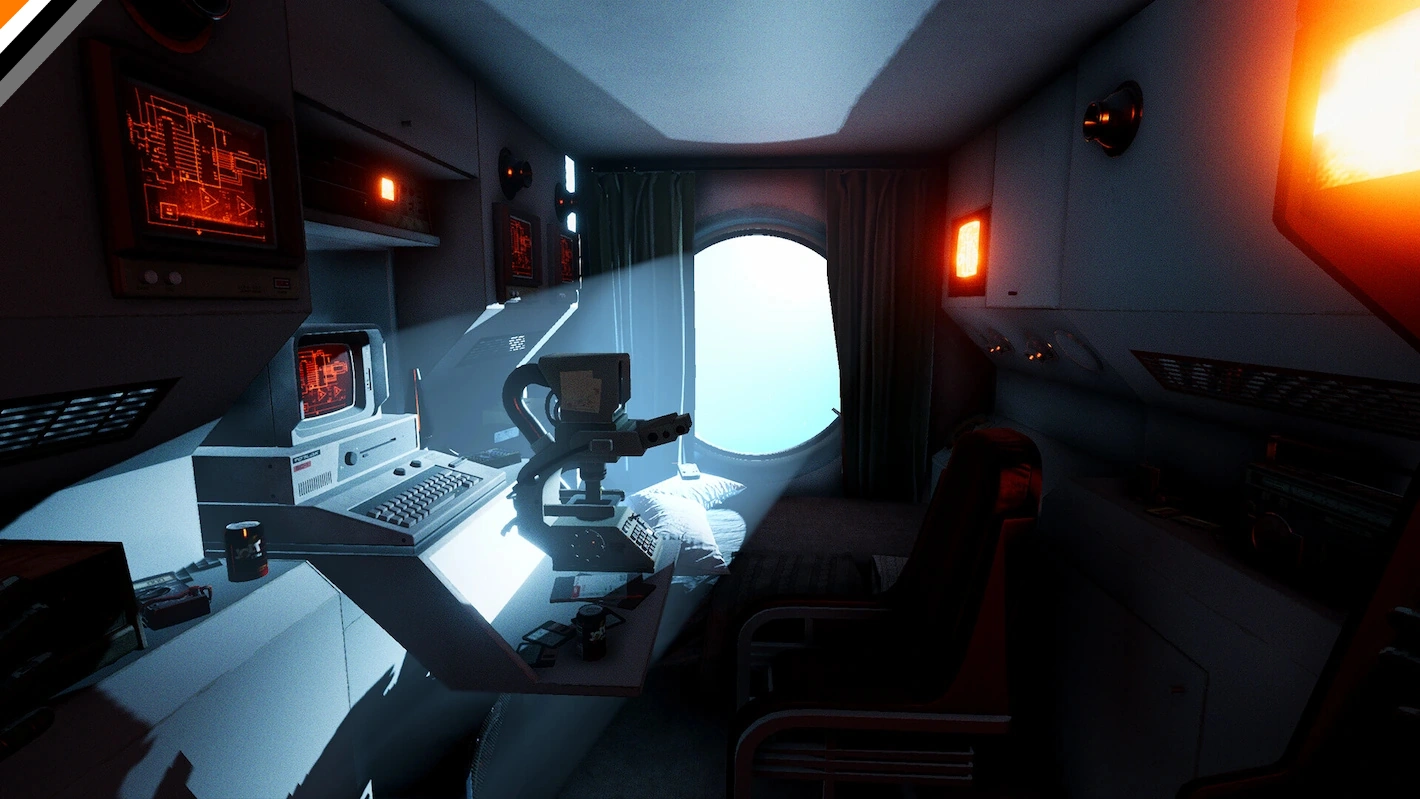
Visually, LOW-FI has always possessed a clear identity. Heavy rain, deep shadows, holographic advertising, dense street clutter and large industrial structures create a cyberpunk city that feels closer to late-1980s and 1990s cinematic futurism than the cleaner digital worlds used by many recent games. The lighting is not merely decoration; it creates separation between spaces that would otherwise merge into one dark urban mass. Bright shop interiors, red emergency light, blue signage and distant elevated traffic give the player landmarks while preserving the sense that the district extends beyond the visible route. The game’s strongest screenshots and trailers suggest an environment designed to be looked at slowly rather than crossed as efficiently as possible. That suits a sandbox centered on presence, but beauty cannot carry the entire simulation. Shops need a purpose beyond selling upgrades, arcade machines need enough substance to justify stopping, residents need routines or stories, and police work must produce outcomes that remain visible after an encounter ends. LOW-FI’s official description promises a massive open world with character-driven stories and player-directed activity, but those promises have existed for years without a finished public release. The environment already looks convincing as a place; the final test is whether it behaves like one when the player stops following the most carefully prepared route.
development has become part of the story
LOW-FI began its Kickstarter campaign in 2019, attracting 1,628 backers and more than CA$108,000, while early plans pointed toward a retail release around the end of 2020. That schedule disappeared long ago. The project remained in development through several missed windows, limited updates and extended periods in which supporters openly questioned whether it would ever reach completion. In late 2025, developer Blair Renaud stated that the game was not dead but that funding was being secured to finish it, following major personal and professional difficulties; the Kickstarter received new progress posts and public Discord access afterward. Steam still says only “Coming soon,” and the PlayStation listing gives no release date. These facts do not erase the work already visible in the development build, but they fundamentally change the tone of any preview. LOW-FI cannot be treated like a newly announced project following a normal production schedule. It is a long-running promise whose atmospheric identity has remained powerful while its path to release has repeatedly shifted. The most responsible expectation is therefore cautious interest rather than certainty. The city, premise and freedom remain compelling, and the continued platform listings indicate that the project is still active, but the final amount of content, technical polish and completion timeline remain unresolved.