PREVIEW | KNIGHT’S PATH | HONOUR MUST BE EARNED
A young noble enters the road without the status, equipment or reputation that once protected his name. The armour associated with knighthood is still somewhere far ahead, and reaching it will require more than surviving a few opening fights or accepting a convenient destiny. Knight’s Path is a story-driven third-person action RPG set in the grounded low-fantasy realm of Eredorn, a world inspired by the political structures, warfare and material culture of the Holy Roman Empire. The player controls Alryk, a disgraced noble who has lost everything and must rebuild his position from almost nothing, first for himself and eventually for the people of Eranthold. Its central promise is progression that can be seen, felt and socially recognized: simple clothing gives way to gambeson, mail and full plate, basic survival becomes trained combat, and a man treated as insignificant gradually earns the right to be regarded as a knight. The game is being developed for PC by Jan Tichota and Aamn Chahrour, supported by additional specialists in art and animation, while Steam still lists its release date as to be announced. A free earlier project, Knight’s Path: The Tournament, remains available as a two-to-three-hour concept demonstration, but the developers explicitly warn that it represents old ideas and should not be mistaken for a demo of the current full game. The new Knight’s Path is larger, more deliberate and built around a stronger narrative identity: knighthood is not selected during character creation it is the destination.

from disgrace to recognition
Alryk’s journey begins with damaged social standing rather than heroic anonymity. He understands the class he has fallen from, remembers what respect looked like and must now confront people who no longer consider him worthy of it. That distinction gives the usual RPG progression a more personal structure. Better equipment is not merely a statistical reward pulled from a chest; it reflects the gradual restoration of identity, competence and public trust. The official description says Alryk initially attempts to reclaim what he lost before recognizing that Eranthold needs something more from him, leaving the player to decide how he responds to that responsibility. Knight’s Path can therefore build its choices around duty, loyalty and reputation without requiring a world-ending prophecy to make them important. A local dispute, a broken oath or the treatment of an ordinary resident may matter because Alryk is attempting to prove what kind of man deserves authority. The setting supports this smaller scale. Eredorn contains cities, forests, ruins and hidden places, but the project presents itself as a small open-world game, not a continental checklist filled with disposable locations. That restraint could allow settlements and characters to remember Alryk’s conduct, while quests remain connected to social position rather than existing as unrelated errands. The strongest version of Knight’s Path would make reputation practical: access to training, equipment, alliances and opportunities should change as people begin to trust or distrust the name Alryk is rebuilding.

combat shaped by knowledge and armour
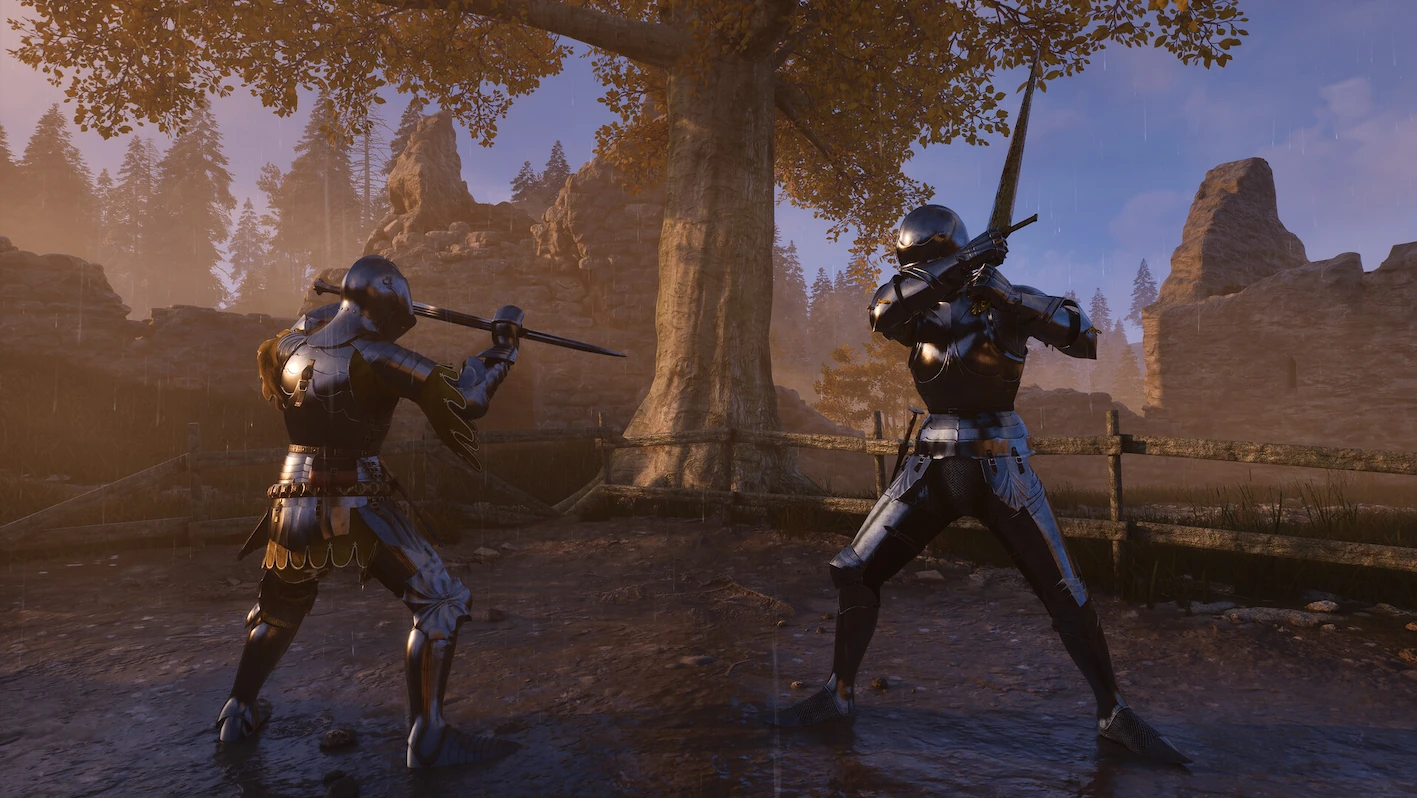
The developers describe combat as HEMA-inspired, placing emphasis on weapon mastery, spacing, timing and understanding rather than endless attack combinations. The revealed gameplay shows deliberate third-person duels in which positioning and defensive judgment appear more important than overwhelming an opponent through speed. Armour progression is especially important because Knight’s Path wants equipment to alter more than appearance. Moving from a cloth gambeson toward mail and full plate should change protection, confidence and the types of attacks Alryk can survive, while different weapons need purposes connected to reach, speed and the armour facing them. A sword should not remain the universal answer simply because its damage number is higher, and full plate should feel like the result of accumulated progress rather than another interchangeable outfit. The earlier Tournament concept already focused on challenging combat and immersive progression, but the developers now treat it as an outdated experiment whose systems and presentation do not define the final game. That creates both promise and uncertainty. The current footage looks substantially more ambitious, yet animation transitions, enemy reactions and the physical clarity of individual strikes will require refinement before combat can support an entire action RPG. A system built around measured duels must communicate why an attack missed, glanced away or created an opening; otherwise deliberate pacing can become stiffness. The concept is convincing because Knight’s Path is not promising effortless cinematic swordplay. It is promising a process in which Alryk and the player become competent together.
grounded history with room for the impossible
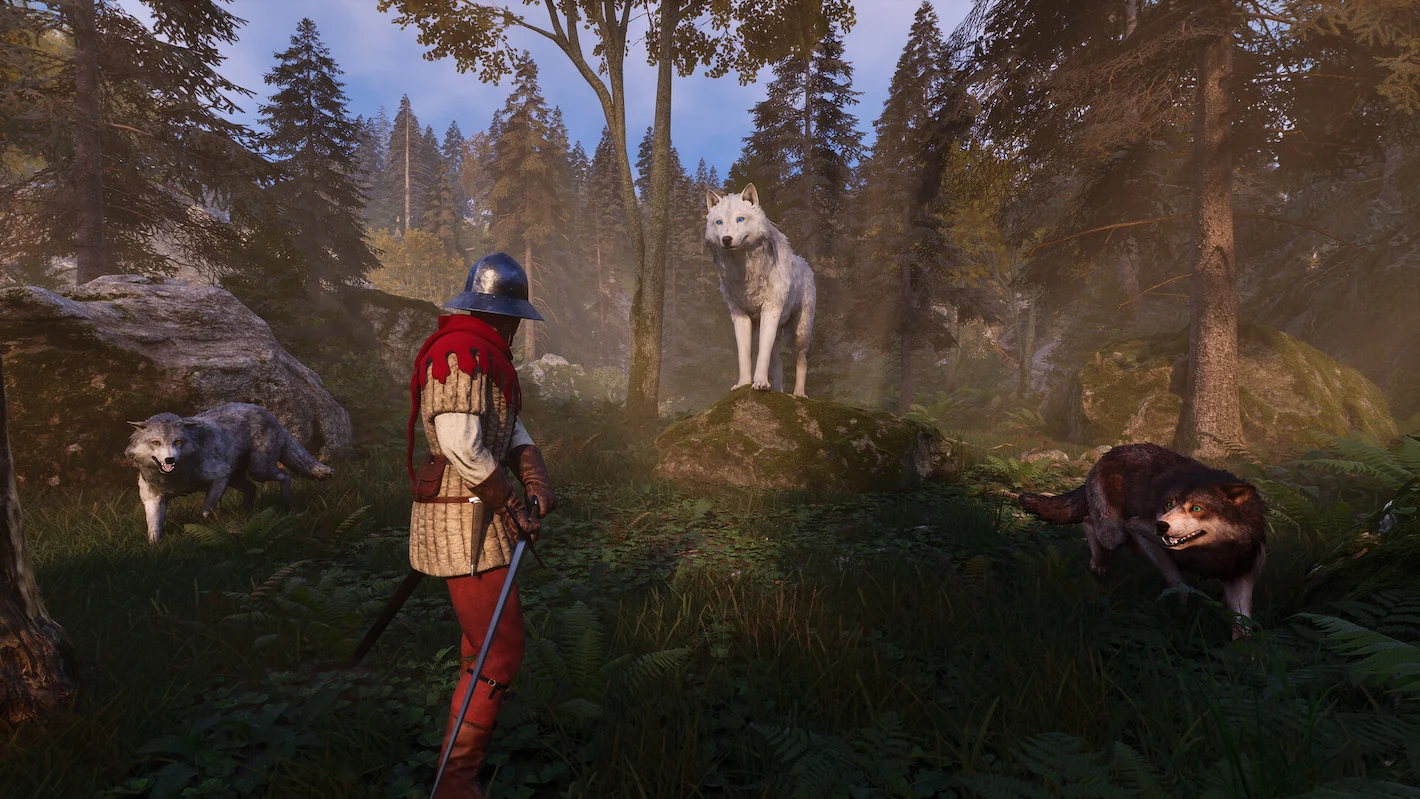
Knight’s Path uses the phrase grounded low fantasy, which gives it room for folklore and extraordinary threats without allowing magic to erase the physical medieval foundation. The architecture, social hierarchy, weapons and armour draw from the Holy Roman Empire, while the official gallery also shows encounters extending beyond ordinary human conflict, including a wyvern. That contrast could become one of the game’s strongest qualities. A creature feels more dangerous when it enters a world where most problems are solved through steel, training and political obligation rather than constant spell effects. Low fantasy also allows uncertainty to survive: people may interpret an event through religion, superstition or personal fear long before the player knows whether anything supernatural has actually occurred. The visual direction benefits from the same restraint. Castles, forests, roads and settlements appear designed as practical spaces before becoming dramatic scenery, giving Alryk’s journey a sense of material reality. Knight’s Path does not need to reproduce medieval history exactly, but it should preserve the feeling that armour is expensive, status has consequences and travelling beyond protected roads carries risk. The Holy Roman Empire inspiration is especially useful because it suggests fragmented authority, competing obligations and political relationships more complicated than one king controlling a unified fantasy nation. Even with a relatively small world, those tensions can create meaningful conflicts between local rulers, settlements and personal loyalties. The danger is allowing familiar medieval imagery to carry too much of the writing. Eredorn needs its own institutions, history and character beyond recognizable armour and castles.
a focused world built by a small team
The scale of the project demands caution. Steam credits Jan Tichota and Aamn Chahrour as the primary developers, while the official site identifies a broader supporting group that includes specialists in modelling and animation. This remains a compact independent production attempting story-driven quests, open exploration, character progression, demanding melee combat and a visually detailed medieval world. Concentrating on a smaller open world is therefore not a limitation that needs apology; it may be the decision that allows the game to exist with enough density and polish. A few settlements with interiors, routines and connected stories would provide more value than a vast landscape held together by repeated camps and generic encounters. The earlier Tournament project also provides useful evidence that the developers are willing to test an idea publicly, gather reactions and then separate the final game from systems that no longer represent their target. However, there is still no release window, and the first official gameplay trailer shows a project with a long development road ahead. Combat needs further animation work, the world must prove it contains meaningful activity beyond attractive views, and the narrative has to support Alryk’s social rise across more than equipment upgrades. Knight’s Path has attracted attention because its central fantasy is unusually specific, but attention can also create expectations far larger than the production itself. The best outcome would come from protecting the game’s focus: one character, one carefully built region and one convincing path from disgrace to earned honour.