
PREVIEW | I HAVE NO CHANGE | ONE NIGHT, ONE KIOSK
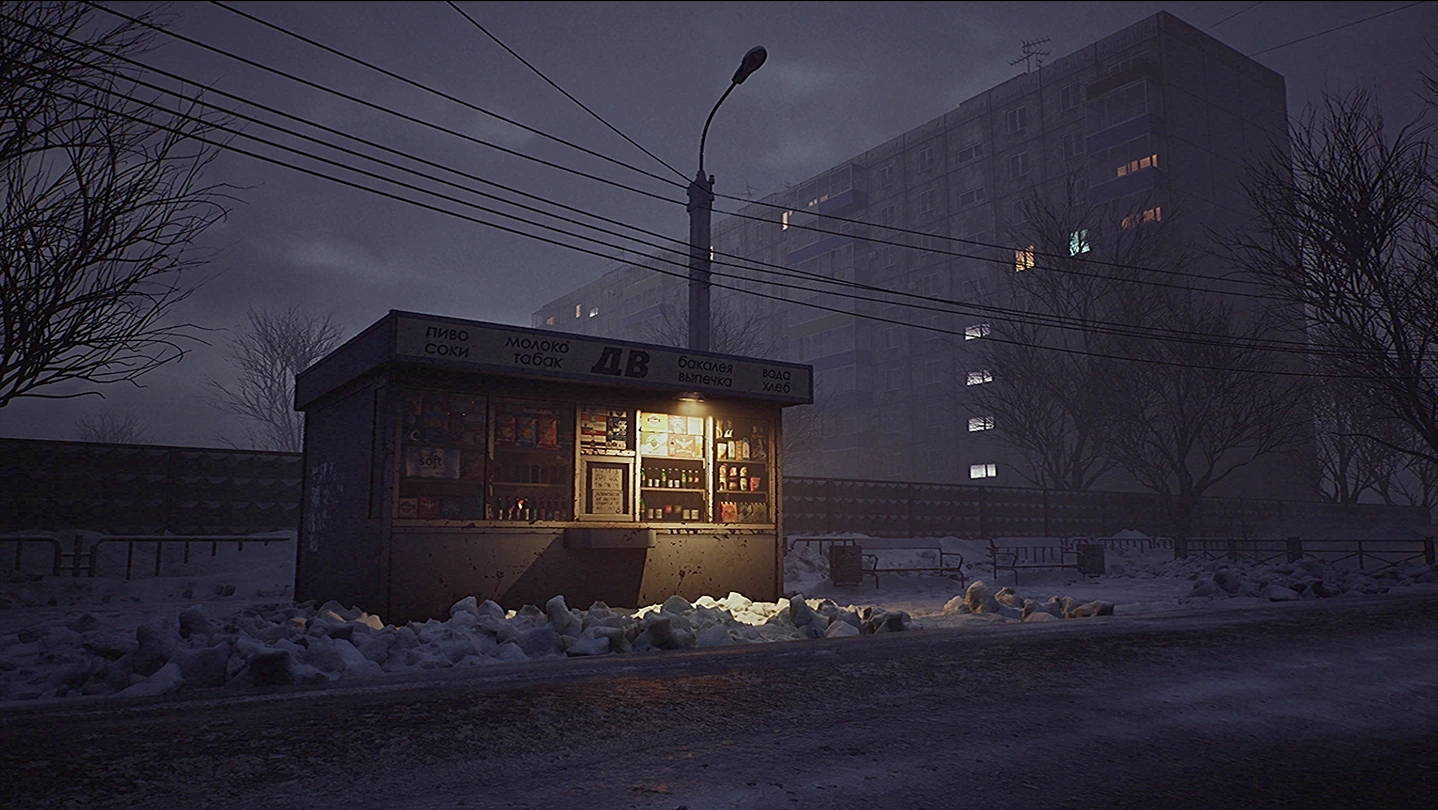
Warm fluorescent light spills through a kiosk window while winter darkness covers the empty streets outside. Customers arrive one by one, asking for ordinary products before leaving behind fragments of disappointment, humour, loneliness and unfinished lives. Behind the counter stands Matvey, a 27-year-old seller spending another holiday night at work and quietly wondering how he ended up there. I Have No Change uses that small location as the centre of a first-person narrative game about stagnation, lost ambitions and the uncomfortable possibility that changing one’s life may require more courage than continuing it. The kiosk becomes both workplace and observation point, separating Matvey from the lives moving past him while forcing him to confront how long his own has remained unchanged. Conversations, routine tasks and moments of imagination gradually turn the shift into something more personal than a simple night at work. Developed and published by Studio Rassvet, the PC game is currently planned for release through Steam in 2027.

more than a kiosk simulator
Selling goods and maintaining the kiosk provide the daily routine, but I Have No Change is not primarily designed as a detailed business simulation. Its central interest lies in the people who approach the window and the stories they bring with them. Some are old acquaintances, others are local residents or strangers passing through the night, and each encounter reveals another part of the community surrounding Matvey. The official description presents the game as a first-person narrative experience balancing ordinary kiosk work with conversations, introspection and excursions into the protagonist’s imagination.That distinction immediately gives the project a stronger identity than a conventional job simulator. Stocking shelves, serving customers and handling small tasks create the rhythm between conversations rather than becoming the complete purpose of play. The kiosk is effectively a stage: a confined space through which an entire region passes during the course of one shift. Its size also supports the story. Matvey can see the world outside, but he remains physically separated from it by glass, shelves and the obligations of his job. Customers are free to leave after every conversation; he stays behind. That simple visual relationship communicates much of the game’s central theme before the narrative needs to explain it.

a story about standing still
Studio Rassvet describes the story through ideas of stagnation, lost dreams and the consequences of earlier decisions. Matvey increasingly questions whether the kiosk represents a temporary situation or the final shape of a life that stopped moving forward without him noticing. The game’s holiday setting strengthens that conflict because celebrations associated with renewal and new beginnings arrive while its protagonist remains in exactly the same place. This is not necessarily a story about escaping an unpleasant job. The more interesting possibility is that the kiosk becomes a point from which Matvey examines himself and the lives of those around him. Some customers may have followed their ambitions and failed. Others may have accepted ordinary lives without considering themselves defeated. Their experiences can challenge the easy assumption that change is always heroic or that stability is automatically a form of surrender. The game’s success will depend heavily on restraint. Stories about disappointment and unrealized potential can become melodramatic when every character speaks in carefully prepared philosophical statements. I Have No Change appears strongest when its larger ideas emerge through routine conversation, awkward pauses and details that initially seem insignificant. A customer buying something ordinary can reveal more about a place than a long monologue written only to explain the theme. Matvey’s decisions are expected to influence the direction of the story, although the full extent of those consequences remains unknown. The official material confirms narrative choice but does not yet establish how many major branches, outcomes or endings the completed game will contain.

real people behind the window
The characters are visually striking because they are not conventional real-time 3D models. Studio Rassvet filmed professional actors, processed the footage and integrated their performances into the game as FMV-based animated elements. The technique preserves real facial movements, posture and small expressions while placing the actors inside the digitally constructed kiosk environment. FMV is not new, but its use here feels particularly appropriate. I Have No Change depends on close conversations and subtle emotional reactions rather than action or free movement around large environments. The restricted viewing angle helps the recorded performers blend with the surrounding scene, while modern compositing and colour treatment make the effect more convincing than the visibly separated actors found in many older FMV adventures. The approach also gives a small independent team access to expressive performances that would be difficult to reproduce through complex facial animation. A tired look, an uncomfortable smile or a pause before answering can communicate information that written dialogue alone might miss. There is still a risk of visual separation between actor and environment. FMV characters can appear to float above the background when lighting, perspective or image edges fail to match. The available footage suggests careful integration, but the finished game will need to maintain that quality across different scenes, animations and narrative outcomes.
between cold reality and colourful imagination
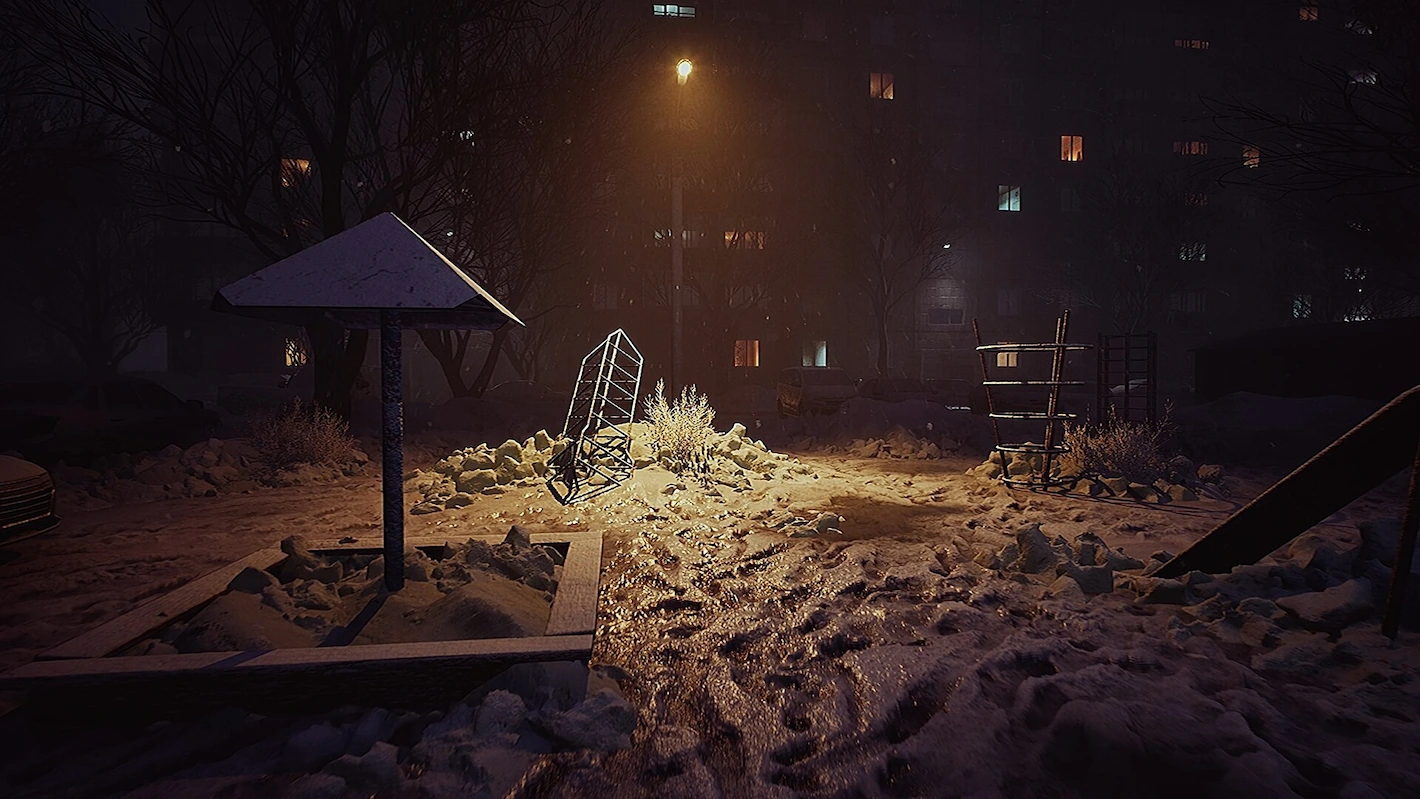
The kiosk is presented through restrained, cinematic melancholy, but Matvey’s memories and imagination allow the game to move into brighter and more fantastical visual styles. Studio Rassvet describes gameplay that shifts from ordinary kiosk management into different genres within the protagonist’s inner worlds. That contrast could prevent the single location from becoming visually and mechanically repetitive. The cold exterior and confined workplace establish Matvey’s reality, while imaginative sequences reveal the ambitions, fears and memories that routine conversation cannot show directly. Different visual styles can represent how he remembers childhood, interprets another person’s story or escapes mentally from the night shift. Those sequences must remain connected to the narrative. Minigames and stylistic changes could become distracting when included only to provide variety. Their strongest use would be to expose something specific about Matvey: what he once wanted, which decisions continue to trouble him and why change now seems both necessary and frightening. The contrast between realism and imagination may become the project’s defining structure. The kiosk shows the life Matvey currently occupies. The fantasy sequences can show the alternatives he abandoned, invented or still believes might be possible.

a community arriving one customer at a time
The official description emphasizes a varied cast whose stories may be warm, sad or instructive. That variety matters because a game centred on melancholy could easily become emotionally uniform. Humour, awkwardness and ordinary local gossip are necessary if the kiosk is going to feel like a real social space rather than a procession of carefully arranged tragedies. The limited location can give recurring characters particular value. Someone who appears early as a minor customer may return later under different circumstances, allowing the player to understand how relationships and problems develop over the course of the night. Old acquaintances can also reveal versions of Matvey that he no longer recognizes in himself. Local identity is another important part of the concept. The official site places the game within the atmosphere and reflections of residents from the Russian Far East rather than using an undefined generic town. The kiosk, weather, music and conversations can therefore communicate a specific sense of place while still addressing broader experiences of isolation, compromise and uncertainty. Music from local artists is planned to accompany the characters and strengthen the emotional connection to their stories. Used carefully, those songs can make the kiosk feel tied to the lives beyond its walls rather than existing as an isolated narrative set.
simple tasks need meaningful rhythm
Routine activities appear intentionally uncomplicated. The player serves customers, performs small maintenance duties and moves through conversations without the heavy economic systems expected from a full retail simulator. This accessibility suits a story-led game, but it creates a pacing challenge.Too little interaction could make the experience feel like a sequence of dialogue scenes separated by token chores. Too much repetitive work could weaken the emotional effect of the conversations. The kiosk tasks need to provide breathing room and physical presence without becoming busywork. A good balance would allow routine to change according to the narrative. Serving a familiar customer should feel different after learning something important about them. Cleaning the kiosk after a tense conversation can create silence in which the player considers what happened. A sudden rush of customers may prevent Matvey from responding properly to someone who needed more time. The project does not need complicated mechanics to make these moments effective. It needs ordinary actions to support atmosphere, character and the passing of the night.

why it has attracted attention
I Have No Change has already passed 600,000 Steam wishlists according to a developer announcement. That figure represents unusually strong interest for an unreleased narrative indie game, although it should be treated as evidence of visibility rather than proof that the final experience will fulfil its promise. The appeal is understandable. Its setting is instantly recognizable, the FMV presentation gives the characters unusually realistic faces, and the concept can be explained without reducing it to another familiar genre comparison. A small kiosk during a winter night is both specific and universal enough to support many kinds of human stories. The strongest promotional material also avoids presenting the game as larger than it is. There are no promises of an enormous open world or hundreds of simulated systems. The ambition lies in using a limited space to create emotional and thematic depth. Strong early attention can create pressure, particularly for a game whose quality will depend on writing, performance and pacing rather than a repeatable mechanical loop. A memorable trailer can demonstrate atmosphere within minutes; the complete release must preserve it across the entire story.

what the full game must prove
The setting and presentation already work as a convincing introduction, but several questions remain unanswered. The kiosk routine must stay engaging without becoming too complicated. Customer stories need enough variation to avoid repeating the same emotional tone. Choices must produce consequences that feel connected to the player’s behaviour rather than existing only as late ending changes. The imaginative sequences also need discipline. Their visual freedom can reveal parts of Matvey that the kiosk cannot, but excessive genre switching could weaken the grounded atmosphere that first made the game interesting. Most importantly, the completed story must understand that ordinary lives are not automatically failed lives. Matvey’s dissatisfaction may be real, but a thoughtful narrative should avoid judging every character according to whether they escaped their town, transformed their career or fulfilled an old ambition. Change can be necessary, but it can also be frightening, irresponsible or impossible under certain circumstances. A game about stagnation becomes more powerful when it recognizes the difference between choosing to remain and feeling unable to leave.