PREVIEW | HELL LET LOOSE: VIETNAM | TUNNELS BELOW, HELICOPTERS ABOVE
A helicopter crossing above the tree line and a tunnel opening beneath an apparently secure position describe the central conflict more clearly than any list of weapons or vehicles. Expression Games is not simply moving the established Hell Let Loose formula from European battlefields into a greener environment. Vietnam changes where danger can arrive from, how armies move across the map and what each side considers a usable route. The United States enters with aerial mobility, heavy fire support and helicopters capable of transporting soldiers and supplies, while the North Vietnamese Army can construct underground networks designed to place troops where the opposing force does not expect them. Rivers introduce patrol boats, dense vegetation reduces the value of distant observation, and steep terrain makes control of movement as important as control of firepower. Hell Let Loose: Vietnam remains a hardcore 50v50 multiplayer FPS built around squads, officers, commanders and coordinated objectives, but its two armies are being given different methods of influencing the battlefield rather than matching equipment under different uniforms. The standalone game is scheduled to launch on August 13, 2026 for PC, PlayStation 5 and Xbox Series X|S, with the PC edition available through Steam and the Epic Games Store.

a new war, not an expansion
This is not a map pack or historical expansion attached to the original Hell Let Loose. It is a separate entry with its own installation, factions, environments, movement systems, vehicles, interface and onboarding. That distinction gives Expression Games room to alter established rules without forcing every addition to remain compatible with the Second World War structure of the existing game. The original remains active as its own product, while Vietnam begins a separate branch of the series centred on a conflict whose terrain, logistics and tactical assumptions demand different systems. The basic identity remains familiar: one hundred players are divided into two 50-person teams, the chain of command connects individual squads to a commander, and success depends upon communication, positioning and collective execution rather than one player accumulating an extraordinary number of eliminations. However, nearly every layer surrounding that foundation is being adjusted to account for jungle warfare, vertical movement and two forces whose military strengths were historically unequal in very different ways. The decision to build a standalone game also protects the clearest strength of the concept: asymmetry. A conventional expansion might have introduced Vietnamese maps while preserving broadly similar spawn systems, vehicle structures and battlefield roles. Here, the US side can organise helicopter units for transport, support and supply operations, while the NVA can construct tunnel networks that allow forces to emerge from concealed positions. Those are not small faction bonuses. They influence map control, reinforcement routes and the information each army must collect before it can safely advance. A US squad may control an exposed road and still fail to understand how enemy troops are reaching its rear. An NVA force may avoid direct confrontation with superior aerial mobility but still need to protect tunnel access and coordinate attacks before those routes are discovered. Hell Let Loose has always worked best when a team understands that the visible firefight is only the surface of a larger logistical contest. Vietnam appears designed to make that idea even more literal.

the jungle must become a system
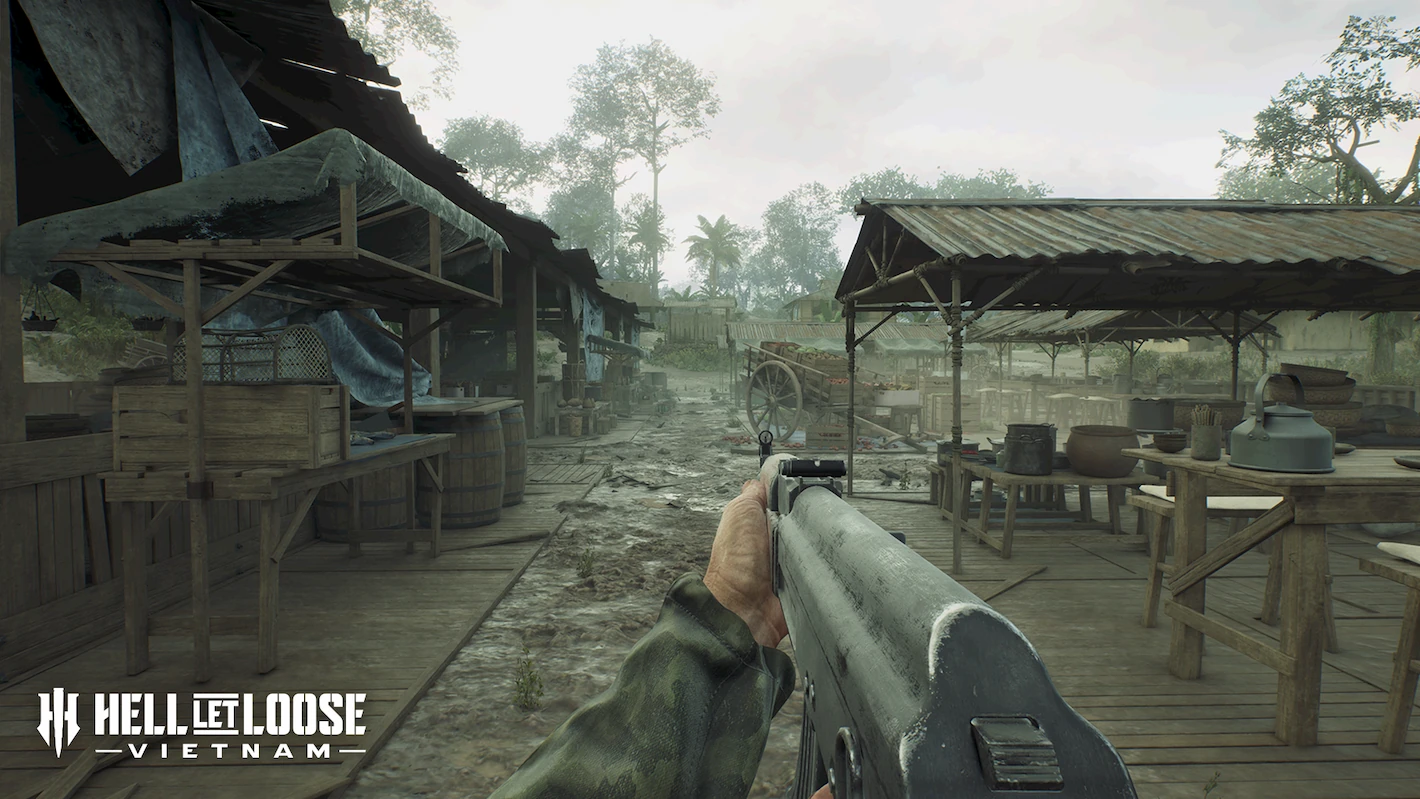
Dense vegetation can easily become either decorative scenery or visual frustration. The important question is whether the jungle produces readable tactical decisions rather than simply hiding every opponent. Six large maps inspired by real locations will cover thick forests, mountain gorges, settlements, rivers and more open areas, giving the game opportunities to alternate between extremely limited sightlines and spaces where aircraft, armour or long-range weapons regain importance. The terrain must support concealment without turning every death into an unexplained shot from an invisible position. It must also offer enough landmarks for squad leaders to communicate clearly, because “somewhere near the trees” is not useful information on a battlefield already filled with vegetation. The vertical structure may prove more important than the visual density. Helicopters create movement above the conventional front, tunnels allow it beneath the front, and climbing, swimming and faster crawling expand the routes available to infantry between those two extremes. Expression Games is therefore building a battlefield that cannot be understood entirely through roads, capture sectors and horizontal lines of advance. A helicopter can deliver troops beyond a blocked route, while a tunnel can quietly place an NVA squad behind a position that appeared secure. Rivers function as travel corridors rather than simple map boundaries, with armed patrol boats available to both factions. Infantry can cross water, climb obstacles and move through restricted spaces with greater flexibility than in the original game. The resulting maps could feel less like a front line moving from west to east and more like overlapping layers of pressure, with security dependent on reconnaissance and communication rather than a continuous row of friendly positions. This also creates a difficult balancing problem. Mobility must be powerful enough to define each side without allowing helicopters or tunnels to bypass the entire strategic game. If aerial deployment becomes too easy, the US team may constantly appear behind objectives without establishing meaningful logistical preparation. If tunnels are too difficult to locate or destroy, the NVA may generate pressure without exposing the infrastructure that enables it. The best outcome would make both systems consequential but vulnerable: routes that reward planning, protection and intelligence rather than functioning as automatic shortcuts. Hell Let Loose has traditionally treated spawn placement and supply lines as strategic responsibilities hidden beneath its FPS presentation. Vietnam has an opportunity to turn those invisible systems into the most distinctive part of the battle.
two armies should not feel like mirrors
The US Armed Forces and North Vietnamese Army are not being presented as equivalent teams separated only by weapon models. American forces gain specialised helicopter roles, with logistics officers and pilots responsible for transport and battlefield support. NVA squads instead use tunnels and concealed movement to undermine the advantage created by American air power. Both sides have access to infantry, reconnaissance, armour and mortar structures, but the routes through which they project force are deliberately different. The Steam listing currently describes 17 specialised roles across six battlefield unit types, including command, infantry, reconnaissance, armour, US helicopter units and mortar squads. This asymmetric direction is necessary because the setting would lose much of its meaning if both armies followed identical tactical patterns. The US side should feel capable of rapidly concentrating troops and supplies where helicopters can operate, but more exposed when its predictable landing zones and transport routes are observed. The NVA should gain value from concealment, preparation and local knowledge, but still require coordination to turn an unexpected arrival into control of an objective. Neither faction should be reduced to a simple stereotype of technology against stealth. The stronger design would allow every advantage to produce a responsibility: helicopters need skilled crews, safe approaches and cooperation from ground units; tunnels need resources, placement, protection and squads prepared to use them effectively. Seventeen roles also suggest that individual soldiers remain parts of a larger operational system. A rifleman may participate directly in the most visible exchange of fire, but squad leaders, engineers, medics, machine gunners, reconnaissance teams, armour crews, mortar operators and helicopter personnel shape whether that exchange occurs under favourable conditions. Hell Let Loose has never been designed as a shooter where every player receives the same degree of immediate independence. Vietnam appears committed to that principle, asking players to accept specialised responsibilities within a 50-person force. The revised tutorial and onboarding systems will therefore be important. Complexity is valuable only when new players understand how their role contributes to the team rather than learning through repeated failure while experienced squad members become increasingly impatient.

helicopters can change the entire match
Fully operational helicopters are the most immediately dramatic addition, but their importance extends far beyond spectacle. They can provide fire support, transport soldiers and deliver supplies, connecting combat, logistics and mobility inside one platform. A pilot who successfully inserts a squad near an important sector may alter the direction of the battle without firing a weapon. A logistics flight can help establish infrastructure in a position that would take ground vehicles much longer to reach. At the same time, every aircraft creates noise, visibility and a predictable period of vulnerability during landing or low-altitude movement. The helicopter unit therefore needs to feel like part of the chain of command rather than a private vehicle selected by players who want to fly. Its value depends on communication with infantry leaders, commanders and logistics personnel. Pilots need useful destinations, ground squads need to secure landing areas, and the broader team must decide whether an aircraft should transport troops, support an attack or maintain supply routes. Poor coordination could turn an expensive advantage into repeated crashes and wasted reinforcement waves. Strong coordination could allow American forces to shift pressure across a large map faster than the NVA can respond through conventional movement. This is also where performance and technical stability become central rather than secondary concerns. A game built around 100 players, dense vegetation, long sightlines, vehicles, water, artillery effects and player-controlled aircraft cannot afford unstable frame rates or inconsistent network behaviour during the moments when precise control matters most. The release was moved from June 18 to August 13, with the studio publicly continuing performance work and cross-platform testing before launch. Delaying the game was the responsible decision, but the final result must demonstrate that the additional time produced measurable improvements. A helicopter system is only as convincing as its controls, physics, visibility and frame-time stability under real 50v50 server conditions.

tunnels turn security into a question
The NVA tunnel system may ultimately have a greater strategic effect than helicopters because it attacks the opposing team’s understanding of territory. Traditional battlefield control relies on identifying the direction from which reinforcements must arrive. Roads, garrisons and visible movement create patterns. Tunnels threaten those patterns by allowing troops to emerge through concealed infrastructure and launch attacks from unexpected positions. For the US team, this means capturing an area may not be enough. Soldiers may need to search beyond the immediate objective, identify signs of hidden deployment routes and protect the rear against forces that did not cross the visible front. Reconnaissance becomes essential because the absence of movement does not confirm the absence of infrastructure. Engineers and squad leaders may have to think about underground access in the same way they previously considered enemy garrisons and supply routes. The NVA, meanwhile, must decide where tunnels provide genuine tactical value rather than simply placing them near the next objective. A tunnel discovered too early becomes a wasted investment and may reveal the intended direction of attack. The design will succeed if tunnels create uncertainty without becoming arbitrary. The American side needs meaningful methods for locating and countering them, while the NVA needs enough control to build plans around them. Hidden infrastructure should reward careful placement and reconnaissance rather than luck. When balanced properly, tunnels could create some of the game’s best moments: an objective that appears secure, a sudden attack from an unexpected direction and the urgent realisation that the enemy did not cross the line everyone was watching.

rivers are part of the battlefield
Patrol boats ensure that waterways are not reduced to scenery or inconvenient gaps between infantry areas. Both sides can construct and operate armed boats across the river network, turning water into a route for transport, attack and interception. This expands the number of spaces teams must monitor and creates another layer of combined-arms coordination. A boat can move soldiers past congested terrain, apply firepower along riverbanks or challenge enemy movement on the water, but it may also become dangerously exposed in narrow channels with limited options for concealment. Swimming reinforces the same idea at infantry level. Water is traversable, but entering it may sacrifice speed, readiness and protection. Crossing a river can become a deliberate risk rather than an invisible wall forcing everyone toward the nearest bridge. Combined with climbing and faster crawling, the movement updates suggest that soldiers will have more ways to navigate difficult terrain without turning the game into a fast arcade shooter. The key is maintaining weight and vulnerability. Enhanced movement should reduce unnecessary obstruction while preserving the sense that every exposed crossing and climb carries consequences.The ability to drag wounded teammates away from active fire adds another useful interaction. Medics and nearby soldiers can attempt to move casualties into cover before treatment, transforming revival from a stationary animation performed in the open into a small rescue operation. The mechanic fits the game’s emphasis on cooperation and may create genuine reasons to risk exposure for another squad member. It also provides a physical connection between battlefield positioning and medical support: where a soldier falls matters, but the team is no longer forced to accept that exact location as the only place where assistance can occur.
six maps, six modes and one long-term question
The launch package is built around six large maps and six gameplay modes. Warfare returns as a 50v50 struggle over five sectors, while Offensive separates the teams into attacking and defending roles. Four additional rotating modes are intended to alter the battle parameters and create different tactical demands. The number is promising, although mode variety matters only when the rules produce genuinely different decisions rather than small adjustments to objective placement. Six maps can provide substantial territory when each is large, layered and capable of supporting different unit structures. However, the long-term value will depend on how differently they behave. A river-dominated map should create different priorities from a mountain corridor or dense jungle environment. Helicopter access, tunnel placement, armour movement, mortar positions and infantry visibility must change enough that teams cannot repeat one universal strategy across every location. If each map simply combines trees, villages and capture sectors in a new order, visual authenticity will not prevent tactical repetition. The new modes have a similar responsibility. Hell Let Loose matches are long commitments involving dozens of players, so mode rules must remain understandable while providing enough variation to prevent every battle from following the same rhythm. The original Warfare and Offensive structures already demand coordination at a scale many multiplayer shooters avoid. Vietnam does not need novelty for its own sake, but it does need modes that use its new systems. Helicopters, tunnels, rivers and asymmetrical deployment should affect objectives directly rather than existing as impressive additions around an unchanged central game.
performance cannot be a footnote
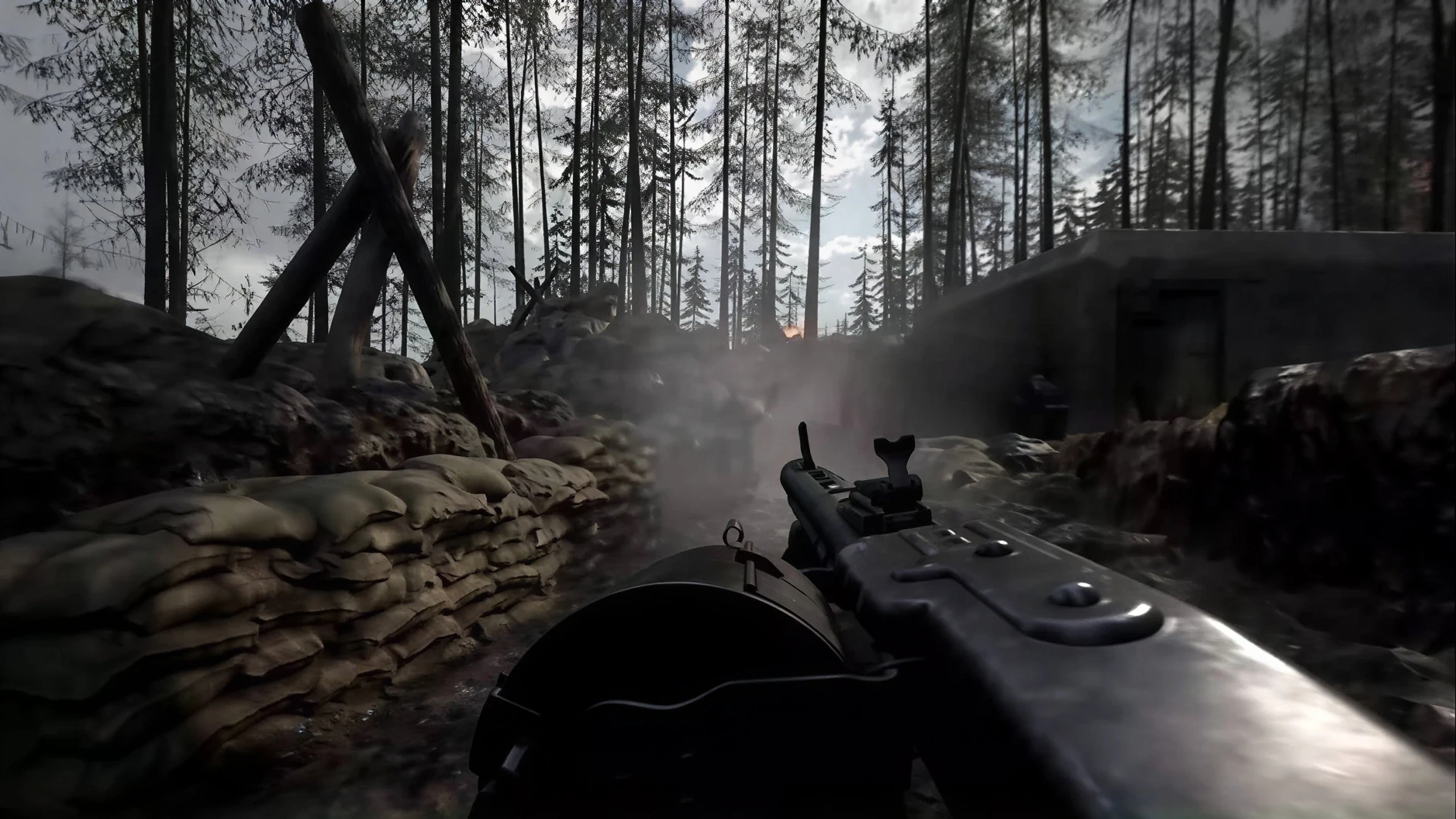
The listed minimum PC target currently pairs an Intel Core i5-11600K or Ryzen 5 5600X with an RTX 2060 or Radeon RX 5700 for 1080p at 60 fps. The recommended target moves to an i5-12600K or Ryzen 5 7600X and an RTX 3070 or RX 6700 XT for 1440p at 60 fps, with 50 GB of storage required. The specifications remain subject to change. Those requirements are not extreme for a 2026 multiplayer release, but specifications alone do not establish consistency. Hell Let Loose is especially sensitive to processor performance, server load, effects density and the number of active players interacting within one sector. Vietnam adds vegetation, helicopters, boats, tunnels and more complex traversal to that workload. The studio’s continued focus on performance before release is therefore encouraging but also reveals how central the issue remains. Players will judge the game during its worst moments, not while walking through an empty section of jungle. A stable frame rate during a concentrated attack involving aircraft, mortars, boats and dozens of infantry players matters more than the highest visual quality achieved in controlled footage. Steam also states that the PC version uses kernel-level Easy Anti-Cheat and that manual removal may be required after uninstalling the game. That information will matter to players who avoid kernel-level anti-cheat systems, and it should not be hidden beneath the broader feature list. Cross-platform multiplayer is supported, while the official testing programme has been used to examine gameplay and crossplay before release.