
PREVIEW | HAEX | EVERY SEED CHANGES THE WORLD
A helicopter lies broken among the trees while a pale mist slowly consumes the wilderness beyond it. The scientific expedition sent into the sub-Arctic north has disappeared, the landscape no longer behaves like ordinary terrain, and something impossibly large appears to be moving behind the forest. This is where HAEX begins: not inside a fortified base or a safe tutorial zone, but in the aftermath of a failed mission whose surviving members must enter the same anomaly that swallowed everyone before them. Developed by Swedish studio Dead Astronauts, HAEX is an open-world first-person survival shooter designed for solo play or online cooperation with up to three additional players. Its familiar elements are easy to identify resource gathering, crafting, equipment upgrades, environmental survival and armed combat but the central idea is more unusual. Players can discover or create alien Seeds and plant them directly into the world, causing entire sections of the environment to transform. New terrain, vegetation, resources, pathways, enemies and narrative threads may emerge from that decision, meaning exploration is not limited to discovering a world generated before the adventure begins. The player actively interferes with its structure and then has to live with whatever that interference releases. HAEX is scheduled to enter Early Access on PC through Steam and the Epic Games Store in 2027, and while its first trailer shows only a controlled sample of the experience, the combination of Nordic isolation, procedural transformation and strange extraterrestrial technology already gives this survival project a stronger identity than its weapons alone could provide.
something happened in the north
The premise sends a group of research scientists into a remote Scandinavian wilderness after an anomaly is detected and the original science team goes silent. Following a helicopter crash, the survivors must locate the missing expedition while moving deeper into a paranormal mist that becomes increasingly dangerous with distance. Temperature, thirst and available resources will place conventional survival pressure on the journey, but HAEX appears more interested in discovery than simply keeping several status meters full. The landscape contains alien structures, distorted creatures, unknown symbols and objects whose purpose cannot be understood immediately. Among the more striking images shown so far is a gigantic wall-like entity rising into the sky, large enough to make the human expedition feel insignificant before a single weapon is fired. Creative director Tobias Nyman has named Annihilation, Arrival, Jeff VanderMeer’s weird fiction and cosmic black metal among the project’s influences, an unusual mixture that explains the intended balance between wonder and hostility. The sub-Arctic setting is not being used merely as a cold background for another crafting game. Nyman has described northern Sweden as a personal influence, particularly its long summer light, enormous silence and ability to feel beautiful and oppressive at the same time. That tension may become HAEX’s strongest atmospheric tool. Dense forests, wet ground, fluorescent vegetation and open mountain spaces can create moments of calm, but the anomaly means that no part of the wilderness can be treated as completely natural. The objective is not only to survive an alien invasion in the conventional sense. It is to determine what has altered the region, what happened to the missing researchers and whether the strange power found within the mist is a tool, an organism or something that is gradually using the expedition for its own purpose.

planting danger into the ground
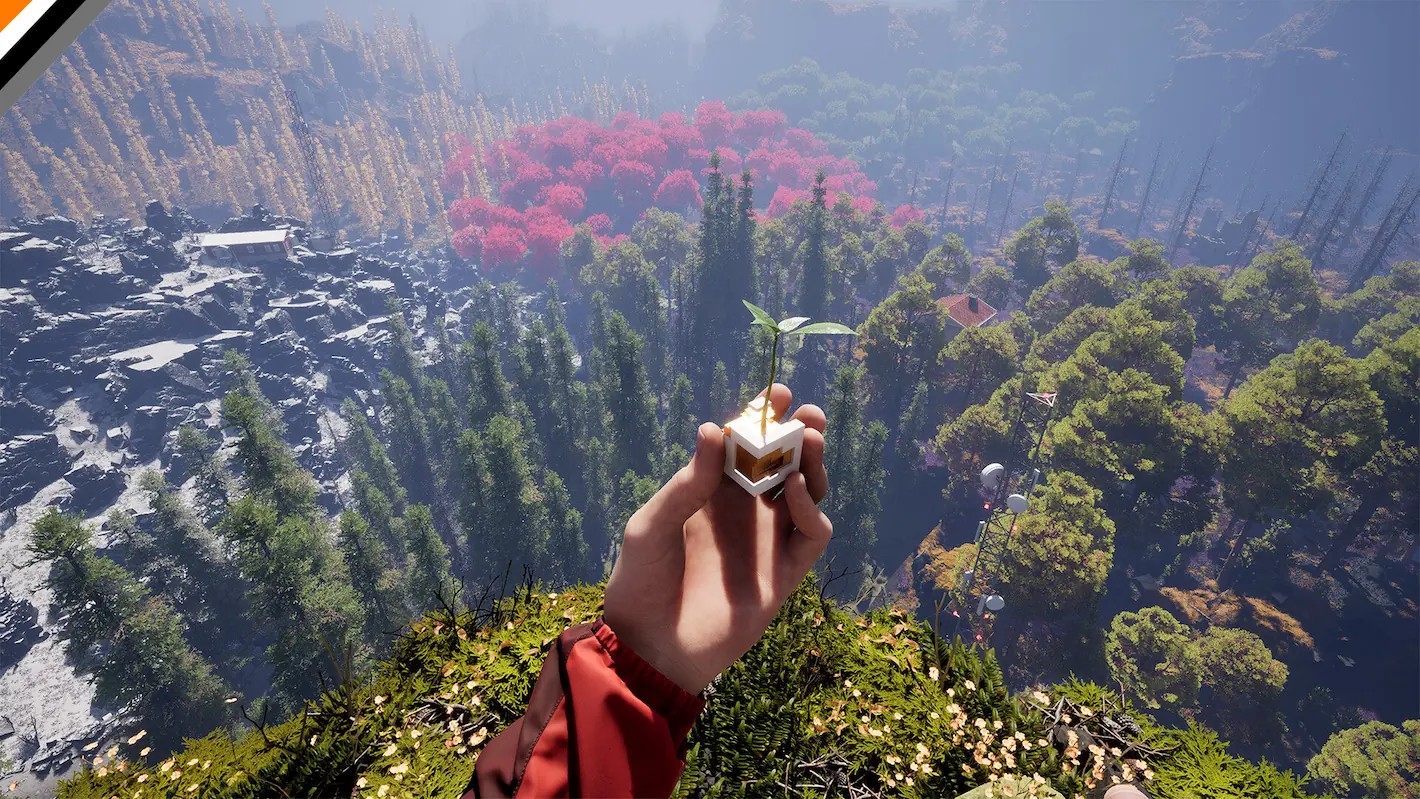
Alien Seeds are the mechanic that separates HAEX from the growing number of cooperative open-world survival shooters. Each campaign begins with a procedurally generated world, but that initial layout is only the starting point. Seeds contain additional procedural information and can terraform specific areas after being planted, introducing new geography, vegetation, resources, threats and pieces of the world’s story. A blocked region might become accessible, a scarce material may appear, or an apparently useful transformation could bring a new enemy into a previously manageable area. The player is therefore not simply unlocking another biome from a menu. Planting a Seed is an intervention whose result may change the practical and narrative state of that particular world. Dead Astronauts says every world will preserve its own story, while player characters maintain separate progression that can travel between campaigns. Equipment, unlocked skills and crafting recipes belong to the character, allowing an experienced survivor to enter a friend’s newly generated world without abandoning previous development. The world, however, remembers which Seeds were planted and what those choices created. This division could give cooperative play a useful sense of ownership: one group may carefully alter only the areas needed for resources, while another may aggressively transform the map and deal with the consequences later. It also gives procedural generation a clearer purpose than merely changing the location of trees and loot containers. The important question is how substantial those transformations will be in practice. If Seeds only exchange one resource zone for another, the system may become a decorative progression gate. If they genuinely affect routes, encounters, ecosystems and story possibilities, they could make each campaign feel authored through player decisions rather than randomly assembled. HAEX is building much of its identity around this promise, so the quality, variety and permanence of these transformations will matter more than the size of the map itself.
the cube is more than a gathering tool
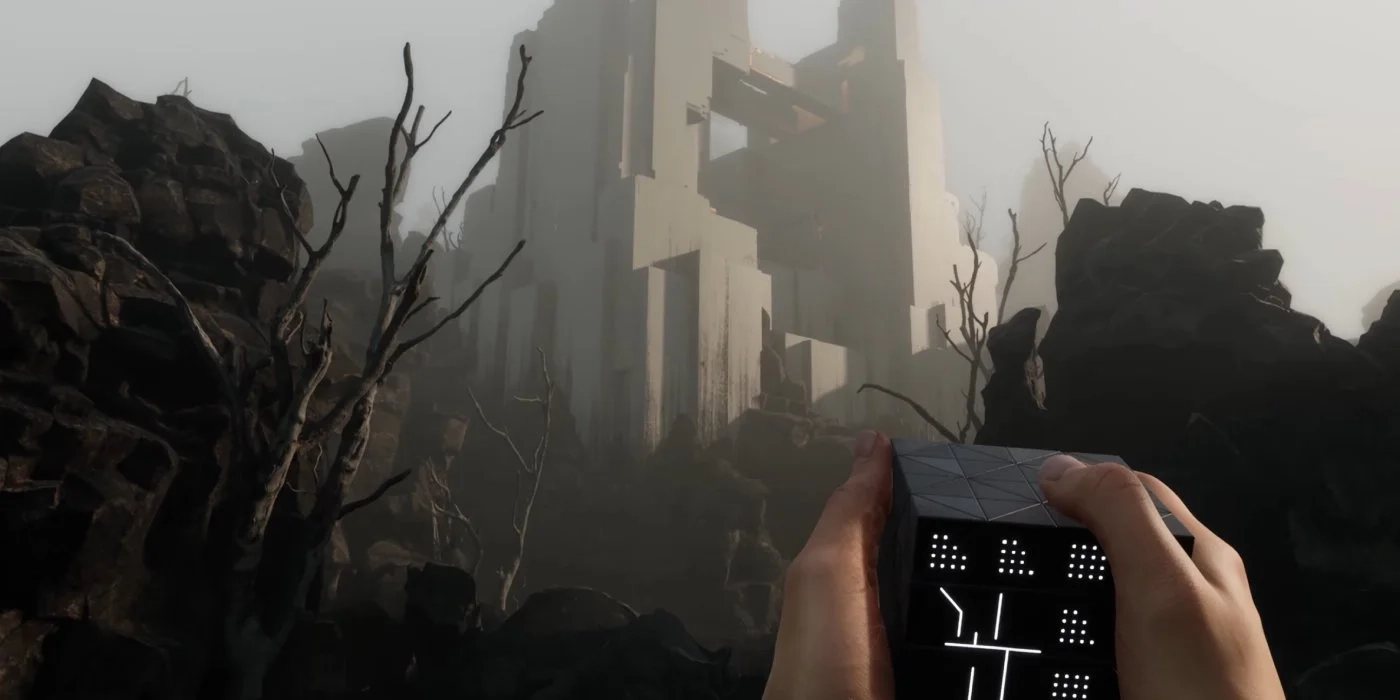
The expedition’s most important companion may not be another survivor but a sentient alien cube recovered during the journey. It can scan the surroundings, gather resources and develop new functions as it is upgraded, gradually giving the player access to extraterrestrial abilities that change movement and exploration. Dashing and double-jumping have already been mentioned, suggesting that progression will eventually make the scientists far more mobile than their vulnerable starting condition implies. This creates an interesting contrast with the otherwise grounded survival structure. Cold, thirst and limited resources establish the expedition as physically exposed, while the cube offers powers that seem to pull the player closer to the anomaly with every improvement. It may serve as a practical tool, a progression system and a narrative problem at the same time. The more useful it becomes, the harder it may be to question whether relying on unknown alien technology is safe. Combat will include firearms, melee weapons, gadgets and weapon customization intended to support different approaches, while crafting will provide new equipment and gear for expeditions deeper into the mist. The announcement footage shows large hostile creatures, faster humanoid forms and shifting environmental threats, but it remains unclear how much combat will depend on conventional shooting and how much the alien abilities will alter encounters. HAEX risks becoming less distinctive whenever it looks like a familiar cooperative FPS, particularly because gathering, crafting and shooting already occupy so many current survival games. The cube and Seeds are therefore not side features that can remain underdeveloped. They are the systems capable of making combat, traversal and world progression feel connected to the same alien force. The strongest version of HAEX would not treat the cube as a science-fiction replacement for a standard multitool. It would make every new ability useful enough to desire and strange enough to distrust.

a personal world shared with other players
HAEX supports one to four players, but its structure is designed to avoid tying character progression permanently to a single host or campaign. Characters and worlds are stored separately, so players can develop equipment and skills in one session before carrying that progress into another group’s world. A new host can begin with an untouched procedural landscape, while visiting players arrive with the experience and gear earned elsewhere. This should make cooperation more flexible than systems in which missing several sessions leaves one member far behind, although it also raises balance questions when a heavily equipped character enters a fresh campaign. Dead Astronauts will need to ensure that portable progression does not allow experienced visitors to erase the tension or discovery that gives a new world its value. The studio itself is relatively small, with approximately twelve developers reported in July 2026, but its members have experience at Massive Entertainment and Epic Games, including work connected to large projects such as Avatar: Frontiers of Pandora and Star Wars Outlaws. HAEX appears to be a deliberate response to those enormous but relatively fixed worlds. Instead of competing through scale alone, the team wants to create a smaller environment that can be meaningfully changed by the people occupying it. That ambition is also why Early Access makes sense, even though it introduces obvious caution. Dead Astronauts currently estimates a period of approximately 12 to 18 months before version 1.0, with additional weapons, enemies, mechanics, story content and broader refinement planned during development. The studio says the initial Early Access release will represent the core experience and that no price increase is currently planned for the full version. These are useful intentions rather than guarantees, and procedural multiplayer games can expose technical and design problems that controlled trailers cannot show. World persistence, transferable characters, terraforming and cooperative synchronization all need to function together. HAEX may have a clear artistic direction, but Early Access will reveal whether its systems are stable enough to support it.