PREVIEW | GUILD WARS 3 | TYRIA BEFORE THE GUILD WARS
More than a thousand years before Orr became a drowned ruin, its cities were still alive, its guilds were fighting for influence and the human gods had not yet abandoned the world. ArenaNet is taking the franchise deep into that forgotten age, before the First Guild War gave the series its name and shortly after the former God of Death was overthrown. The Order of the Vael is struggling to hold its position, while players enter this unstable period as Vaelwardens, members of a guild sworn to protect the people, lands and nature spirits of Orr. The game is officially described as an action-adventure MMORPG built around action combat, character development and skill collection, with PC and PlayStation 5 versions planned from the beginning. No release date has been announced, although ArenaNet intends to begin beta testing in fall 2027. That leaves a long development road ahead, but the opening concept already gives Guild Wars 3 something stronger than a familiar logo: a version of Tyria that long-time players know only through ruins, legends and unanswered questions.
ancient orr is more than a change of scenery
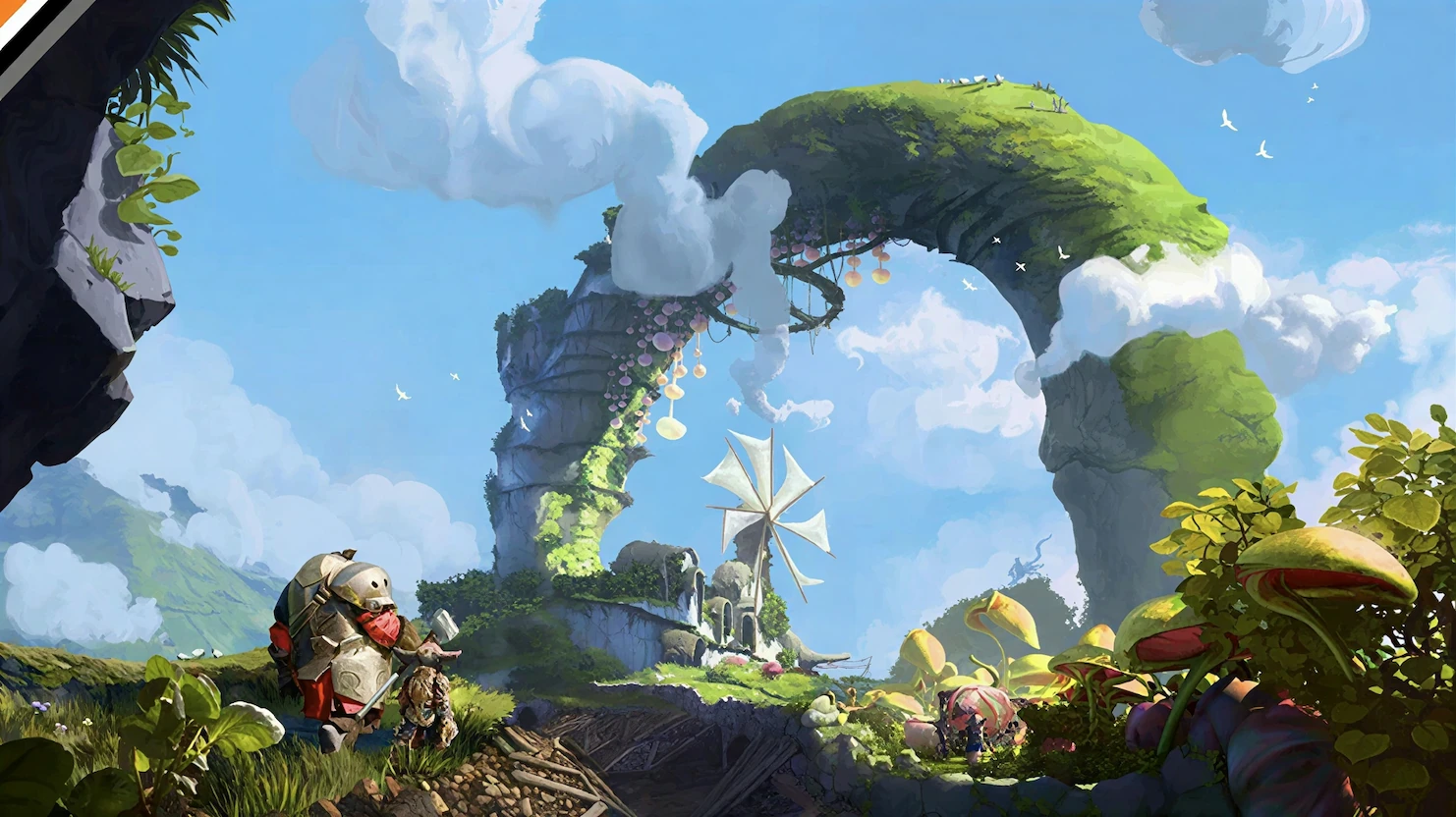
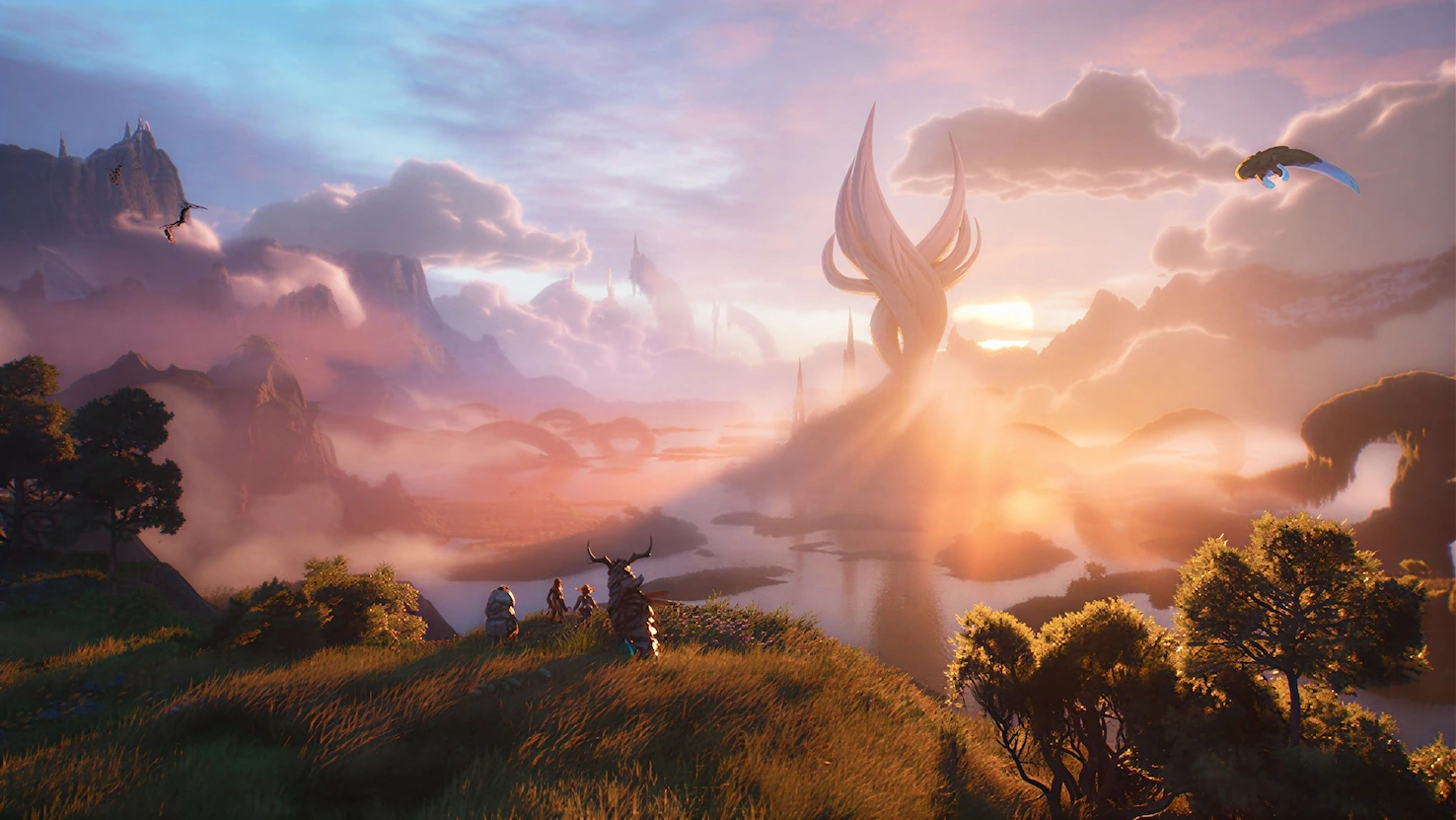
Orr has spent most of Guild Wars history as a place defined by catastrophe. Guild Wars 2 players explored its corrupted remains after the Elder Dragon Zhaitan raised the sunken nation from the ocean, while stories from the original game connected its destruction to the charr invasion, human magic and Vizier Khilbron. Guild Wars 3 turns that familiar tragedy backwards and presents Orr while it is still alive. Cities, communities, guilds and religious tensions will exist before history reduces them to lore entries and broken architecture. ArenaNet has deliberately limited the initial setting to one region rather than spreading the launch across large sections of Tyria, promising a more layered, interconnected and detailed world with fewer loading screens and locations designed to reward both exploration and return visits. The studio also wants conflicts to feel closer to the player, with consequences appearing in settlements and among the people who live there instead of every storyline immediately escalating into another world-ending emergency. This narrower focus could give Orr the density many modern open worlds lack. A smaller map is not automatically a better map, but a region built around evolving places, recurring characters and visible consequences has more potential than another collection of attractive zones abandoned as soon as their objectives are cleared.
The distant timeline also gives ArenaNet room to serve veterans without turning the game into homework for newcomers. Guild Wars 3 begins before most of the recorded history explored by the previous games, allowing new players to enter without memorising two decades of characters, dragons, gods and political changes. Existing fans still receive the deeper reward of seeing the rise of Grenth, the fall of Dhuum, the early conflicts between guilds and the society that once surrounded Arah. Setting the game in the past also protects the continuing storyline of Guild Wars 2. ArenaNet has committed to supporting Guild Wars, Guild Wars 2 and Guild Wars 3 simultaneously, and placing the third game before both existing titles avoids forcing the current MMO toward a predetermined ending. The decision is practical, but it also creates one of the most interesting fantasy settings available to the studio: not another damaged kingdom waiting to be repaired, but a prosperous civilisation whose eventual fate is already known by the audience.
movement is being built into the world and combat
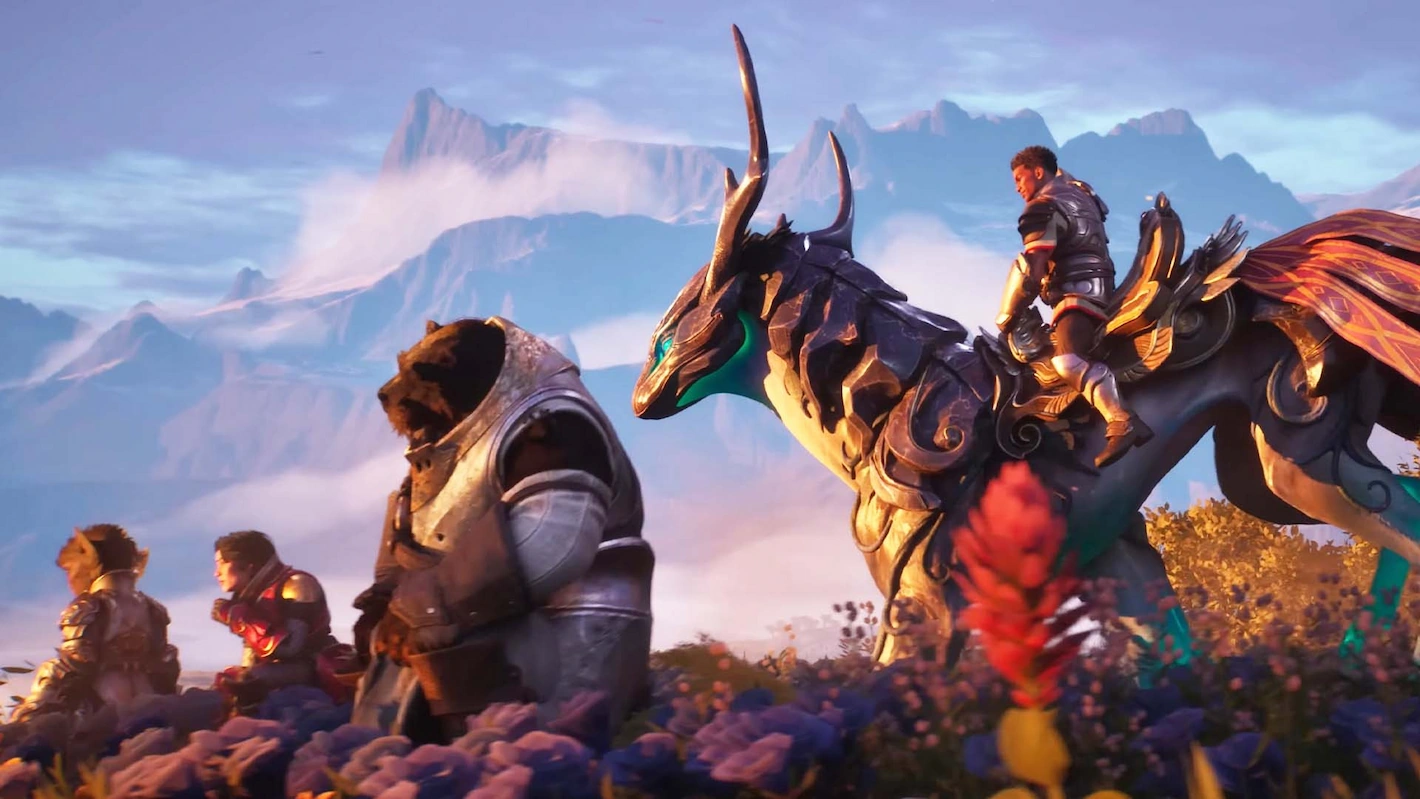
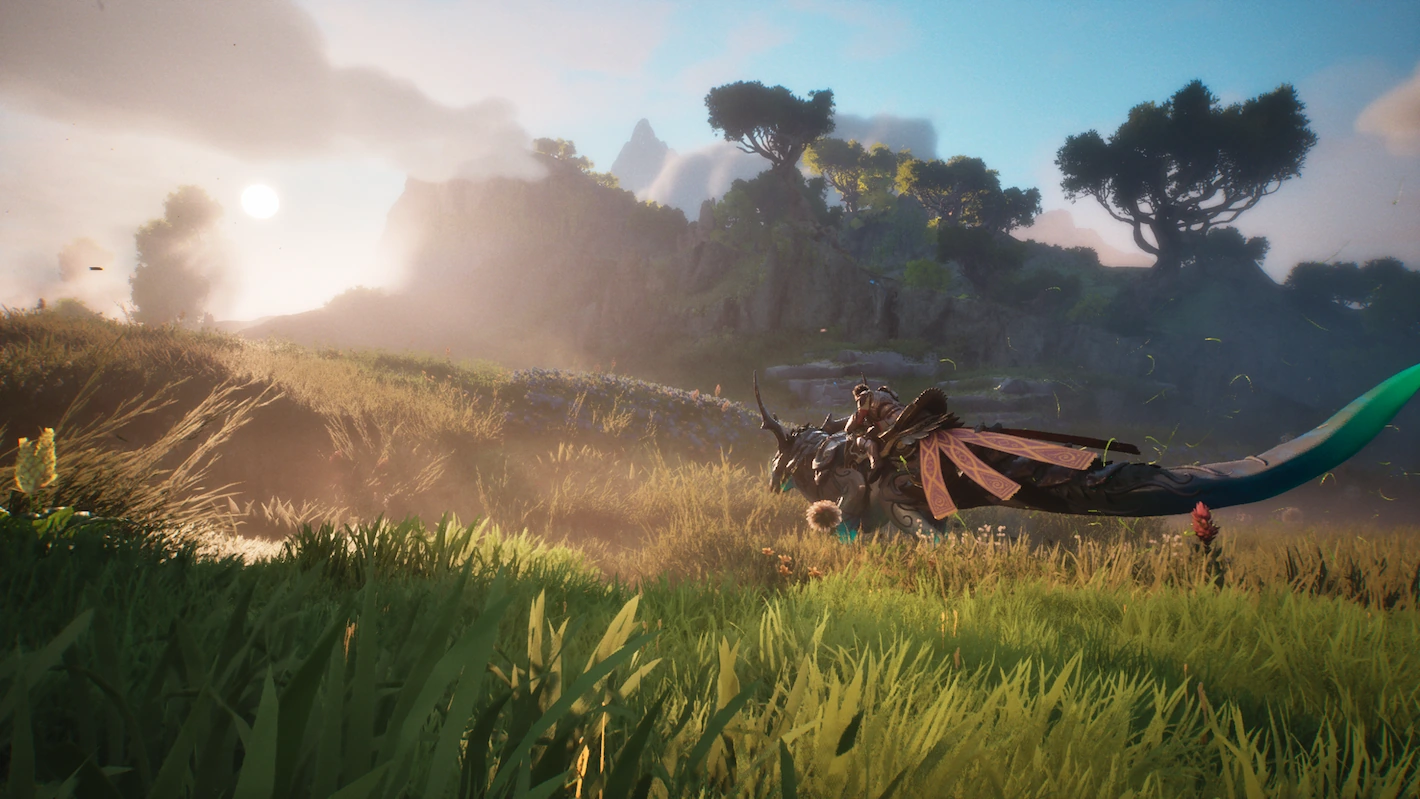
Guild Wars 3 wants movement to become more than the distance between objectives. Players will be able to sprint, slide, leap, wall-run, glide and ride while carrying momentum from one movement type into another. The promise is a world that can be crossed through connected actions rather than the familiar MMO routine of running along the ground until a mount becomes available. The player’s mount is called a Seeker, a Vael nature spirit that also represents a direct connection to the magic of Orr. That relationship gives the mount a place inside the fiction instead of reducing it to another item collected from a menu. ArenaNet has not yet shown enough uninterrupted gameplay to prove that the system feels natural, but its importance is already clear: the geography of Orr, the rhythm of exploration and even the combat system are being designed around mobility from the beginning. Combat follows the same direction. ArenaNet describes a system in which action-RPG control meets traditional Guild Wars build-making, with depth coming from skill selection, positioning and movement rather than long stationary attack rotations. Momentum may also influence how players enter encounters and combine traversal with offensive abilities, although the studio has not yet explained the exact mechanics. The return of skill collection and build construction is important because Guild Wars has always been strongest when combat decisions begin before the first enemy is attacked. Guild Wars 2 delivered responsive movement and excellent large-scale battles, but its build systems often became trapped between accessibility, balance changes and the demands of dozens of players occupying the same space. Guild Wars 3 has an opportunity to restore more deliberate character building without surrendering the immediate control expected from a modern action game. That balance will determine whether the new movement system becomes a meaningful part of combat or simply an impressive way to cross the map.
solo-friendly, but still an mmorpg
ArenaNet openly states that Guild Wars 3 can be played solo or with a group of adventurers, making solitary exploration part of the intended experience rather than an unofficial way of avoiding the community. The broader structure also sits deliberately between the two previous games. Guild Wars Reforged is built around small instanced teams composed of players, heroes or henchmen, while Guild Wars 2 is recognised for enormous world bosses, map-wide meta-events and large competitive battles. Guild Wars 3 will remain much closer to a true MMORPG than the first game, but ArenaNet says it will not reproduce the massive gameplay pillars that define Guild Wars 2. That suggests a world where other players remain visible and important without every major activity depending on a crowd of fifty people arriving at the same marker. For players who prefer to explore alone, that middle position may be one of the game’s strongest ideas. The story, ordinary exploration, character progression and much of the open-world content should be approachable without maintaining a permanent group, while spontaneous cooperation can still happen naturally when players meet. However, Guild Wars 3 is not being presented as a disguised single-player RPG. ArenaNet has not revealed its dungeons, group sizes, raid equivalents, PvP structure, endgame activities or whether AI companions will return. It would therefore be premature to claim that everything will be soloable. The more accurate expectation is a solo-friendly MMORPG that allows independent players to make meaningful progress, not a private adventure that happens to require an internet connection. Whether ArenaNet can preserve that freedom when the hardest content and long-term progression systems appear remains one of the biggest unanswered questions.
a business model without a second job
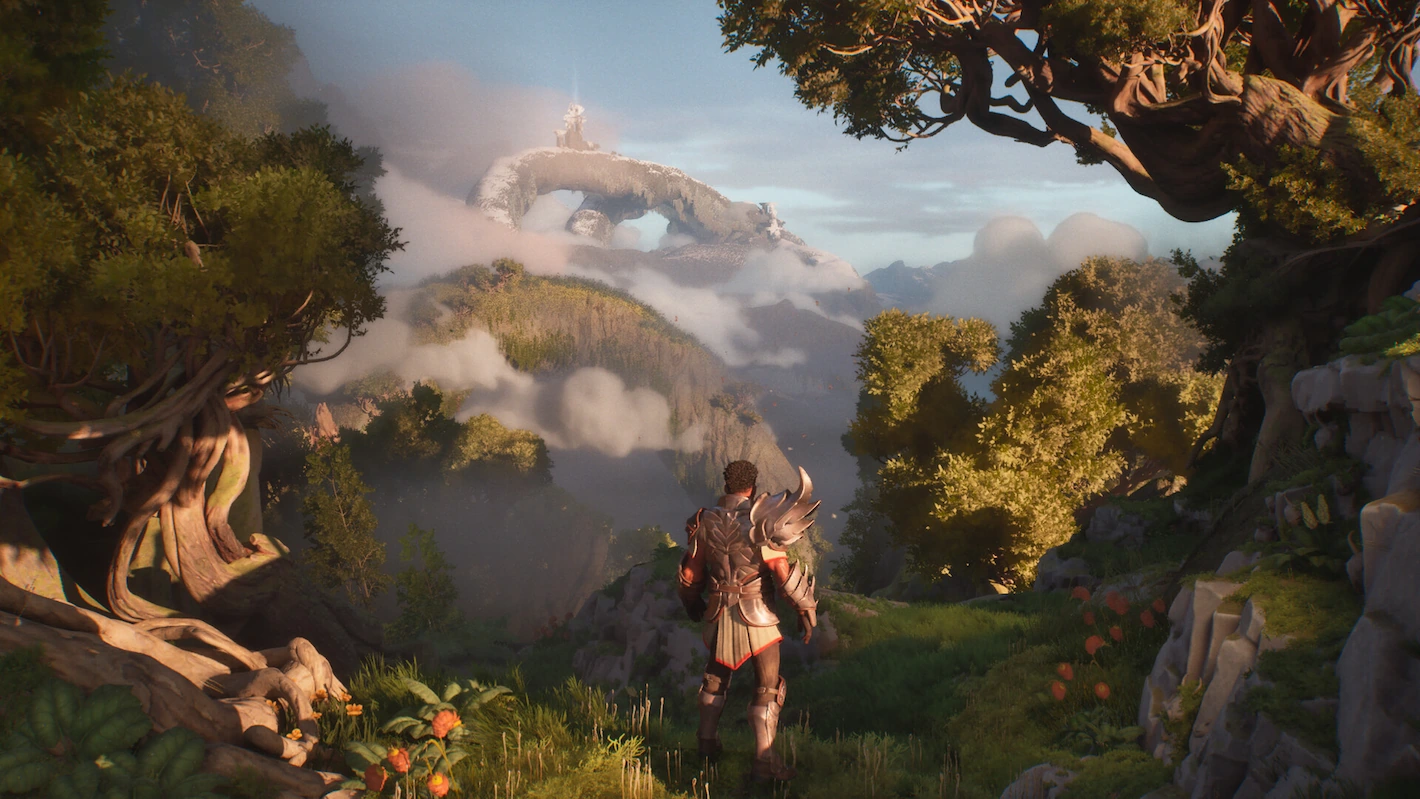
Guild Wars 3 will launch as a buy-to-play game with no monthly subscription. ArenaNet has also ruled out paid battle-pass subscriptions and says players will not be able to purchase an unfair competitive advantage. The planned store may contain cosmetic items, account services and time-saving convenience options, while future expansions and other optional purchases will provide additional revenue. This follows the broad philosophy of the earlier games: purchase access, play according to your own schedule and return without feeling that unused subscription time is being wasted. ArenaNet is also developing a new Hall of Monuments connection between Guild Wars 2 and Guild Wars 3, allowing established players to receive rewards for their previous investment in the franchise. Those promises address many of the most exhausting habits of modern online games. Guild Wars 3 is being designed for players who may have thirty minutes, several hours or a long break between sessions, with ArenaNet arguing that an MMO should provide meaningful progress without turning preparation, inventory management and recurring seasonal obligations into unpaid work. The language is encouraging, but the final judgement must wait for the actual progression economy. Convenience items can remain harmless or gradually become solutions to problems created by the game itself, and a title without a formal battle pass can still use aggressive limited-time events. ArenaNet has stated the right principles; Guild Wars 3 must now build systems that respect them when player retention and store revenue begin competing with those ideals.