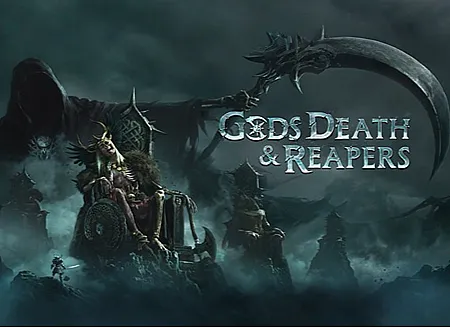
PREVIEW | GODS, DEATH & REAPERS | DEATH CAN WAIT
There are delays that immediately drain the excitement out of a project, and then there are delays that make considerably more sense once you look at what is actually being built. Gods, Death & Reapers increasingly feels like the latter. wolcen studio has confirmed that its unusual dark-fantasy ExtrAction RPG will no longer enter Early Access in 2026, with the launch now scheduled for February 2027. The studio says the additional time will be used for further development and playtesting before the Early Access doors are opened, and considering how dramatically the game has evolved across its closed-alpha period, that decision is difficult to argue with. More importantly, the delay arrives alongside another substantial update rather than silence: Closed Alpha 6 begins on September 24, introducing a third major realm, cooperative party play, significant changes to item persistence and progression, a new weapon archetype and further work on combat, quests and matchmaking. Gods, Death & Reapers may be arriving later than expected, but from everything Wolcen has shown so far, this is becoming one of the more interesting action RPG projects heading into 2027.
an afterlife that already has an identity
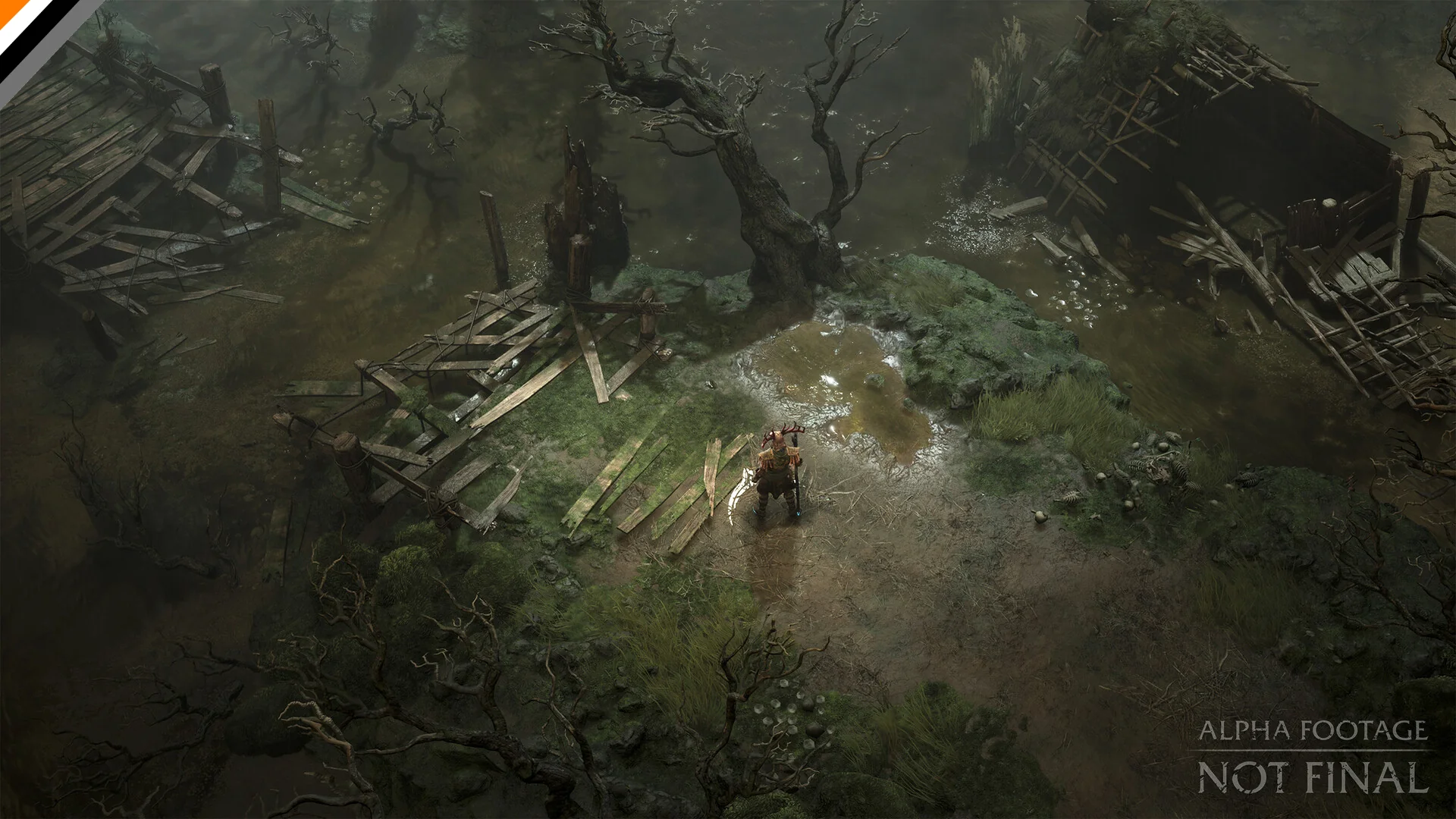
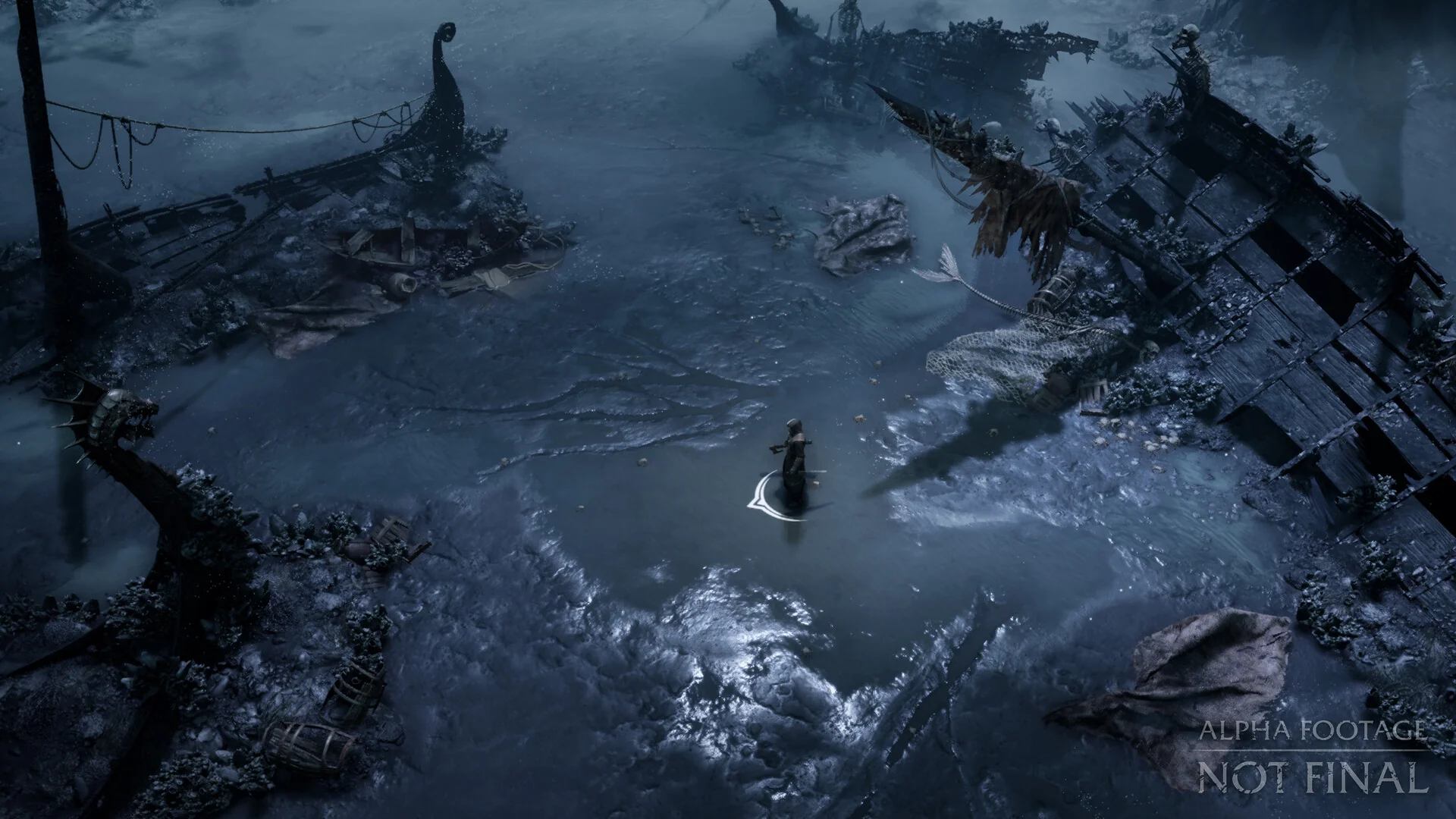
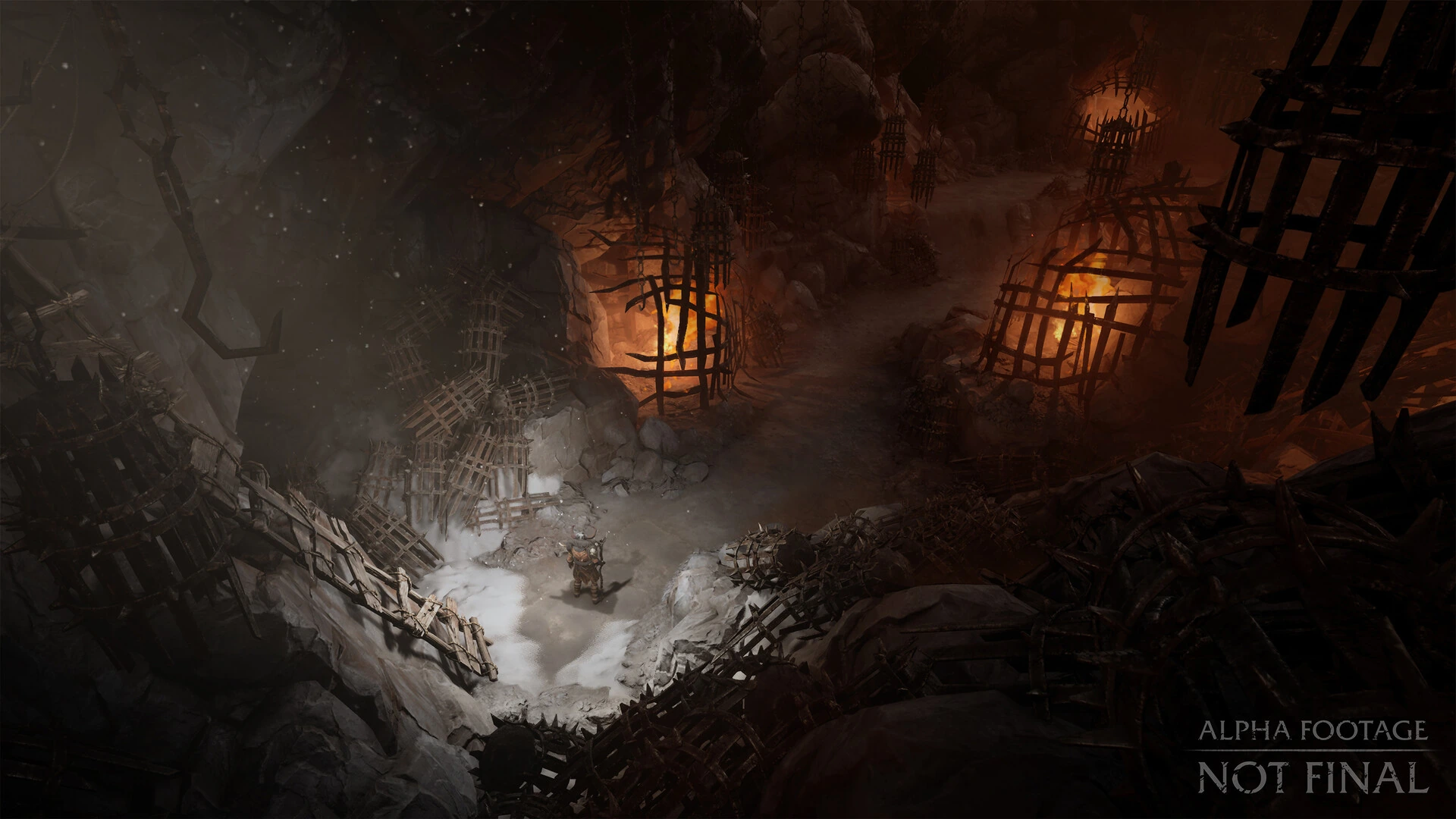
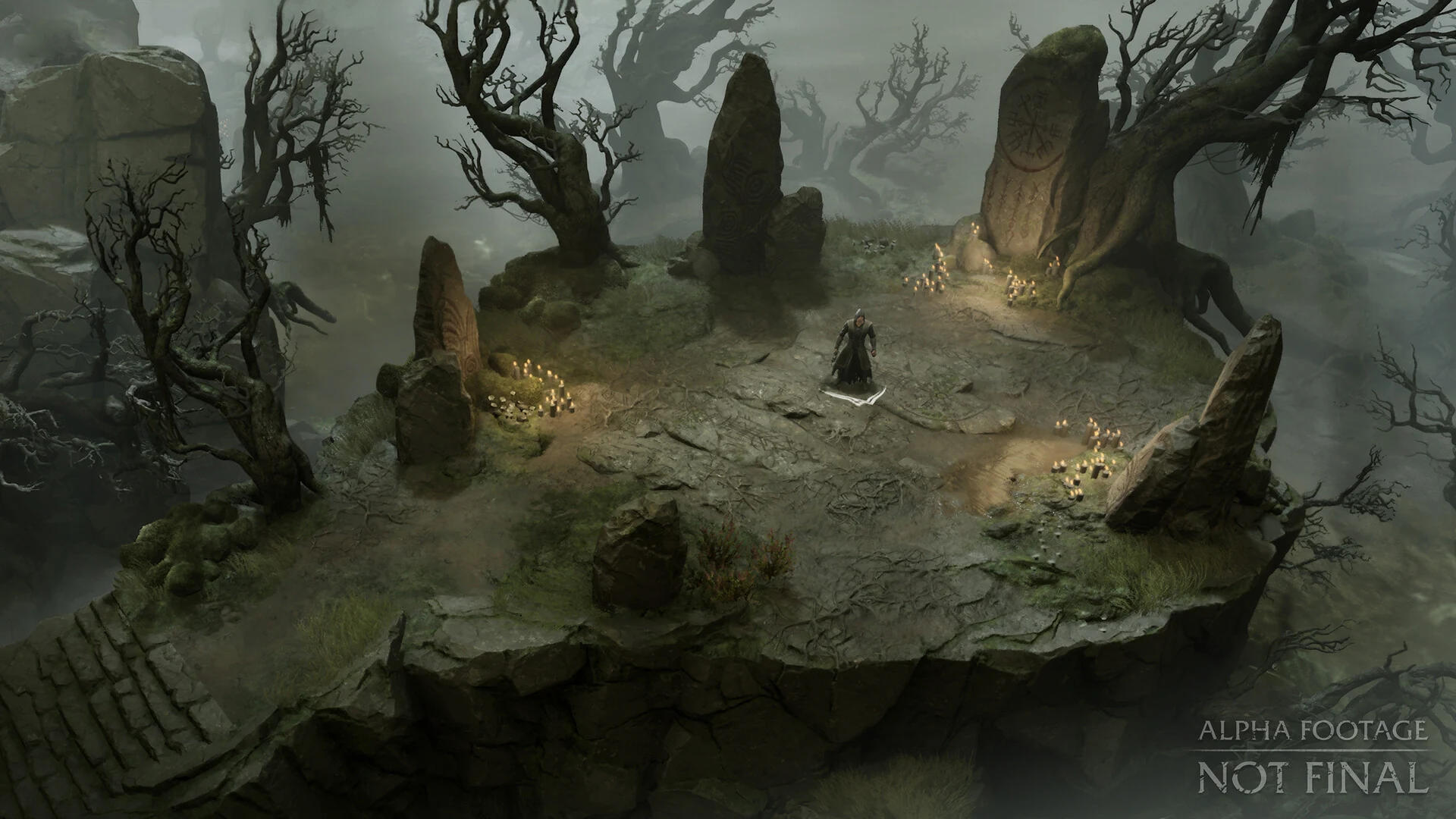
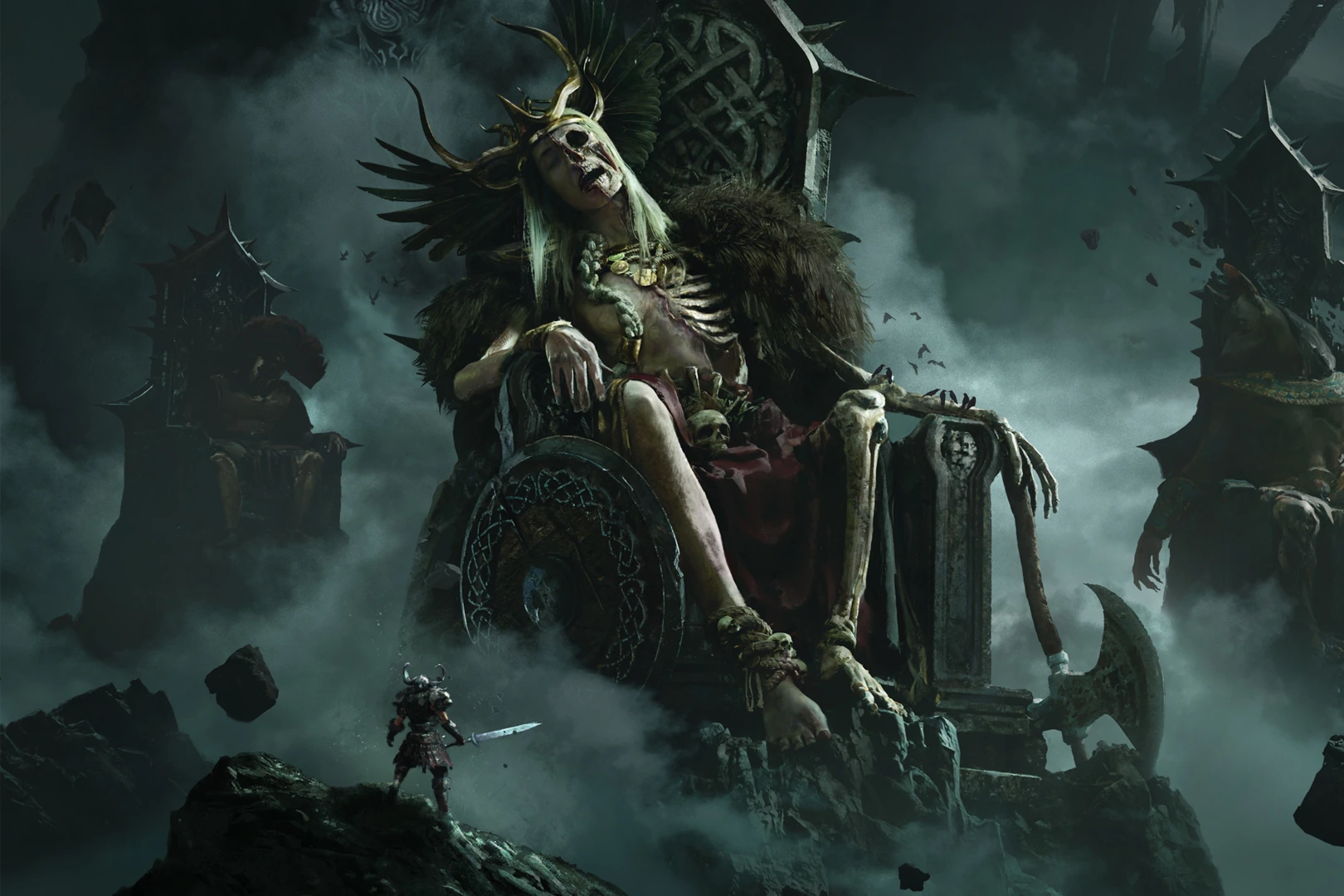
The easiest way to describe Gods, Death & Reapers would be to call it an isometric action RPG with extraction mechanics, but that description undersells what makes the project immediately appealing. Its world is built around a wonderfully bleak premise: mythology is real, the gods are dead, their realms are collapsing, and Death recruits the player as one of its Reapers to investigate what happened and restore some measure of order. The journey begins in ruined Norse mythology, but Wolcen is not simply dropping familiar names and creatures into another conventional fantasy landscape. The visual direction is deliberately grounded, decayed and post-apocalyptic. Former temples have become ruins, monumental structures sit damaged or abandoned, creatures are distorted by the collapse around them and the environments constantly try to communicate that something enormous existed here before the player arrived. Wolcen’s own art team describes mythology, the underworld, grounded dark fantasy, devastation and a sense of scale as central pillars of the game’s identity, and that philosophy is visible throughout the material shown so far. Even at this unfinished stage, Gods, Death & Reapers has a heavier and more coherent atmosphere than a large number of games that simply reach for the familiar black-and-red Diablo vocabulary. That distinction matters because this is a genre currently crowded with games that can look interchangeable in a screenshot. Gods, Death & Reapers does not. Helheim is sickly and hostile, Midgard has a ruined physicality to it, while the newly revealed Asgard pushes the scale upward into the remains of what was once the home of the Norse gods. Broken halls and scarred monuments now sit without their divine owners, while competing factions have occupied what remains. Closed Alpha 6 also introduces the Chosen, Einherjar who once served Odin and have become fanatical guardians of Asgard after his death. It is a strong concept because Wolcen is using recognizable mythology as a foundation rather than the finished product. The important question is not simply whether Odin, Asgard or Nidhoggr exists; it is what happens to those legends after the gods disappear. That gives the studio considerable room to reinterpret familiar material without losing the mythology that gives each realm its character.
diablo combat meets the extraction loop
Where things become much more interesting is the structure underneath that world. Wolcen calls Gods, Death & Reapers an ExtrAction RPG, and the term is more than marketing shorthand. Instead of building another linear campaign followed by a traditional ARPG endgame, the core loop sends Reapers from their Sanctuary into dangerous maps where objectives, enemies, resources and potentially hostile players compete for attention. Survive and extract successfully, and the expedition feeds the next stage of character and base progression. Stay longer and there is potentially more to gain. Push too far, make a poor decision or meet another player with the better build, and the entire expedition can unravel. In other words, the familiar pleasure of improving an ARPG character is being tied to the tension normally associated with extraction games. Game director Andrei Chirculete has acknowledged that combining the two genres proved considerably harder than Wolcen originally expected, because systems that work naturally in isolation often need to be redesigned when they are pushed together. The studio has consequently spent roughly a year putting the game in front of players and adjusting the mixture through repeated public tests. Crucially, Wolcen has also recognized that not every ARPG player wants PvP hanging over every expedition. The current map structure separates Stable Maps, which are PvE-only and allow players to learn, explore and progress without putting their equipped gear at risk, from Unstable Maps, where PvPvE becomes part of the equation and stronger rewards accompany the increased danger. Helheim and Midgard have already been adapted around this structure, and the same character can now move between modes instead of requiring separate progression. That may prove to be one of the smartest decisions in the entire project. Rather than forcing Diablo and Path of Exile players into an extraction format whether they like it or not, Gods, Death & Reapers can use PvE as the accessible foundation and let players voluntarily step into the more dangerous side of the game when their build, equipment and confidence are ready. It is still an extraction RPG, but it no longer sounds like one designed exclusively for people who already enjoy extraction games.
death does not necessarily mean the end
Even death itself has been turned into a mechanic rather than a simple failure screen. On the first death during a match, a Reaper can attempt to return to their own corpse or possess another fallen Reaper’s body, potentially inheriting the equipment attached to it and continuing the expedition. It is exactly the sort of mechanic this setting should have: mechanically useful, thematically appropriate and capable of producing unpredictable situations without requiring a paragraph of lore to justify its existence. The larger item-loss philosophy is changing as well. Closed Alpha 6 will test Soulbound Items, meaning equipped gear will no longer simply drop when a player dies. Wolcen is simultaneously reworking item progression so that important equipment is crafted, developed and individually customized over time rather than treated purely as disposable extraction loot. The studio openly describes this as a significant experimental change and is inviting feedback before committing to its final form, but the reasoning is easy to understand. Persistent ARPG character progression and total extraction-game loss are natural enemies; allowing players to become attached to a build without completely removing risk may be the compromise this hybrid needs. It also makes the Sanctuary considerably more important. This is not just a menu dressed as a castle but the player’s base between expeditions, with buildings tied to crafting, salvage, rerolls, storage and access to more dangerous activities. Earlier alpha updates expanded buildings through additional tiers, with Portal upgrades unlocking Unstable Maps and eventually the Arena, while the Workshop and Smithy provide more control over item development. Keeping the Sanctuary operational also requires souls gathered during expeditions to feed its Power Source, creating another reason for individual runs to matter beyond chasing a single weapon with a slightly better number. These systems are still being developed and balanced, but collectively they point toward something Gods, Death & Reapers badly needs if it is to survive as a long-term game: progression that exists on several layers at once. Character, equipment, infrastructure, map access and eventually economy can all feed each other instead of every session becoming an isolated loot run.
combat needs to carry the whole idea
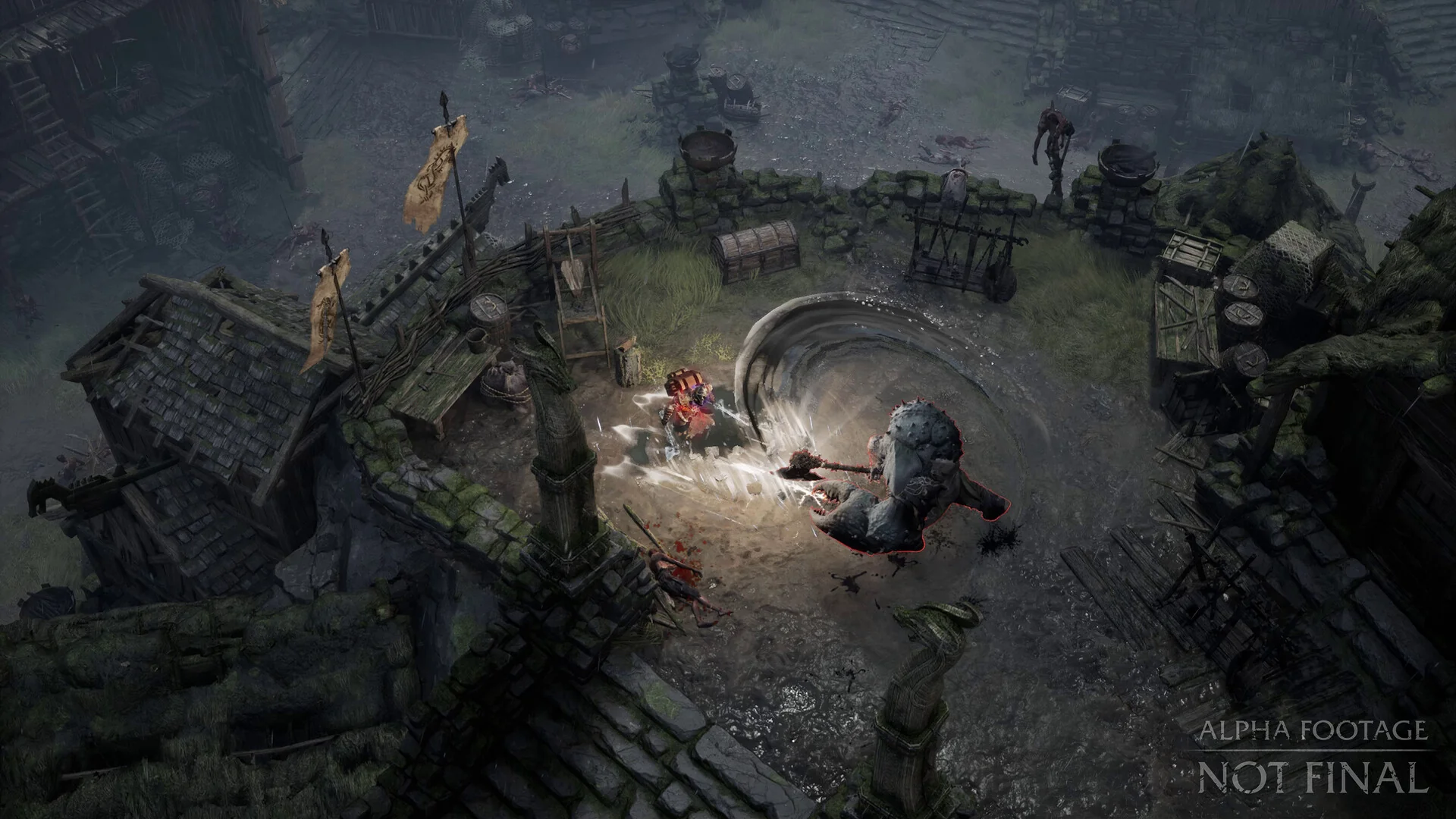
None of that matters if hitting things is not satisfying, of course, and this remains the area where Wolcen has the most to prove. Public alpha impressions have occasionally described attacks as lacking some weight and impact, which is exactly the sort of problem that can sink an action RPG regardless of how sophisticated the surrounding systems become. At the same time, the foundation is attractive: weapon choice determines much of the available ability set, crowd control and positioning matter, enemies arrive in dangerous groups, and the ability design is already moving well beyond basic damage buttons. The Longsword, for example, has received abilities capable of trapping enemies inside barriers, chaining teleports between targets, tethering groups into areas or turning defensive shields into offensive detonations, while the Staff can manipulate positioning and link enemies so that damage is distributed across multiple targets. Wolcen says Closed Alpha 6 contains another responsiveness pass aimed specifically at eliminating awkward projectiles and remaining combat clunkiness. That is encouraging, because the game does not need to reinvent ARPG combat; it needs to make its combat immediate enough that the extraction pressure enhances it rather than exposing every weak animation or hit response. The newest weapon illustrates how much room the system potentially has. The Double Axe is technically a ranged weapon, but its real identity is as a summoner archetype. Players attach sigils that determine whether they fight alongside a Wolf, Raven or Boar, each carrying a passive benefit and an active combat ability. The Wolf increases damage and life steal while being able to leap into enemies and root them; the Raven expands vision and can dive to blind targets; the Boar absorbs part of the player’s incoming damage and can charge through enemies. Equip no sigil and a Wisp becomes the default companion, increasing movement speed while attacking nearby threats. Only one creature can be active at a time, which turns the weapon into something closer to a configurable combat framework than a simple stat stick. This kind of design is exactly what can separate Gods, Death & Reapers from the endless parade of ARPGs where a weapon is exciting primarily because one number turned green.
closed alpha 6 is much more than another test
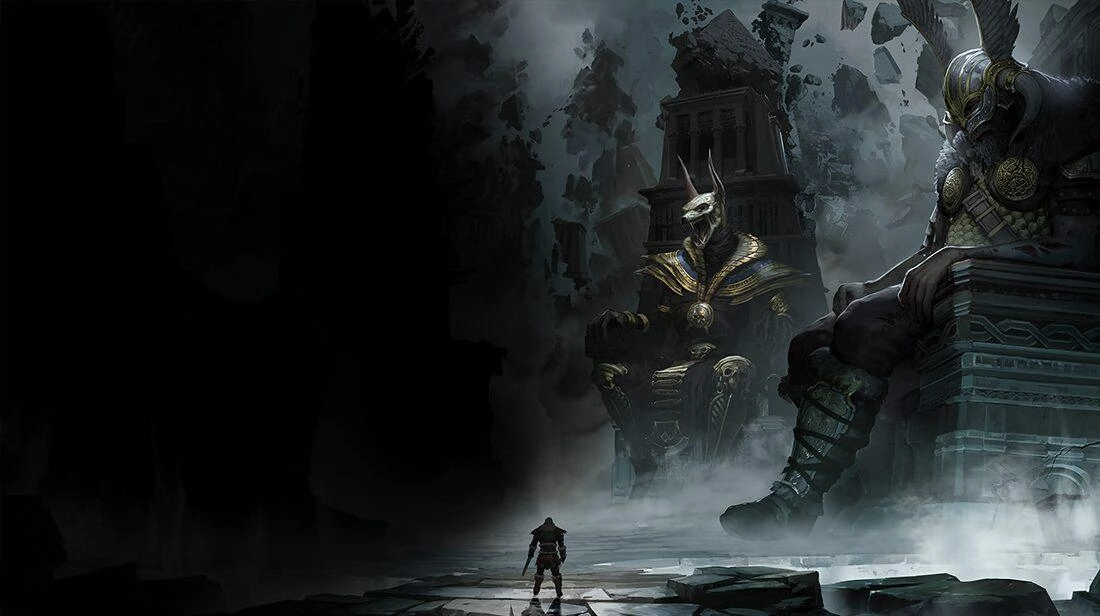
The September playtest also marks an important transition because Gods, Death & Reapers is finally becoming properly social. Closed Alpha 6 adds the requested Party System and Friend Management, allowing players to enter the afterlife together rather than merely encountering one another as rivals. Parties are matched against other parties rather than solo players, difficulty and rewards increase for grouped expeditions, and experience distribution is designed around proximity and participation so teams have a reason to actually function as teams instead of scattering across the map. The same update expands Arena combat into 2v2 and 3v3 formats and adds a Training Area inside the Sanctuary where weapons, abilities and combinations can be tested without committing to an expedition. Wolcen is also reorganizing loot distribution so that areas associated with particular resource types are visible on the map, giving players more agency when deciding where an expedition should go. Add the new Asgard environment, another enemy faction, further NPCs and questline development, and Alpha 6 looks less like an incremental patch and more like a test of whether the game’s major systems can finally operate together. That is especially significant because Wolcen said after Closed Alpha 5 that it now considers the majority of the game’s core systems and features to be in place. The remaining road to Early Access therefore appears to be increasingly about integration, content, iteration and polish rather than inventing the basic game from scratch. The broader roadmap also makes clear that Norse mythology is only the opening chapter of the project. Future phases have pointed toward additional mythological settings including Egyptian, Aztec and Greek material, giving Wolcen a potentially enormous pool of creatures, architecture, artifacts and narrative ideas to explore if the game survives long enough to reach them. That is a very big “if” for any free-to-play live-service project, but the underlying concept is strong: instead of stretching one fantasy biome across years of updates, the structure naturally allows entirely different mythological civilizations to become new worlds.
the free-to-play question
There is still an obvious reason for caution. Gods, Death & Reapers is planned as a free-to-play game with online PvP, cooperative play and long-term progression, and those words alone are enough to make experienced players suspicious. The eventual economy, monetization, progression pacing and relationship between paid content and competitive fairness will matter enormously. Steam currently identifies the game as free-to-play and lists in-game purchases among its interactive elements, while Wolcen repeatedly emphasizes fair PvP and anti-cheat measures. None of that tells us yet what the final monetization model will feel like in practice. A beautifully designed extraction ARPG can be undermined very quickly if progression starts bending around monetization rather than the player, and that is an area where judgement has to wait until Early Access provides something resembling the real economy. There is also the matter of Wolcen Studio’s history. Wolcen: Lords of Mayhem had genuine strengths, particularly its visual design and combat ambition, but its troubled development and technical problems mean Gods, Death & Reapers does not get automatic trust simply because the same studio has another attractive dark fantasy game. To Wolcen’s credit, the current development process seems almost designed as a response to those lessons: repeated external testing, visible iteration, community feedback and a willingness to substantially change systems such as item loss instead of pretending an early design must remain untouched. Gods, Death & Reapers is also explicitly not Wolcen 2; it is its own project with a different structure and purpose. The newly announced Wolcen 2 exists separately, which leaves GDR free to be the studio’s more experimental game rather than carrying the burden of becoming a conventional sequel.
a delay that could make the game better
So yes, February 2027 is later than expected. But this may be one of those occasions where the delay actually makes the project more interesting rather than less. Gods, Death & Reapers already has the part many unfinished games struggle to find: an identity. The ruined mythological afterlife looks excellent, the combination of ARPG combat and extraction tension has a clear reason to exist, Stable and Unstable maps provide an intelligent answer to the PvE-versus-PvP problem, and the Sanctuary gives successful expeditions something meaningful to feed back into. Soulbound gear suggests Wolcen is willing to question the harshest assumptions of the extraction genre when they interfere with RPG progression, while Asgard, party play and the increasingly unusual weapon designs show that the game is expanding rather than merely being polished around the edges. The difficult work is now making all of those ideas feel as good as they sound. Combat needs more weight and consistency, progression has to remain satisfying without becoming exhausting, PvP has to coexist with players who would rather stay in PvE, and free-to-play monetization must avoid contaminating the build-driven competition at the heart of the game. Those are substantial challenges, and February will arrive quickly enough. But based on the game Wolcen Studio is showing today, Gods, Death & Reapers has moved well beyond “interesting concept” territory. There is a genuinely promising action RPG taking shape here dark without becoming visually monotonous, familiar enough to understand immediately but strange enough to avoid feeling like another Diablo imitation. Death can wait a few more months. If Wolcen uses them well, the afterlife may be worth the trip.