PREVIEW | FALSE ECHO | TRUTH SINKS BELOW THE ATLANTIC
A radio room buried under the Atlantic can be more frightening than a battlefield. No open sky, no clean information, no easy hero moment. Just paper, cables, signals, orders, pressure, and the quiet knowledge that every message you touch may change someone’s fate. Somewhere above, the war is moving through fog, steel and water. Somewhere outside the hull, danger may already be close. But inside this room, fear arrives in a different form: a broken transmission, a suspicious order, a missing detail, a rule that changed without warning. False Echo understands that kind of tension. It does not look like a game built around speed or spectacle. It looks like a game built around procedure, suspicion and the slow damage of working for a system that decides what truth is allowed to survive. The player is not charging across a battlefield or leading a heroic attack. The player is sitting in front of a machine, processing information for an empire that may be hiding as much as it reveals. That small shift makes the premise stronger. A signal is not just a signal. A decision is not just a checkbox. A wrong classification may protect someone, condemn someone, or help a lie become official. That is already enough to make it worth watching.

Developed and published by Retromagine, False Echo is listed for PC on Steam as a narrative cryptography thriller with adventure, indie and simulation elements. The game is set in 1942, aboard a classified submarine belonging to the Oppressian Empire, a military power trying to control both war and information. The player operates the Obscura machine, processes transmissions, adjusts rotors, connects cables, aligns signals and decides which messages pass through the ECHO system as TRUE or FALSE. That setup immediately brings Papers, Please to mind, but False Echo should not be treated as a simple underwater copy. The comparison helps explain the pressure, not the full identity. Instead of a border checkpoint, the room is a submarine communication station. Instead of stamping passports, the player is handling information in a closed military environment where rules shift, orders contradict each other and the crew may not fully trust what it hears.

a small room with a lot of pressure
The strongest idea here is not the submarine by itself. Submarines are already good material for tension: tight corridors, limited air, metal walls, distant threats and people trapped together under pressure. False Echo adds something more interesting on top of that. The danger is not only outside the hull. It is also inside the paperwork. Messages keep arriving. Some may be true. Some may be false. Some may be dangerous because they are correct. Others may be dangerous because the regime wants them to be wrong. That is the kind of setup that can turn a simple interface into a moral machine. A player is not just solving puzzles. A player is deciding what the system hears, what the crew believes and what version of reality survives the next few minutes. If the game handles that properly, the Obscura machine could become more than a cool mechanical interface. It could become the heart of the whole experience.


the appeal of procedural guilt
Games about information control work best when the rules are clear enough to follow, but unstable enough to make the player uncomfortable. False Echo seems to be aiming exactly there. Precision-based decoding, censorship, contradiction detection and changing directives all point toward a loop where the player is never fully relaxed. You may understand today’s rule, but tomorrow’s order may break yesterday’s logic. That is where the game could find its own voice. The best version of False Echo would not punish the player with random confusion. It would build stress through responsibility. You do your job, but the job itself becomes harder to trust. You follow the rules, then start noticing that the rules may be part of the lie. You classify a message, then wonder who benefits from that classification. That is a much more interesting kind of pressure than simple fail-state punishment.
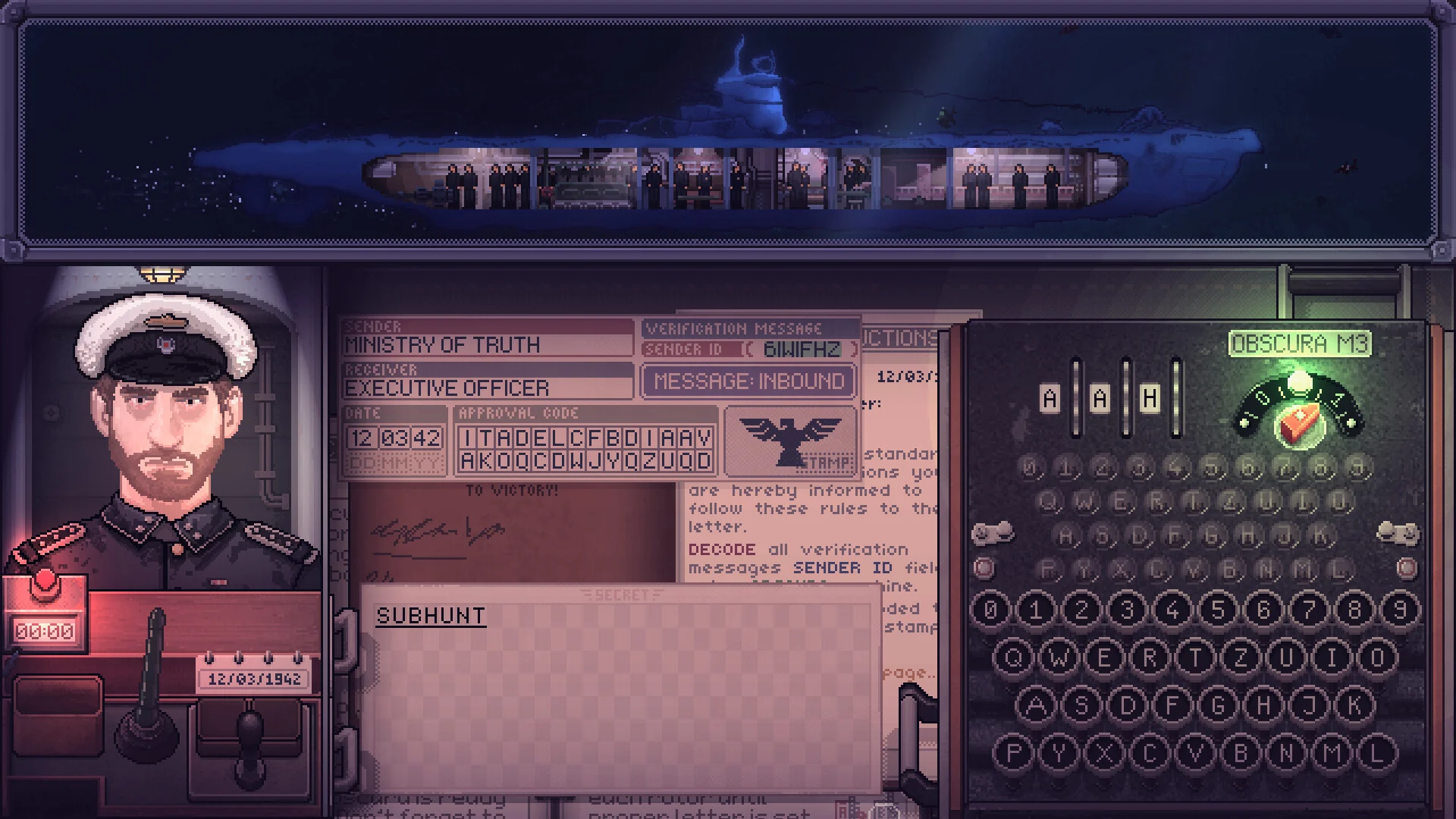
pixel art, signals & atmosphere
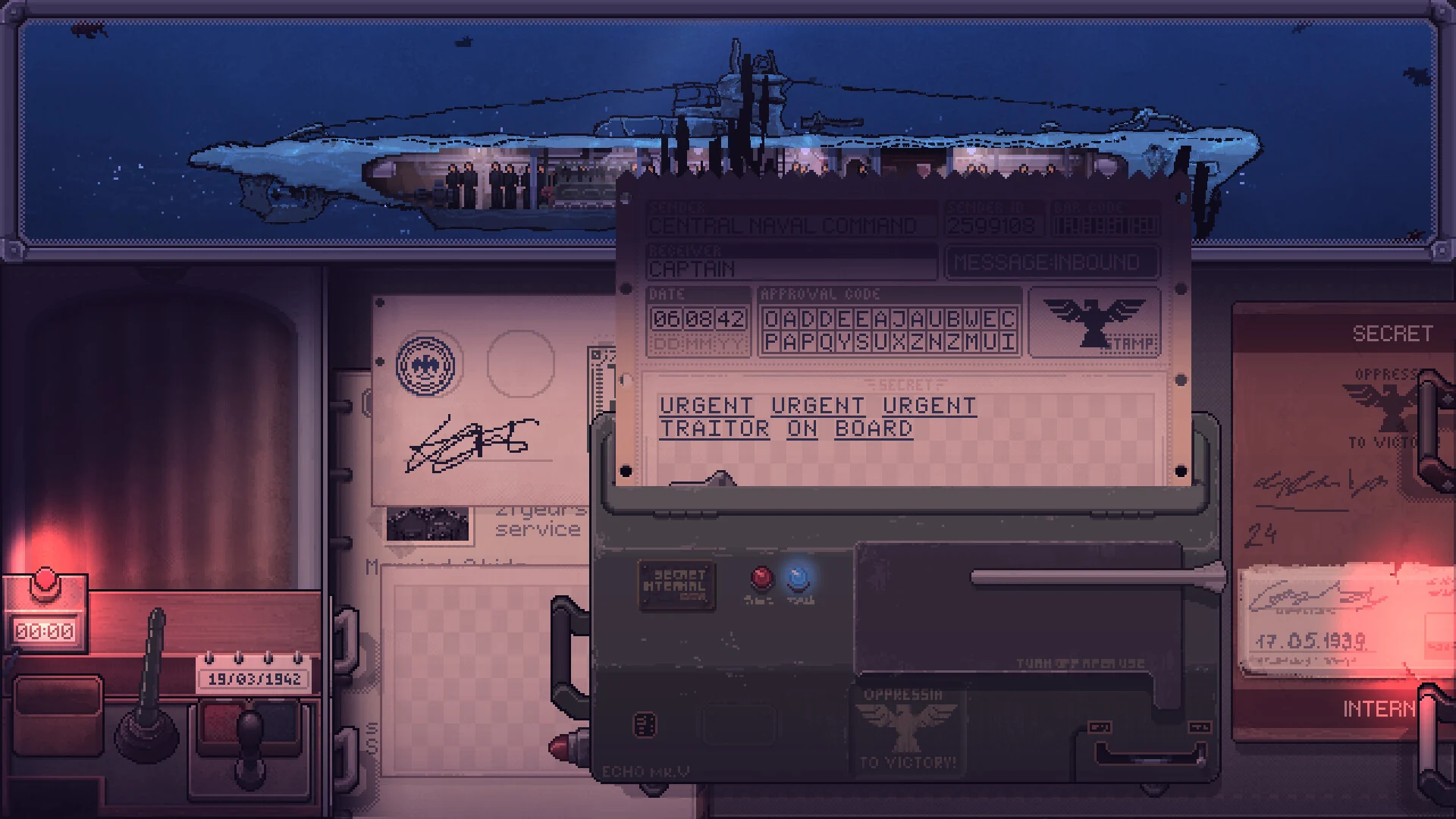
The screenshots and presentation already suggest a game with strong visual identity. The pixel art is dark, detailed and readable, with enough mechanical texture to make the submarine setting feel more physical than abstract. This matters because games like this depend heavily on atmosphere. If the room feels flat, the tension dies. If every device, paper and screen feels like part of a believable system, the player starts treating small actions seriously. False Echo also has a strong thematic advantage. War stories often focus on action, survival or command. This one focuses on filtered truth. That gives it a different angle. The player is not the captain leading a heroic mission. The player is somewhere inside the machinery of control, turning signals into official reality. That is a darker and more unusual role. It also makes the “false” part of the title feel important. A false echo is not just a mistake. It is a signal that appears real long enough to matter.
what could go wrong
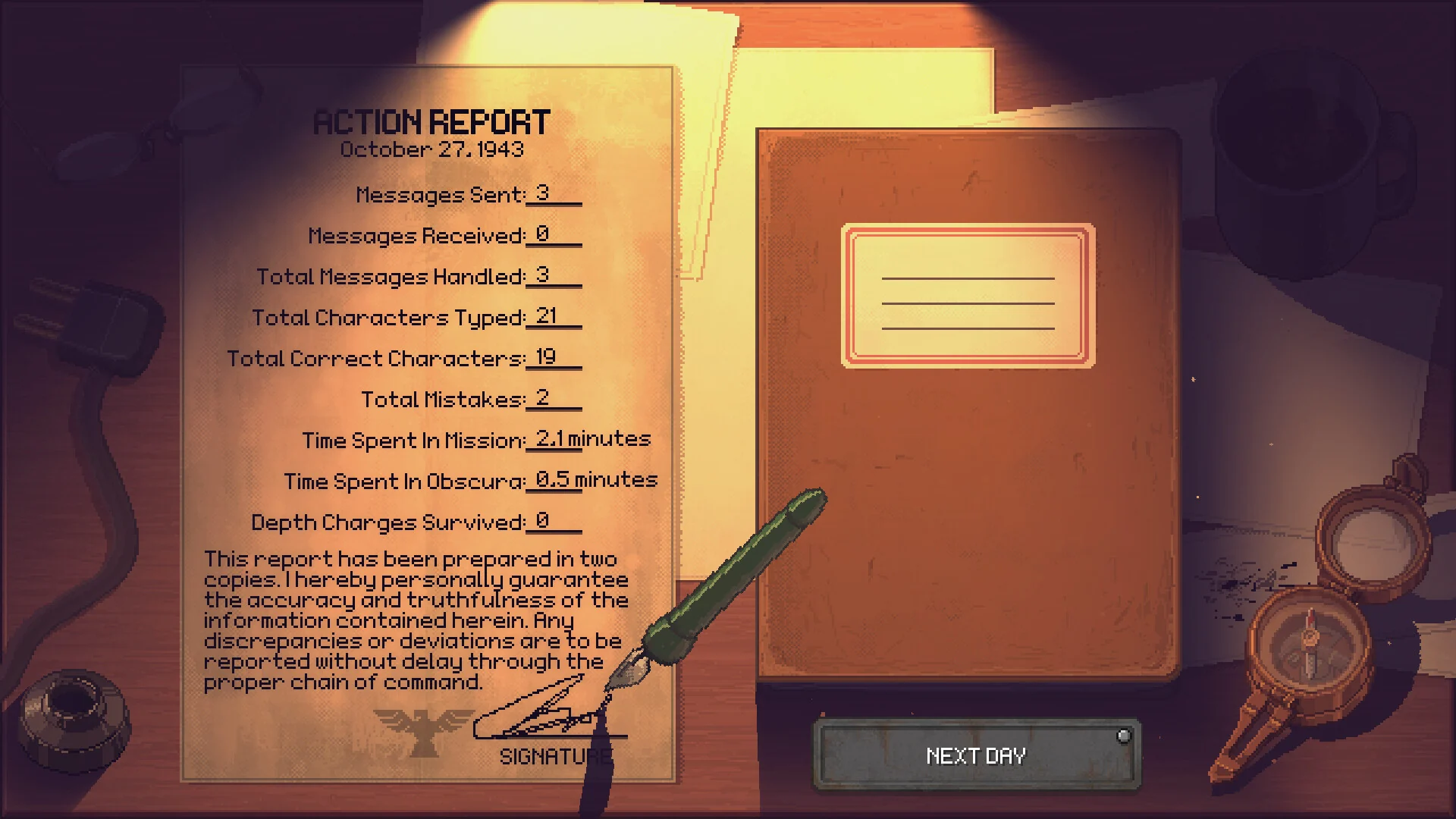
The risk is obvious. A game built around decoding, classification and changing rules needs careful pacing. Too simple, and it becomes repetitive. Too obscure, and it becomes frustrating. Too much story, and the procedural loop may feel like a pause between dialogue scenes. Too much procedure, and the characters may not matter enough. False Echo will need balance. The machine has to feel satisfying. The rule changes have to feel tense, not cheap. The crew conversations need enough personality to make suspicion meaningful. The endings need to feel earned by the player’s actions, not just attached to a few obvious choices. That is a difficult mix, but the concept is strong enough to justify the attention.False Echo is not trying to win attention through size. Its strength is in the opposite direction: one submarine, one information system, one controlled space and a player forced to work inside a regime where truth is not clean. The Papers, Please influence is clear, but the Atlantic setting, cryptography focus and military pressure give it room to become its own thing. No firm release date has been locked yet, so this remains a watchlist title rather than a guaranteed recommendation. Still, the idea is sharp. A game about decoding messages could easily become dry, but a game about decoding messages under censorship, suspicion and wartime pressure has real potential. If Retromagine can make every signal feel dangerous and every classification feel like more than a checkbox, False Echo could become one of those small PC games that does not need a huge budget to leave a mark.