
PREVIEW | CORSAIR COVE | A CITY BUILDER THAT THINKS VERTICALLY
Corsair Cove doesn’t waste time trying to impress with scale or spectacle. What stands out first is how differently it approaches space. Most city builders spread wide, slowly filling the map with structures and systems. Here, growth feels tighter, more controlled, almost compressed because expansion isn’t just horizontal. You’re building upward, stacking functions, and constantly rethinking how limited space should be used. That single shift already changes the way the game feels before anything else even kicks in. That approach also hints at something more demanding beneath the surface. This doesn’t look like a game where you casually place buildings and let things run in the background. Every decision seems to carry more weight, especially as the settlement grows and systems begin to overlap. Corsair Cove leans into that pressure early, not by overwhelming the player, but by quietly forcing smarter choices. If it holds that balance, it could end up being one of those city builders that feels simple at first, but slowly pulls you into a much deeper layer of planning than you expected.
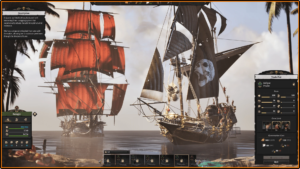
At first glance, the pirate theme does a lot of the heavy lifting. Ports, ships, trade routes, maybe even a bit of naval conflict it’s familiar territory, but still underused in modern city builders. Corsair Cove leans into that atmosphere, placing you in control of a growing pirate settlement that isn’t just about survival, but about building a functioning, layered economy. The interesting part is that it’s not trying to be purely decorative or relaxed. Under the surface, it clearly wants to be a systems-driven game. The vertical building mechanic is where things start to get more interesting. Instead of spreading endlessly across a flat map, you’re stacking structures, optimizing limited space, and thinking about how different layers interact with each other. That changes the usual rhythm of a city builder. Placement becomes more deliberate, mistakes more punishing, and efficiency more rewarding. It’s less about filling empty land and more about solving a spatial puzzle that keeps evolving as your settlement grows. That ties directly into the production side of the game, which looks deeper than expected. Corsair Cove isn’t just about placing buildings and watching numbers go up. It’s built around chains of resources, processing, and distribution. Goods need to be produced, refined, transported, and eventually used or traded. When a game commits to that kind of structure, it usually means one thing the early game will feel manageable, but the mid to late game is where everything either clicks into place or starts falling apart.
The naval aspect adds another layer on top of that. Ships aren’t just visual flavor here; they’re part of the economy. Trade routes, resource gathering, and possibly combat all seem to revolve around your fleet. If that system ends up being as interconnected as it looks, it could give the game a strong sense of movement and purpose, something many city builders struggle with once the initial expansion phase is over. Visually, Corsair Cove sits somewhere between stylized and functional. It’s clean enough to read easily, but still detailed enough to give personality to the world. That balance matters more than it might seem. In games built around management and optimization, clarity is everything. If you can’t instantly understand what’s happening on screen, the whole system starts to feel heavier than it should. So far, it looks like the developers understand that.
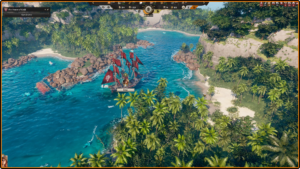
What’s still unclear is how far the game will push its complexity. There’s always a line between depth and overload, especially in this genre. The vertical building system, combined with layered production chains and naval logistics, has the potential to be either a standout feature or something that overwhelms the player if not handled carefully. The pacing of progression will be crucial here. There’s also the question of identity. Right now, Corsair Cove sits between a few ideas a pirate-themed city builder, a logistics-heavy management game, and something that experiments with spatial design. That mix is promising, but it needs to come together into something cohesive. If it does, it could easily stand out in a genre that often feels like it’s repeating the same formulas with minor changes.
Corsair Cove isn’t trying to reinvent the genre completely, but it doesn’t feel like a safe project either. It’s taking a known foundation and pushing it in a direction that could either make it more engaging or more demanding, depending on execution. That’s always a risk, but it’s also what makes it worth paying attention to. For now, it’s one of those games that doesn’t need to say too much to spark interest. The core idea is already doing that. If the systems behind it hold up, Corsair Cove could end up being more than just another city builder with a different coat of paint. It might actually make you rethink how you approach building in the first place.