PREVIEW | BRASS RAIN | HISTORICAL BATTLES, FREE ENTRY
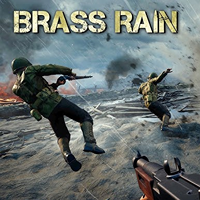
Artillery waits somewhere beyond the Normandy cliffs while one team searches for it and the other prepares to defend positions the attackers cannot identify in advance. That uncertainty is the strongest early idea behind Brass Rain, an upcoming free-to-play World War II combined-arms shooter from Yarnhub Animation Studios. Planned for December 2026 on Steam, the game begins with multiplayer battles built around infantry and tanks, authentic weapons, recognizable locations and objectives inspired by real events. Yarnhub is careful not to describe the project as a strict simulation. Brass Rain is intended to remain grounded enough to preserve the weight and atmosphere of its historical setting while moving quickly enough to work as an accessible multiplayer FPS. That distinction is important. The market already contains highly demanding military simulations and faster shooters wearing WWII uniforms, so Brass Rain must find a useful middle position between them. Its strongest chance comes from Yarnhub’s background in animated military storytelling. The studio already understands how to build short historical narratives around particular soldiers, machines and moments. The challenge is transferring that sense of purpose into matches where players, not filmmakers, control the pace.
real battles must shape more than the scenery
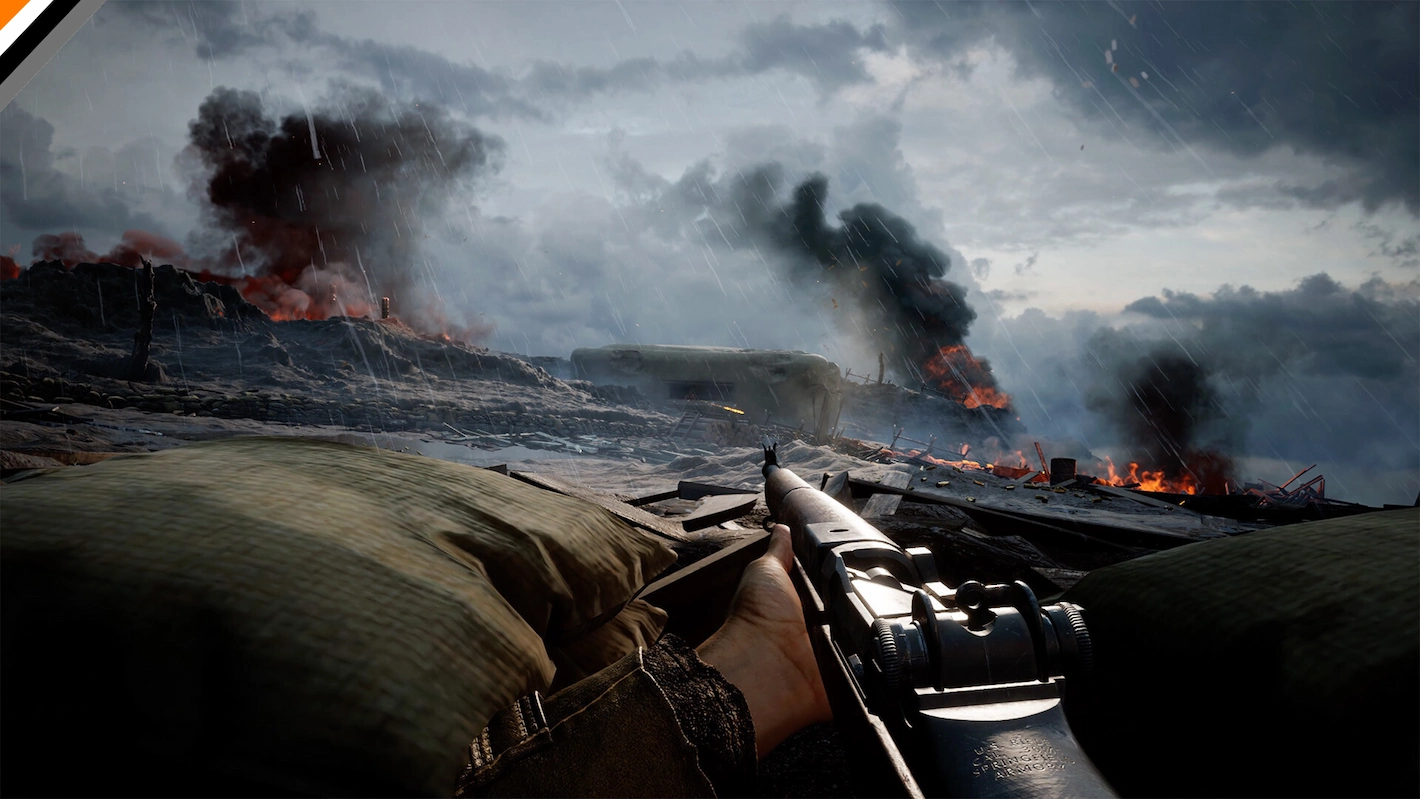
The first confirmed environments include Pointe du Hoc on the Normandy coast and Castle Itter in the Austrian Alps, two locations selected not only for their historical importance but for the different forms of combat their geography can support. Pointe du Hoc combines exposed ground, long sight lines, trenches, bunkers and underground routes, creating room for snipers, close-range clearing and coordinated movement between protected positions. Castle Itter is denser, with interior rooms, elevated angles, medium-sized cover and environmental details that can reveal where other players have moved. Yarnhub has also discussed destructible elements and removable light sources, suggesting that the maps may contain small tactical changes rather than functioning as fixed backgrounds. This is the correct approach for a history-based multiplayer game. Real locations should not survive only as recognizable architecture placed beneath ordinary capture points. Their terrain, original military purpose and unusual circumstances need to shape how each match works. Pointe du Hoc becomes meaningful when artillery, cliffs and concealed routes affect the objective. Castle Itter becomes more than a famous name when its enclosed structure produces a completely different rhythm of movement and defence.

operation mode gives each side a different war
Brass Rain’s most promising system is Operation Mode, an asymmetrical structure in which attackers and defenders receive different responsibilities while remaining uncertain about the opposing side’s exact mission. Objectives can shift as the battle develops, and Yarnhub emphasizes coordination over raw individual aim. At Pointe du Hoc, attackers must locate hidden artillery while the defending team knows where the guns are positioned and attempts to protect them. Their placement can change between matches, preventing the operation from becoming a memorized route toward the same target. This is a much stronger foundation than giving both sides identical lists of flags and asking them to accumulate points faster. Asymmetry can make factions feel as though they are participating in the same battle from genuinely different positions, while changing information forces squads to scout, communicate and react. The system will only work, however, if objectives remain understandable. Uncertainty should create tension, not leave players wandering without useful direction. Brass Rain will need clear briefings, strong map communication and enough visual information for teams to understand what has changed without exposing every enemy plan. When balanced correctly, Operation Mode could give each historical location its own identity instead of applying one universal multiplayer structure across every map.

infantry and tanks come before the larger promise
Yarnhub’s long-term vision extends beyond soldiers and armoured vehicles toward aircraft, bombers, naval combat and a broader battlefield connecting land, sea and air. That ambition helped attract attention when Brass Rain was revealed, but the launch version is more focused. The Steam description now clearly states that the initial game will concentrate on multiplayer infantry and tank combat, a selected group of maps based on real battles and core PvP modes. Aircraft and naval units belong to future expansion plans rather than the guaranteed starting package. This narrower launch is the sensible decision. Combined-arms games become difficult to balance as soon as infantry, armour, aircraft and ships must all remain useful within one ecosystem. Beginning with two connected layers gives Yarnhub a chance to refine movement, weapon handling, vehicle interaction, map scale and the relationship between exposed soldiers and protected crews before adding more machinery above and beyond them. Tanks must feel powerful without turning infantry into targets with no practical response, while soldiers should contribute through terrain, objectives and teamwork rather than defeating heavy armour through arbitrary balance rules. The larger war can wait. Brass Rain first needs to prove that its ground combat is enjoyable enough to support it.

free-to-play brings opportunity and risk
The free-to-play model could give Brass Rain the population required for large multiplayer battles, especially because Yarnhub already has an established audience built around its military-history films. Steam lists online PvP, online co-op, in-app purchases and leaderboards, while the developers have described ongoing updates and balancing as part of the post-launch plan. Accessibility is valuable for a new multiplayer property, but it also places immediate pressure on progression and monetization. Historical shooters can easily become visually inconsistent when cosmetics are designed primarily to generate attention, and vehicle progression becomes frustrating when power, convenience or reduced grinding can be purchased. Brass Rain needs a business model that supports development without damaging the authenticity used to distinguish it from competitors. Its December 2026 release also means the studio has limited time to demonstrate network stability, satisfying gunplay, readable vehicle combat and enough content to keep players active after their first few sessions. Yarnhub may understand cinematic history, but maintaining a live multiplayer game requires a different discipline built around servers, balance, anti-cheat systems, matchmaking and regular communication. This is the studio’s first game, so confidence should come from what the playable version proves rather than from the quality of its trailers alone.