
PREDATOR ATLAS 8 ANNOUNCED | WINDOWS 11 GAMING GOES HANDHELD
this is not pcdoorz moving into console coverage. That needs to be said first, because Predator Atlas 8 looks like a console, sits in your hands like a console, and will probably be compared with every other handheld gaming machine the second it reaches the market. But Acer is not presenting this as a closed console box. This is a Windows 11 gaming handheld, and that moves it close enough to the PC world to deserve a look. Predator Atlas 8 sits in that strange modern space where the shape says console, but the operating system says PC. It is not a tower, not a laptop, not a classic handheld console either. It is a portable Windows gaming machine with PC game libraries, PC launchers, system tools, drivers, updates, settings, and all the usual beauty and pain that come with Windows gaming.
pc hardware in a handheld body
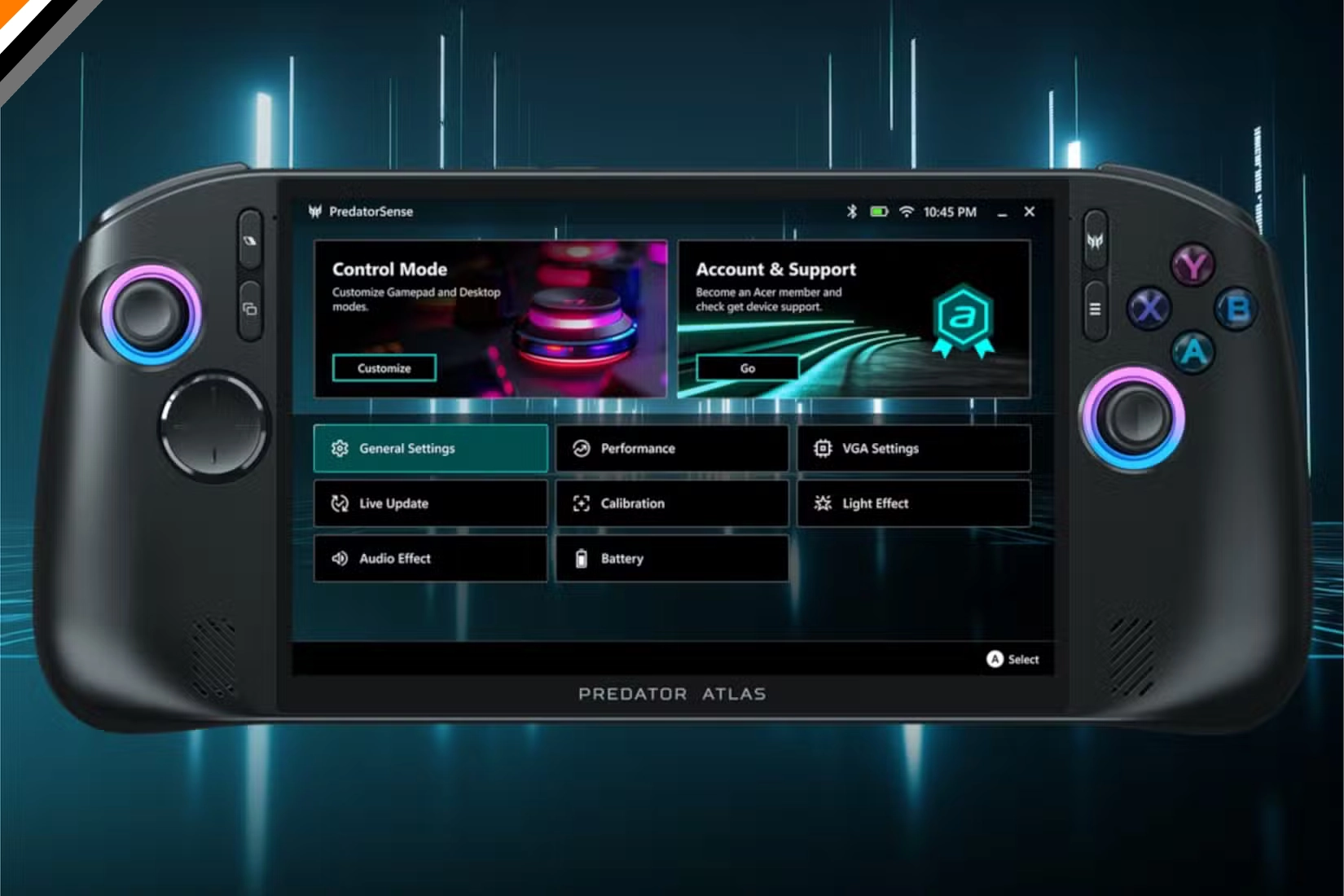
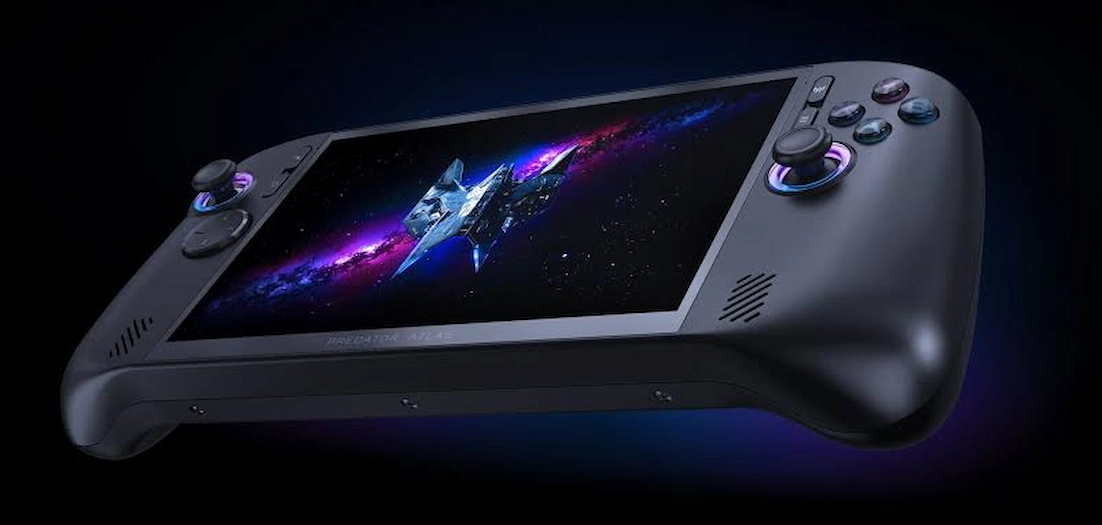
That is why it belongs here, at least as a Beyond PC note. Acer is building the device around Intel Arc G-Series hardware, with configurations going up to Intel Arc G3 Extreme processor options and Intel Arc B390 graphics. On paper, that gives Predator Atlas 8 a serious hardware pitch for handheld gaming, especially with Intel XeSS 3 support included in the conversation. In a device like this, upscaling is not just a nice extra feature. It can become one of the most important tools for keeping frame rates stable without destroying battery life. Handheld gaming is always a fight between performance, heat, weight and endurance. A desktop PC can solve problems with a bigger cooler, a stronger power supply and more space. A handheld has no such luxury. Everything is packed into a small chassis, close to the screen, close to the hands, close to the battery. That means raw specs only tell half the story. The screen is one of the more interesting parts of Predator Atlas 8. Acer is using an 8-inch WUXGA touchscreen with a 1920 x 1200 resolution, 16:10 aspect ratio, 120 Hz refresh rate, VRR support and up to 500 nits brightness. That is a smart direction for a Windows handheld. The 16:10 ratio gives a little more vertical space, which matters when menus, launchers and PC interfaces enter the picture. A normal console-style interface can live comfortably on almost any screen, but Windows still likes room.
display speed meets handheld reality
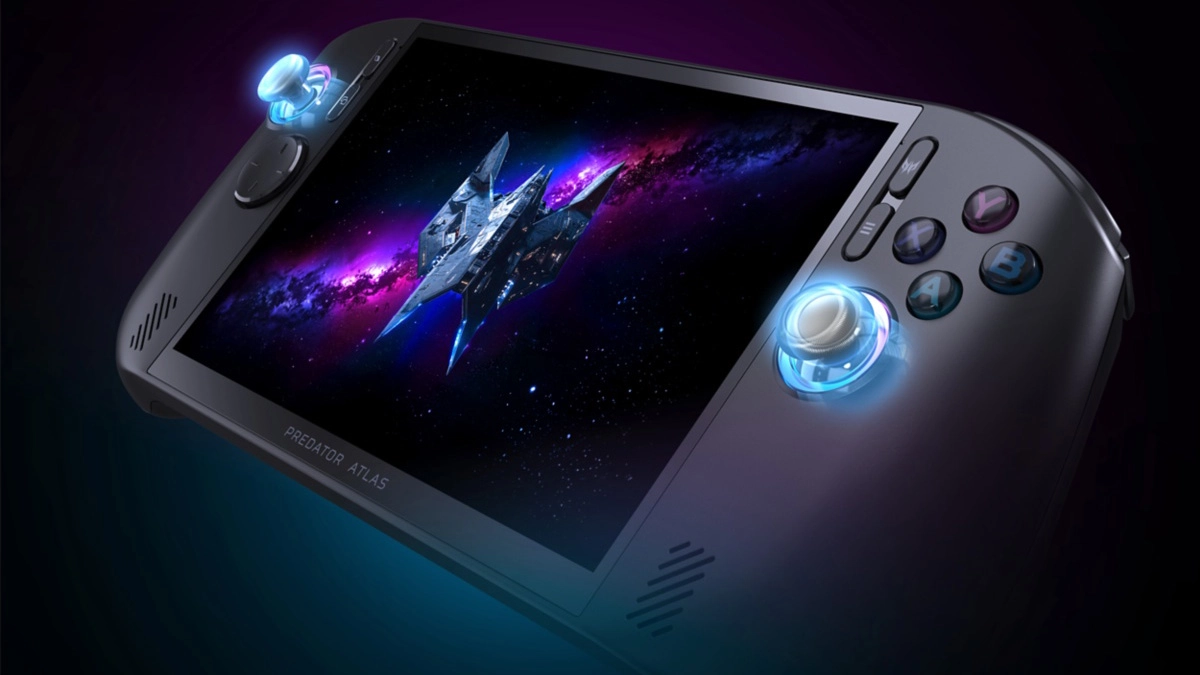
The 120 Hz refresh rate also makes sense, even if not every modern PC game will hit that number on a handheld. Menus, lighter games, older titles, indie games and competitive games can still benefit from it. VRR support is even more important because handheld performance will naturally move up and down depending on the game, settings, power mode and temperature. A display that can smooth out those changes matters more here than marketing numbers alone. Cooling is another big point Acer is pushing. Predator Atlas 8 uses a dual-fan Predator AeroBlade system, including a metal fan and Vortex Flow tuning. That sounds like the usual gaming-hardware language until you remember how unforgiving this category is. A handheld PC can look strong in a press release and still lose its edge if heat forces it to drop clocks too quickly. Sustained performance will be the real test.The controls look properly serious too. Acer mentions full-size analog sticks, Hall-effect analog triggers, adjustable trigger modes, macro buttons, a dedicated PredatorSense button, Xbox Game Bar access and a layout clearly built for PC games as much as console-style titles. That matters because Windows handhelds do not live only on one type of game. One moment you are playing a racing game, the next a shooter, then maybe an RPG, a strategy game with controller support, or something old that never expected to be played on a handheld. PredatorSense is also part of the package, and that could be useful if Acer keeps it clean. Handheld PCs need quick access to power modes, fan behavior, performance monitoring, controller options and display settings. Nobody wants to dig through full Windows menus while sitting on a couch, in a car, or halfway through a game. The best handheld PC software does not try to hide Windows completely, but it does reduce the number of times Windows gets in the way.
where the handheld starts feeling like a pc
Storage and memory are in the right zone for this kind of device. Acer lists up to 24 GB of LPDDR5x memory and up to 1 TB PCIe Gen4 NVMe storage. That will not turn a handheld into a desktop replacement, but it does give the device enough room to feel like a serious portable PC. The UHS-II microSD slot is also important because modern PC games are not getting smaller. A handheld with limited storage can become annoying very fast if every install feels like a small negotiation. Connectivity also points toward a real PC identity. Dual Thunderbolt 4 ports mean docking, fast external accessories and display output should be part of the story. Wi-Fi 7 and Bluetooth 5.4 keep it in line with newer hardware expectations. This is where the line between handheld and small PC becomes more obvious. A closed console usually wants to keep the experience narrow and controlled. A Windows handheld wants to be flexible, even when that flexibility brings some mess with it. And that is the real question around Predator Atlas 8.
can acer make it feel smooth?
Because Windows handhelds have a strange problem. They are exciting because they run Windows, but they can also be frustrating for exactly the same reason. Launchers, anti-cheat systems, driver behavior, sleep mode, scaling, pop-ups, updates and controller mapping can all affect the experience. A good handheld PC has to feel like more than a small laptop with controllers attached to the sides. That is where the competition already learned some painful lessons. Steam Deck changed expectations with a more console-like interface and a focused experience. Windows machines from ASUS, Lenovo, MSI and others pushed harder on hardware, but often had to fight the software side. Acer is not entering an empty market. It is entering a category where users already know what can go wrong. Predator Atlas 8 could benefit from arriving later. Sometimes being late is not a weakness if the product learns from the first wave. Better cooling, better software shortcuts, better trigger design, better battery behavior and a stronger display can all matter. But Acer will still need the price to make sense. Without price, every handheld gaming device lives in a fog. A strong spec sheet can quickly become less attractive if it lands too close to gaming laptop territory. The battery claim is also worth watching carefully. Acer lists up to an 80 Wh battery, which sounds strong for a handheld. But battery life in gaming hardware is never one simple number. A light indie game, an older PC title and a demanding modern AAA game can produce completely different results. The real question is not only how long it lasts, but how much performance it can hold before the user starts lowering brightness, limiting frame rate, dropping resolution or reaching for the charger.
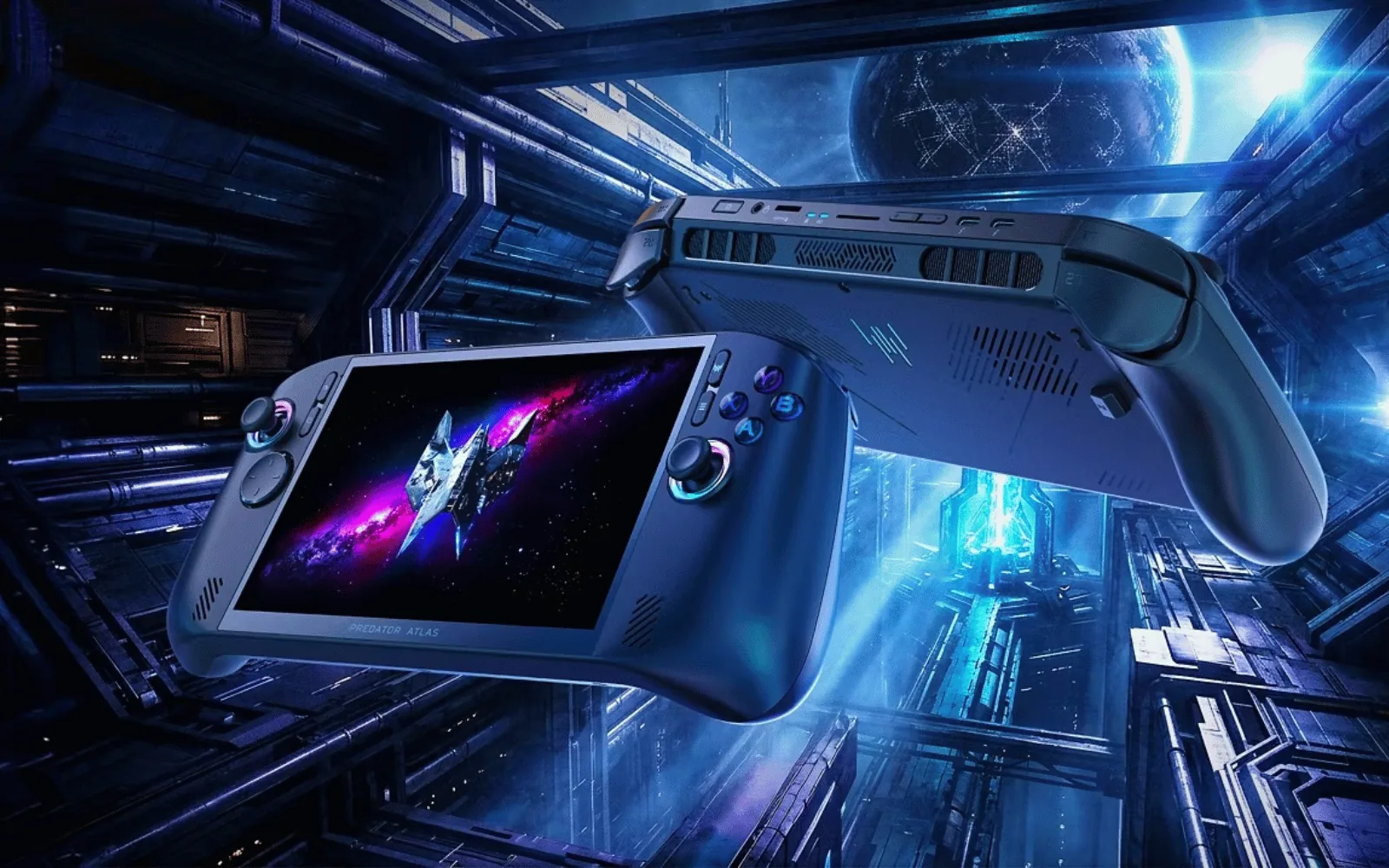
Predator Atlas 8 is built on a simple tension. It looks like a handheld console, but it does not behave like one. Windows 11, PC launchers, Intel Arc hardware, external accessories, storage expansion and all the usual PC-side complications make it a different kind of machine. That is why it fits better under Beyond PC than under normal console talk. This is not a signal that console coverage is becoming part of the site. A PlayStation, Switch or Xbox story still needs a very strong reason to appear here. Predator Atlas 8 gets attention because it stands on the PC side of the border, even while borrowing the shape of a handheld console. A small Windows gaming machine with Predator branding, modern PC hardware and a handheld body is not something to praise blindly. It is something to watch carefully.