PCD TOP 5 KEYBOARDS | FIVE DIFFERENT WAYS TO GET IT RIGHT
A useful Top 5 should not pretend that every PC player needs the same keyboard. Competitive shooters reward extremely fast reset points and precise actuation, long RPG or strategy sessions demand comfort and a layout that does not throw useful keys away, while work, writing and everyday desktop use can expose weaknesses that never appear in a latency chart. Our selection therefore covers five genuinely different approaches rather than filling the list with five nearly identical Hall Effect boards. Wooting represents the current performance standard, Keychron combines magnetic-switch gaming features with serious custom-keyboard construction, Razer attacks the esports category with an aggressively tuned optical design, SKYLOONG turns a full-size keyboard into an almost absurd collection of modules and secondary functions, and ASUS keeps the price and learning curve under control with a durable, quiet and practical alternative. Raw speed matters here, but so do software, typing feel, layout, build, connectivity and whether the keyboard remains pleasant after the excitement of the specification sheet disappears. None of these five is perfect for every desk, but each one has a clear reason to exist and a category it can defend without excuses.
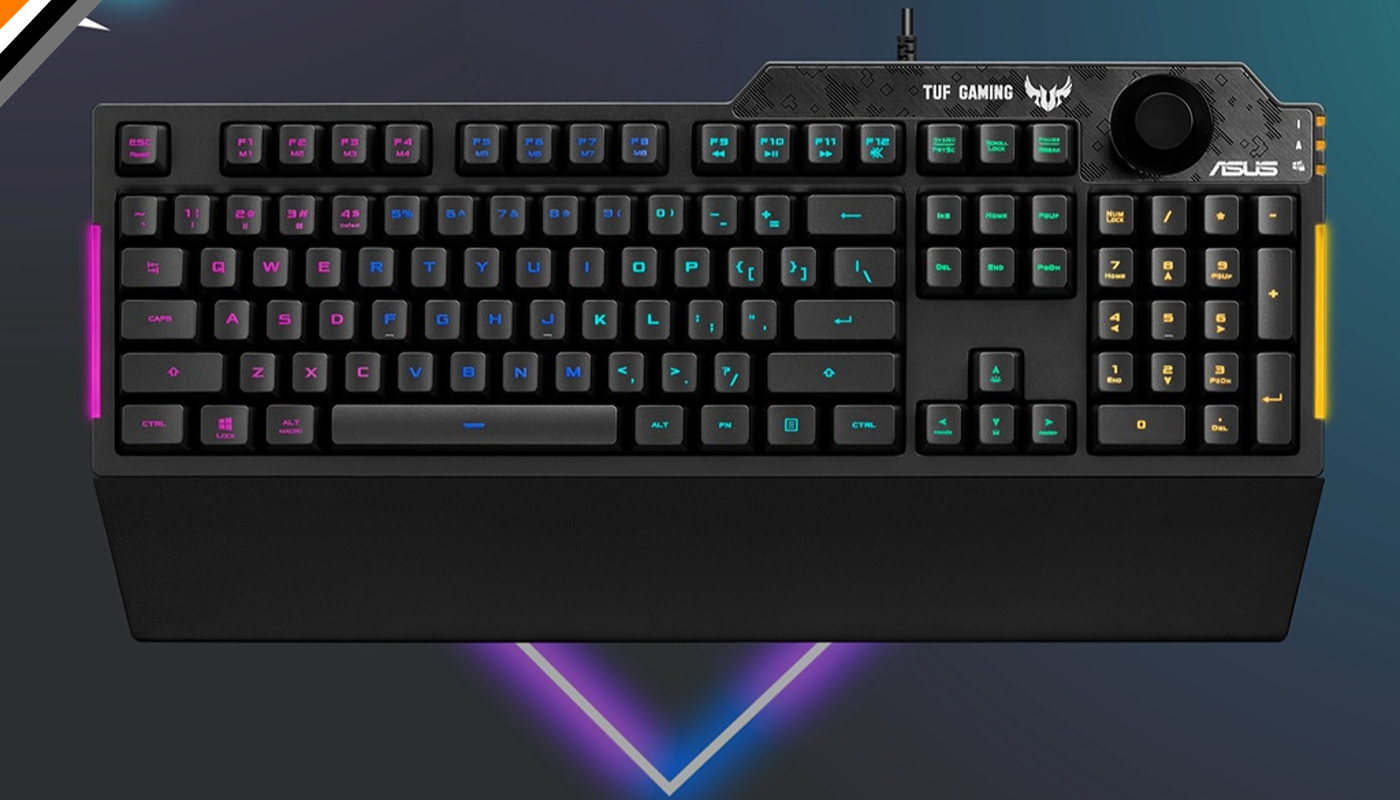
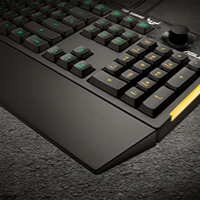
 ASUS TUF GAMING K1 | QUIET, DURABLE AND HONESTLY AFFORDABLE
The ASUS TUF Gaming K1 earns its place by refusing to compete in a category it was never built to win. It does not offer magnetic switches, per-key actuation tuning or the metallic construction of models costing several times more. Instead, it delivers a quiet, cushioned and tactile full-size experience aimed at players who want a reliable gaming keyboard without turning the purchase into a specialist hobby. Its 19-key rollover is sufficient for normal gaming combinations, every key can be programmed through Armoury Crate, onboard memory keeps configurations available without constant software use, and on-the-fly macro recording adds practical value for strategy games, MMOs and desktop shortcuts. The dedicated volume knob is far more useful during daily use than another decorative display, while the detachable wrist rest and two height positions make long sessions easier on the hands. ASUS has also reinforced the plastic frame, applied a coating tested against abrasion and perspiration, and rated the design for spills of up to 300 ml. Five-zone RGB is less precise than per-key lighting, but the illuminated side bars give the K1 enough visual identity without pretending to be a premium mechanical board. Its limitations remain obvious: the keys lack the crisp response and replaceable-switch freedom of mechanical competitors, the large chassis occupies significant desk space, and demanding competitive players will gain more from the adjustable reset behaviour of Wooting, Keychron or Razer. Armoury Crate can also feel unnecessarily large for basic keyboard configuration. None of that removes the K1’s value. Quiet operation, a number pad, proper media control, spill resistance and comfortable key action matter to a large group of PC users who are poorly served by expensive compact boards. The ASUS TUF Gaming K1 is the least advanced keyboard in this selection, but it may also be the easiest one to recommend to a normal player who needs one affordable device for gaming, typing and years of daily use.
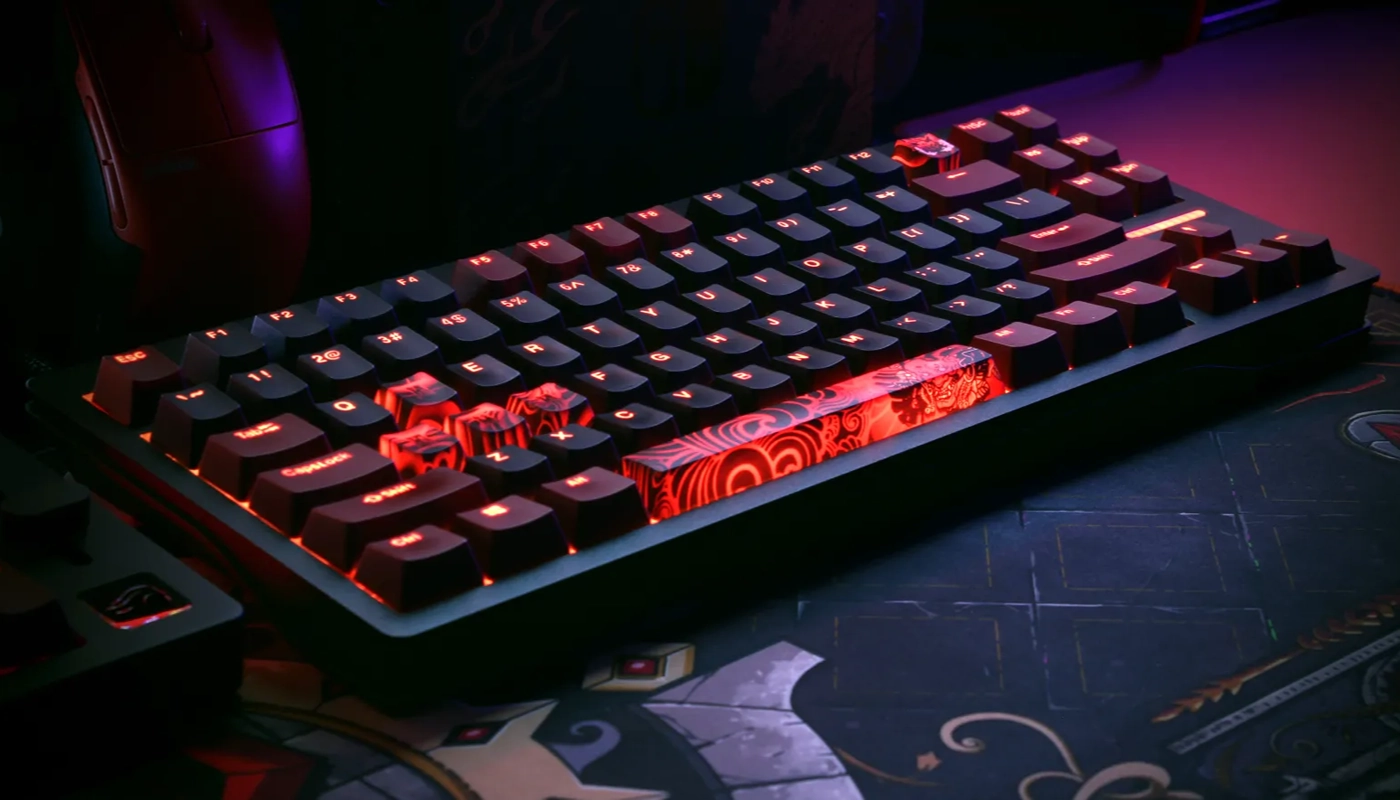
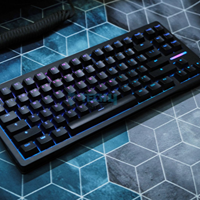
 WOOTING 80HE | THE COMPLETE PERFORMANCE STANDARD
Wooting did not secure the first position by simply attaching an 8K badge to another magnetic keyboard. The 80HE brings together Hall Effect switches, per-key adjustable actuation, Rapid Trigger, analog input and true synchronized 8,000 Hz scanning and polling in a package that feels unusually mature for hardware aimed so heavily at competitive play. Its greatest advantage is control: a movement key can be set to react almost immediately, another key can retain a deeper and safer actuation point, and Rapid Trigger can reset an input as soon as the switch begins moving upward rather than waiting for a traditional fixed reset position. That can make counter-strafing, repeated movement and rhythm-game inputs feel exceptionally direct, but the keyboard is not reduced to one aggressive configuration. Wootility remains one of the cleanest keyboard utilities available, running through a lightweight application or browser while keeping advanced functions understandable rather than burying them behind several layers of gaming-brand menus. The 80% layout retains the navigation cluster and arrow keys without consuming the desk space of a full-size board, while pre-lubricated switches, stabilizers and internal acoustic material give it a much more controlled typing sound than older performance-first keyboards. It is wired-only, expensive and more keyboard than a casual player strictly needs; 8K operation also offers a technical advantage that will be far less dramatic in normal play than the marketing number suggests. Yet no other model in this group combines elite latency, precise analog behaviour, excellent software and long-term hardware flexibility quite as convincingly. The Wooting 80HE is not first because every buyer needs its maximum performance, but because it leaves the fewest serious weaknesses once gaming, configuration and everyday use are judged together.
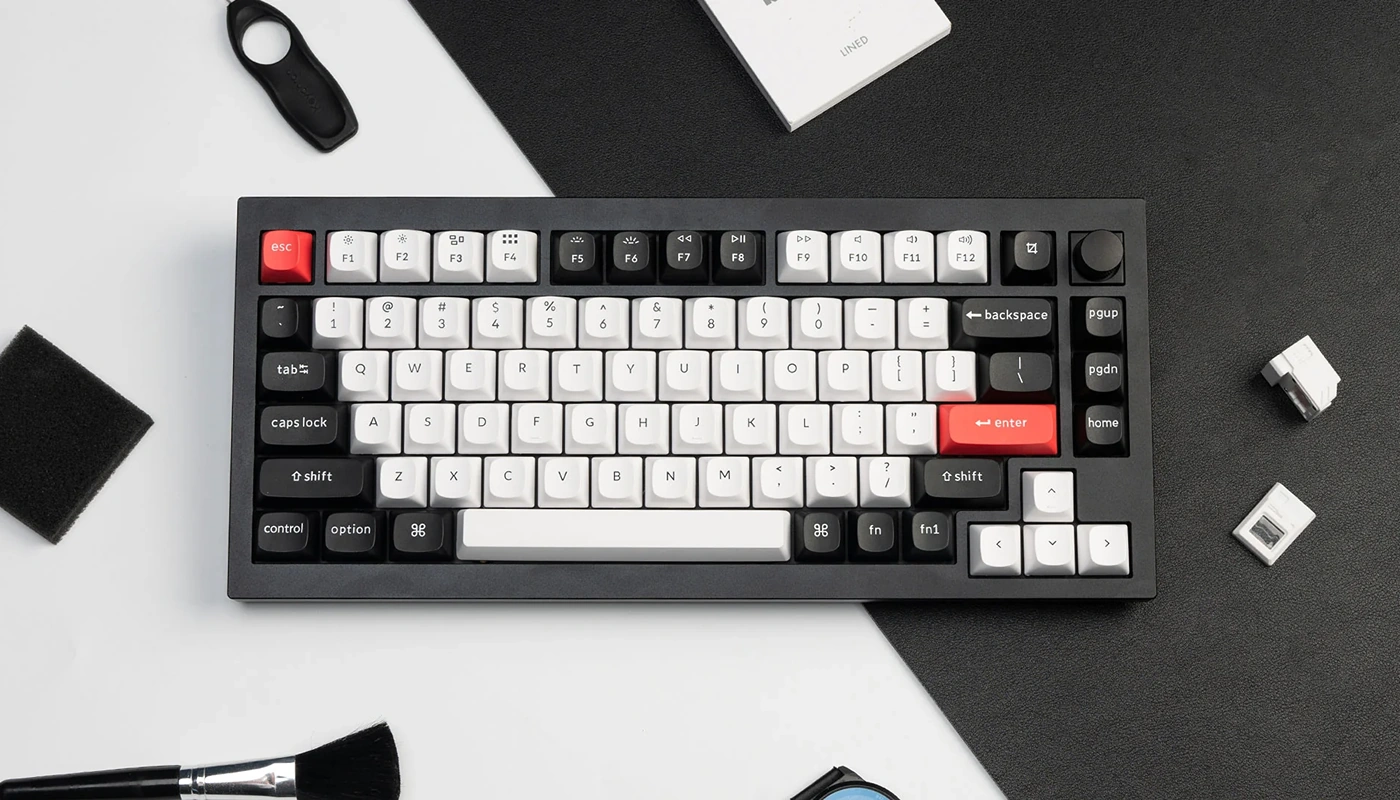
KEYCHRON Q1 HE | PREMIUM GAMING WITHOUT THE PLASTIC SHELL
The Keychron Q1 HE is the choice for someone who wants magnetic-switch gaming technology but refuses to accept that a fast keyboard must feel like a lightweight esports accessory. Its CNC-machined aluminium body gives the board real physical presence, while the double-gasket construction produces a softer and more isolated keystroke than the rigid mounting found in many mainstream gaming models. Gateron double-rail magnetic switches provide adjustable actuation and Rapid Trigger-style control, allowing the Q1 HE to move from a comfortable writing configuration to a much more sensitive gaming profile without changing the hardware. The 75% layout keeps the function row, arrow keys and a compact navigation column, which makes it easier to live with than a 60% board while remaining noticeably smaller than a traditional full-size keyboard. Keychron also gives it a practical connection system: low-latency 2.4 GHz wireless runs at up to 1,000 Hz, Bluetooth handles secondary devices, and USB-C remains available for wired use and charging. That versatility immediately separates it from the wired-only Wooting and Razer models, especially on a desk shared between a gaming PC, laptop and tablet. The compromises are mostly tied to its premium construction. It is heavy, not particularly portable and less focused on absolute latency than the Wooting 80HE, while magnetic-switch compatibility is more limited than the broad mechanical-switch ecosystem associated with ordinary hot-swappable Q-series boards. Stabilizer consistency has also received some criticism, which is disappointing at this price. Even so, the Q1 HE feels like a proper high-end keyboard before its gaming features are even activated. It types well, sounds controlled, looks restrained and does not force the owner to choose between a custom-keyboard atmosphere and modern Hall Effect performance. For mixed gaming, writing and everyday work, it may be the most balanced product in the entire selection.
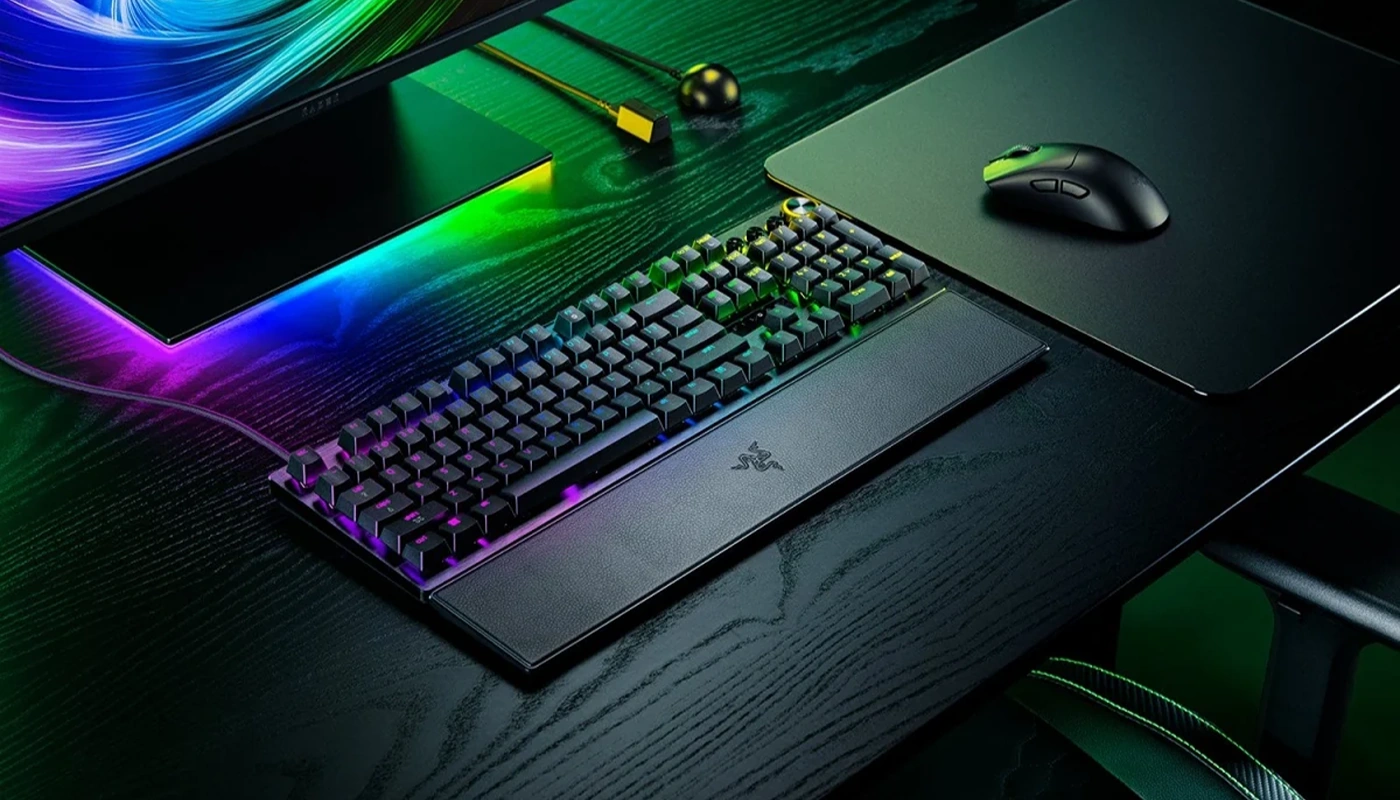
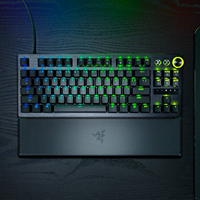
RAZER HUNTSMAN V3 PRO TKL 8KHZ | BUILT FOR COMPETITIVE PRESSURE
The Razer Huntsman V3 Pro TKL 8KHz is the most openly competitive keyboard here. It does not try to look like a custom board or turn itself into a wireless productivity companion; it is a wired tenkeyless instrument built around fast movement, repeatable inputs and adjustments that can be made in the middle of a session. Razer’s second-generation Analog Optical switches support actuation across a 0.1–4.0 mm range, Rapid Trigger and Snap Tap, while the 8,000 Hz HyperPolling system pushes input updates at intervals as short as 0.125 milliseconds. Optical sensing also avoids some of the environmental sensitivity associated with magnetic systems, and Razer has added improved shielding, lubrication and thicker internal dampening to make this version feel and sound more refined than the earlier Huntsman V3 Pro TKL. The onboard LED array deserves particular credit because actuation depth and Rapid Trigger sensitivity can be adjusted without immediately opening Synapse. That matters on tournament systems, shared PCs or any setup where software should not stand between the player and an essential change. Performance is excellent, the chassis feels solid and the compact layout leaves more room for low-sensitivity mouse movement. The weaknesses are easier to notice outside competitive gaming. It is wired-only, the sensitive switches can become tiring or error-prone when configured too aggressively, and typing noise remains higher than ideal for a quiet room. The wrist rest is useful but does not transform it into a relaxed office keyboard, and Synapse remains a heavier software environment than Wootility or Keychron Launcher. Wooting still offers the stronger overall ecosystem and more hardware flexibility, but Razer has created a serious alternative for players who want rapid optical input, familiar onboard controls and an esports-focused design that feels ready without extensive modification. It is narrow in purpose, but extremely convincing inside that purpose.
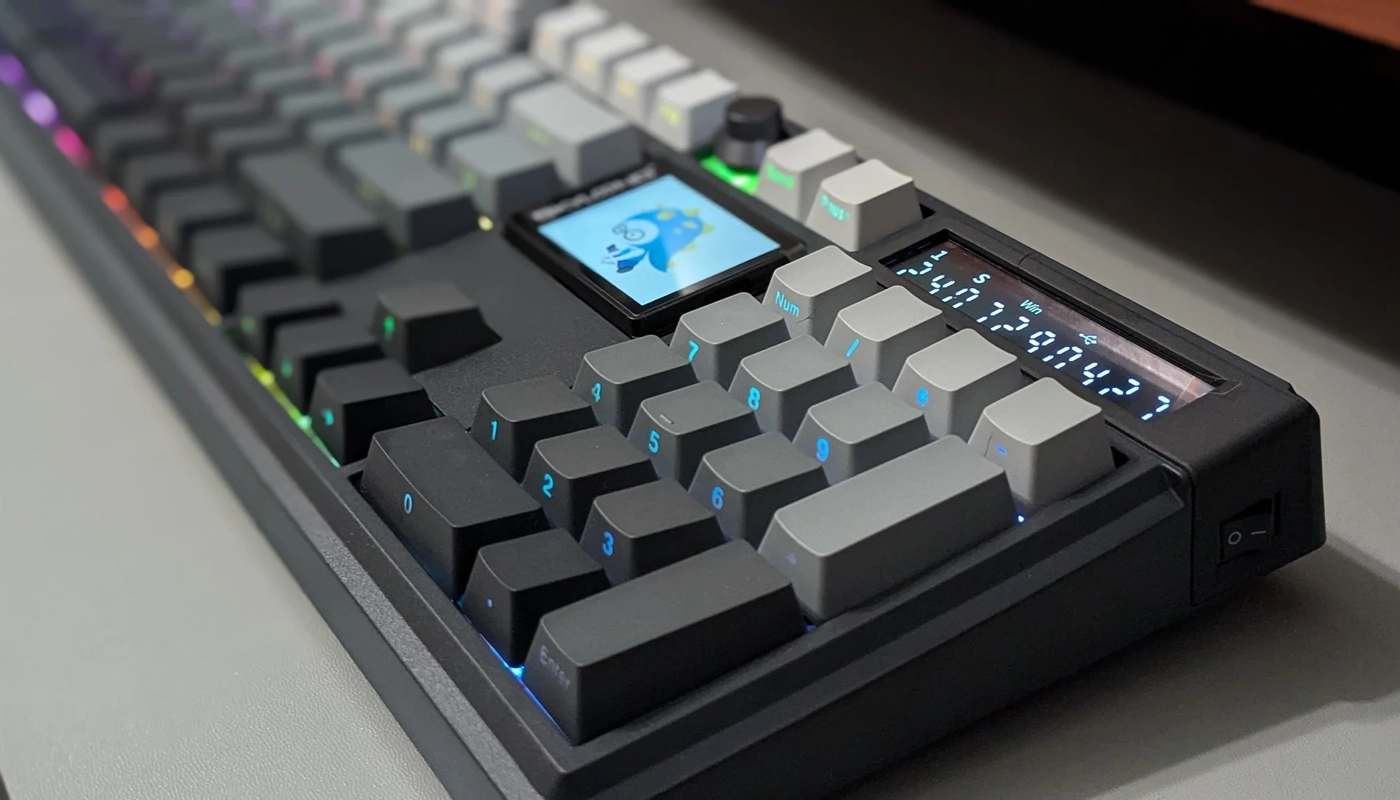
 SKYLOONG GK104 PRO | THE FEATURE MONSTER
The SKYLOONG GK104 Pro looks as though several different keyboard concepts were combined before anyone in the room was willing to remove a feature. It is a full-size mechanical board with tri-mode connectivity, hot-swappable switches, RGB lighting, a programmable split-spacebar system, interchangeable modules, a display and a dedicated calculator section, while wired operation can reach an 8,000 Hz polling rate on supported versions. Some configurations add rotary controls, screen modules and even selectable typing sound effects through the built-in speaker. This is not restrained industrial design, and it will not appeal to someone who wants a blank aluminium rectangle with one discreet status light. For the right owner, however, the GK104 Pro is one of the most entertaining and functionally ambitious keyboards available. The number pad remains present, the calculator can be genuinely useful during work, the screen provides another layer of customization, and the split spacebar can turn a normally oversized single-purpose key into several programmable inputs. Its gasket structure, foam treatment and pre-lubricated components also give the board a better stock typing character than its gadget-heavy appearance might suggest. The main weakness is software, and it is serious enough to prevent the GK104 Pro from ranking higher. Configuration can feel poorly translated, visually cluttered and less reliable than the hardware deserves, while learning how its modules, layers and unusual functions interact takes patience. The full-size footprint is also substantial, and several extras risk becoming novelties after the first weeks of ownership. Yet judging this keyboard only by conventional minimalism misses its point. SKYLOONG has made a board for the user who enjoys experimenting, remapping and discovering secondary functions rather than treating a keyboard as a sealed appliance. It is imperfect, busy and occasionally awkward, but no other product in this Top 5 offers the same mixture of full-size practicality, mechanical customization and unapologetic excess.
| -PRODUCT- | -WHAT YOU GET- | -GLOBAL SCORE- |
| ASUS TUF GAMING K1 KEYBOARD | durable everyday performance | 86 / 100 |
| WOOTING 80HE KEYBOARD | competitive control without compromise | 87 / 100 |
| KEYCHRON Q1 HE KEYBOARD | premium typing, serious speed | 87 / 100 |
| RAZER HUNTSMAN V3 PRO KEYBOARD | esports speed, instant response | 83 / 100 |
| SKYLOONG GK104 PRO KEYBOARD | maximum features, minimum restraint | 83 / 100 |