GPU BRANDS | HOW MAJOR GPU MAKERS SHAPE THE GAMING EXPERIENCE
When you buy a graphics card, you are not simply selecting a chip from NVIDIA or AMD, but a fully engineered product that defines how that chip behaves in real-world gaming conditions. The GPU silicon itself is only the base layer of performance, while the actual experience is shaped by the add-in board (AIB) partner who designs the cooling system, power delivery, PCB layout, firmware tuning, and even the acoustic profile of the card. This is why two GPUs with identical specifications can feel completely different in practice, with variations in sustained boost clocks, thermal stability, coil whine behavior, noise levels, and long-term reliability under gaming or rendering workloads. In modern generations, especially with high-power GPUs like RTX 4080/4090 class or RX 7900 series cards, AIB design has become even more important because thermal and power constraints are tighter than ever, meaning efficiency and cooling quality often matter more than small differences in factory overclock numbers.
asus premium gpu brand known for overbuilt cooling and strong stability.
ASUS operates at the premium end of the GPU market, and their design philosophy revolves around engineering-heavy solutions that prioritize thermal headroom, long-term stability, and controlled acoustics even under sustained gaming loads. Their ROG Strix series is widely considered one of the most overbuilt consumer GPU lines, often featuring massive triple-fan cooling systems, thick vapor chamber or heatpipe arrangements, reinforced metal frames, and extremely strong VRM designs that allow the GPU to maintain higher boost clocks without thermal throttling. These cards are not just about peak performance but about sustaining performance over long sessions, which becomes especially noticeable in demanding modern games that push GPUs close to their power limits. ASUS also integrates dual BIOS functionality in many models, allowing users to switch between quiet and performance profiles, and their Axial-tech fan design improves airflow pressure while reducing turbulence noise, which contributes to their reputation for quieter high-end operation compared to many competitors at similar power levels. Below the Strix tier, ASUS TUF Gaming cards focus more on durability and balanced performance rather than extreme overclocking potential, often using simplified but highly efficient cooling solutions, high-grade components certified for longevity, and a more industrial design approach that prioritizes reliability over flashy aesthetics. The Dual series, on the other hand, is designed for compact builds where space constraints matter, using smaller dual-fan configurations that trade some thermal headroom for physical compatibility. Across all tiers, ASUS benefits from its Auto-Extreme manufacturing process, which automates PCB assembly and soldering to reduce production variance, improving consistency and reducing the chance of defects, which is one of the reasons ASUS cards are often perceived as “safe long-term investments” in enthusiast communities.

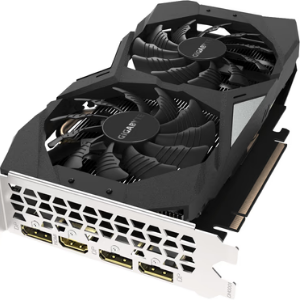
gigabyte gpu brand known for practical cooling designs and solid value performance.
Gigabyte approaches GPU design with a strong emphasis on practical cooling efficiency and value-oriented engineering, centering most of their lineup around the WINDFORCE cooling system, which focuses on maximizing airflow distribution across the heatsink through a combination of alternate spinning fans, direct-touch heatpipes, and layered fin stacks designed to efficiently spread heat across a large surface area. Their cooling philosophy is less about extreme overbuilding and more about achieving stable, predictable thermal behavior at a reasonable cost, which makes them a popular choice for users who want reliable performance without paying a premium for enthusiast-grade acoustics or materials. In higher-end AORUS models, Gigabyte adds more aggressive cooling solutions, stronger VRM implementations, RGB-heavy aesthetics, and sometimes additional features such as LCD displays that show system stats like temperature and clock speeds, targeting users who want a more visually expressive build without moving into ultra-premium pricing territory. Mid-range Gaming OC and Eagle models are where Gigabyte’s value proposition becomes most visible, offering solid factory overclocks, decent thermal designs, and generally stable long-term performance, although in some cases they may run slightly louder or warmer compared to premium ASUS or MSI equivalents under full load. However, Gigabyte often compensates for this with strong PCB designs and competent VRM layouts that ensure consistent power delivery, allowing the GPU to maintain boost clocks reliably during extended gaming sessions. Their software ecosystem has also improved significantly over recent generations, offering more refined control over fan curves, power limits, and performance tuning, making them a balanced choice for users who want decent customization without paying flagship-level prices.
msi gpu brand known for quiet cooling and stable long-term performance.
MSI is widely recognized for its strong focus on thermal stability, quiet operation, and user-friendly performance tuning, with its TRI FROZR cooling architecture serving as a foundation across many product generations. This design typically combines large heatsinks, multiple TORX fan configurations that optimize airflow concentration, and carefully engineered heatpipe layouts that distribute heat evenly across the cooling assembly, allowing MSI cards to maintain stable boost clocks without frequent thermal fluctuations. Their Gaming X Trio and SUPRIM series represent the premium segment of their lineup, often competing directly with ASUS ROG Strix in terms of noise levels and thermal performance, and in many cases delivering exceptionally quiet operation even under full gaming load, which makes them particularly attractive for high-end silent or near-silent PC builds. A major strength of MSI lies in its software integration and tuning ecosystem, especially through MSI Afterburner, which has become one of the industry-standard tools for GPU overclocking and monitoring, giving users granular control over voltage curves, fan behavior, power limits, and performance profiles. This makes MSI particularly appealing to enthusiasts who enjoy fine-tuning their hardware without dealing with overly complex or restrictive software environments. MSI also emphasizes long term durability through reinforced PCBs, high-quality capacitors, and improved thermal padding on memory and VRM components, which helps ensure stability under extended load conditions. Aesthetically, MSI cards tend to lean toward a clean, modern design language with subtle RGB integration, making them a popular choice for builds that aim for a balanced mix of performance, silence, and visual refinement.

sapphire gpu brand known for strong Radeon optimization and efficient cooling.
Sapphire is arguably the most dominant and respected AMD-focused GPU partner, known for consistently delivering some of the most stable and efficient Radeon-based graphics cards across multiple generations. Their Nitro+ series represents the top tier, often featuring oversized cooling systems, dual BIOS support, reinforced power delivery systems, and finely tuned factory firmware that allows AMD GPUs to sustain higher boost clocks more consistently under real gaming loads. Sapphire places strong emphasis on thermal consistency not only for the GPU core but also for VRAM modules and VRM components, which is critical for Radeon cards where memory thermals can significantly impact stability and performance. The Pulse series serves as their mid-range offering, focusing on value efficiency while still maintaining solid cooling performance and reliable build quality, making it a popular choice for gamers who want Radeon performance without paying for premium aesthetics or extreme cooling headroom. One of Sapphire’s biggest strengths is its “out-of-the-box optimization,” meaning their cards typically require little to no manual tuning to achieve stable performance, which is a major advantage for users who prefer plug-and-play simplicity. This consistency has made Sapphire almost a default recommendation within the AMD community, especially for users who prioritize stability and thermal efficiency over flashy design features or aggressive factory overclocks.

zotac gpu brand known for compact designs and efficient cooling.
Zotac is a GPU brand that primarily focuses on compact engineering and practical performance solutions, making it especially relevant for users building small form factor or ITX systems where physical space, airflow constraints, and thermal density play a major role in component selection. Their Twin Edge series is designed around reduced PCB size and more compact cooling assemblies, which allows the card to fit into tighter cases without sacrificing core gaming performance, although this naturally comes with slightly higher operating temperatures compared to larger triple-fan designs from premium competitors. Despite the smaller footprint, Zotac still maintains stable power delivery and reliable boost behavior under load, which makes these cards surprisingly consistent in real gaming scenarios where sustained performance matters more than peak benchmark numbers. Their higher-tier AMP and Extreme variants expand on this foundation by introducing improved heatsinks, stronger fan configurations, and mild factory overclocks that push performance slightly higher, while still maintaining Zotac’s core identity of efficiency and compact design rather than aggressive thermal overengineering or extreme enthusiast tuning.
palit gpu brand known for affordable pricing and solid everyday performance.
Palit operates strongly in the value-driven segment of the GPU market, where the primary focus is delivering stable gaming performance at competitive pricing without unnecessary emphasis on premium materials, aggressive aesthetics, or enthusiast-level overclocking potential. Their design philosophy prioritizes functional cooling solutions, straightforward PCB layouts, and cost-efficient manufacturing, which allows them to consistently offer GPUs that perform within expected specifications while remaining accessible to a wider audience of gamers. In practice, Palit cards tend to provide reliable frame rates and stable boost behavior in gaming workloads, but without the additional thermal headroom, acoustic refinement, or feature-rich extras that are commonly found in higher-tier ASUS, MSI, or Gigabyte models. This makes them particularly attractive for budget-conscious builds where the goal is maximum performance per dollar rather than long-term overclocking flexibility or ultra-low noise operation, and where a simple, dependable GPU solution is more important than premium build complexity or visual enhancements.
powercolor gpu brand known for strong and aggressive cooling designs.
PowerColor is a Radeon-focused GPU manufacturer that has built a strong reputation within the AMD ecosystem by consistently delivering performance-oriented designs that push closer to the full potential of the underlying GPU silicon, particularly in their Red Devil series, which represents their flagship tier with oversized cooling systems, reinforced VRM configurations, and aggressive factory tuning that allows Radeon GPUs to sustain higher boost clocks under extended gaming loads. These cards are often engineered with a focus on thermal stability and power delivery efficiency, ensuring that both the GPU core and memory modules remain within optimal temperature ranges even during demanding workloads, which is especially important for modern AMD architectures where memory and power behavior significantly impact overall performance consistency. The Hellhound series sits slightly below this tier and is designed for users who want a more balanced experience, offering strong but quieter cooling solutions, stable factory settings, and a more restrained power profile that prioritizes acoustics and long-term reliability over maximum performance extraction, making PowerColor a brand that effectively covers both enthusiast and mainstream Radeon users depending on their performance and noise priorities.

nvidia known for efficient architecture & strong entry-level performance
NVIDIA builds its GPU lineup around architectural efficiency and strong software integration, focusing on performance-per-watt rather than raw hardware scaling. The GeForce RTX series combines ray tracing cores, tensor acceleration, and technologies like DLSS to maintain smooth performance even on mid-range and lower-end cards. In the entry-level segment, models like the “xx50” and “xx60” class GPUs are designed to deliver stable 1080p gaming performance without high power demands or premium pricing. NVIDIA’s designs, especially Founders Edition cards, emphasize compact cooling solutions and predictable thermal behavior, often using dual-fan or vapor chamber systems depending on the generation. This makes them well-suited for smaller builds and prebuilt systems where airflow is limited, while partner models from ASUS, MSI, and Gigabyte expand performance with larger cooling and factory overclocks. On the software side, NVIDIA stands out with frequent driver updates and features like DLSS and Reflex, which improve performance and responsiveness across modern games. Even at the entry level, the ecosystem is stable and well-optimized, making NVIDIA a common starting point for gamers targeting reliable 1080p and light 1440p gaming performance.
pny known for straightforward designs & reliable oem-focused performance
PNY builds its GPU lineup with a strong focus on simplicity, stability, and OEM reliability, often acting as a close manufacturing and distribution partner for NVIDIA-based graphics cards. Their approach is less about aggressive factory overclocks or flashy design language and more about delivering reference-aligned performance that stays close to NVIDIA’s intended specifications. This makes PNY cards especially common in prebuilt systems and workstation setups where consistency and long-term stability are more important than extreme tuning. Cooling solutions on PNY cards are generally practical and functional, using standard dual-fan or blower-style designs depending on the model segment. While they don’t usually compete with premium custom designs from brands like ASUS or MSI in terms of acoustics or thermal headroom, they maintain safe operating temperatures and predictable behavior under load, which is often exactly what system integrators look for. Higher-end variants may include improved heatsinks or slightly enhanced boost behavior, but the overall philosophy remains conservative and reliability-driven. On the software and feature side, PNY relies heavily on NVIDIA’s ecosystem, meaning performance benefits from the same drivers, DLSS support, and feature stack as any other GeForce card. The main difference is not in functionality but in branding and cooling implementation, positioning PNY as a no-nonsense option for users who want NVIDIA performance without paying extra for aggressive overengineering or premium aesthetics.

what really matters in practice
In real-world gaming and productivity workloads, GPU brand differences are rarely about raw FPS and are instead defined by sustained performance behavior under heat and power constraints, where cooling efficiency determines whether a GPU can maintain boost clocks or begins to throttle during long sessions, while VRM quality influences stability under load spikes and overclocking headroom. Acoustic behavior is another major differentiator, as fan curve design, bearing quality, and airflow optimization can result in significantly different noise profiles even when two cards run at similar temperatures, meaning one GPU can feel nearly silent while another becomes noticeably audible in the same system. Coil whine behavior, while partly dependent on silicon lottery, can also vary between brands due to PCB design and power filtering quality, which is why premium models often show more consistent acoustic performance. Physical design constraints are equally important, as GPU size, thickness, power connector placement, and cooling orientation directly affect case compatibility and airflow efficiency, meaning a well-performing GPU on paper can still underperform if installed in a poorly ventilated or cramped chassis. Over recent generations, especially in RTX 40-series and RX 7000-class GPUs, the performance gap between AIB partners has narrowed in terms of FPS output, but the gap in thermals, noise levels, and long-term stability has actually become more noticeable, making brand choice more about user experience than raw benchmark numbers.
choosing what’s right for you
Choosing a GPU brand ultimately depends on your priorities rather than raw specifications, as premium models like ASUS ROG Strix, MSI SUPRIM, and Gigabyte AORUS are designed for users who value quiet operation, thermal headroom, and long-term stability over cost efficiency, often delivering better sustained performance in demanding workloads due to superior cooling and power delivery systems. Mid-range options such as ASUS TUF Gaming, Gigabyte Eagle, and Zotac Twin Edge provide a more balanced approach, focusing on affordability and compatibility while still delivering stable gaming performance suitable for the majority of users who do not require extreme overclocking or ultra-low noise levels. For AMD users, Sapphire Nitro+ and PowerColor Red Devil remain among the strongest choices due to their consistent thermal optimization and strong out-of-the-box performance tuning, often outperforming similarly priced competitors in stability and memory cooling efficiency. In practical terms, the best GPU choice is less about chasing marginal benchmark differences and more about matching the card’s thermal design, noise profile, and physical dimensions to your specific build, usage patterns, and long-term expectations.