EA SPORTS FC27 GAMEPLAY REVEALED | MORE CONTROL, SAME INVISIBLE GRID
EA has presented the official Gameplay Deep Dive for EA Sports FC 27, leading with a promise that should address one of the series’ oldest weaknesses: greater control across every mode. The publisher says community feedback demanded less automation, so the new edition reduces automatic defensive actions, increases the importance of manual tackles and introduces more deliberate control over crosses, corners, through passes and attacking runs. On paper, this is exactly the direction FC needs. The pcdoorz editorial team began watching the presentation ready to examine those changes, but interest disappeared almost as soon as the players started moving. Footballers once again appeared to glide laterally over the grass with the weightless ease of skaters, shifting direction without a convincing transfer of body weight or firm contact between boots and the playing surface. We did not reach the end of the presentation. Once the same familiar motion returned beneath another list of features promising greater realism and control, there seemed little reason to keep pretending that the central problem had been addressed.
manual defending cannot create manual football alone
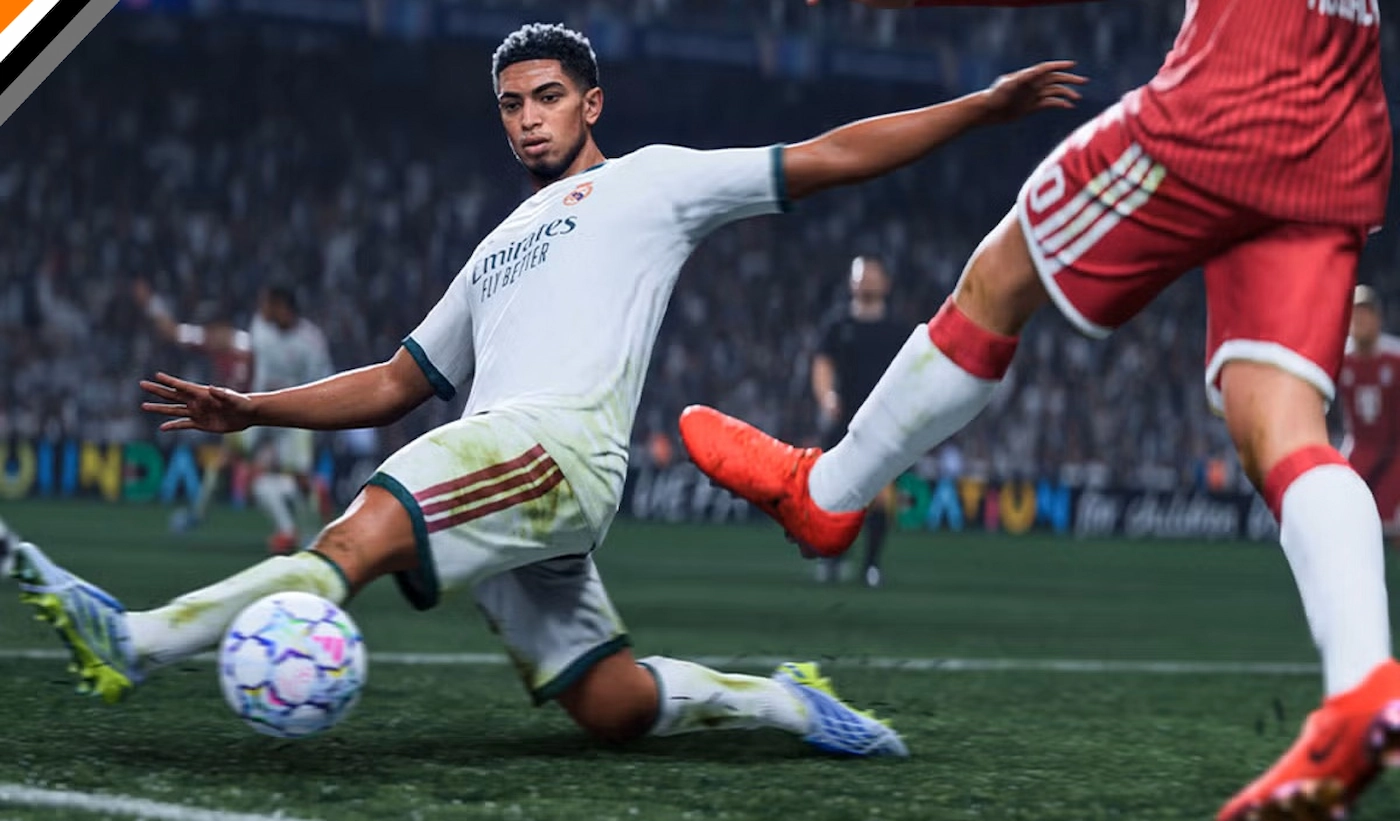
EA’s defensive changes are substantial enough to deserve recognition. AI-controlled defenders should attempt fewer automatic tackles, possess a shorter interception reach and remain in supporting positions until the user takes control. Manually controlled players receive quicker jockey movement and greater stand-tackle reach, while teammate contain is being weakened so that it cannot press effectively without direct intervention. These changes could make defending more skill-based and reduce situations in which the computer quietly wins possession for a player who did very little. The problem is that manual defending represents only one part of manual football. A game can demand a tackle button at the correct moment and still feel highly automated everywhere around that action. FC’s movement continues to suggest that the player is selecting from a network of permitted paths and animation transitions rather than directly controlling a footballer’s balance, momentum and orientation. The command may come from the player, but the motion completing it often belongs to the animation system. Increasing jockey speed may improve responsiveness, yet faster movement across the same invisible tracks does not automatically produce more physical or believable football.
the pitch still resembles a simplified movement grid
The deeper issue is not simply that players look as though they are skating. It is the almost complete absence of what we would call manuality: the feeling that a precise input has created a precise physical action. In convincing football gameplay, receiving the ball should depend on approach angle, foot position, speed and body orientation. Turning should require balance to move from one leg to the other. A defender changing direction should visibly plant a foot, absorb momentum and then accelerate again. In FC, too many movements still look like transitions between predefined nodes. A footballer moves toward one accepted position, an animation takes over, and the body slides into the next permitted state with very little friction between them. This is why the series can appear smooth while feeling strangely disconnected. Smoothness is not the same as physical continuity. The player may be issuing commands constantly, but the result resembles navigation through a limited network more than free control of a human body and a loose ball. The visible grass says football; the movement beneath it says arcade board.
more manual passing, inside the same automated body
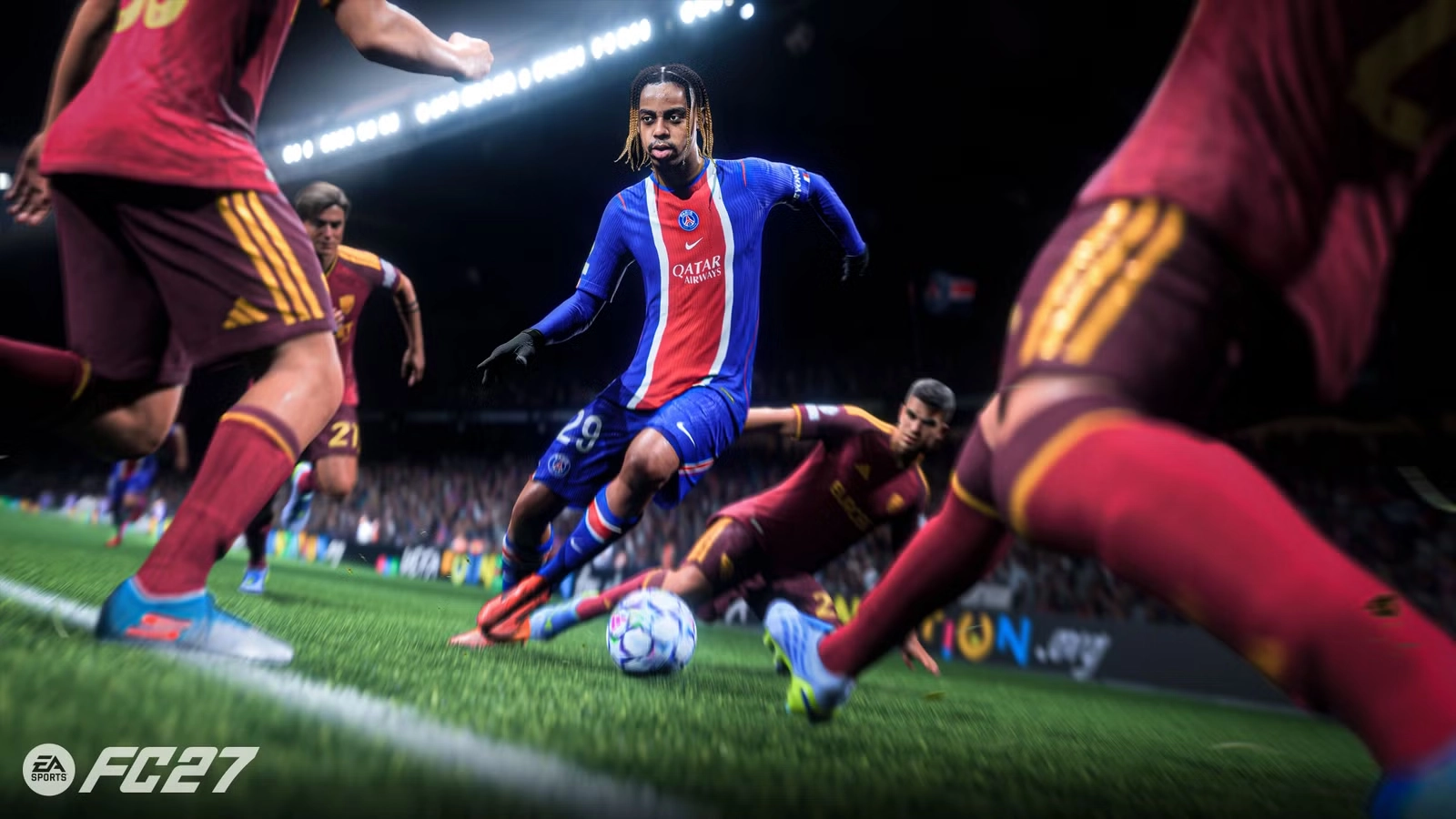
FC 27 does introduce several systems designed to place more responsibility on the user. Ground and lobbed through passes should now follow directional input more strictly instead of being heavily redirected toward open lanes. Dinked passes are becoming fully manual, while crosses will be aimed into space rather than automatically locked onto a specific receiver. Corners will allow direct control of attackers before delivery, and manually triggered curved runs can send teammates around defenders or into open areas. These are sensible changes, and poor aim should now produce a poor pass or a cross that misses everyone. Yet manual ball direction cannot completely repair automated physical movement. A pass may travel closer to the selected angle, but the receiver still has to enter one of the game’s animation chains to collect it, turn and continue. A curved run may be triggered manually, but the running player still appears guided along a prepared arc instead of continuously negotiating stride, balance and surrounding bodies. EA is adding more decision points to its system, but the system between those points still looks insufficiently complex. The user may gain more responsibility for choosing the destination while remaining separated from the physical process of reaching it.
new features cannot hide an old foundation
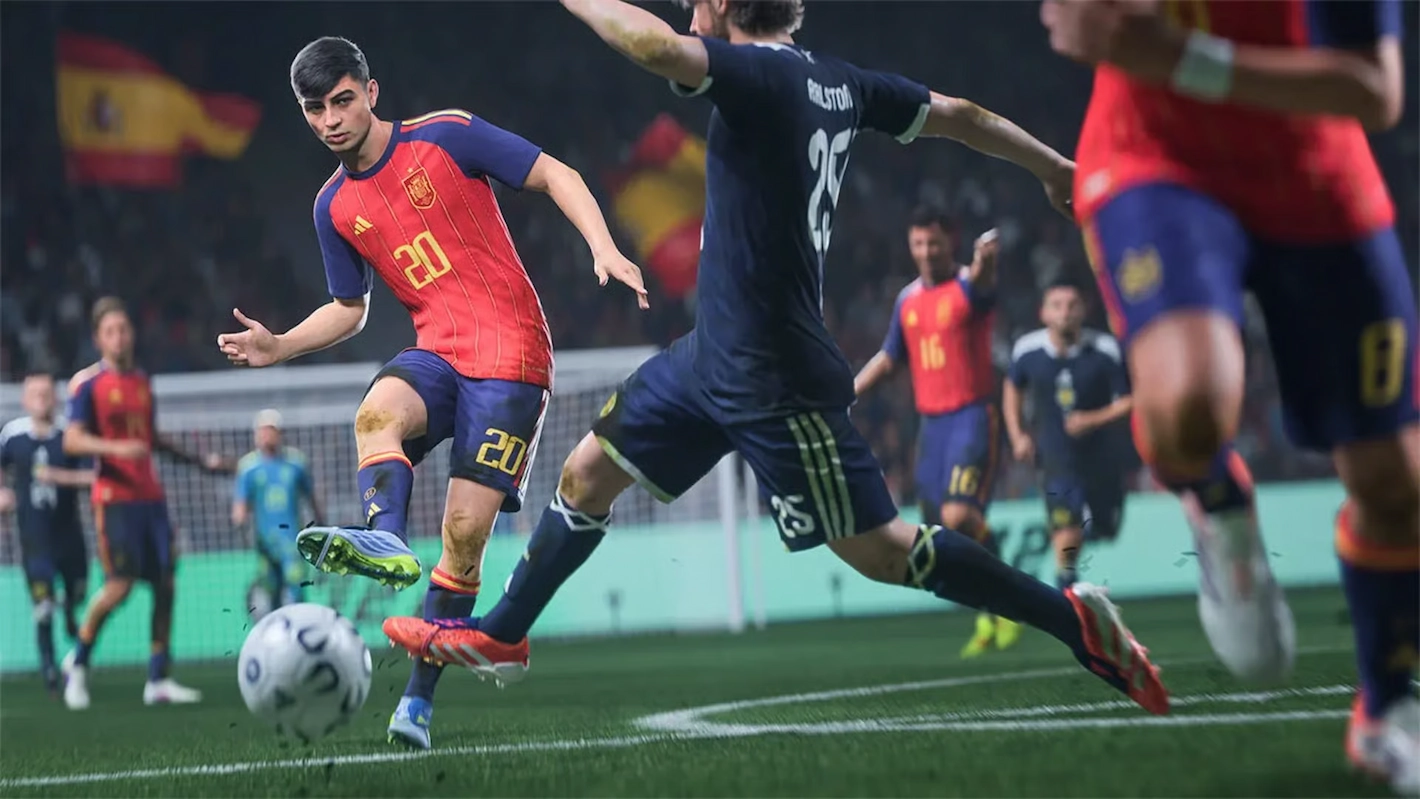
Other announced changes include smarter attacking spatial awareness, limited distances for manually triggered runs, off-balance dribbling and a broad rebalancing of PlayStyles against ordinary player attributes. Off-balance dribbling is intended to let elite players remain controllable after contact, while attackers should recognize available space and make more contextual curved runs. Again, none of these ideas is inherently poor. The concern is that FC continues to solve football through additional animation states and assistance rules instead of rebuilding the feeling beneath them. A new stumbling animation can make contact look more varied, but it does not guarantee that the collision generating it feels natural. Smarter AI positioning can improve the shape of an attack, but it cannot give the user a stronger connection to the player currently carrying the ball. EA repeatedly expands the number of situations its system knows how to represent while leaving the physical language connecting those situations largely familiar. That is why every new edition can contain real adjustments and still feel recycled within seconds. The individual branches change; the underlying network remains visible.