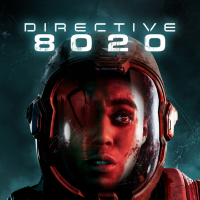
DIRECTIVE 8020 | SPACE, STEALTH, AND A CREW YOU CAN’T TRUST
Space horror works best when the danger is not only outside the ship, but already walking through its corridors. That seems to be the core idea behind Directive 8020, Supermassive Games’ next big narrative horror project and the newest entry connected to The Dark Pictures line. Instead of another haunted location, cursed object, or grounded nightmare, this one moves the formula into deep space with the crew of the Cassiopeia, a mission that starts as humanity’s search for survival and turns into a fight against something far worse: an alien organism capable of mimicking people. The game is currently set to launch on May 12, 2026 for PlayStation 5, Xbox Series X/S, and PC via Steam.
That premise immediately gives Directive 8020 a sharper edge than some of Supermassive’s previous choice-driven horror games. The fear is not only “who will die next,” but “who can still be trusted.” A creature that can copy its prey changes the whole rhythm of a horror story. Every conversation becomes suspicious, every crew member becomes a possible threat, and every decision carries a little more weight because betrayal may not look like betrayal until it is already too late. Supermassive describes the crew as being hunted by an organism that can mimic its prey, and that simple idea is probably the strongest hook the game has right now. The bigger question is how much Directive 8020 changes the usual Dark Pictures structure. Supermassive is still leaning on cinematic storytelling, branching decisions, and character survival, but this does not look like a pure “watch, choose, repeat” horror game. The official material talks about real-time alien threats, stealth mechanics, and more active survival gameplay, which is exactly the kind of shift the formula needed. If players are now moving through dangerous spaces while an enemy actively hunts them, Directive 8020 could feel more tense moment to moment, not just during quick-time events or major story choices.
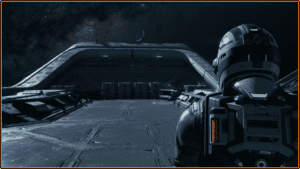
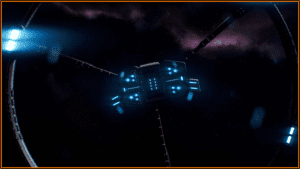
That change matters because Supermassive’s games have always been strongest when pressure and character decisions collide. Until Dawn worked because it understood how to make panic feel personal. The Quarry had the same idea, even when its pacing moved unevenly. The Dark Pictures games sometimes struggled because their smaller format made the scares feel more mechanical, like the structure was visible under the surface. Directive 8020 has a chance to push past that by making danger more physical. If sound, movement, stealth, and split-second reactions really matter, then the game could finally make the player feel hunted instead of just guided through a sequence of bad outcomes. The Cassiopeia setting also gives the game a useful kind of isolation. A spaceship is naturally restrictive, but that can be a strength for horror. Corridors become pressure points. Doors become risks. Crew quarters, medical rooms, engine spaces, and damaged systems can all turn into places where the player is forced to move even when they would rather not. This is the kind of environment where Supermassive’s cinematic style could work well, because the location itself can keep the story tight without needing a giant open world. A smaller, controlled setting may actually be exactly what Directive 8020 needs. The co-op angle is also worth watching. The official Dark Pictures site mentions couch co-op Movie Night mode for up to five players, with online multiplayer planned after launch. That fits the studio’s social horror identity, especially for players who enjoy arguing over choices, blaming each other for bad decisions, and watching a story fall apart in real time. Still, online
multiplayer coming later is something to note. Anyone buying the game mainly for online co-op should pay attention to the post-launch timing before treating it as a day-one feature. What makes Directive 8020 interesting is not only that it is sci-fi horror. Plenty of games have done dark corridors, alien threats, and failing spaceships. The important part is whether Supermassive can combine that setting with genuine player pressure. A mimic enemy only works if doubt feels active. Stealth only works if failure feels fair. Choice only matters if the consequences feel connected to what the player actually did. If those pieces line up, Directive 8020 could be more than another cinematic horror entry with space wallpaper. It could become the studio’s most complete horror design in years. There is still room for caution. Supermassive has great ideas, but not every game from the studio lands with the same force. The concept can be excellent and still fall apart if pacing drags, stealth feels shallow, or the alien threat becomes predictable too early. The game also has to balance action and narrative carefully. Too much scripted drama and the real-time threat system may feel underused. Too much active gameplay and it could lose the controlled tension that makes Supermassive’s best scenes work. Directive 8020 is walking a narrow line, but at least it is walking somewhere new. For now, this is one of the more promising upcoming horror releases because it feels like Supermassive is trying to evolve rather than simply repeat itself. A deep-space mission, a crew under suspicion, a shapeshifting alien threat, stealth, real-time danger, and branching survival choices all sound like the right ingredients. The real test will be whether Directive 8020 can make trust feel dangerous from the first hour to the last. If it can do that, this may be the Dark Pictures project that finally feels bigger than the anthology label.