REVIEW | DIABLO IV: LORD OF HATRED | HELL FEELS SHARPER NOW
Diablo IV did not need another expansion that simply added more enemies, more loot, and another map marker to chase. It needed a stronger reason to return, a clearer structure around its endgame, and enough new energy to make Sanctuary feel dangerous again without throwing away the foundation Blizzard has spent years adjusting. Lord of Hatred comes closer to that goal than expected. It does not completely reinvent Diablo IV, and players who never connected with the base game probably will not suddenly become believers overnight, but as a major expansion it feels more confident, more complete, and more willing to sharpen the parts of the game that already worked. The expansion launched in late April 2026, continuing the Mephisto-focused arc after Vessel of Hatred and adding new content, classes, endgame systems, and another major push toward making Diablo IV feel more settled as a long-term action RPG.

a stronger shape for sanctuary
The biggest improvement in Lord of Hatred is not one single feature. It is the way the expansion makes Diablo IV feel more structurally complete. The base game had atmosphere, weight, and an excellent combat foundation, but it also carried a strange emptiness after the campaign, as if the world was beautiful but not always sure what it wanted players to do with it. Lord of Hatred gives that structure more direction. The story pushes the hatred theme forward with a darker sense of finality, while the new content gives players better reasons to stay inside the loop instead of bouncing away after the main quests. Game Informer described the expansion as a grim and satisfying conclusion to the Age of Hatred arc, while also pointing to new endgame systems and stronger reasons to return to Sanctuary. That matters because Diablo lives or dies by rhythm. The player needs a constant pull: one more dungeon, one more build adjustment, one more item upgrade, one more attempt to make a character feel slightly more brutal and efficient. Lord of Hatred understands this better than earlier versions of Diablo IV sometimes did. It trims some of the aimlessness, adds more purpose to progression, and gives the game a sharper identity as a live action RPG. It is still built around repetition, of course, because Diablo has always been built around repetition, but the difference is whether that repetition feels empty or addictive. Here, more often than not, it leans toward addictive.
the new classes give the expansion real energy
The new class additions are probably the easiest reason to recommend Lord of Hatred. The Paladin brings back a familiar Diablo fantasy with heavy armor, holy force, and a directness that fits the game extremely well. It is the kind of class Diablo IV always felt like it was missing. The world is full of corruption, hatred, ruined faith, and broken orders, so bringing in a warrior built around conviction and punishment gives the expansion a strong thematic counterweight. The Paladin does not feel like a random class dropped into the game for nostalgia. It feels like a natural answer to the direction the story has been moving. The Warlock adds a different kind of flavor. It leans darker, more aggressive, and more flexible, giving the expansion another build identity beyond the safe return of a beloved archetype. Reports before launch described Blizzard revealing the Warlock with a dual-resource system and different demon-driven playstyles, which helps explain why the class feels built around control and destructive pressure rather than just another spellcaster variation. Together, the Paladin and Warlock help Lord of Hatred feel larger than a content patch. They change how players approach combat, builds, fantasy, and replay value. A Diablo expansion can survive a lot of rough edges if the new classes are worth building around, and here they are one of the main reasons the score lands high.

combat still carries the game
Diablo IV’s combat remains one of Blizzard’s strongest assets. Hits have weight, skills have readable impact, and the screen rarely turns into meaningless noise unless the build itself is designed to do exactly that. Lord of Hatred benefits from that foundation immediately. The new classes, balance changes, and endgame additions all sit on top of a combat system that already understood the pleasure of timing, positioning, cooldowns, mobility, and controlled chaos. This is still a game where the difference between a build that only functions and a build that sings can be felt in seconds. What Lord of Hatred improves is the sense that combat feeds into something more coherent. Earlier versions of Diablo IV sometimes had strong moment-to-moment fighting but less satisfying long-term structure. Here, the surrounding systems do more work. Buildcrafting feels more encouraged, endgame activities feel more readable, and the expansion gives players enough friction to keep experimentation alive. PC Gamer described Lord of Hatred as a major step that gives the action RPG more depth than it previously had, and that lines up with the way the expansion feels: not perfect, but noticeably more confident in how it wants the player to keep playing.
endgame finally feels less lost
The endgame has been Diablo IV’s longest argument with itself. Since launch, Blizzard has kept adjusting the game’s systems, itemization, seasons, dungeons, activities, and progression because the base version never fully convinced everyone that the chase was worth the time. Lord of Hatred does not magically solve every complaint, but it makes the endgame feel less scattered. It gives the game a better sense of order and a stronger reason to keep refining a character after the campaign is over. That said, this is also where the expansion’s score needs some restraint. Not every endgame addition feels equally fresh. Some criticism around the expansion points to familiar content being repackaged with new framing, and Stevivor was much harsher than most outlets, arguing that some additions were not exciting enough and that the value proposition could be a difficult sell depending on what players expected. That criticism is worth acknowledging. Lord of Hatred is very good, but it is not flawless. It improves Diablo IV’s long-term shape, yet it still relies on the same basic genre loop: grind, refine, repeat, optimize, repeat again. For players already tired of that rhythm, the expansion may feel like a better version of a game they already left behind.
the story has more bite this time
Lord of Hatred works better when it remembers that Diablo is not only a loot machine. The series has always needed mood, corruption, dread, and the sense that the world is being pulled apart by forces larger than the player. This expansion brings that back with more confidence. The Mephisto thread gives the story a stronger central pull, and the expansion feels more focused than some earlier Diablo IV narrative stretches. It does not become a deeply personal RPG in the traditional sense, but it does give the campaign more urgency and a darker emotional direction. The best Diablo storytelling usually does not come from long speeches or complicated political structures. It comes from atmosphere, pressure, and the feeling that every victory is temporary. Lord of Hatred understands that. It gives the world a sharper shadow and lets the campaign feel like a meaningful continuation rather than a side story bolted onto the main game. Game Informer praised the expansion’s narrative as gripping and satisfying, especially as a conclusion to the current hatred-focused arc. That praise makes sense. The story is not perfect, but it is strong enough to give the expansion purpose beyond loot.
graphics and atmosphere remain excellent
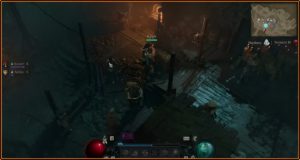
Visually, Lord of Hatred does not need to reinvent Diablo IV because Diablo IV already had a strong artistic foundation. The expansion mostly continues that direction: heavy environments, dark lighting, detailed surfaces, thick atmosphere, and a world that looks worn down by pain, ritual, decay, and old violence without needing to constantly shout about it. The graphics remain excellent, but the important point is that they are excellent in a familiar way. This is not a dramatic visual leap over the base game, and it should not be judged as one. It is more like an extension of an already strong visual identity. That is actually the right call. Diablo IV’s best visual work comes from restraint: ruined stone, candlelight, mud, ash, blood-dark interiors, cold landscapes, oppressive temples, and spaces that feel old before the player arrives. Lord of Hatred keeps that atmosphere intact. The new areas and enemy designs add enough visual freshness, while the core look remains unmistakably Diablo IV. A more radical art shift would probably have damaged the consistency of Sanctuary. Here, the expansion looks sharp, polished, and atmospheric, but it does not pretend to be a new engine showcase. It simply gives the existing art direction more room to breathe.

patches show the launch was not perfect
Lord of Hatred did not arrive without problems. Early hotfixes and patch notes show that Blizzard had to address quest progression issues, balance problems, bugs, overpowered interactions, and enemy tuning shortly after launch. GamesRadar reported on hotfixes that addressed progression blockers, class-related problems, and balancing issues, while another patch adjusted the Burning Butcher, improved charm discovery, and fixed multiple gameplay bugs. This does not ruin the expansion, but it does matter. A strong expansion can still launch with rough edges, and Lord of Hatred clearly needed some post-launch cleanup. The positive side is that Blizzard moved quickly. Diablo IV is a live game, and part of reviewing an expansion like this is judging whether the developer is actively maintaining it. Lord of Hatred benefits from that ongoing support. The rough launch elements are real, but they do not define the whole package. They are part of the reason the score stops at 87 instead of climbing higher. The expansion is excellent in many areas, but the early bug and balance cleanup shows that it was not perfectly stable out of the gate.
value depends on your relationship with diablo iv
For players already invested in Diablo IV, Lord of Hatred is easy to recommend. It gives the game more shape, more classes, more story, more endgame direction, and a stronger sense that Blizzard has learned from the last few years of feedback. For players who left because the base game felt empty or repetitive, this expansion is more complicated. It may be the best reason to return, but it still remains Diablo IV. The same core structure is here. The same loot chase is here. The same long-term grind is here. If those things were never appealing, Lord of Hatred will not transform the game into something else. That is why the expansion works best for players who liked Diablo IV but wanted it to mature. It feels like a stronger version of the same game, not a replacement for it. Metacritic’s listed review spread shows a generally positive critical reception, but also some mixed views, with scores ranging from very positive to more reserved depending on how much the reviewer valued the new content and endgame changes. That feels fair. Lord of Hatred is not the impossible “Reaper of Souls moment” some fans hoped for, but it is a meaningful step toward making Diablo IV feel closer to what it should have been.
why 87 makes sense
An 87 score may sound generous if someone focuses only on the familiar grind or the rougher launch moments, but it fits when the expansion is judged as a full Diablo IV package. The new classes are strong. The story has more weight. The endgame is better organized. The atmosphere remains excellent. Combat still feels powerful, and the expansion gives players a better reason to keep building, testing, refining, and returning. It is not perfect, but it is one of the clearest signs that Diablo IV is becoming a more complete game. At the same time, the score should not go much higher. Repetition is still part of the experience. Some systems could feel fresher. The launch needed fixes. Value will depend heavily on how much the player still enjoys Diablo IV’s base loop. Lord of Hatred is a very strong expansion, but not a full reinvention. It sharpens Diablo IV rather than replacing it. For many players, that will be enough. For some, it may be exactly what they were waiting for.