
REVIEW | BALDUR’S GATE III |  A TRUE ROLE-PLAYING EXPERIENCE
Waiting too long for something you care about changes how you look at it before it even arrives. Not the loud fear of disappointment, but the quiet one, the type that grows slowly over years. Baldur’s Gate III carried that kind of weight for me. Not because Larian didn’t know how to make RPGs. They clearly do. But because Baldur’s Gate is not just another RPG name. It is a memory. A tone. A rhythm of play. A feeling of sitting in front of a screen late at night, clicking through dialogue boxes, pausing combat, reading spell descriptions you barely understood, and still feeling like you were inside a living fantasy novel. When a game carries that kind of history, it becomes dangerous to touch. Every design choice becomes a potential betrayal. Every modern convenience risks feeling like an intrusion.
I went into Baldur’s Gate III with excitement, yes, but also with tension. I wanted to love it. I also expected, at some level, to be let down. The kind of letdown that is not loud enough to rage about, but quiet enough to sit in your chest and bother you long after the credits roll. What I did not expect was to feel, hours into the game, that familiar pull of “just one more conversation, just one more fight, just one more choice.” That pull is the real currency of role-playing games. Not graphics. Not scope. Not systems. Time. Baldur’s Gate III does not just ask for your time. It quietly takes it from you, piece by piece, until you realize you have been living in its world instead of merely playing in it.
A World That Breathes Back
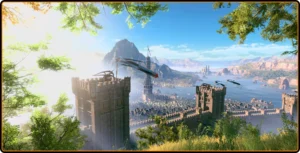
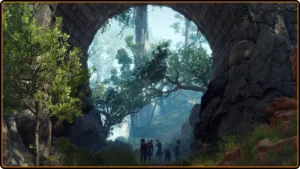
Baldur’s Gate III is not subtle about its ambition. From the opening moments, it wants you to feel small inside something vast. Not in the open-world checklist sense, but in the sense that every area you step into feels like it has its own internal logic, its own small dramas unfolding whether you pay attention or not. Villages feel lived in. Camps feel temporary, fragile, like places people pass through rather than settle in. Dungeons are not just spaces filled with enemies, but pockets of forgotten history. There is a density here that reminds me of tabletop campaigns where the dungeon master has notes you will never see. Not every door is important. Not every NPC is waiting to give you a quest. And that is precisely why the world feels convincing. You are not the center of the universe. You are a traveler inside it. The environments themselves are beautiful in a very modern sense. Lighting is dramatic without becoming theatrical. Shadows carry weight. Interiors feel warm or oppressive depending on the story being told inside them. Forests are lush but not fairy-tale clean. Everything feels slightly worn, slightly imperfect. There is mud on the boots of this world. Rust on the metal. Cracks in the stone. I genuinely like the visual presentation, and on a technical level, Baldur’s Gate III is impressive. It looks expensive. It looks like time and care went into every corner. And yet, here is the part where nostalgia complicates things for me. I am still, emotionally, more attached to the old Infinity Engine perspective. There was something about those isometric, painted worlds that felt more like peering into a storybook. Baldur’s Gate III is more cinematic, more immediate, more physically grounded. It pulls the camera closer, brings faces into focus, and gives expressions a weight the old games could never achieve. Objectively, this is better. Subjectively, I sometimes miss the distance. The slight abstraction. The feeling that I was observing a legend unfold rather than standing inside it. This is not a flaw of Baldur’s Gate III. It is simply a reminder that progress in presentation does not erase personal taste. The new visual style fits the game perfectly. It just does not replace the emotional imprint of the old one for me.
Characters That Refuse to Be Simple
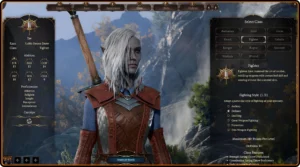
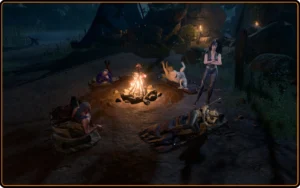
The heart of Baldur’s Gate III is not its systems or its world. It is its characters. Companions in this game are not just combat tools with backstories attached. They are emotional anchors. They disagree with you. They judge your choices. They remember things you said hours ago. They react to your failures as much as your successes. There were moments when I caught myself adjusting my decisions not because of the mechanical outcome, but because I did not want to disappoint a character I had grown attached to. That is a dangerous and beautiful thing for a game to achieve. It means the illusion is working. What stands out is how flawed everyone is. No one is a clean archetype. Heroes carry ugly history. Villains sometimes speak with uncomfortable clarity. Allies can be selfish. Enemies can be understandable. This moral grey is not just decorative. It forces you into uncomfortable spaces. You can do the right thing and still hurt someone. You can make a pragmatic choice and feel like you sold a small part of yourself. Baldur’s Gate III does not reward you with constant validation. It lets you sit with your decisions. That discomfort is part of its strength. Dialogue is where this really shines. Conversations are long, layered, and often unpredictable. Choices are rarely simple yes/no buttons. They are emotional postures. You are not just choosing what happens, but who you are in that moment. Sarcastic responses can carry hidden cruelty. Kind responses can hide manipulation. The writing does not spoon-feed you moral clarity. It trusts you to feel the weight of your words. That trust is rare in big budget RPGs. Many games want to reassure you that you are the hero. Baldur’s Gate III is comfortable letting you be uncertain, conflicted, even wrong.
Combat as a Story in Motion
Turn-based combat in Baldur’s Gate III is not just a mechanical layer. It is storytelling through movement, positioning, and risk. Every fight feels like a small puzzle that changes shape depending on how creative you are willing to be. Elevation matters. Environmental hazards matter. The world itself becomes part of the fight. Fire spreads. Explosions chain. Enemies are not politely waiting to be attacked in neat lines. They flank, retreat, reposition. There is a messy, organic quality to combat that makes each encounter feel less like a solved equation and more like a dynamic scene. What I appreciated most is how the game allows you to break its own expectations. You can win fights through brute force, yes. But you can also manipulate the environment, use dialogue to avoid conflict, or set up situations where enemies defeat themselves through poor positioning. This openness encourages experimentation. It rewards curiosity. It also means that no two players will tell the same story about how they survived a particular encounter. That is powerful design. It turns combat into personal narrative rather than a fixed sequence of moves. Playing on PC, I had no performance issues worth mentioning. The game ran smoothly, and technical stability never pulled me out of the experience. I did not use any mods during my playthrough, with one small exception: a toggle walk/run option. This might sound trivial, but its absence in the base game stood out to me as a strange oversight. Movement is such a fundamental part of inhabiting a world. Not having an adequate built-in toggle for walking versus running felt oddly limiting in a game that otherwise gives you so much control. The community, of course, has already stepped in to fill that gap. And that community deserves its own recognition. Baldur’s Gate III exists not just as a product, but as a living platform for creative players. Mods, guides, builds, story discussions, and endless theorycrafting surround it. That ecosystem extends the life of the game far beyond its own boundaries.
Systems Beneath the Surface
Baldur’s Gate III does not just give you systems. It layers them in a way that slowly reveals how deep the foundation actually goes. At first glance, it feels approachable. Movement, abilities, dialogue choices everything is readable. But the longer you stay, the more you realize how much is happening underneath. Character building is not about chasing a single “best” setup. It is about identity. The game allows you to shape a character that feels mechanically and narratively consistent. A reckless barbarian does not just play differently it feels different in conversations, in combat decisions, in how you approach problems. A careful wizard is not just about spells, but about control, positioning, patience. What surprised me is how often the game lets systems overlap in unexpected ways. A simple environmental object becomes part of a strategy. A spell you ignored suddenly solves a situation in a completely unintended way. You are constantly reminded that this is a game built on rules but rules that invite creativity instead of limiting it. There is also a learning curve here, no way around it. Baldur’s Gate III does not simplify itself to be immediately comfortable. It asks for attention. But once it clicks, the complexity stops feeling like a barrier and starts feeling like freedom.
Choices That Actually Matter
The phrase “your choices matter” is one of the most overused promises in gaming. Baldur’s Gate III takes that phrase seriously enough to make it uncomfortable. Choices do not just branch dialogue. They reshape entire storylines. Characters can leave. Alliances can collapse. Entire questlines can end early, not because you failed, but because you chose differently. The game does not protect you from locking yourself out of content. It respects your agency enough to let you miss things. That is risky design in a market that often wants players to see everything. But it is honest. Life does not let you rewind to explore the other path. Baldur’s Gate III embraces that truth. What makes this even more effective is how consequences are often delayed. You may make a decision early on that seems minor, only to feel its impact hours later. This delayed consequence builds a sense of continuity. The world remembers you. Not in a simple reputation meter way, but in narrative echoes. This creates a subtle emotional investment. You start thinking about your actions not just in terms of immediate reward, but in terms of the person you are becoming inside this world. That kind of reflection is rare in games. It blurs the line between role-playing and self-reflection.
Role-Playing That Feels Personal
There is a subtle shift that happens after a few hours in Baldur’s Gate III. You stop thinking in terms of “what is the best outcome” and start thinking in terms of “what would this character actually do.” That is where the game becomes something more than a well-designed RPG. It stops being about optimization and starts being about expression. You might choose a dialogue option that is objectively worse, just because it fits who you have become in that world. You might take a risk that makes no sense mechanically, but feels right emotionally. And the game does not punish you for that. It adapts. That freedom creates something rare a sense that your playthrough is not just a variation, but a version that belongs to you. Not because the game tells you it is unique, but because it feels that way. Even small decisions carry weight. A line of dialogue. A moment of hesitation. A choice to intervene or stay silent. Over time, these fragments build a character that feels authored, not selected.
A Modern RPG with an Old Soul
Baldur’s Gate III is, at its core, a modern RPG wearing the emotional weight of an old one. It has the polish, production values, and cinematic presentation of contemporary design. It also carries the slow, deliberate pacing of classic role-playing. This combination will not be for everyone. Some players will find it overwhelming. Others will find it too slow. That is fine. This game is not trying to please everyone. It is confident in its identity. It asks you to slow down. To read. To listen. To sit with conversations. To think before acting. In a gaming landscape increasingly optimized for speed and spectacle, Baldur’s Gate III feels almost stubborn in its refusal to rush you. There are small frustrations, of course. The lack of an adequate built-in toggle walk/run control stands out as a genuinely annoying omission. Some interface elements feel heavier than they need to be. The sheer complexity of systems can be intimidating, especially for players new to this style of RPG. And while I appreciate the modern presentation, I still personally feel a stronger emotional pull toward the Infinity Engine style of visual storytelling. These are not deal-breakers. They are small frictions in an otherwise deeply absorbing experience. What matters more is that Baldur’s Gate III respects your intelligence. It does not flatten its themes into easy moral lessons. It does not reduce its world to a series of objectives. It invites you to exist inside its contradictions. To care about people who are not always likeable. To make choices you might regret. To live with uncertainty. That is a rare thing for a big, expensive RPG to attempt. It would have been safer to create a more streamlined, less demanding experience. Larian chose the harder path. The result is a game that feels alive in a way many technically impressive games do not. By the time I stepped away from Baldur’s Gate III, I did not feel like I had “finished” it. I felt like I had left a place. That is an important distinction. Finishing a game is about completion. Leaving a place is about memory. Baldur’s Gate III leaves residue. It lingers. You think about characters after you log off. You replay conversations in your head. You imagine how different choices might have reshaped the story. That lingering presence is the mark of something more than a good game. It is the mark of a world that briefly convinced you it was real. Baldur’s Gate III is not a game you rush through. It is one you return to in your head long after you stop playing. Not because it demands it, but because it earns it.