
REVIEW | VGN DRAGONFLY KING | SOLID, SUBSTANTIAL, BUILD FOR EVERY PRECISE CLICK
The VGN Dragonfly King is one of the more ambitious mice to hit the market recently marketed as the first wireless gaming mouse with a fully enclosed magnesium alloy shell, while still targeting the competitive / esports crowd. The promise: durability and solidity of metal, at a weight that allows serious gaming a balance between rugged hardware and performance‑focused peripheral. What remains to be seen does that promise hold up under scrutiny? Below is a detailed breakdown of its design, hardware, ergonomics, and suitability, with a balanced view of what works and what may not.
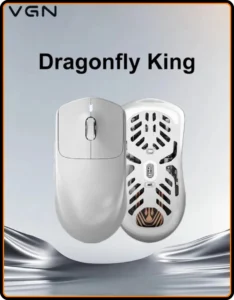
Build, Materials and Construction
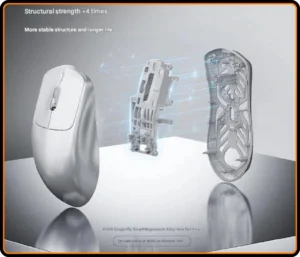
At the heart of Dragonfly King’s identity is its magnesium‑alloy shell. According to the manufacturer, the shell uses an ultra‑thin magnesium alloy (AZ91D), and despite its lightweight construction (listed at ~54 g) it reportedly offers hardness and durability well beyond typical plastic mice. What this design achieves is unusual in the gaming‑mouse landscape: instead of the common perforated “honeycomb” designs used to reduce weight, King goes for a solid metal body fully enclosed, without holes on the upper shell. Internally, the build represents a three-part structure: the base, an internal skeleton (housing sensor and electronics), and the magnesium shell all intended for rigidity and protection. The result is a sense of solidity and build quality that many plastic mice cannot offer. For someone more interested in durability or longevity, that shell is a compelling feature. At the same time, the weight is light enough to avoid the bulkiness often associated with metal peripherals so Dragonfly King aims to thread the needle between sturdiness and playability.
Sensor, Connectivity and Performance Specs
Under the hood, Dragonfly King uses the optical sensor PixArt PAW3950 a sensor model well regarded for precision, stability, and performance. The mouse supports adjustable sensitivity (DPI), reportedly up to 42 000 DPI (with overclocking), which is well beyond what most gamers realistically need. When it comes to input responsiveness, the model is advertised with a polling rate up to 8000 Hz (both wired and wireless modes), using the vendor’s custom “SPARKLINK” esports‑grade main control chip to ensure stable, low-latency communication. For competitive gaming especially fast-paced shooters or other titles where milliseconds matter this spec sheet reads like a high‑end weapon. Additionally, the Dragonfly King offers dual-mode connectivity you can switch between 2.4 GHz wireless and wired USB depending on your preference or situation; that flexibility remains a strong selling point. Battery life is listed as up to 100 hours (on a full charge), which, if realized in real-world use, is a respectable endurance for a wireless esports-focused peripheral. All told, the internal hardware and advertised specs place Dragonfly King among the serious‑play class of gaming mice: precise sensor, high polling rate, flexible connectivity, and robust construction.
Ergonomics, Shape and Practical Use Considerations
According to promotional descriptions and available specification sheets, Dragonfly King has a relatively compact shape with a pronounced rear hump and concave sides, a profile that suggests optimization more for claw or fingertip grip rather than a large “palm‑grip, relax‑and‑chill” style. Because of that shape, the comfort and fit will likely vary depending on hand size and grip preference. For users with average or smaller hands, claw or fingertip grip may work well; for large hands or those preferring a wide, relaxed palm grip, the compactness could feel restrictive. The tradeoff seems to be between control/precision and comfort/space. The choice of magnesium alloy shell gives Dragonfly King a tactile, “solid” feel in hand something that plastic mice rarely replicate. That may appeal to users who prefer their gear to feel serious and durable, rather than light and “airy.” On the other hand, because of the metal, you might notice a slightly different tactile sensation maybe more weight, more feedback, and a different balance compared to ultralight plastic shells. Without widespread user data (the mouse appears relatively new), it’s harder to definitively assess long-term comfort for all grip styles, but the design decisions suggest that the target audience is users who value control and durability more than universal ergonomics.
Durability, Practicality & User Considerations
The fully enclosed magnesium shell suggests higher durability and resistance to damage than plastic bodies. According to manufacturer claims, the shell is three times harder than ordinary shells implying better resistance to scratches, wear, and potentially impacts. For players who travel, move their setup around, or simply want a peripheral that lasts that can be a real advantage. Because the construction is more robust, the integrity of internals sensor, electronics, structural skeleton may remain stable over a longer time compared to cheaper mice, especially those using thin plastic. This gives Dragonfly King a use‑case as a “long-term investment” peripheral, not just a short‑term cheap setup. From a practical perspective: dual connectivity (wired + wireless) allows flexibility depending on the environment, and the advertised battery life (100 h) is more than adequate for most users. Still as with any specialized hardware there are compromises. A heavier, solid shell may not offer the ultra-lightweight agility some gamers prefer. Compact shape might not suit all hand sizes. And while the specs are impressive, real‑world comfort and user preference could vary significantly.
Who This Mouse Is For: Use Cases & Audience
From its design and spec sheet, the Dragonfly King clearly targets a specific type of user who values precision, durability, and a serious, substantial feel in their gear. It is for you if you care about every millisecond in competitive FPS or fast-paced games where sensor accuracy and low latency matter, if you appreciate a build that feels robust and premium and can withstand daily use or frequent travel, if you prefer a firm, solid, almost “tool-like” sensation in your mouse rather than an ultra-light or soft ergonomic design, and if claw or fingertip grips suit your style or your hands are average to smaller in size. This mouse is meant for those who want a sense of connection to their actions, where each movement feels deliberate and precise, and where the weight and tactile feedback contribute to confidence in every swipe and click. Conversely, it may not be for you if you have larger hands and prefer a full palm grip that spreads weight across the hand, if you prioritize extreme lightness for fast, effortless swipes, if you are drawn to mice that almost feel like hovering extensions of your hand rather than solid tools, or if ergonomic softness and long-term comfort are more important than ruggedness and tactile feedback. For these users, the Dragonfly King could feel compact, firm, or heavier than desired, and its approach to control might seem less forgiving than ultra-light alternatives. Overall, the Dragonfly King strikes a balance where technical excellence, durability, and precision take precedence, making it a compelling option for those who place performance and build quality above all else, while it naturally polarizes players who prioritize hand coverage, extreme lightness, or plush ergonomics. The design makes a statement: it is confident, deliberate, and exacting, rewarding the right user with a refined gaming experience that blends precision and solidity in a way few other mice attempt.