REVIEW | SUBNAUTICA | HOW THIS GAME MADE ME FEEL SMALL AND TRULY ALIVE
I remember the first few hours vividly. Gathering titanium scraps, clipping my scanner into place, and staring into the abyss these weren’t just chores, they were small rituals that anchored me in this alien world. The ocean wasn’t just scenery; it had mood, it had temperament, and, in its own way, it demanded respect. I crafted a flashlight, a survival knife, a habitat builder, and each new tool felt like a key to unlocking secrets the planet held. And yet, each key also reminded me how fragile I was. A predator fin slicing past, the sudden rumble of a distant leviathan my heart raced, and my fingers clenched the controls tighter. I felt alive in a way few games had managed to conjure. Alive and profoundly aware of my insignificance.
Deeper Dives and Tension
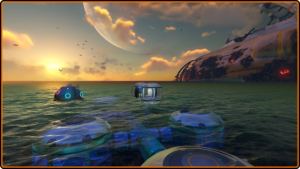
Subnautica’s world is deceptively gentle on the surface but punishing in its depths. The shallow reefs, teeming with colorful fish, luminous corals, and drifting flora, seemed welcoming, almost like an invitation. But the deeper I went, the more the world’s duality revealed itself. Darkness crept in slowly, suffocating, not immediately, but in waves that seemed to pulse with life of their own. I learned to trust sound more than sight. The faint hum of machinery, the splash of a passing creature, even the echo of my own breath in the helmet became a guide. Every dive taught me lessons in patience, caution, and attentiveness. I remember the terror of descending into the Jellyshroom caves, the walls bioluminescent yet eerily silent. I froze, fearing the unknown, yet compelled to move forward. That tension, that mixture of fear and curiosity, gripped me like a vise and refused to let go.
Base Building & Encounters
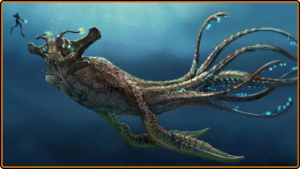
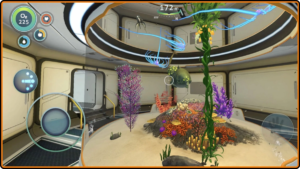
Building my first base was transformative. A fragile construct of glass and metal, perched on the ocean floor, surrounded by neon flora and darting fish. Every corridor I laid, every storage module added, was a declaration: “I exist here, even if briefly.” The viewports offered more than aesthetics; they were windows into a world alive, alive with movement, with predators lurking just beyond perception. I spent hours simply sitting, observing, imagining what life might be like in such isolation. It was meditative, humbling, and occasionally infuriating. The crafting menu became both friend and taskmaster. I could spend long stretches scanning, gathering, and constructing, and though the rhythm became repetitive, it never lost the weight of consequence if I failed, the ocean didn’t forgive. Oxygen ran out faster than I expected, predators stalked me silently, and one careless dive could erase hours of work. I remember particularly vividly the first time I encountered a Reaper Leviathan. Nothing on the map prepared me for its presence; I saw the water churn before I realized what it was. A heartbeat skipped, my fingers froze, and instinct screamed at me to flee. But I couldn’t stop staring its sheer size, the way it moved with purpose, was awe-inspiring. I ducked behind a coral formation, breath shallow, heart pounding, and watched as it passed. Subnautica didn’t hand me power over the world. Instead, it offered vulnerability and demanded respect. The fear was real. The adrenaline was real. And I loved every terrifying second.
Challenges and Wonders of Exploration
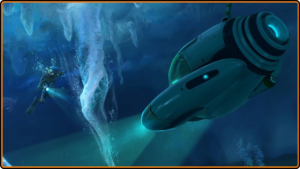
But not everything was perfect. After dozens of hours, the constant grind gathering titanium, quartz, salt, crafting power cells, glass, and hulls sometimes became taxing. There were moments when the ocean, once brimming with mystery, felt repetitive. Landmarks blurred; reefs and caves repeated in a subtle loop. It didn’t ruin the game far from it but the novelty dimmed in long stretches. Technical glitches crept in occasionally: frame drops, texture pops, and audio stutters broke immersion. Small, yes, but noticeable, reminding me that this wasn’t a flawless world. And sometimes, the open-ended structure led to indecision. Where to go next? Which dive to attempt? Freedom is a gift, but it can also be exhausting. Yet, these flaws never completely overshadowed the game’s brilliance. Exploration remained thrilling, and discovery felt earned. The wrecks I found told stories without words, their rusted hulls and sunken cargo hinting at tragedies and histories I could only imagine. Each new biome, each alien formation, prompted wonder: luminescent kelp forests, volcanic vents that hissed and bubbled, the deep sea trench that swallowed light whole. I felt like a visitor in an ecosystem that was simultaneously alien and alive, and I never took that for granted. Every survival decision rationing water, managing oxygen, reinforcing my base was a choice that mattered, adding a layer of tension and satisfaction. I could retreat to safety, yes, but that was a decision with weight. Courage and curiosity were both optional, but the rewards for embracing them were immense.
Emotional Cadence and Solitude
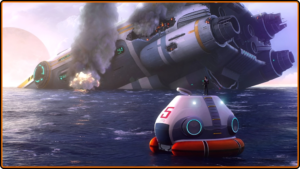
At night, I would sit by my base’s glass windows, lights dimmed, and watch plankton drift lazily, suspended in the current. The silence of the ocean contrasted sharply with the quiet hum of my life pod. The solitude wasn’t lonely; it was contemplative, almost sacred. I thought about the Aurora, about other survivors who never made it, about the mystery encoded in the wreckage scattered across the ocean. Subnautica had a subtle way of reminding me that life even in a game carries fragility, consequence, and beauty. It respected my intelligence, my patience, and my willingness to immerse myself fully in a world I could neither control entirely nor fully comprehend.
The Lasting Impact and Human Moments
Even after completing the main story arc, the game lingered. The credits rolled without fanfare; no triumphant music, no closure beyond reflection. The ocean remained, deep and unyielding, an unspoken promise of more stories, more mysteries, more quiet moments of danger and discovery. I thought back on every dive, every narrow escape, every breathtaking vista, and felt a strange gratitude. Subnautica didn’t just entertain it shifted my perception of immersion, of tension, of beauty in digital spaces. It reminded me that games can be delicate, deliberate experiences, not just spectacles. Small, human moments also made the game stick: laughing quietly when a Peeper got too close to my base, cursing under my breath as I miscalculated a dive, feeling a rush of triumph when a new vehicle module worked perfectly. Those tiny slices of life gave texture and authenticity to the broader narrative of survival and exploration.
Emotional Depth and the Ocean’s Majesty
I also can’t ignore the emotional cadence of Subnautica. It demanded patience, rewarded attentiveness, and occasionally crushed my confidence with unexpected danger. That mix of dread, excitement, wonder, and triumph was intoxicating. Few games managed to balance fear with beauty, risk with reward, isolation with awe Subnautica did, almost effortlessly. By the time I reached the deep-sea trench, the final biomes revealed themselves as both majestic and terrifying. Alien leviathans glided past, colossal and indifferent. The terrain twisted and warped, beautiful and deadly. Every movement carried weight; every decision mattered. I had invested myself fully in this world, and it had invested back in me: fear, awe, serenity, and profound satisfaction.
Reflections, Lessons, and Lingering Wonder
Looking back, Subnautica isn’t just a survival game. It’s an emotional odyssey, a meditation on isolation, a lesson in respect for environments, and a celebration of curiosity. It rewards patience, punishes recklessness, and occasionally humbles even the most confident player. Its imperfections repetition, occasional technical hiccups, long stretches of routine only make the peaks feel sharper. Even after logging off, the echoes of bioluminescent caves, leviathans in the deep, and sunlight shimmering on alien reefs remained with me. Subnautica lingers, imperfect, frustrating at times, but breathtakingly alive. Its moments of danger, awe, and small human joys create a resonance that stays with you long after you surface.