
REVIEW | S.T.A.L.K.E.R. II: HEARTH OF CHERNOBYL | SURVIVES THE TEST 
When I finally launched S.T.A.L.K.E.R. 2: Heart of Chornobyl, the sensation felt a lot like returning to a place that shaped you years ago but no longer exists in the same form. I remember the Zone vividly from my younger days murky, dangerous, melancholic, wrapped in silence and madness that deepens the further you push. More than ten years have passed since we last set foot in this dystopian, decaying world, and GSC Game World carried the heavy task of resurrecting one of the most influential PC franchises of its era without stripping away its identity. I’ll admit it I was worried. Delays, technical complications, engine changes, and the brutal real-world circumstances that affected the studio oversaw the project like an unshakable shadow. But the moment I stepped into that fog-soaked clearing, it became clear: Heart of Chornobyl is exactly the kind of return I was hoping for harsh, emotional, visually unnerving, and imperfect in just the right ways so it still feels unmistakably like S.T.A.L.K.E.R.
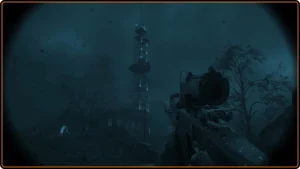
The Story and the Weight of the Zone
The story follows Skif, an almost ordinary man whose life is blown apart the moment a mysterious artifact lands on his table something that shouldn’t exist, something that reshapes his reality in an instant. Without much ceremony, Skif finds himself pulled toward the Zone a place that never leaves anyone unchanged, a melting pot of science, hallucination, greed, and a warped version of nature that evolved into something else entirely. This isn’t a game that holds your hand. Instead, the Zone feels like it’s always watching you, testing how far you’re willing to go and what you’re prepared to sacrifice. As the narrative deepens, it spreads not through loud, cinematic exposition, but through quiet discoveries: overheard conversations, isolated ruins that tell stories on their own, and anomalies that whisper about a reality barely holding together. Skif’s journey is personal, but miles away from the typical hero narrative. In every conversation, you feel the exhaustion, the fatalism that’s soaked into the Zone for decades. Stalkers speak like people who lost hope long ago but simply got used to the emptiness. That authenticity gives the story its strength it isn’t loud; it invites you to lean in and listen.
Atmosphere, Tension, and the Ever-Present Threat of the Zone
Atmosphere in Heart of Chornobyl is staggering, in a way that few modern games manage to achieve. The moment you step into the Zone, it feels alive not just with wildlife or anomalies, but with a sense of watchfulness that keeps you constantly alert. Fog rolls across abandoned industrial sites and decaying villages, muting colors and shaping your perception of distance and danger. Every creaking metal beam, every broken window, every faint howl or crackling Geiger counter contributes to a psychological tension that’s difficult to shake. The Zone doesn’t just challenge you mechanically it challenges your instincts, your patience, and your willingness to move forward cautiously. Anomalies, in particular, are terrifyingly unpredictable, bending reality and threatening to punish the slightest misstep. Approaching them requires careful observation, respect for your detector’s warnings, and a willingness to risk loss for the promise of powerful artifacts. That constant balance between danger and reward makes the world feel organic, immersive, and emotionally draining in the best possible way. The ruins, rusted and overgrown, feel genuinely abandoned, as if the environment itself is slowly reclaiming what humanity tried to leave behind. Forests are eerily quiet, and the occasional snapping of a branch or distant mutant howl is enough to make your heart jump. Unlike many survival games, Heart of Chornobyl doesn’t rely on jump scares or scripted events—the tension emerges naturally from the interplay of visuals, sound, and the ever-present unpredictability of the environment. It’s a world where silence is dangerous, shadows conceal threats, and every step is a negotiation with potential death.
Survival and Gameplay That Demands Awareness
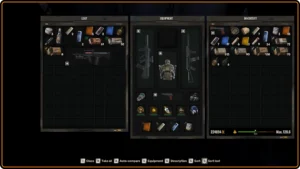
Gameplay here is built around consequence and calculation rather than reflexive shooting. Resources are limited, every bullet counts, and the weight of your inventory affects mobility, stamina, and survival chances. Running headlong into a firefight is rarely wise; you are constantly reminded that the Zone doesn’t forgive mistakes. Weapons degrade with use, armor wears down, and even your health management demands attention hunger, radiation, bleeding, and fatigue all subtly shape your approach to exploration and combat. Survival is not a side element; it is the lens through which every encounter, mission, and decision is filtered. Faction interactions layer additional depth onto this system. Aligning with one group may provide critical support or access to unique missions, but it can simultaneously burn bridges with others, creating a web of social and tactical consequences. Planning is essential: understanding the map, gauging the threats along your path, and managing scarce supplies are constant considerations. Every excursion into the Zone feels like a small expedition, and the satisfaction of emerging intact, or even just alive, is a testament to the game’s intricate design. There is a deliberate tension in every choice whether you prioritize stealth, engagement, or cautious retreat, the Zone reacts and challenges you in ways that feel both organic and consequential.
Exploration, Risk, and the Allure of Artifacts
The exploration in Heart of Chornobyl is a constant interplay of reward and danger. The environment is crafted with painstaking detail, encouraging players to linger and observe, yet the constant threat ensures that wandering carelessly is punished. One moment you might find yourself marveling at a crumbling Soviet-era building or a marshland blanketed in early morning mist; the next, an unseen mutant or anomaly may remind you of the stakes. The discovery of artifacts reinforces this tension. They are never handed to you; finding them involves patience, risk, and careful observation. When successfully acquired, artifacts provide tangible advantages that shape your survival strategy, yet each success is tempered by the knowledge of what could have gone wrong. It’s this cycle of anticipation, risk, and reward that makes exploration feel meaningful rather than mechanical. The Zone itself often tells stories more vividly than dialogue or cutscenes ever could. Every abandoned village, collapsed structure, and scorched vehicle hints at the life that once thrived there, the tragedy that occurred, and the dangers that persist. The environment demands respect and observation, and the tension created by its unpredictable hazards ensures that no two explorations ever feel the same. That combination of environmental storytelling, emergent danger, and careful reward creates an atmosphere of suspense and satisfaction that few survival shooters achieve.
Combat That Feels Real and Punishing
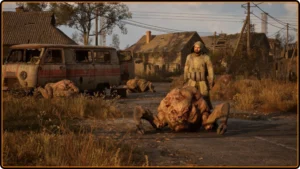
Combat in Heart of Chornobyl is grounded, deliberate, and occasionally brutal. Weapons feel substantial, with each shot carrying weight, recoil, and consequences for poor maintenance. Reloading is tactile, and mechanical failure mid-combat can transform a routine firefight into a desperate struggle. Mutants behave unpredictably, and AI patrols can force improvised tactics, requiring patience and situational awareness. Even when stealth is attempted, the results are inconsistent enough to maintain tension; a misstep can quickly turn a calculated approach into a full-blown fight for survival. Melee combat exists but is generally a last-resort solution, emphasizing the game’s focus on firearms, careful planning, and resource management. Every encounter feels consequential because the game is unforgiving, yet fair, rewarding players who respect its systems and punish those who act recklessly. Combat’s strength lies not in spectacle but in the stress it creates. Every firefight tests your observation, timing, and decision-making, reminding you that survival is never guaranteed and that even a small misjudgment can have serious consequences. This focus on realism and weight reinforces the game’s overarching theme: the Zone is an environment to be respected, feared, and understood.
Visuals and Audio That Anchor the Zone in Reality
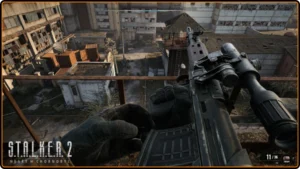
Graphically, Heart of Chornobyl leverages Unreal Engine 5 to craft a Zone that is both beautiful and haunting. Lighting, weather, and environmental details work in tandem to create spaces that feel lived-in and treacherous. Dynamic weather can shift in moments, turning a serene morning into a storm-laden environment where visibility drops and the mood intensifies. Fog, shadow, and texture detail all contribute to the sense that the Zone is alive, constantly shifting, and inherently dangerous. Audio design complements this realism perfectly. Silence is wielded as effectively as sound the faint crunch of debris, distant metallic echoes, or the subtle pulse of anomalies keeps players on edge. Mutants and environmental hazards are characterized by unique, unsettling audio cues, ensuring that listening is as critical as sight. Minimalist music punctuates key moments, enhancing tension without overwhelming the ambient dread. The combination of sound and visuals makes immersion nearly total; the Zone doesn’t just look dangerous, it feels threatening in a visceral way.
Performance and Technical Observations
While Heart of Chornobyl delivers visually and atmospherically, technical performance can be inconsistent, particularly on mid-range hardware. High-end systems showcase the game beautifully, but stutters, texture pop-ins, and occasional crashes still occur. Patches have improved stability, yet players may still encounter hiccups depending on their configuration. Even with these imperfections, the overall experience remains compelling, and the game’s immersive qualities consistently outweigh minor technical drawbacks. The challenge of optimization feels secondary to the meticulously crafted world, where immersion and gameplay tension define the player experience.
Advantages
Exceptional atmosphere that constantly maintains tension
Stunning and haunting UE5 visual presentation
Deep survival mechanics with meaningful decision-making
Unique exploration driven by anomalies and artifacts
Outstanding sound design that elevates immersion
Subtle but compelling narrative direction
Disadvantages
Noticeable performance issues on various hardware
Stealth and melee systems need refinement
Occasional inconsistent AI behavior
Steep difficulty curve may discourage newcomers
Stability and optimization require additional updates