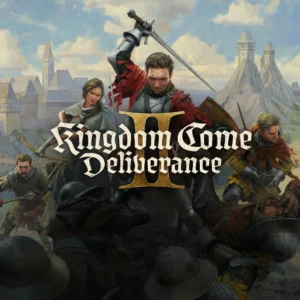
REVIEW | KINGDOM COME: DELIVERANCE II | BOHEMIA’S UNFINISHED BUISNESS
A quiet shock hits you the moment you step back into 15th-century Bohemia raw, familiar, and strangely alive in a way modern RPGs rarely manage, an energy that stands apart from anything the genre usually offers. Not the heroic swell of a fantasy epic, not the polished sheen of a power fantasy, but something rougher, more grounded, more human. Kingdom Come: Deliverance II takes that fragile identity from the first game and pushes it further, deeper, and with far more confidence. It’s a sequel that feels like it understands what made the original so beloved, even in all its clumsy brilliance, and then builds on that foundation with the maturity of a studio that has learned, failed, grown, and now finally swings with precision. The first game was defined by its imperfections, and somehow, that became its charm. The sequel still has that edge just softened, shaped, sharpened better. You still trip over your own feet if you’re careless, your sword still feels heavier than your nerves can handle, and the world still treats you like just another person in the mud rather than a chosen one glowing with prophecy. But now, every system breathes more naturally. Combat flows more steadily. People’s reactions feel warmer or colder in ways that matter. Choices linger. And most importantly, Bohemia itself feels alive not like a backdrop, but a character with its own pulse.
A World That Feels Lived In, Not Designed
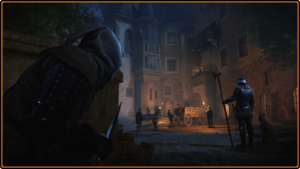
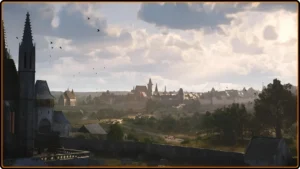
What stands out immediately about Warhorse Studios is how unapologetically they build a medieval world.They don’t romanticize it. They don’t sanitize it. They certainly don’t try to turn it into another Renaissance fair where everyone is clean, witty, and conveniently placed on your path. Instead, they craft something muddy, inconsistent, sometimes beautiful and sometimes miserable, but always convincing. Walking through Rataje or around the countryside, you keep catching yourself slowing down not because the game forces you to but because the world feels worth observing. Smoke drifting lazily from chimneys. Dogs barking at the wrong time of day. Guards chatting about things that don’t concern you. People with uneven teeth and tired faces and clothes that actually look like they’ve lived through weather. This isn’t a world obsessed with being photogenic; it’s obsessed with being believable. And that is the secret sauce behind Kingdom Come II: immersion that doesn’t come from spectacle, but from texture. It’s not the graphics alone (though they are excellent in their own grounded way). It’s the way everything seems to belong there, the way no detail screams for your attention yet pulls you in regardless. You feel the weight of the soil, the smell of food cooking over a smoky fire, the early morning chill that refuses to leave the ground. You feel the world even when you’re not doing anything dramatic, and that is far more valuable than another scripted “epic moment.”
Henry’s Journey Continues, But the Tone Has Shifted
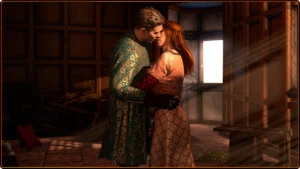
Henry, still that stubborn mix of earnestness and youthful arrogance, returns as the protagonist. No longer the clueless son of a blacksmith who thought he could outrun the catastrophe that consumed his life, he stands at a very different point now a man trying to reconcile justice, revenge, loyalty, and survival. What gives this sequel its emotional weight is that Henry doesn’t suddenly transform into a medieval superhero. He grows, but he doesn’t shed his humanity. He gains confidence, but he doesn’t lose vulnerability. His relationships feel more nuanced, and the writing around him leans heavily into personality rather than exposition. The story avoids the temptation of turning him into someone he’s not. Even when the stakes rise, even when the world asks more of him than one man should reasonably give, Henry remains Henry, and that consistency grounds the entire narrative. There are moments where he pushes back, moments where he doubts himself, and moments where the violence around him forces him to realize that revenge is rarely clean, and closure is often a myth sold by storytellers who never had to live through consequences. No details here, no spoilers only this: the story does not betray its characters. It lets them breathe, and it lets them struggle. That alone elevates the sequel far above most RPGs released in the last decade.
Combat: Still Gritty, Still Demanding, Now More Rewarding
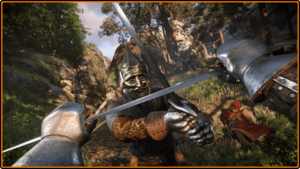
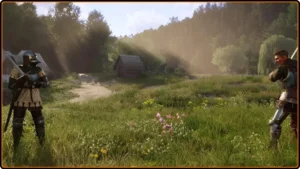
Anyone who survived the combat learning curve in the first game remembers the early frustration mis-timed blocks, missed swings, getting absolutely demolished by what looked like a drunk guard with a butter knife. Kingdom Come II doesn’t abandon that identity, but it certainly respects your time more. The combat is still directional, still timing-based, and still punishes panic. But movements are smoother, inputs clearer, and Henry’s animations more responsive. Strikes feel more dangerous, and defence feels like an actual skill not just a matter of button-mashing hope. The real joy comes from duels: tense, sweaty, desperate stand-offs where one wrong read ends everything. The game never lets you feel comfortable in a fight because medieval combat wasn’t comfortable. It’s messy. Quick. Brutal. That’s exactly what this sequel captures again, but with much better technical execution. And then there’s the ranged combat, stealth improvements, and the expanded training options that make experimentation less intimidating. But the key achievement here is this: the combat finally feels like something you can master rather than just survive.
Role-Playing Without The Illusion
One of the most refreshing qualities of this series is how it treats role-playing not as a checklist of morality sliders but as a lived experience. Who Henry becomes is a result of what you repeatedly do not what dialogue option you click once. If you barter often, you actually become better at bartering. If you practice fighting, you get better at fighting. If you read books, you become more literate and unlock layers of the world that were previously hidden from you. The sequel expands on this beautifully. Skills grow naturally, consequences echo more clearly, and the world feels like it genuinely reacts not through scripted “you gained karma” pop-ups, but through people’s attitudes and access to opportunities. Sometimes you only realize the weight of a decision hours later, when a person treats you differently or an event unfolds in a way you didn’t expect. This isn’t a morality system; it’s a social system. Much more interesting, much more engaging, and much more reflective of what role-playing actually means.
Atmosphere Carries This Game Like a Cathedral Carries an Echo
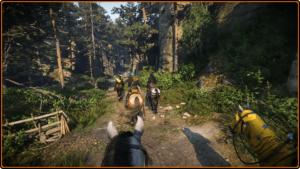
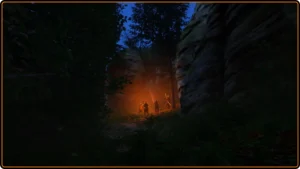
There’s a quality to the soundscape that’s difficult to articulate. It’s not simply that the music is excellent (it is), nor that the ambient audio is rich (it is), but that the world sounds lived in. When you’re riding through a forest, the quiet feels ancient. When you’re walking through a village at dawn, the mild chaos of daily life greets you like a familiar routine. When steel clashes in a courtyard, the echo shakes you differently than in an open field. Atmosphere is something so many games attempt and so few achieve. Kingdom Come II earns it with restraint. It doesn’t push music into every crevice. It doesn’t bombard you with dramatic cues. It allows silence to exist, and in that silence, the world’s authenticity grows. The same applies to visual atmosphere. Lighting is softer, warmer, less artificial than in most modern RPGs. Interiors glow with uneven candlelight. Sunsets cast golden dust across courtyards. Fog rolls in with a kind of medieval melancholy that fits the tone far better than thermal HDR landscapes ever could.
A Sequel Built on Growth, Not Reinvention
What makes this sequel powerful is that it refuses to chase trends. No excessive open-world bloat. No forced fantasy elements “for mass appeal.” No streamlined systems that sand away personality. Kingdom Come II improves everything, but doesn’t betray anything. The studio respected its own blueprint. The writing is stronger. The acting is better. The world is bigger yet denser. The quests have more depth. Relationships matter more. And despite the technical improvements, the game still feels handcrafted, rough where it needs to be rough, charming where it wants to be charming, and serious when the story demands it. The result is a game that feels not just bigger, but wiser.
Pacing and Emotional Weight
A 91-rated game isn’t flawless, and Kingdom Come II doesn’t pretend to be. But the pacing slow, patient, deliberate works entirely in its favour. The story unfolds like a lived experience rather than a scripted sequence of checkpoints, taking its time not out of indulgence but out of respect for its characters and the world they inhabit. Scenes linger just long enough to settle, conversations breathe, and the quieter stretches give weight to the moments that eventually break through the silence. What’s striking is how naturally the emotional rhythm forms: nothing feels forced, yet major beats land with a clarity that comes only when a narrative is allowed room to stretch its legs. You feel the tension building in the margins long before it peaks; the game trusts you to notice the small shifts in tone, the subtle tightening of atmosphere, the unspoken anxieties carried through characters who aren’t rushing to the next plot marker. There’s a rare maturity in that approach a willingness to let the journey matter more than the fireworks. And when Kingdom Come II finally pulls the pin on one of its heavier story moments, again, no spoilers, it hits with the kind of resonance that doesn’t fade after the cutscene ends. It’s emotional impact earned not by spectacle, but by the slow, careful accumulation of choices, consequences, and the quiet humanity behind them.
Performance and Technical State
This is the area where people always hold their breath with Warhorse Studios. The first game launched with… let’s call them medieval gremlins. Kingdom Come II, fortunately, arrives in a far better state. There are still occasional animation quirks, small physics oddities, and some uneven facial expressions, but nothing remotely close to the turbulent launch the original suffered. Performance is stable, the world loads cleanly, and the improvements in AI behaviour are noticeable particularly in combat and social interactions. What matters most is that the game feels stable. Nothing breaks immersion in a dramatic or momentum-killing way. Loading transitions are smoother, the world stitching is tighter, and even the demanding interior-to-exterior environments maintain a sense of continuity instead of snapping the player out of the moment. It’s clear the studio learned from its past: instead of chasing scale at the cost of stability, they’ve tightened the engine, refined their systems, and shipped something that lets the atmosphere do the heavy lifting. It’s not flawless, but it’s finally at a point where the technical side supports the experience instead of competing with it.
A Rare RPG That Trusts the Player
Some RPGs want to entertain you. Some want to challenge you. This one wants to respect you. It treats the player like someone capable of patience, observation, and engagement. It respects your time by refusing to make decisions for you. It respects your intelligence by avoiding cheap storytelling tricks. And it respects your immersion by building a world that never breaks character. That alone makes it stand out in a genre increasingly obsessed with checklists and dopamine loops. Kingdom Come II isn’t a game you rush through. It’s a game you inhabit a place where the smallest actions feel deliberate, where every choice carries weight, where the world around you reacts with a kind of quiet authenticity that modern RPGs rarely bother to pursue anymore. It’s a reminder that immersion isn’t built on spectacle, but on consistency, tone, and the feeling that the developers trust you enough not to hold your hand every step of the way.