REVIEW | FARTHEST FRONTIER | MASTERING SETTLEMENT LIFE ON THE FRONTIER
Standing at the edge of a cold, untamed forest in Farthest Frontier doesn’t feel like the start of a typical strategy game it feels like the first breath before a long, uncertain struggle. Farthest Frontier somehow captures that fragile balance, inviting players into a world where every decision carries weight and every cleared patch of land feels earned. From the first moment, there’s a sense of “okay, this is delicate, this is risky, but maybe I can carve out something real here.” It’s not flashy, it doesn’t throw you into instant heroics, yet it quietly pulls you in. For a large part of the time, it works remarkably well, letting the slow rhythm of survival and settlement-building unfold with surprising depth and satisfaction.
A rough wilderness turned into home
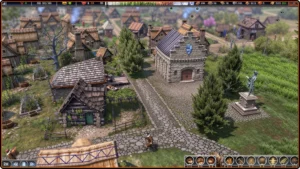
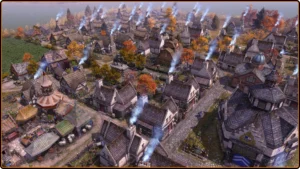
Farthest Frontier doesn’t throw you into a flashy cinematic introduction or a heroic quest. Instead, it greets you with a blank map, a handful of settlers, and the cold dawn of possibility. The early hours are shaky: newcomers to city‑builders may feel overwhelmed by menus, symbols, and endless resource names. But there’s a quiet beauty in that overwhelm the impression of raw potential, of taming the wild step by step. Wood must be chopped, stones mined, simple food gathered or hunted; you tell your people to build a hut, a small camp and slowly, gradually, you start shaping order from chaos. The forests, rivers and meadows around feel alive; every patch you clear, every path you carve, carries weight. It’s not just building houses it feels like building hope. Over time, what started as a fragile shelter can grow into a fragile village, with smoke curling over wooden roofs, carts carrying raw materials, fields tilled and sown. That transition from uncertain survival to the first pulse of community is satisfying in the old‑school, gritty sense. The rhythm is slow, sometimes unforgiving, but in the right mood, profoundly immersive.
Resource management, farming, logistics
What makes Farthest Frontier stand out among many city‑builders and survival‑builders is how detailed and interlinked its systems are. There are a lot of layers: wood, stone, ores, clay, herbs, honey; a wide variety of food types (crops, hunted game, fish, wild forage); crafts, tools, clothing, production chains all that. Farming in particular deserves a nod: it’s not just planting‑and‑harvest. Soil fertility, crop rotation, seasons, land quality all matter. Choose the wrong field, plant the wrong crop, or ignore fallow cycles and you risk a disastrous harvest. When harvest fails, or food is mismanaged, the fragility of your settlement shows quickly. Hunger looms. Anxiety creeps. And that makes each successful harvest feel meaningful. Similarly, transport, storage, production chains: everything feels interconnected. Build a tannery here, a forge there; but if storage is far, or workers spread too thin, efficiency collapses. Good layout, smart positioning: that becomes a small art, and a big part of the satisfaction.This kind of systemic depth isn’t for everyone but for those who like to tinker, plan, optimize and feel the weight of each decision it’s a dream. The payoff isn’t immediate. It’s not flashy. But once things start humming when smoke rises from chimneys, fields feed people, and production chains clickthere’s this quiet pride. You built this.
Calm life…but shadows lurk all around
Yet, for all its calm promise, Farthest Frontier never lets itself become comfortable. Mother Nature and life itself doesn’t offer safety guarantees. Winters come hard, crops may fail, food becomes scarce. Wild animals roam. Disease can afflict the sick or careless. Bandits or raiders may raid your fragile homes. It’s not like an action game where enemies teleport and you react with reflexes. No here threats often manifest slowly. A poor harvest becomes hunger. A neglected settlement becomes disease‑ridden. A badly positioned house becomes a death trap for a worker gathering wood at night. That ongoing uncertain tension keeps alive the fragile‑society feeling. One wrong decision at the wrong time and everything can unravel. That tension combined with the sense of gradual progress makes building feel earned. But sometimes it can get exhausting. The constant balancing, the micromanagement after a while, especially once the “easy early game” is over, can feel like walking a tightrope.
When expansion and growth bring their own frustrations
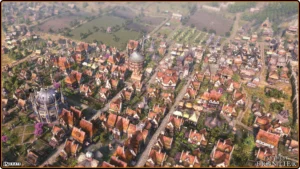
Once the town grows more settlers, more buildings, more complexity the game shows some of its cracks. The 1.0 version (released 23 October 2025) came with many improvements: a revamped tech‑tree, more buildings, updated animations, even monuments and optional victory conditions. Still, scaling your settlement sometimes feels clunky. After a certain size, performance issues become noticeable especially on less-than-top-tier PCs. Some players on community forums report lag, slowdown, pathfinding or storage‑management issues when population grows high. > “I have the game but not since early access…I love Farthest Frontier, but my old PC just can’t handle it.” Storages that don’t overflow properly, workers walking illogical paths, resources piling up: micro‑management becomes tedious. Critics of the game sometimes describe it as “a babysitter simulator” meaning, you constantly babysit your villagers, not because you enjoy it, but because otherwise chaos will creep in. For players wanting a smooth ride into a sprawling empire, or large cities with hundreds or thousands of citizens, that becomes a frustrating drag. The joy of first settlements slowly gives way to the burden of maintaining complexity and on some maps, the resource distribution or map size can feel limiting.
Combat, defence and threats: somewhat functional, but not thrilling
Farthest Frontier includes threats beyond starvation and disease: wild animals, raids, bandits, even plagues. To survive, you’ll need more than barns and farms you’ll need defenses, palisades, watchtowers, maybe soldiers. The developers added more defensive and soldier types over time light and heavy infantry, archers, even cavalry (stables), following updates leading into 1.0. Still, combat in Farthest Frontier never becomes a central, satisfying spectacle. Compared to its deep economic and logistic systems, fighting remains cursory more a necessary evil than a cool feature. Critics commonly point out that if you enjoy big medieval battles, conquests and heroic armies, this game isn’t for you. For this kind of game, that’s not necessarily a fault but it does limit the appeal to a smaller crowd. It’s medieval survival + settlement building with occasional raids, not a full‑on real‑time strategy war simulator.
Who is Farthest Frontier for: and who might get disappointed
If you love long sessions, slow build-up, micro‑management, planning, realism if you enjoy being the “mayor, logistician, quartermaster, and babysitter” all in one Farthest Frontier can be an almost hypnotic experience. It gives you time, let’s you learn slowly, rewards careful thinking, and gives genuine satisfaction when your small settlement survives harsh winters, bandit attacks, failed harvests and still pushes on. But if you crave immediate gratification: big cities fast, flashy battles, freedom from micromanagement this will probably feel more like a chore. As one community member put it: “This is a babysitting simulator, not a colony simulator…there is never a quiet season, because you are expected to babysit everything.”Also, big ambitions (massive cities, sprawling empires) may be limited by performance issues and by design choices (map size, resource distribution, building and management limitations). Bottom line: this is a game for patience, for those who enjoy the slow burn, not the fireworks.