REVIEW | DISCO ELYSIUM THE FINAL CUT | DIALOGUE-DRIVEN RPG AT ITS FINEST
In a landscape increasingly dominated by sprawling open-world RPGs and action-heavy franchises, Disco Elysium: The Final Cut emerges as a striking anomaly a game that challenges the conventions of the genre, privileging dialogue, introspection, and narrative experimentation over combat. It’s a game that feels less like a traditional RPG and more like an interactive novel, yet one with a psychological complexity rarely seen in video games. ZA/UM’s updated edition of their 2019 masterpiece not only brings full voice acting and cinematic polish to the original, but it also expands the narrative scope, breathing new life into a world already renowned for its depth and nuance. As someone who has spent countless hours wandering the rain-soaked streets of Revachol, interacting with its fractured citizens and navigating the murky moral landscapes of its politics, it’s clear that The Final Cut is more than just a refinement it’s a definitive experience. In this review, we’ll dive deep into the story, mechanics, presentation, and replayability, culminating in a final verdict that reflects the game’s immersive genius and occasional imperfections.
Game Overview
Genre: Narrative-driven RPG
Developer: ZA/UM
Publisher: ZA/UM
Platforms: PC, PS4, PS5, Xbox One, Xbox Series X/S, Nintendo, Android
Release Date: March 30, 2021
Completion Time: 20–30 hours (varies based on playstyle)
Minimum System Requirements (PC)
Operating System: Windows 7/8/10
CPU: Intel i5-7500 / AMD Ryzen 3 1500X
GPU: Integrated Intel HD 620 or equivalent
Memory: 4 GB RAM
Storage: 22 GB available space
Story & Atmosphere
The narrative heart of Disco Elysium: The Final Cut lies in the city of Revachol, a crumbling metropolis teeming with political tension, social decay, and personal despair. Players step into the shoes of an amnesiac detective, tasked with solving a high-profile murder while simultaneously navigating their own fractured psyche. The game’s story is a masterclass in character-driven narrative: every conversation, internal monologue, and subtle environmental cue contributes to a richly layered experience. Where the original game already excelled in weaving political, philosophical, and existential themes into its storytelling, The Final Cut elevates these threads with fully realized voice acting. Hearing characters speak their lines adds an unprecedented layer of emotional resonance. From the deadpan humor of your partner Lieutenant Kim Kitsuragi to the tortured introspection of the protagonist, the voice performances bring Revachol’s denizens vividly to life. It’s not merely about hearing dialogue; it’s about feeling it. The city itself is a character. Broken streets, graffiti-splattered walls, and tattered buildings tell stories of societal collapse, of failed ideologies, and of personal tragedy. Revachol is melancholic and beautiful, a painting of despair and hope in equal measure, drawing players into a world where even silence speaks volumes.
Gameplay & Mechanics
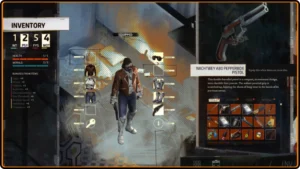
Unlike traditional RPGs that rely heavily on combat, Disco Elysium revolves around thought, perception, and dialogue. The protagonist’s mind is divided into 24 skills, categorized under four attributes: Intellect: Logic, Encyclopedia, Rhetoric, Drama, Conceptualization, Visual Calculus Psyche: Volition, Inland Empire, Empathy, Authority, Suggestion, Esprit de Corps Physique: Endurance, Pain Threshold, Physical Instrument, Electrochemistry, Shivers, Half Light Motorics: Hand/Eye Coordination, Perception, Reaction Speed, Savoir Faire, Interfacing, Composure Each skill has its own personality, providing internal commentary that ranges from sarcastic and humorous to insightful and philosophical. High Drama skill might allow you to spot lies or spin convincing tales, while strong Volition helps maintain moral integrity under duress. The Thought Cabinet further deepens the role-playing experience. Players can internalize thoughts, ideologies, and experiences that influence gameplay over time, granting bonuses, imposing penalties, or even reshaping the protagonist’s worldview. This system encourages deliberate reflection, rewarding engagement with the narrative as much as it rewards clever problem-solving.

Dialogue & Skill Checks
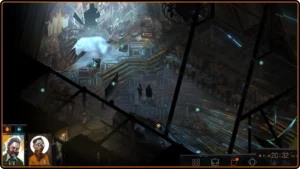
Dialogue in Disco Elysium is far from linear. Every conversation can trigger skill checks, influenced by both your character’s stats and dice rolls, adding a degree of unpredictability that mirrors real-life uncertainty. These checks are not merely binary; failing a check doesn’t halt the story but often unlocks new narrative pathways or insights. The distinction between “white” and “red” checks adds further nuance. White checks can be retried if you adjust your skills, while red checks are one-shot opportunities with permanent consequences. This design ensures that player choices carry weight, making each interaction consequential.
Political Vision Quests
A new feature in The Final Cut, Political Vision Quests offer players a chance to explore ideological allegiances more deeply. By accumulating points in Communism, Moralism, Fascism, or Ultraliberalism, the detective can internalize a belief system, triggering a unique vision quest that affects dialogue, interactions, and outcomes. This system underscores the game’s thematic focus: choices are never superficial. Committing to a political ideology forces players to confront the philosophical implications of their actions and engages them with Revachol’s fractured society in a meaningful way. However, each playthrough only allows one political path, emphasizing the significance of your decisions.
Replayability and Player Agency
The combination of skills, thoughts, and political choices creates a highly replayable experience. Different skill builds open unique dialogue paths, uncover alternative solutions, and offer fresh perspectives on the same narrative. This interplay ensures that no two playthroughs are identical, and it encourages experimentation. Whether you approach the game as a cerebral detective, a moral crusader, or a cynical opportunist, the world responds in kind, making every decision feel impactful.
Audio & Visual Presentation
Visually, Disco Elysium: The Final Cut is a triumph of hand-painted artistry. The game’s oil and watercolor-inspired aesthetic conveys both texture and emotion, capturing Revachol’s melancholy and decay with striking fidelity. Character portraits are more than static images they are expressive, often surreal vignettes that reflect internal states and personality traits. The Final Cut introduces subtle but meaningful enhancements: improved animations, nuanced facial expressions, and gestural cues during dialogue sequences. These refinements heighten immersion, particularly in cutscenes and vision quests, without compromising the distinctive artistic identity.

Environmental Storytelling
The city itself communicates its narrative visually. Muted palettes punctuated by bursts of neon or graffiti create a layered, lived-in environment. Every alley, abandoned building, and cluttered room tells a story, often independent of the scripted narrative. Players are rewarded for observation, as seemingly minor details frequently reveal backstory, foreshadow events, or deepen character understanding.
Sound Design & Voice Acting
British Sea Power’s soundtrack complements the game’s aesthetic, blending post-punk and ambient rock tones to evoke the rhythm of Revachol’s streets. Music is deployed judiciously, accentuating moments of tension, clarity, or introspection without ever overwhelming the narrative. Voice acting in The Final Cut is exceptional. Every line, from the sardonic banter of Kim Kitsuragi to the detective’s self-reflective mutterings, conveys depth and authenticity. Julien Champenois’ portrayal of Kim, in particular, adds gravitas and warmth, enhancing the emotional resonance of key encounters. The million-plus lines of voiced dialogue demonstrate a staggering level of ambition and care, and the result is a performance that few games have matched.
Technical Performance
While the visual and audio presentation is largely outstanding, some platform-specific issues persist. Console versions, particularly on PS4 and Switch, occasionally experience frame-rate drops and minor input lag. These technical hiccups rarely break immersion, but they are noticeable during fast-paced sequences or extended exploration sessions. On PC and newer consoles, performance is smooth, ensuring that the game’s rich detail and complex systems operate without compromise.
Conclusion
Disco Elysium: The Final Cut is a landmark achievement in narrative-driven RPG design. Its rich narrative, multifaceted characters, and innovative mechanics distinguish it from nearly every contemporary RPG, while its thematic ambition challenges players to reflect on morality, ideology, and personal identity.The enhancements in The Final Cut complete voice acting, improved animations, and expanded content elevate an already extraordinary game, making it feel like the definitive version. The game’s introspective focus and deliberate pacing might not appeal to those seeking constant action or fast rewards, but for players willing to engage with its complexity, the experience is unforgettable.
Advanages
The story is layered, with compelling characters and meaningful choices
Unique skill system and dialogue-driven gameplay
Striking art, evocative environments, and immersive audio
Full voice acting and new content enrich the original game
Different skills, thoughts, and political paths lead to diverse experiences
Disadvantages
Heavy emphasis on dialogue and introspection may not suit all players
Early stages can feel slow for those accustomed to action-oriented RPGs
Minor performance hiccups on older consoles