
PREVIEW | ROUTINE | A SCI-FI HORROR GAME CRAWLING BACK FROM THE DARK
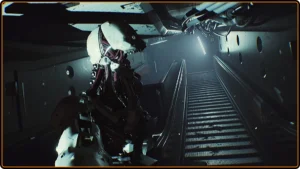
ROUTINE is one of those games that almost turned into a ghost story itself. Announced more than a decade ago, disappearing, reappearing, disappearing again and now suddenly it has a pulse. For anyone who loves dark sci-fi and slow-burn horror, that kind of troubled history doesn’t scare you off. It does the opposite. It makes you curious. Because a game that refuses to die usually has something left to say. The whole thing takes place on a deserted lunar base, the kind that feels like it was built in the 1980s by someone who thought the future would be all CRT screens, bulky terminals and cold metallic hallways. That retro-futuristic charm slowly rots into something claustrophobic. Every light flickers like it’s tired of existing, every room feels like it hasn’t seen a human in ages. And you’re dropped in there alone, expected to figure out what went wrong and why the place fell silent. Not with guns blazing, but with patience, caution and that uncomfortable pressure in your chest that comes from being watched by something you can’t see.
The Atmosphere Works Because Nothing Holds Your Hand
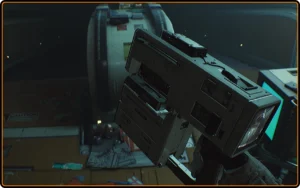
ROUTINE plays in first-person with almost no UI, and it quickly becomes obvious that this isn’t about flashy combat or fast pacing. You’re given the C.A.T. the Cosmonaut Assistance Tool which is basically your lifeline and your biggest source of anxiety. It’s meant for scanning, interacting with old machines and sometimes giving you just enough pushback against whatever decides to crawl out of a shadow at the worst possible moment. A lot of the horror comes from wandering around places that look familiar but feel wrong. The hallways blend together. The lighting keeps shifting, like the station is breathing on its own. You hear things that you can’t track metal bending, something moving far away, a thud that might be footsteps or might be your imagination trying to sabotage you. ROUTINE doesn’t give you objective markers or convenient shortcuts. You’re forced to remember paths, rethink your choices, double back and wonder if you should’ve taken the other door two minutes ago. The fear isn’t loud, it’s slow and suffocating.
A Long Road From 2012 to 2025
The development story is almost as eerie as the game. ROUTINE was first shown in 2012 with plans for a 2013 release, but the project slipped into a long stretch of silence. Reworks, financial struggles, internal resets whatever was happening behind the scenes, the game became one of those infamous “is it even real anymore?” titles. It resurfaced in 2022 with a fresh look in Unreal Engine 5, and finally we have a real date: December 4, 2025, coming to PC, Xbox Series X|S and even Xbox One, including Day One on Game Pass. Of course, this kind of delay can go either way. Sometimes years of work sharpen a vision. Other times they trap a game in the ideas of the past. The real question is whether ROUTINE in 2025 will feel like a relic that lived too long or a horror experience that’s been quietly evolving in the shadows while the rest of the genre ran in circles.
Is Routine Worth the Wait?
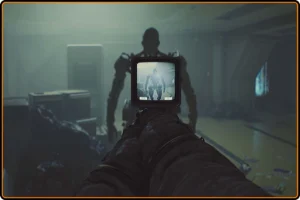
If you’re expecting a fast-paced sci-fi shooter with big set pieces, ROUTINE is going to feel like someone slammed on the brakes. But if you’re into horror that relies on tension instead of cheap jumps, atmosphere instead of explosions, and silence instead of constant noise, then this lunar base might be exactly the kind of nightmare you’ve been waiting for. What makes ROUTINE interesting isn’t just the premise it’s the tone. The designers seem committed to making you feel the weight of every corridor, every flickering light, every moment where you swear you heard something moving just out of sight and can’t prove it. And that’s where ROUTINE might earn its wait, long as it’s been. A decade wandering through development hell usually kills a game’s pulse, but here it almost adds to the mystique. The moon base feels like something frozen in time, and in a strange way, the game’s long silence mirrors its own narrative: a place left alone too long, machinery humming without purpose, a story that’s been waiting to breathe again. There’s something oddly fitting about that. The fear in ROUTINE isn’t loud, it’s patient. The kind that doesn’t jump at you it watches you, lets you walk deeper into the dark, lets you convince yourself everything’s fine. The first-person perspective is crucial for that. It traps you inside your own head. You’re not zoomed out, you’re not safely detached. You’re right there, chest-level with shadows, hearing the ventilation struggle, catching reflections in old metal panels and wondering if that shape behind you moved or if you’re just imagining it. The CAT device ties into that feeling too. It’s not a weapon so much as a reminder of how powerless you are, how every tool is improvised in a place that never wanted you to survive. That’s the part that could make ROUTINE special the tension feels earned, not manufactured. There’s no sense that the game wants to bombard you with monsters. Instead, it wants to make you dread the moment something finally breaks the silence. Horror like that doesn’t aim to scare you instantly. It aims to follow you into the next room, the next night, maybe into your thoughts when you’re sitting in dim light thinking about how quiet things get sometimes. Of course, all this promise has teeth. With Unreal Engine 5 pushing lighting and shadows hard, ROUTINE can’t afford sloppy optimization. And after so many years in the oven, expectations aren’t just high they’re sharp. Players won’t forgive a game that looks atmospheric but plays clunky. The moon base can’t just be pretty; it has to feel alive or dying in a way that actually pulls you in. That’s the line ROUTINE walks, thin and delicate, like a cable stretching across a chasm. If it slips, the whole thing will fall apart. But if it works? If the pacing lands, if the atmosphere hits that perfect “quiet horror” note, if the moon’s emptiness wraps around you just right? Then ROUTINE could become one of those rare games that don’t just scare you for a moment but stay with you long after the credits. The kind you remember when you hear a distant hum in a quiet hallway. The kind that makes you look twice at shadows you normally ignore. It’s a strange thing to hope for a good fear. But ROUTINE has been promising that kind of fear for years now. Maybe, just maybe, it’s finally ready to deliver.